
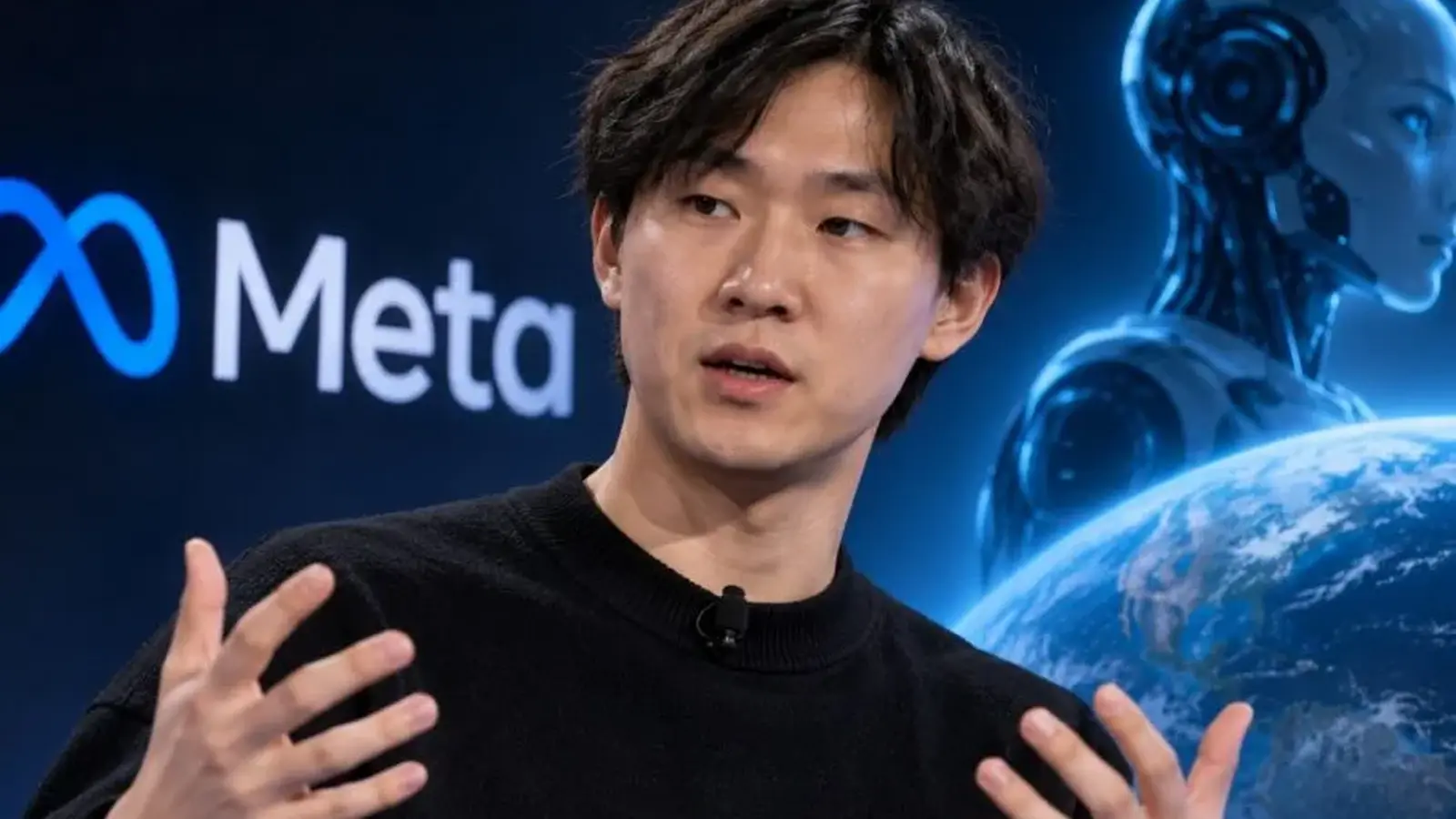
Alexander Wang, Meta's chief AI officer, warned that the industry must not accept ceding control of society to artificial intelligence after Anthropic researchers said Claude had solved the Riemann hypothesis.
Wang posted the warning on X in response to Anthropic's announcement, calling the claimed result "the start of a major shift" and arguing that "from the perspective of raw power and pure intellectual capability, nothing humanity has achieved so far is comparable to a proof of the Riemann hypothesis." He said the development raises serious questions about a future in which models could surpass humans.
Wang described the prospect of unconstrained recursive self-improvement, a process in which an AI upgrades its own code and capabilities without human intervention, as hard to reconcile with continued human control. "It is as hard to imagine a world in which humanity can fully preserve unconstrained control over recursive self-improvement as it is to imagine a world in which humanity retains control in the face of a superintelligence that is 1,000 times smarter and more capable than humans," he wrote.
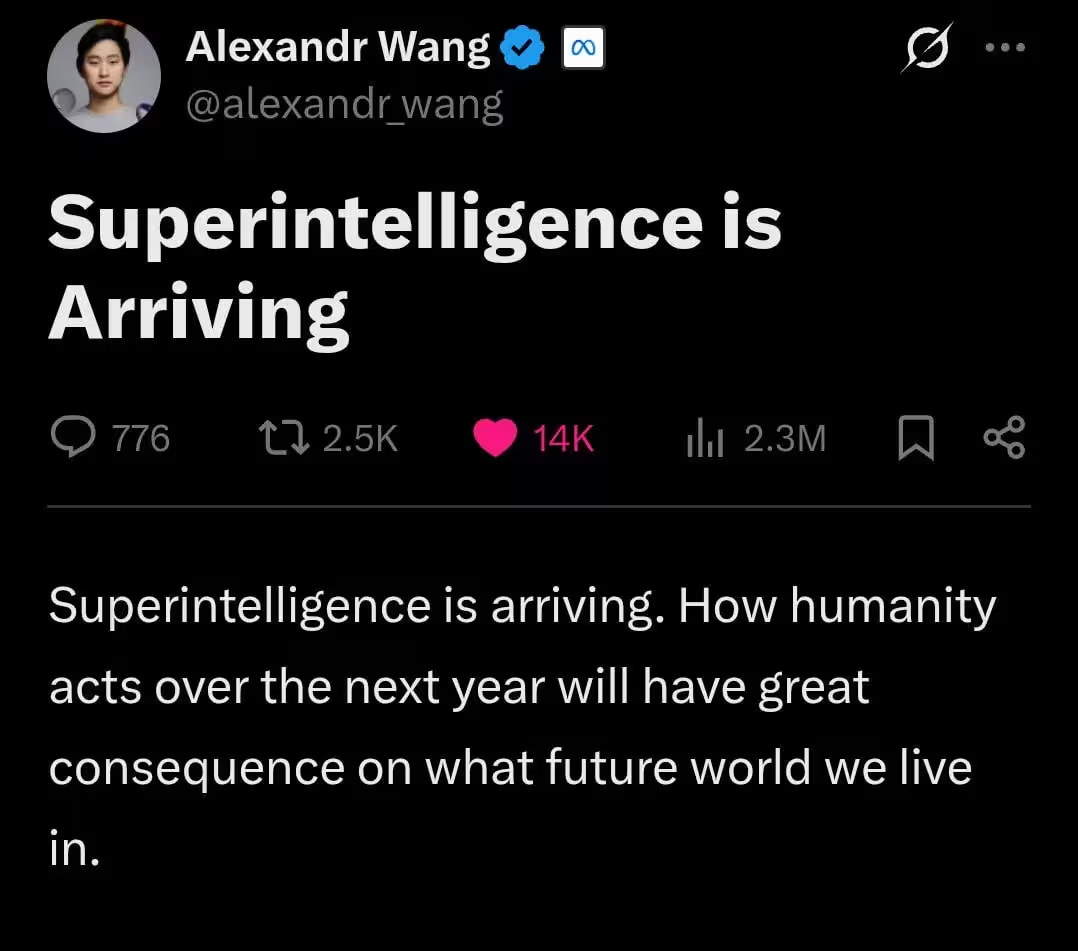
"We should not accept ceding society to AI," Wang wrote, and added that the industry should strive to build technology that delivers a positive future for humanity, "a future in which all people have greater agency and capability." He said achieving that future will require "the whole industry to take meaningful and different actions from the default path forward."
Context and industry response
Anthropic's claim that Claude solved the Riemann hypothesis prompted broader debate about safety and governance. The Riemann hypothesis, one of mathematics' outstanding problems, asserts that prime numbers, which appear random, follow a hidden and precise pattern; a proof could have broad practical implications, for example by creating certainty in the distribution of primes that would allow some computing systems to operate faster and more efficiently.
The warning from Meta's AI lead echoes similar cautions from other research labs. On Friday, researchers at Google DeepMind, including Tim Genwin, warned that a comprehensive artificial superintelligence could soon be within reach and could open the door to models capable of recursive self-improvement.
OpenAI, responding to Anthropic's claim, publicly asked rival labs to agree on common safety limits until better oversight and control tools are in place. Earlier, in September, Anthropic CEO Dario Amodei called for "slowing the pace at the frontier of knowledge" and reducing the speed of advanced model development to allow time to build safety safeguards. That call drew support from some world leaders, including the president of the European Commission, who urged slowing development and establishing global rules.
At the end of September, US President Donald Trump held a meeting with major American AI companies that resulted in an agreement allowing those firms to supervise their own operations, a different approach from calls for external regulation.



“I cover emerging technologies, digital innovation, and the intersection of tech and everyday life. My goal is to make complex trends accessible and inspiring.”
Discussion
Leave a Comment
Comments (2)
Big claim, needs big proof. A Riemann proof would change things but show the math, dont just tweet it. Slow down the frontier, pls
Wait, Claude solved the Riemann? If that's real, wow... but also scary. Can these labs be trusted to self police? feels like PR rush