
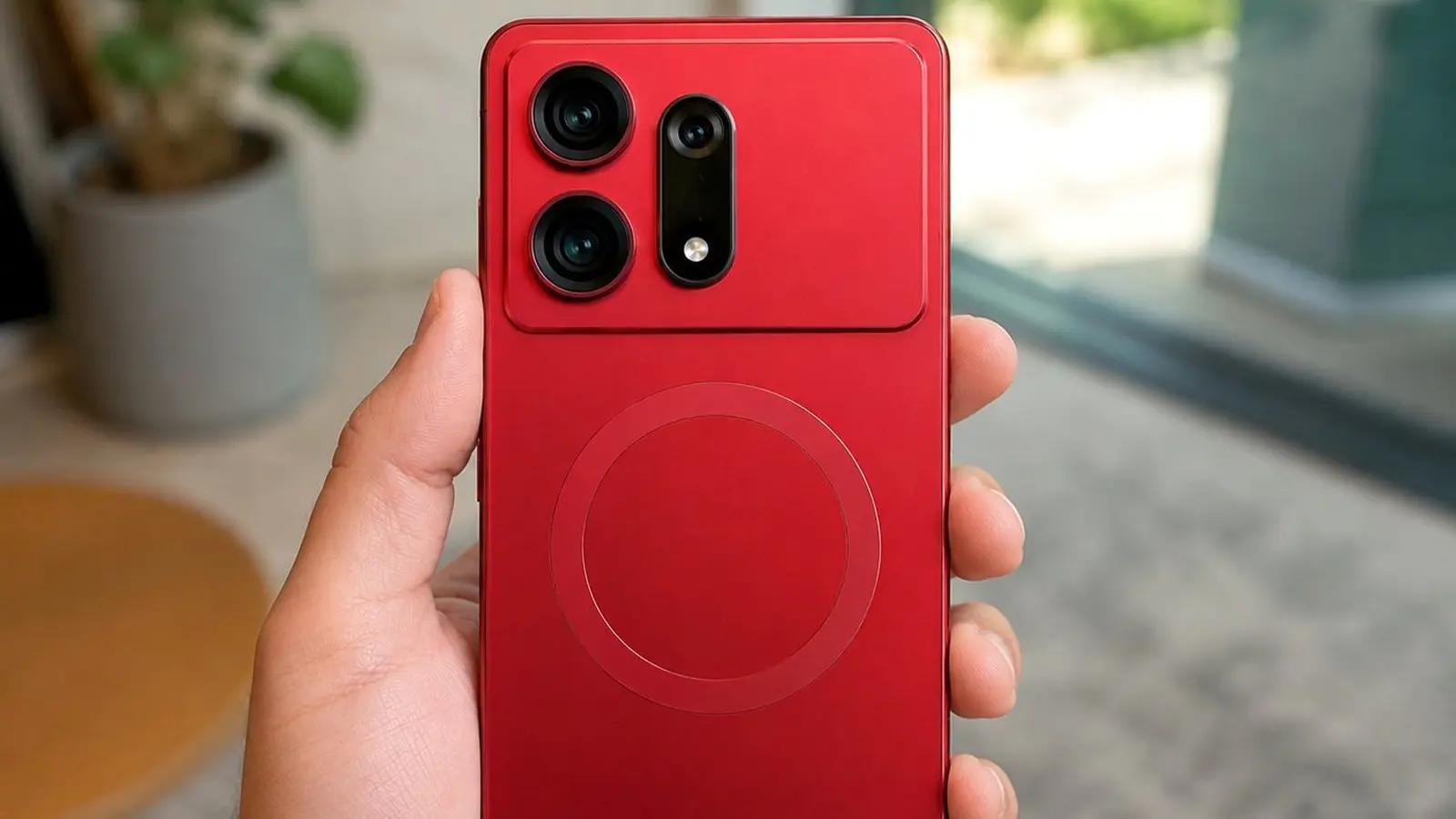
Imagine a Galaxy S27 Ultra that lasts two days on a single charge. The idea of a 7,000 mAh cell felt like a revelation when rumors surfaced, but that headline figure never made it past the lab bench.
The leak that circulated in July suggested Samsung's next Ultra would carry a rated capacity of 5,534 mAh with a typical capacity around 5,700 mAh. That would be a noticeable jump from the S26 Ultra's 5,000 mAh cell. Still, it wouldn't put Samsung in the lead against some Chinese rivals who have pushed battery size to extremes.
Why the big battery prototype never reached production
Prototype testing reportedly included a version of the S27 Ultra fitted with a 7,000 mAh pack. Sounds great on paper. There was a catch: the prototype sacrificed the S Pen. No slot. No stylus. Without that signature capability, Samsung would have hollowed out one of the Ultra line's core appeals. Would users accept that trade-off? Probably not.
Space inside a flagship phone is finite. Every millimeter counts. The S Pen needs a housing. So do the camera stack, cooling hardware, antennas and structural reinforcement. Packing a much larger battery into the same chassis forces compromises elsewhere, and Samsung appears unwilling to erode what makes the Ultra unique just to claim a headline capacity number.

Then there are chemistry choices. Engineers can chase higher capacity by adding more silicon to the anode or by stacking cells differently. Both approaches can increase energy density, but they bring side effects: faster capacity fade, swelling risk, and tougher thermal management. Samsung is said to be conservative with silicon content to protect long-term battery health. The result: a cell that favors durability over maximum capacity.
Charging behavior matters too. Bigger batteries are heavier and take longer to fill unless charging speeds are raised, which in turn demands more robust thermal controls and can shorten battery lifespan. It’s a juggling act. Samsung seems to be balancing raw run-time against cycle life, heat and the phone's other features.
Expect the Galaxy S27 Ultra to surpass the S26 Ultra's 5,000 mAh baseline for the first time, but do not expect Samsung to try to win on sheer capacity alone. The company prioritized the S Pen and long-term battery reliability over a headline-grabbing cell size.
Bottom line: a larger battery was tested, but the practical trade-offs made Samsung choose a slightly bigger, but more balanced, battery solution.

“I cover emerging technologies, digital innovation, and the intersection of tech and everyday life. My goal is to make complex trends accessible and inspiring.”

Discussion
Leave a Comment
Comments
No comments yet. Be the first.