

7 Minutes
SpaceX IPO creates historic wealth, reshapes investor landscape
SpaceX's highly anticipated public debut has not only vaulted Elon Musk past the trillion-dollar threshold but also minted a fresh cohort of billionaires among early backers, executives and institutional investors. The offering sparked intense demand, driving a dramatic revaluation of the company and producing one of the largest private-wealth transfers in recent corporate history.
IPO performance and market impact
SpaceX priced shares at $135 for the initial public offering. Even after some post-listing pullback, shares remained roughly 37% above that IPO price in early trade, delivering a market capitalization in the trillions and briefly placing the company ahead of some of the world’s largest tech giants. At intraday highs, Yahoo Finance data showed shares approaching $225.84 on June 16, driving valuations close to $3 trillion before moderating.
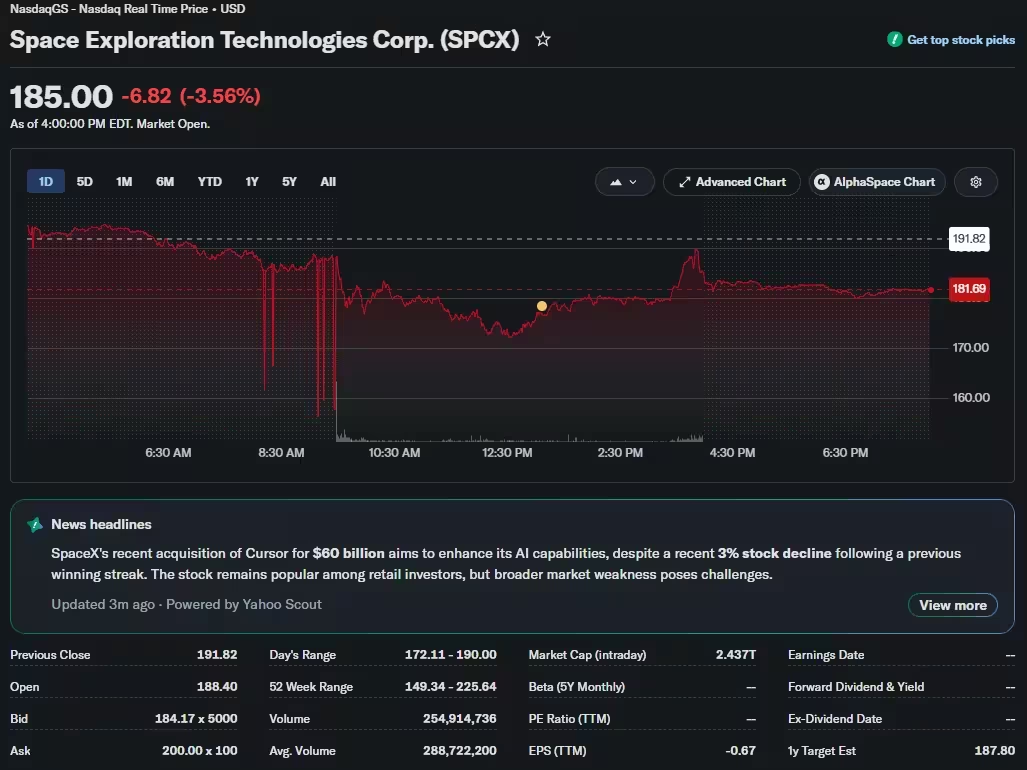
The surge was significant for markets beyond traditional equities. At one point the uplift in Musk’s stake and SpaceX’s market capitalization pushed his total net worth above the market cap of Bitcoin, drawing fresh attention from crypto investors who track how major tech fortunes compare to the largest digital asset. That comparison fed broader conversations about wealth concentration, crypto market dynamics and how public listings of high-profile blockchain-adjacent companies influence investor appetite.
Musk's net worth and the trillion-dollar milestone
Estimates compiled after the IPO suggested Musk controlled about 42% of SpaceX prior to the offering. Reports placed the value of his SpaceX holdings at more than $750 billion immediately after the listing. Combined with his stakes in Tesla and xAI, aggregate wealth trackers briefly calculated Musk’s net worth near $1.4 trillion on June 16 before declining to approximately $1.2 trillion as markets cooled, making him the first individual to top the trillion-dollar threshold.

Source: Forbes
Who profited most: early investors and venture funds
The IPO generated outsized returns for venture capital firms and strategic investors that backed SpaceX through risky early phases. Among the largest winners:
- Valor Equity Partners: Antonio Gracias, Valor’s founder and a long-time SpaceX board member, saw the firm’s holdings appreciate dramatically. CNBC reports valued Valor’s stake around $96.6 billion, a windfall largely owned by the firm’s clients.
- Founders Fund: Peter Thiel’s venture firm was SpaceX’s first institutional backer in 2008. Documents show the fund invested roughly $600 million across multiple rounds and accumulated a stake near 3%, which post-IPO translated into gains north of $50 billion.
- Alphabet and Fidelity: Google’s parent company participated in a 2015 funding round, investing about $900 million alongside Fidelity. That position was later diluted to near 6%, and based on post-IPO pricing is estimated to be worth roughly $132 billion—an extraordinary multiple on the original outlay.
- Sequoia Capital and Kingdom Holding: Sequoia’s stake, reported at about 1.5%, swelled into a holding valued at over $20 billion after investing some $2 billion historically. Kingdom Holding, connected to Saudi investor Prince Alwaleed bin Talal, also saw its position rise to nearly $7 billion in value.
These returns illustrate how venture capital and strategic corporate investments in deep-technology companies can create massive long-term upside, a pattern familiar to many in the blockchain and crypto venture ecosystem who seek outsized returns from early-stage allocations.
Executives, employees and broader wealth creation
The IPO didn’t only enrich institutional backers. Long-tenured executives and thousands of current and former employees benefited from equity programs accumulated while SpaceX remained private.
Senior leadership gains
- Gwynne Shotwell, SpaceX president and CEO of day-to-day operations, emerged as one of the largest individual beneficiaries. CNBC estimated her stake at roughly $2.4 billion. Shotwell has frequently been credited with translating Musk’s strategic vision into operational execution and commercial contracts.
- Bret Johnsen, Chief Financial Officer, also crossed the billionaire threshold with shares valued at about $1.2 billion. Johnsen joined the company in 2011 and played a key role in guiding financial strategy through private funding rounds and the transition to public markets.
Widespread employee gains
Employee stock awards and option programs turned many modest grants into significant payouts. Media reports highlighted examples like a longtime employee whose equity increased from an initial $10,000 valuation to nearly $1 million post-listing. Such gains reflect the firm’s long time horizon and the upside available to early workers at deep-technology firms—a trend mirrored across both the traditional startup ecosystem and select blockchain companies that maintained private equity structures prior to exit events.
Retail demand, allocation scramble and political reaction
Ahead of the listing, retail investors tried to secure allocations in the offering, with some accounts indicating individuals sought personal loans or bank credit to access shares. Demand reportedly outstripped available supply, creating intense competition for allotments.
The massive wealth transfer prompted political scrutiny. Senator Elizabeth Warren criticized the financial dynamics that favor ultra-wealthy investors and company insiders, arguing the system disproportionately rewards a small number of individuals while many households face rising living costs. That critique amplified public debate on taxation, wealth concentration and how major IPO windfalls should be treated in policy discussions.
Debt plans and next steps for SpaceX
Even as share prices retreated more than 9% from post-listing peaks, SpaceX has explored additional capital-market moves. Bloomberg reported the company has discussed a potential bond offering as large as $20 billion to refinance a bridge loan maturing in September 2027. If executed, that transaction could rank among the largest corporate debt deals of recent years, giving the company greater balance sheet flexibility to support Starship development, Starlink expansion and other capital-intensive projects.
What this means for crypto and investors
For the cryptocurrency community, SpaceX’s IPO provides several takeaways. First, it underscores that blockbuster technology listings can shift wealth dynamics and alter comparative valuations against digital assets like Bitcoin. Second, the event reaffirms the power of early-stage allocations: institutional and venture investors who assumed early risk were richly rewarded, mirroring how venture capital has been a major source of funding for blockchain startups. Finally, the episode may influence investor appetite across asset classes, as liquidity events of this size often reallocate capital between equities, crypto, and alternative investments.
Conclusion
SpaceX’s market debut stands as a landmark event in modern markets. The IPO created immense value for founders, employees, venture firms and corporate investors, briefly pushed a founder past the trillion-dollar mark, and triggered political and market debates about wealth concentration and capital allocation. As SpaceX considers large-scale debt issuance and as share prices find a new trading range, the listing will remain a focal point for investors tracking high-growth tech, venture returns and the interplay between traditional capital markets and the crypto ecosystem.
Source: crypto


Leave a Comment