
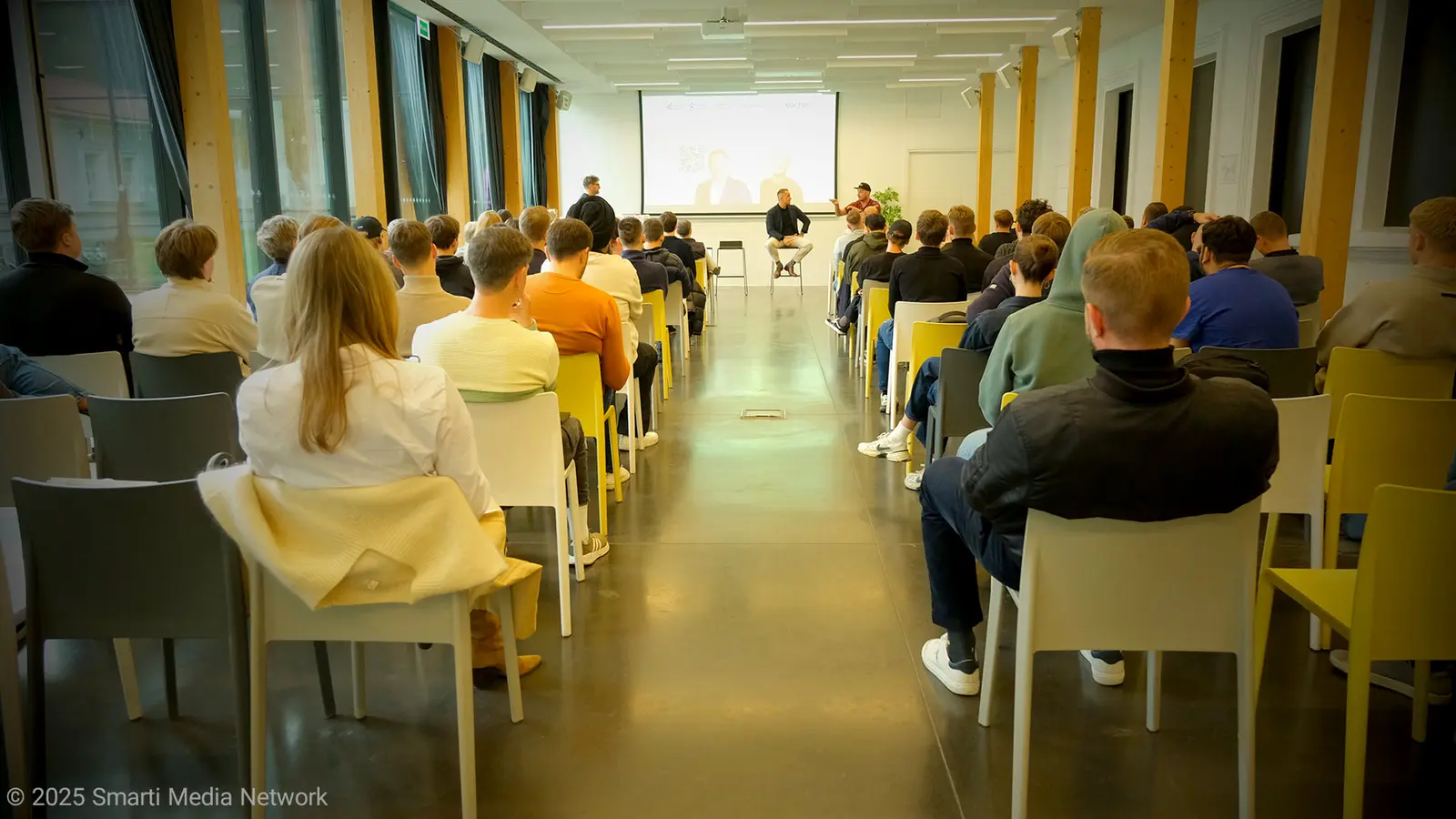
Vilnius’ vibrant startup ecosystem gathered once again for Startup Meetup Vilnius 2025, a community-focused event where founders, innovators, and investors met to exchange insights, share practical experience, and spark new collaborations across the region. Hosted at Vilnius Tech Park on September 30, 2025, the meetup offered keynote conversations, live startup pitches, and open networking — all grounded in real-world lessons about building and scaling startups in competitive markets.
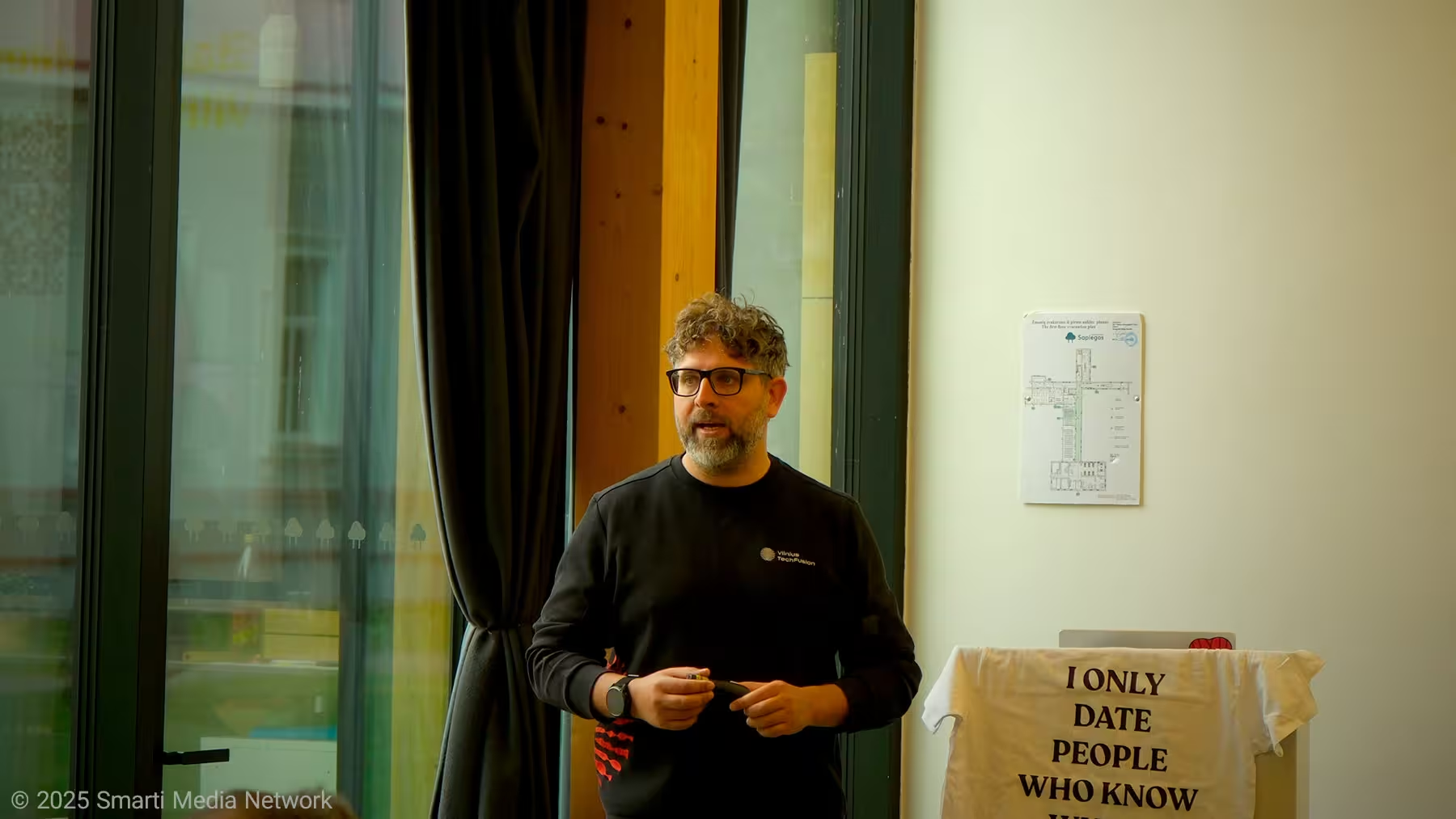
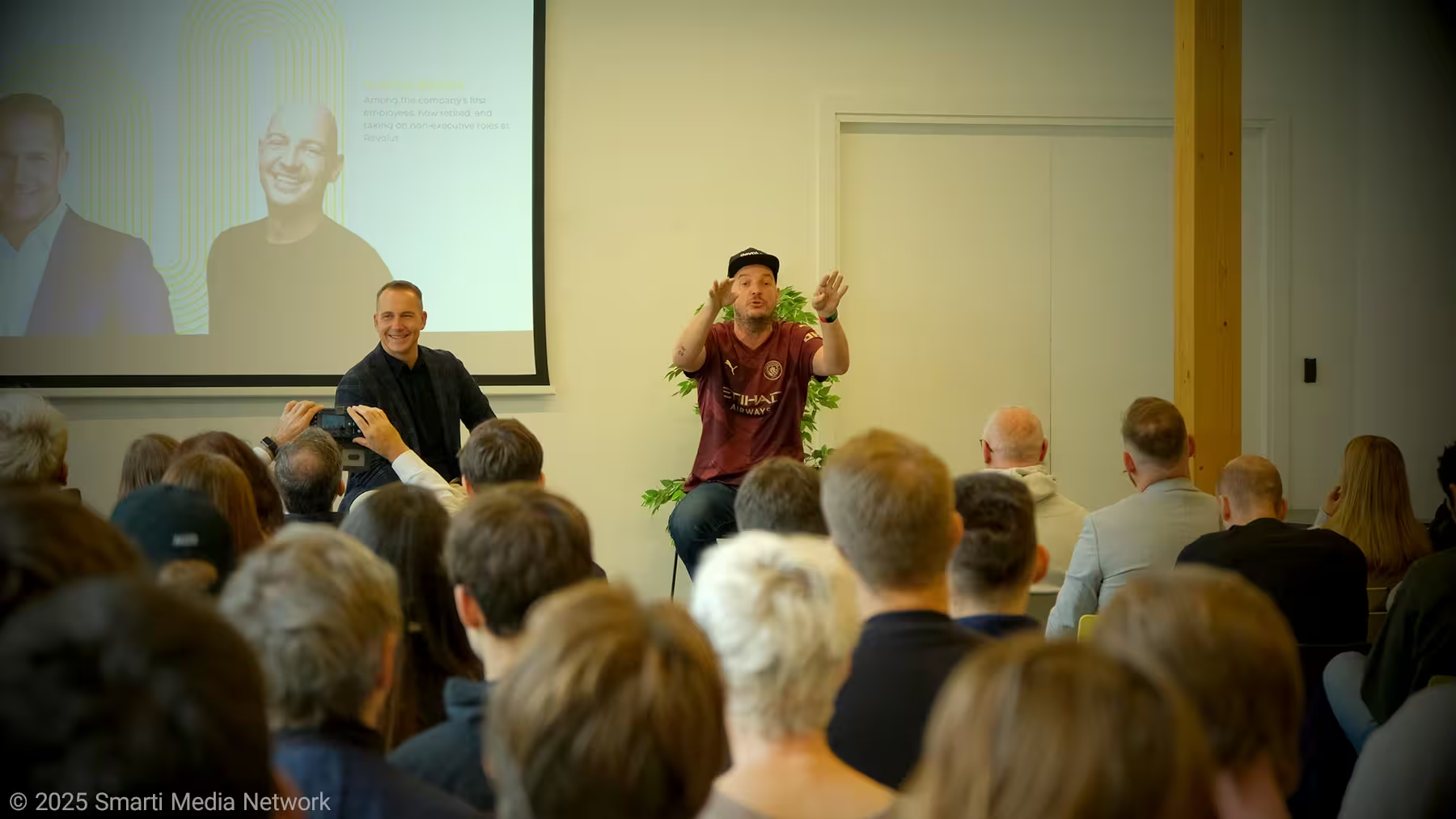
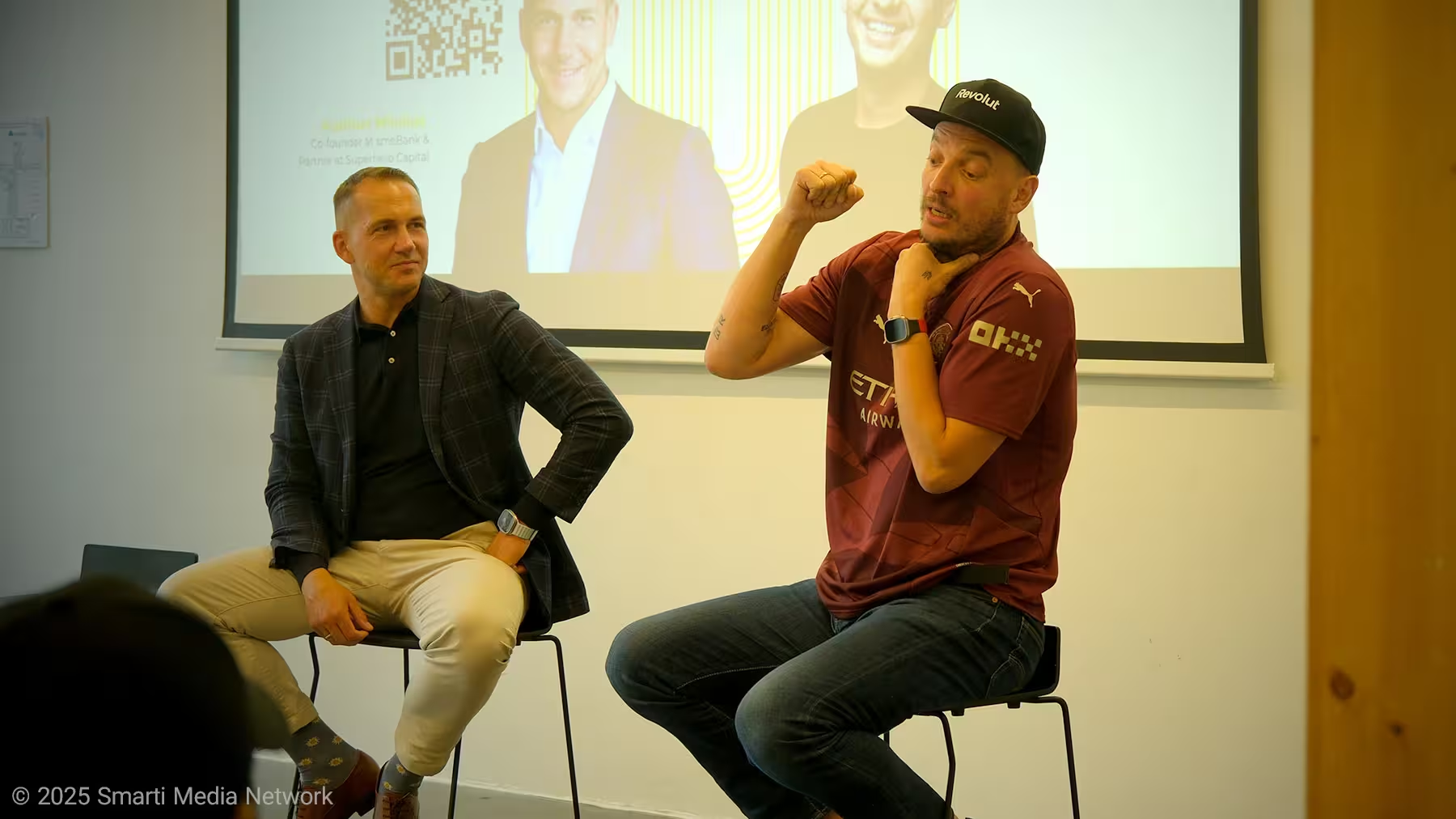
The evening opened with a warm welcome from Mangirdas Sapranauskas, who set a relaxed but focused tone for the gathering. Soon after, attention shifted to a lively fireside chat featuring two respected voices in Lithuania’s startup scene:
Andrius Bičeika – NED at Revolut and Aukok.lt
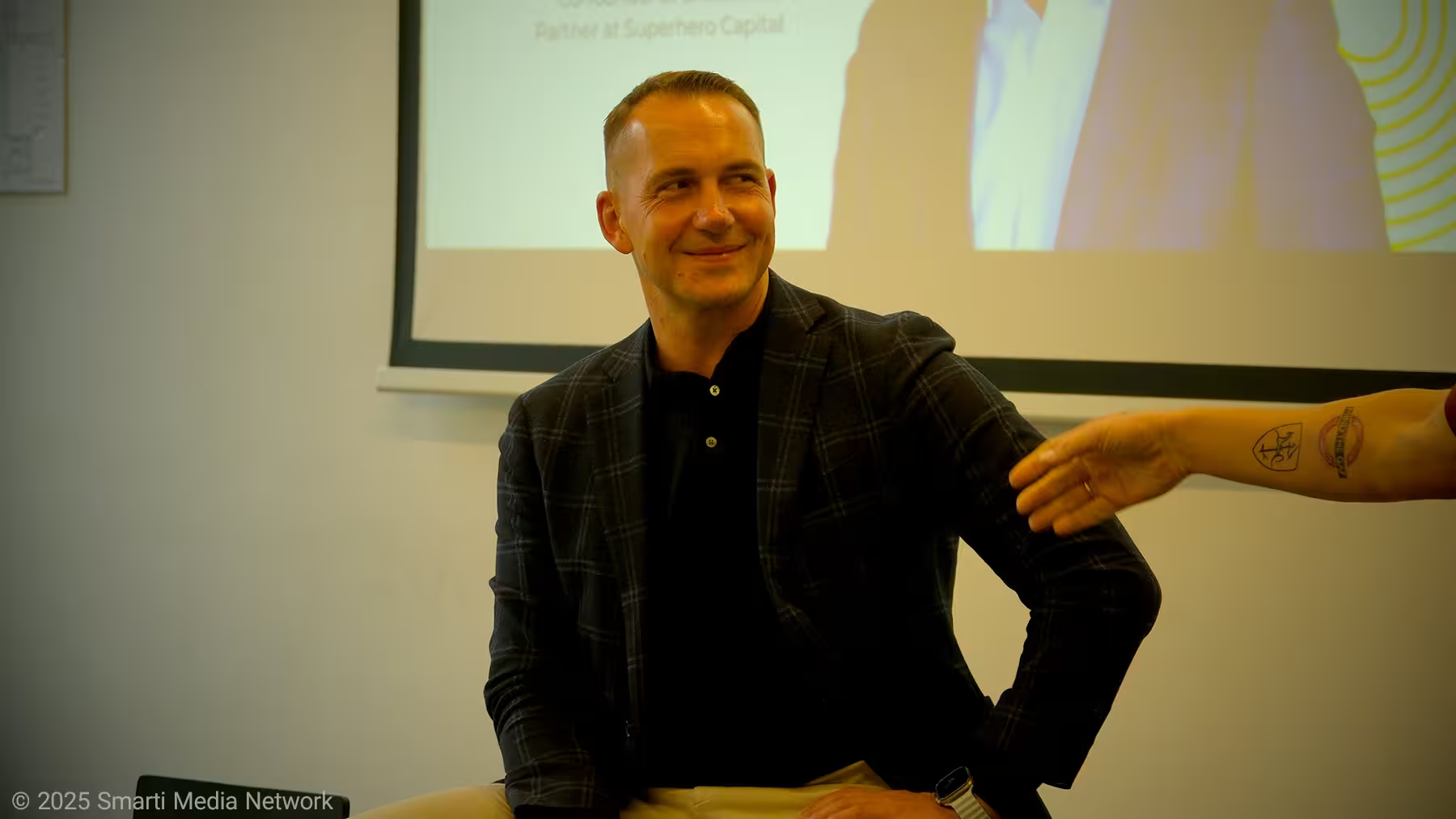
Audrius Milukas – Co-founder at smeBank and Partner at Superhero Capital
What followed was a candid, often humorous conversation in which Andrius revealed lesser-known stories behind Revolut’s rise, described the culture that shaped it, and shared his candid perspective on what genuinely drives startup success in practice.
Fireside Chat: Honest Lessons from the Revolut Journey
From the outset, Andrius Bičeika made clear this would not be a polished corporate spiel about hustle and grind. Instead, he offered an honest account of the messy, unpredictable, and often serendipitous nature of startup success, emphasizing practical lessons for founders and product teams.
“People love talking about hard work and strategy,” he joked, “but let’s be honest — luck plays a massive role. Timing, place, and a bit of randomness often matter more than anything else.”
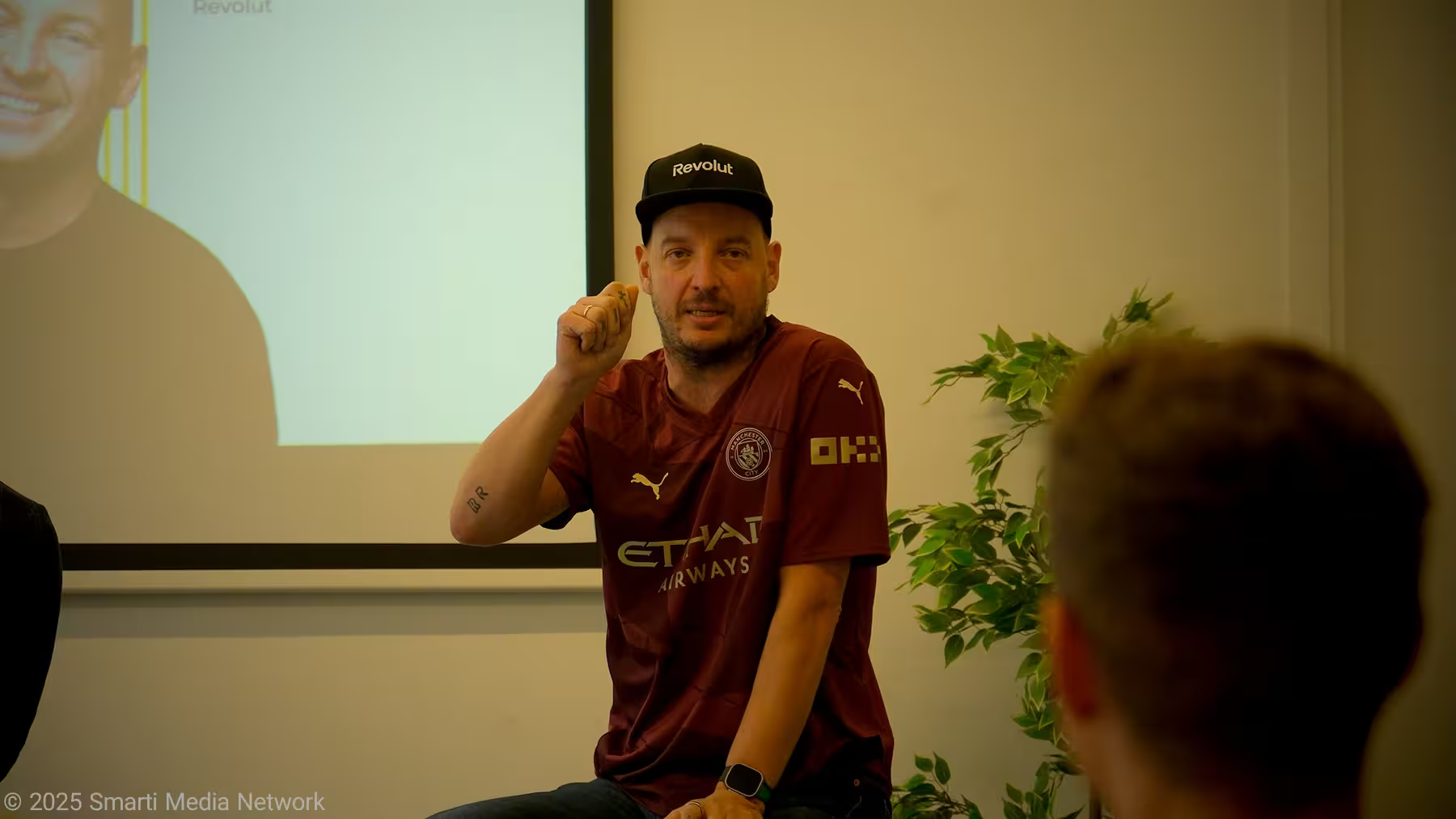
Referencing NYU professor Scott Galloway, Bičeika underscored that even highly talented founders frequently benefit from fortunate circumstances and the right timing, not just pure effort.
“You can work your heart out,” he said, “but if you’re not in the right place at the right time, it may not matter. I’ve been lucky — in my career, and even in meeting my wife!”
He explained how joining Revolut during its earliest, scrappiest phase was one of those pivotal moments of luck that changed the trajectory of his career — and illustrated how timing intersects with decision-making to shape outcomes.
From Late-Night Offices to Canary Wharf Towers
Andrius recounted the earliest days at Revolut when the team numbered only a few dozen, and long nights were the norm.
“Back then, I was the last one to turn off the lights in the London office,” he laughed. “Now we’ve just opened a striking new headquarters next to JP Morgan — a full-circle moment that says a lot about how far we’ve come.”
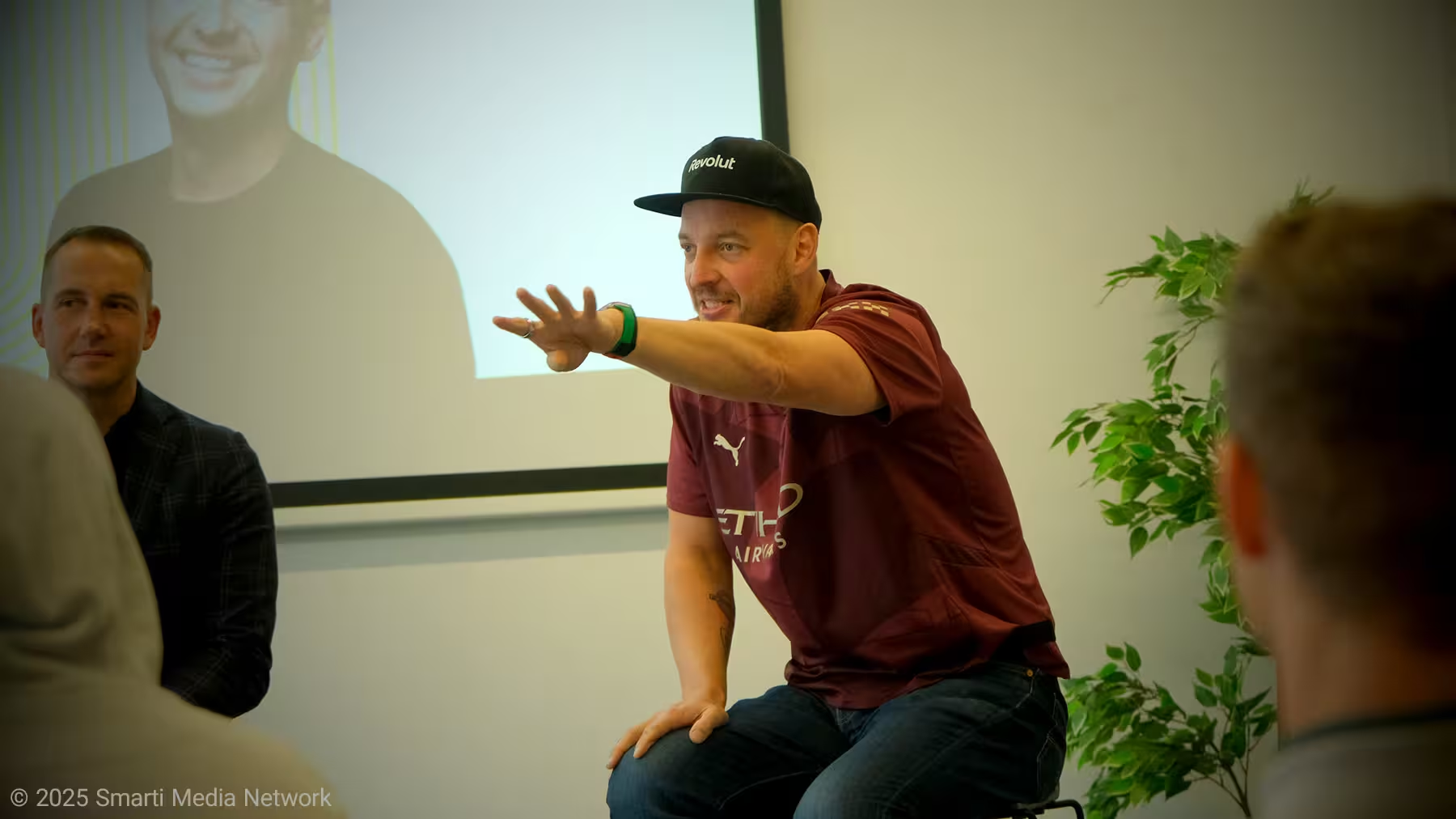
What began as a modest fintech startup is now listed among global financial players, demonstrating how belief, persistence, culture, and the right market timing can scale an idea into an institution. These transitions also highlight operational challenges — from compliance to talent acquisition — that founders must navigate during rapid growth.
Culture Starts at the Top
Shifting from stories to principles, Bičeika emphasized that culture is built from the top down and must be intentionally defined by founders and leadership.
“Culture doesn’t grow from the bottom — it starts with the founders. If they’re lazy or set low standards, the whole team will follow. But if they push hard and set the bar high, that becomes the company’s DNA.”
He described Revolut’s early environment as demanding and fast-paced, yet highly instructive for motivated individuals. That intensity can act as a development accelerator for people who seek responsibility and rapid learning.
“Revolut was the worst place on earth for people who hide and avoid responsibility — and the best place for those who wanted to overachieve and stretch themselves every single day.”
He also noted that in early-stage companies, effort compounds nonlinearly: a single team member’s extra hours and ownership can have outsized impact on product trajectory and customer learning.
“When you’re just starting out, every extra hour you put in is worth triple. The learning curve is so steep — you’d be crazy not to use it.”
Execution Over Ideas
One of his central messages was straightforward and practical:
“Ideas are cheap. Execution is everything.”
To demonstrate, he recounted launching Revolut Business, where leadership chose to ship a product in an aggressive two-week window rather than wait for a fully polished build.
“We were only four people. We worked day and night, and somehow launched it on time — full of bugs, sure, but live!”
That fast shipping taught a core lesson: don’t wait for perfection. Real user data and iterative improvements are far more valuable than hypothetical feature lists.
“Mark Zuckerberg once said: If you’re not embarrassed by what you launch, you launched too late. And he’s right. Shipping fast, failing fast, and learning fast — that’s the only way to grow.”
For Bičeika, execution’s purpose is to generate real feedback: product decisions should be driven by data collected from customers in live conditions, not endless internal debate.
“You don’t build just to build — you build to collect feedback. Action beats endless discussion.”
Believe in the Product You Build
Authenticity was another recurring theme: work on products you personally use and believe in, because that empathy drives better product decisions and stronger customer focus.
“If you’re not a user of your own product, you’re in the wrong place. During interviews, I always ask candidates: do you use our product? How would you make money with it? If they can’t answer, it’s a red flag.”
Failures That Teach
Bičeika also spoke openly about earlier failures before Revolut — attempts at startups that didn’t succeed — and how those outcomes clarified what not to do and sharpened future decision-making.
“We once thought we were sitting on a million-dollar idea — turns out we couldn’t even raise a cent! But those failures were necessary. They taught me what not to do.”
Those early setbacks informed later strategies and contributed to more resilient product choices when the right opportunity arrived.
Final Takeaway: “Just Do It!”
Bičeika closed with an energizing, practical rallying cry for founders and teams.
“Success is built on three pillars: a product you believe in, a culture that drives you, and the courage to act — even before you’re ready. Just do it. Learn as you go. That’s how real growth happens.”
Announcement by Karolina Urbonaitė — Head of Startup Lithuania
Following the fireside chat, Karolina Urbonaitė, Head of Startup Lithuania, took the stage to share updates about one of the country’s largest startup gatherings.
She began with a friendly question to the audience to connect and remind participants of the broader community rhythm.
“How many times have we had these meetups before? Almost every month, right? But only once a year, we all gather for our main event — the Startup Fair.”
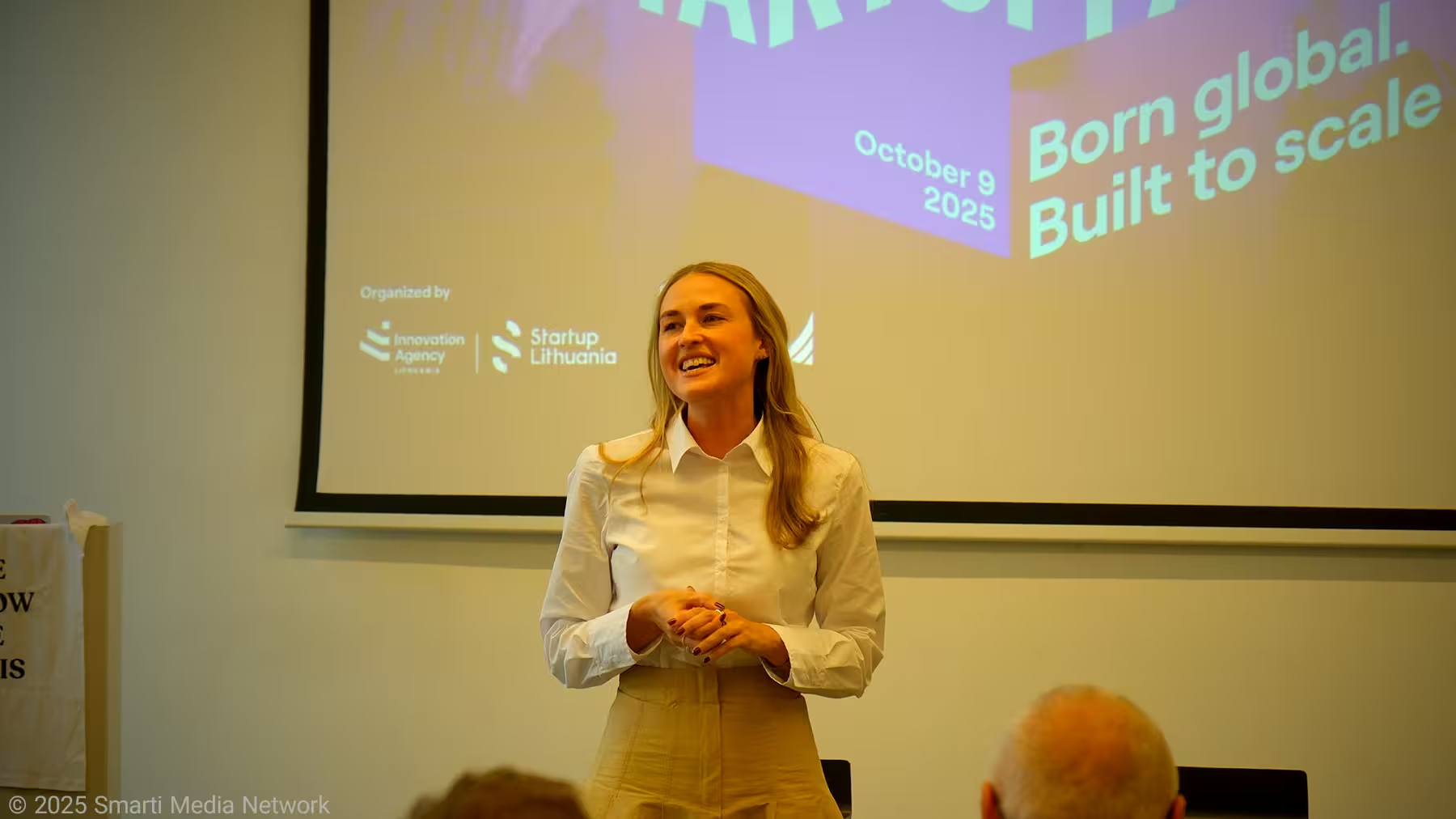
Karolina reminded attendees that this year marks the 13th edition of Startup Fair, an annual event running since 2012 and now a central meeting point for Lithuania’s startup ecosystem, investors, and international guests.
“If you don’t have your tickets yet, now’s the time!” she said with a smile. “The event is happening next Thursday, October 9, and it’s going to be bigger than ever.”
Karolina outlined the 2025 program, noting three main stages — two dedicated to keynotes, fireside chats, and panels and a third dedicated to a competitive pitch battle where 40 startups will compete for visibility and prizes, attracting international investors and press.
She also made a special announcement for the evening’s presenters.
“Tonight, we’ll have five spotlight pitches, and the startup that wins the public vote will receive two complimentary tickets to Startup Fair 2025. So don’t forget to vote for your favorite!”
With that, she wished the participants good luck and encouraged everyone to attend the flagship event to celebrate and expand Lithuania’s growing startup community and network with regional and global stakeholders.
Open Mic & Spotlight Pitches
After Karolina’s announcement, the meetup shifted into one of its most energetic segments — the Spotlight Pitch Session. Five early-stage startups were invited to pitch on stage: each team received three minutes to present and two minutes for audience questions. The aim was to showcase innovative solutions, test value propositions in front of a live crowd, and compete for the audience’s vote — with the winner receiving two tickets to Startup Fair 2025.
The first team to present was MY.CHEF, a startup reimagining the home dining experience through verified culinary professionals and a platform-driven model.
MY.CHEF — Bringing Verified Chefs to Your Home Kitchen
The founder of MY.CHEF opened with a relatable question many busy families face:
“What will my kids eat tomorrow?”
A question that captures the daily pressure parents experience as they juggle work, schedules, and the need to provide nutritious, appealing meals.
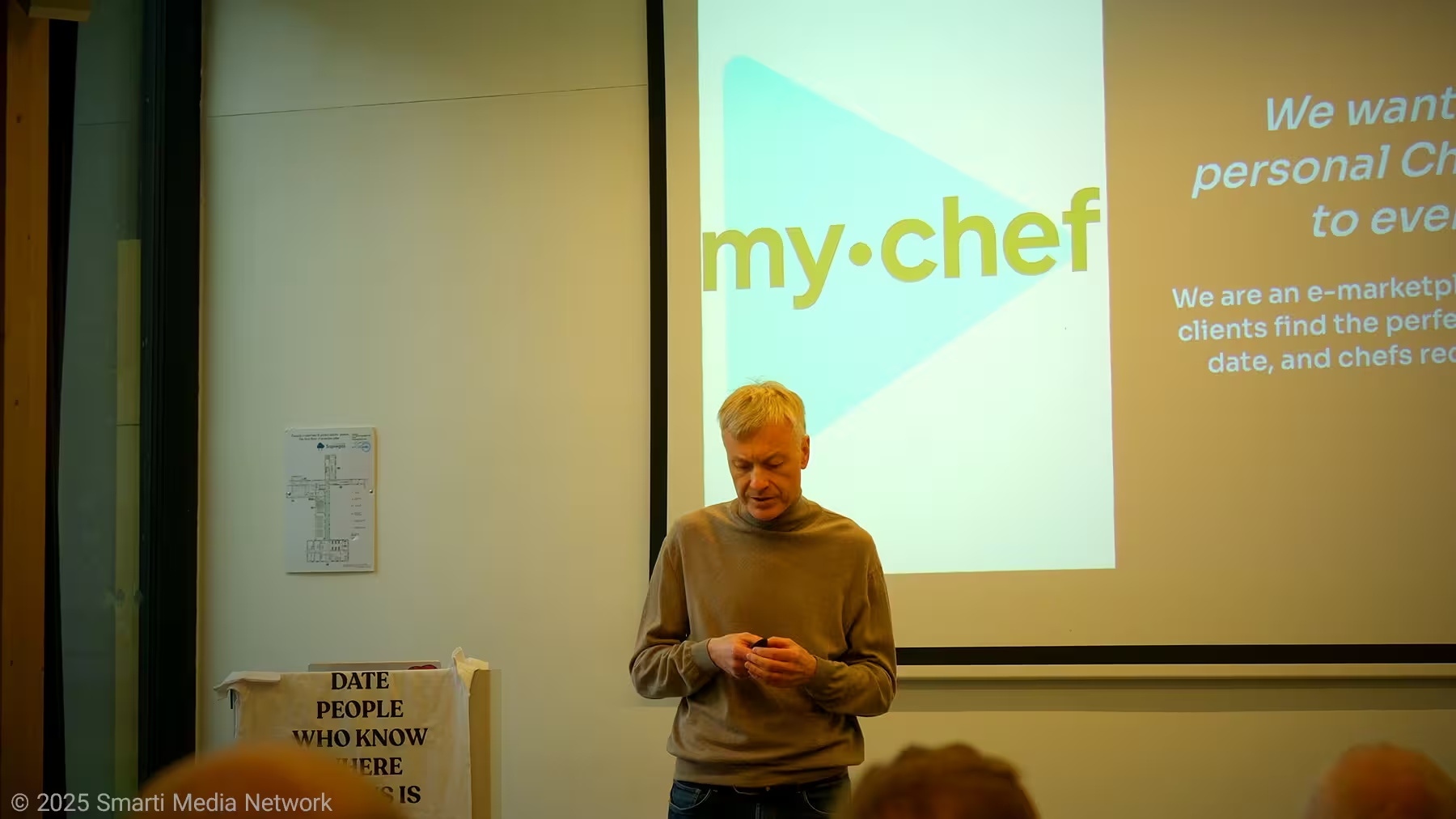
He explained how conventional options — cooking at home or ordering delivery — often fall short. Some families lack time or cooking skills, while delivery raises questions about ingredient quality, freshness, and labor conditions for couriers. MY.CHEF aims to bridge this gap with a human-centered model that brings vetted chefs into clients’ kitchens, focusing on transparency, food safety, and a tailored culinary experience.
MY.CHEF offers a platform that connects households with verified chefs who prepare meals in clients’ homes. This approach delivers transparency, trust, and consistent quality, enabling customers to see ingredients and cooking processes firsthand.
The business model is transaction-based: a matching fee plus transparent hourly rates set by the chefs (typically €15–€20/hour). The platform automatically calculates total costs, accounting for travel, cooking, and cleanup, to ensure fair compensation and predictable pricing for clients. Operationally, this model requires strong verification, insurance, and logistics coordination to scale while maintaining food safety and consistent customer experience.
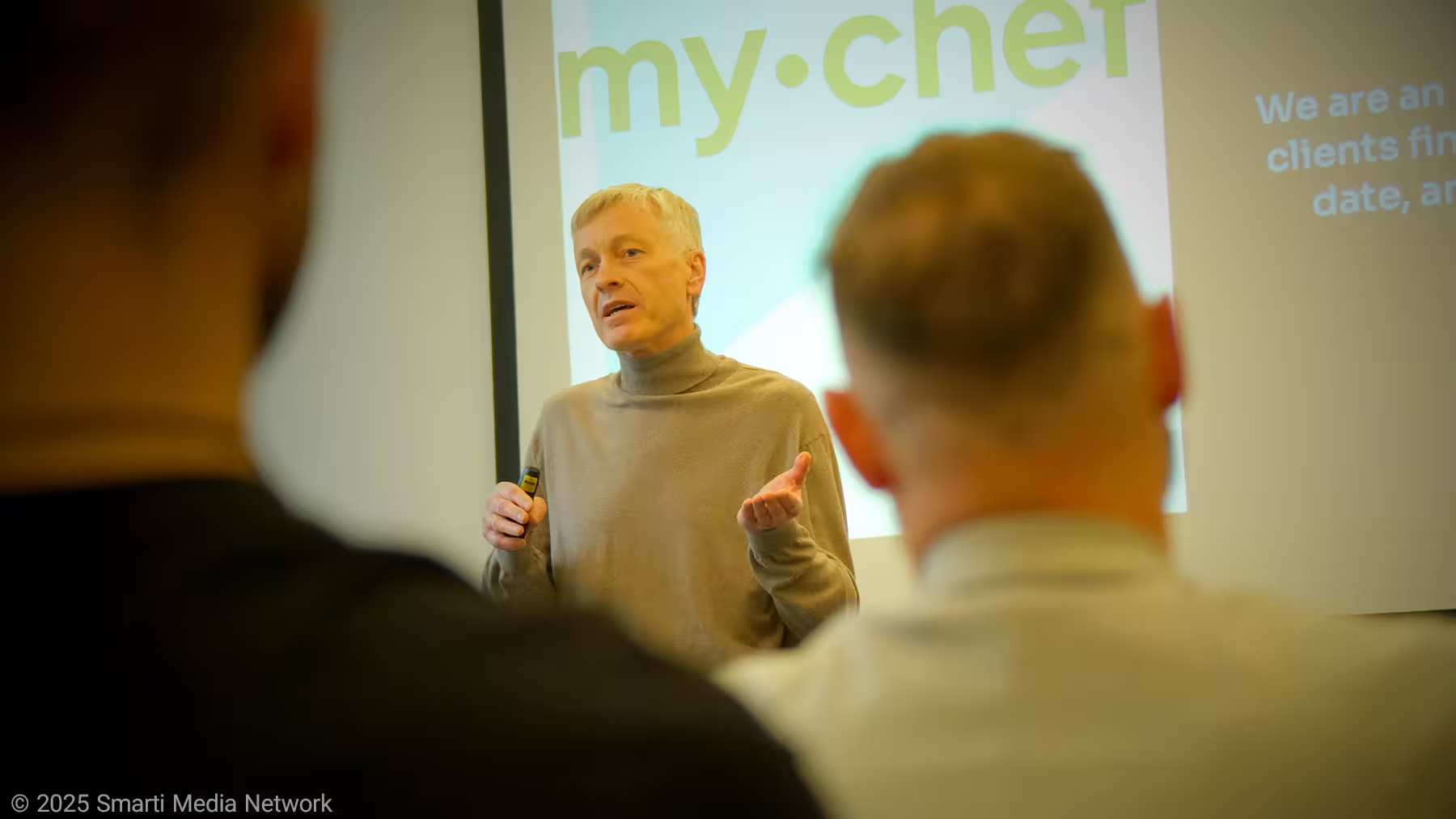
The team, led by the founder and co-founder/software engineer Sergio Closet, has conducted 15 interviews with chefs and 25 with potential clients to validate product-market fit. Their qualitative research highlights demand among families seeking personalized nutrition and chefs looking for flexible income. In partnership with Vilnius city partners, the startup plans a pilot launch in the coming months, focusing on safety, onboarding, and localized marketing to build trust and early traction in the food tech market.
With a human-centered design and emphasis on transparency, MY.CHEF aims to redefine home dining by transforming kitchens into shared spaces for flavor, connection, and trusted culinary service.
SensoFarm — Precision Farming, Simplified by AI
The second pitch introduced SensoFarm, founded by an experienced farmer who wanted to modernize agriculture with data-driven tools rather than follow traditional commodity models.
“I never wanted to plant corn or barley like everyone else,” he explained. “I wanted to make real money, do meaningful work, and build something sustainable — something that doesn’t harm the land or rely on excessive fertilizers.”
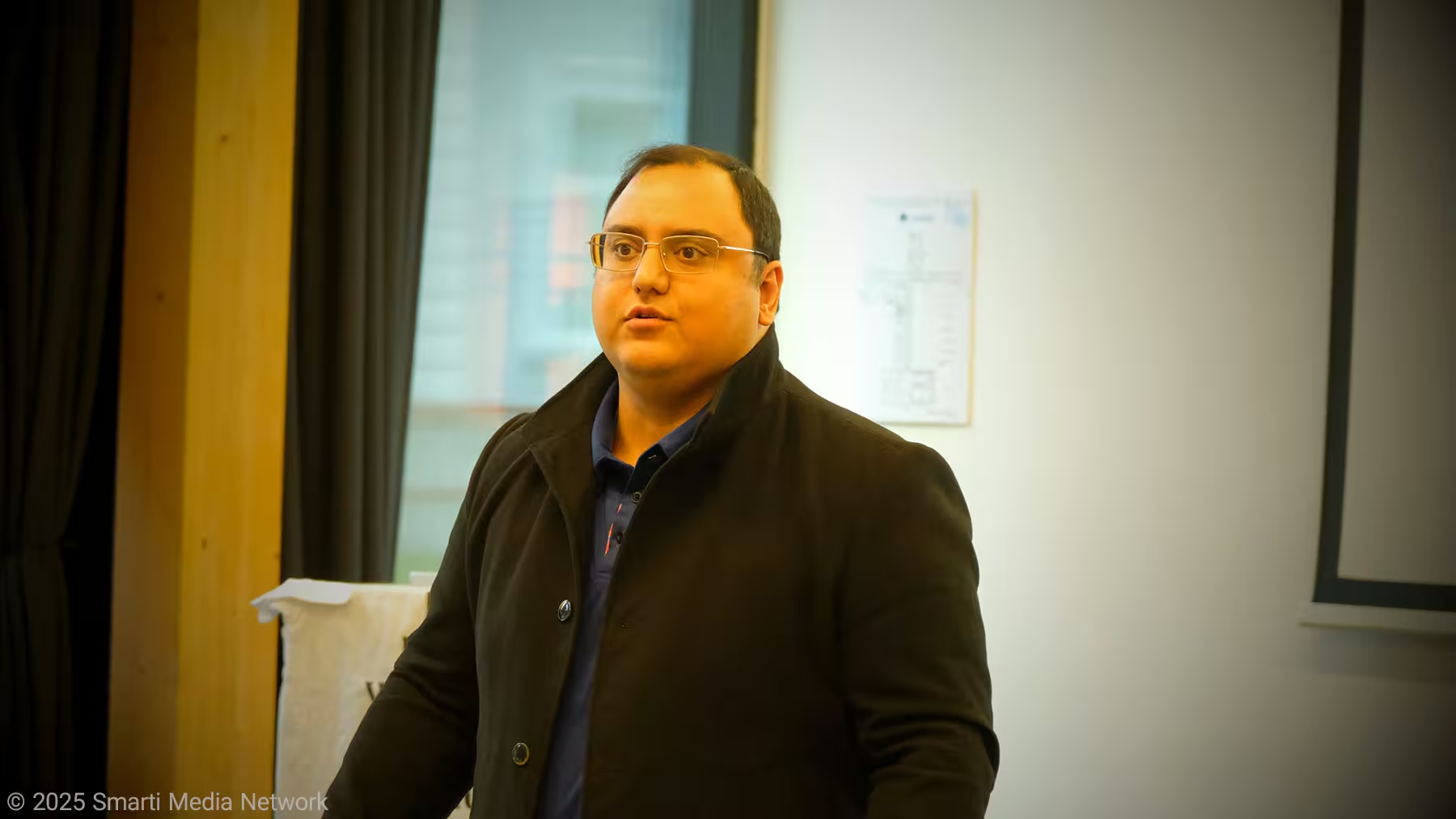
He observed that precision farming requires localized, science-based knowledge often unavailable to individual growers. A relatively small yield variance — for example, ±25% — can determine profitability. Closing that knowledge gap is the core problem SensoFarm aims to solve.
SensoFarm is a mobile app acting as a smart farming assistant. After users enter their location and choose a crop, the app’s AI engine guides them through soil preparation, seed selection, watering schedules, fertilizer recommendations, pest control, and harvest timing. It includes an integrated AI chat assistant for real-time support; farmers can upload photos of damaged leaves and get specific, data-backed recommendations.
When asked how this differs from general AI tools like ChatGPT, SensoFarm’s founder explained that the core advantage is its location-aware and crop-specific approach, built on specialized agricultural datasets and local climate inputs to reduce error and deliver actionable guidance.
“ChatGPT can make mistakes. SensoFarm is location-aware and crop-specific — everything is based on real agricultural data, local climate, and the exact needs of the plant.”
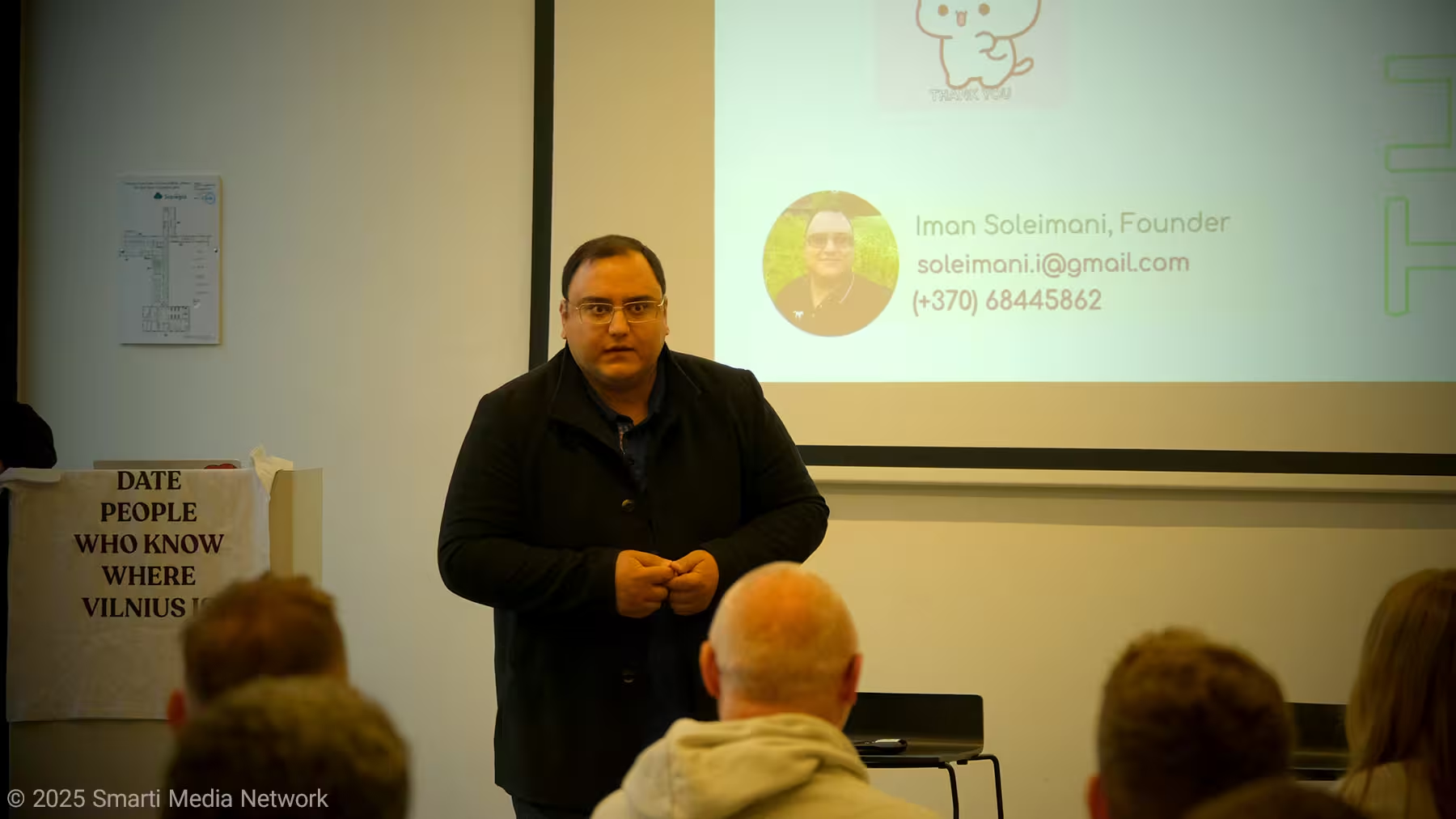
The system is trained on specialized farming datasets, designed to provide high-precision recommendations across many crop types and climates. SensoFarm targets both professional farmers and hobby growers, aiming to democratize precision agriculture with accessible mobile tools and localized insights.
On monetization, the startup plans a B2B revenue model, charging seed suppliers, fertilizer companies, and agricultural service providers for integration, leads, and visibility, while keeping the core app free for farmers to accelerate adoption and data collection at scale.
SensoFarm is currently available on Google Play, with an initial rollout in Vietnam and plans for broader geographic expansion. The founder’s vision is to make advanced, data-driven farming guidance available to anyone with a smartphone, improving yields, sustainability, and farm profitability.
AdGen — Automating Ad Creation with AI in Seconds
The third pitch featured AdGen, an AI-driven tool designed to automate digital ad creation and reduce the time marketers spend on repetitive design tasks.
“Whenever I need to create ad visuals for Google or Meta, I waste countless hours doing repetitive tasks — just to produce basic advertising images.”
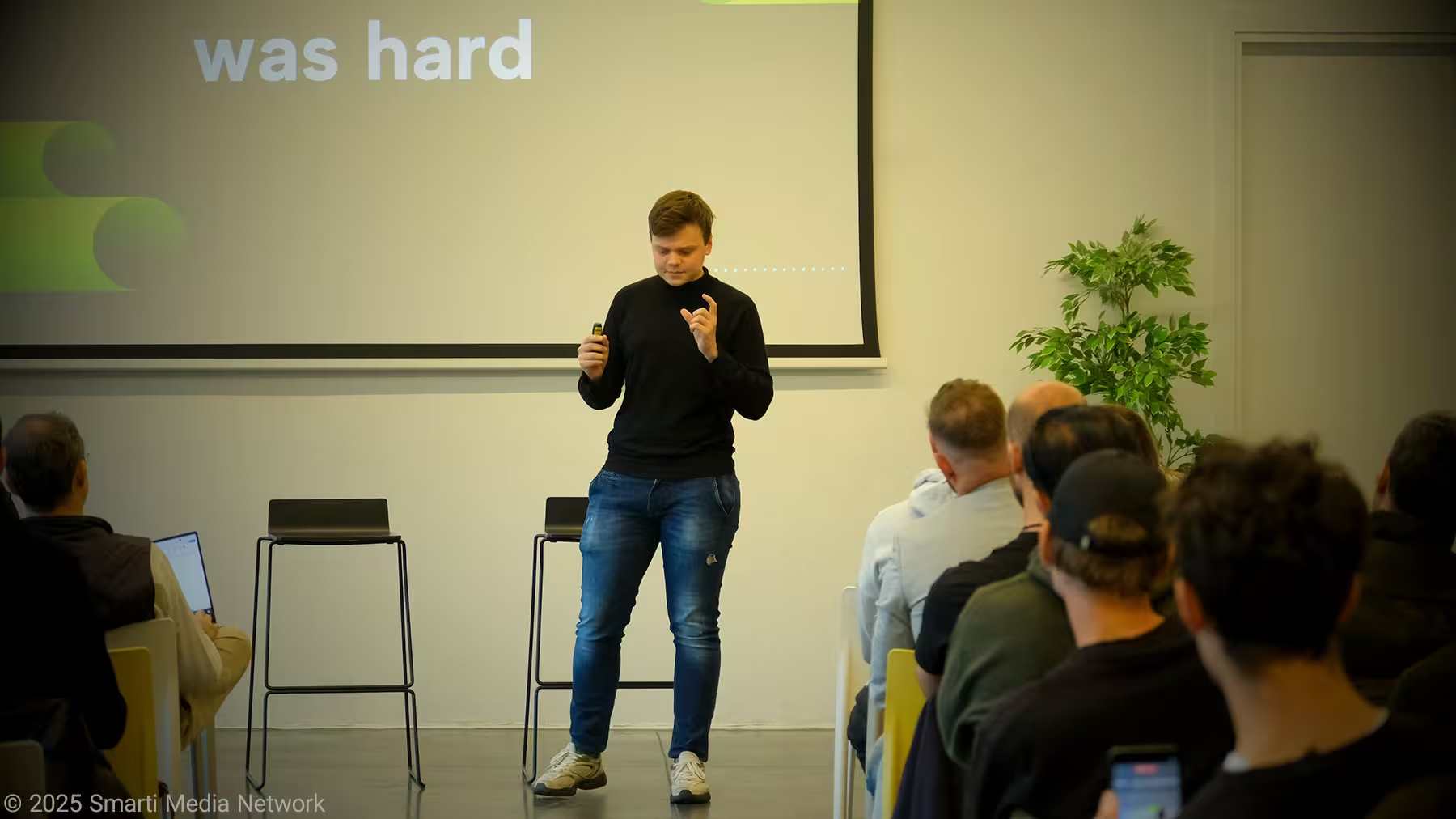
In response, he built AdGen, which automates ad creative production. Users paste a product or company URL and, in under a minute, AdGen’s AI generates ad creatives — images, layout, and copy — optimized for platforms like Google and Meta.
Beyond automation, AdGen supports customization through a conversational interface. Marketers can adjust language, design elements, or CTAs using natural-language commands, for example:
“Change the button color from blue to orange.”
The AI instantly updates the creative to reflect the request, speeding up iteration cycles and reducing dependency on design teams.
According to the founder, AdGen can make the ad creation workflow up to 85% faster compared to manual processes, making it attractive for SMEs, marketing agencies, and ecommerce teams seeking efficient creative production at scale.
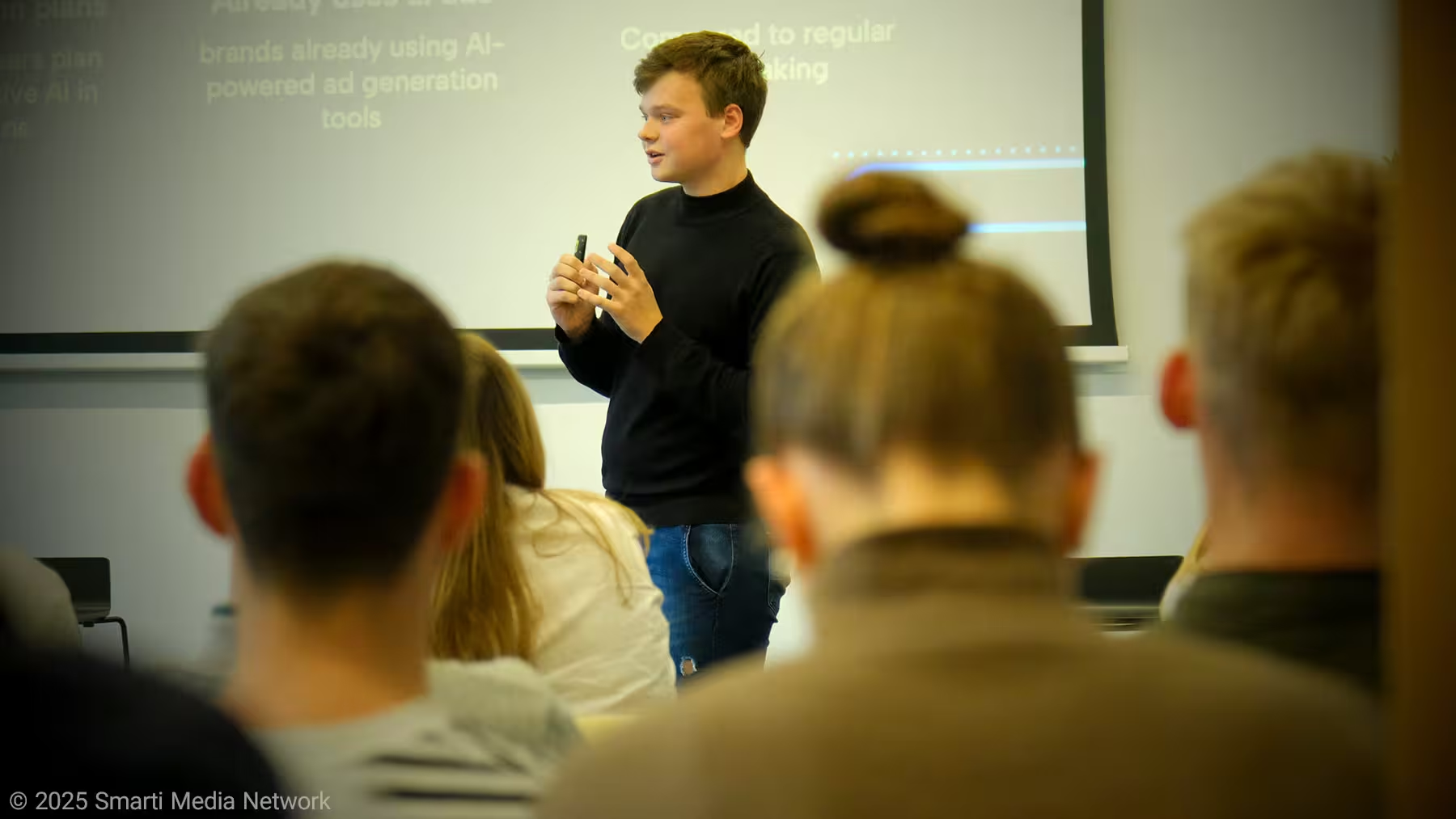
The startup is targeting a growing market for AI-generated creative tools and automation in marketing operations.
“About 90% of AI-driven companies are planning to integrate AI-generated creative tools by 2030, and more than 6,500 companies already use such technologies,” he explained.
This trend positions AdGen to capture demand from businesses that need fast, platform-optimized creatives without large design teams. In a demo, the founder showcased how the tool could produce an ad mockup for a brand like Adidas in seconds, aligning with the brand’s visual identity and marketing objectives.
AdGen’s mission is to simplify and accelerate ad creation with conversational AI, democratizing access to professional-quality marketing assets and reducing time-to-market for campaigns.
Talenme — A Global Referral Engine for Scalable Hiring
The fourth startup, Talenme, presented a recruitment-tech platform addressing the persistent challenge of attracting high-quality talent in a competitive labor market.
The founder highlighted that talent is the number one priority for any company seeking sustainable growth. In Europe, companies spend over €30 billion each year on candidate acquisition while 70% of potential hires remain passive job seekers, not actively searching job boards.
Referral hiring is often the most effective channel, but many referral programs are closed or underutilized. Talenme’s solution is to open referrals to everyone — turning external networks into scalable hiring funnels.
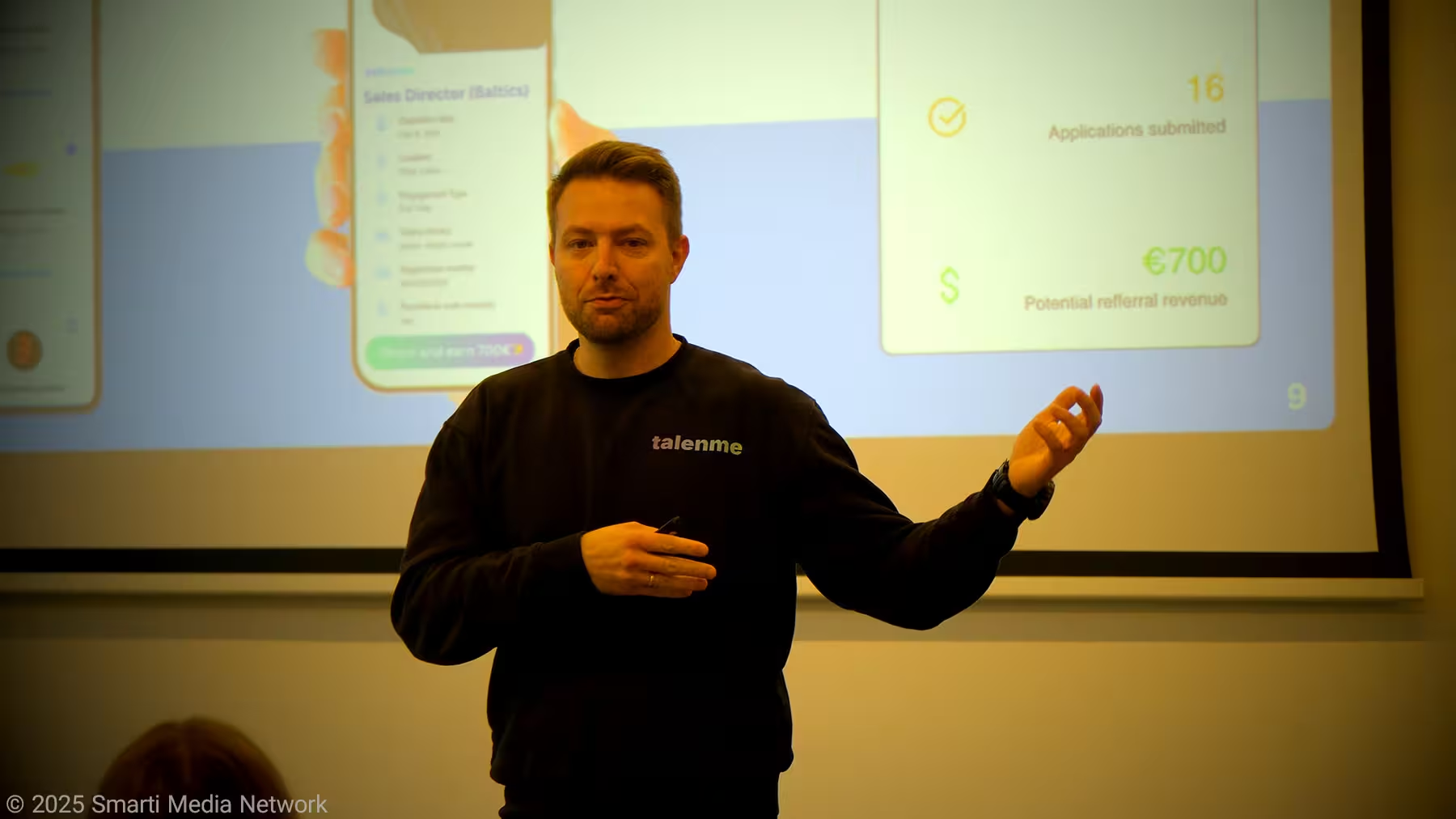
Talenme’s platform enables anyone — employees, freelancers, or friends — to become a talent scout by sharing job openings and earning a referral bonus when a referred candidate is hired. Companies can create public referral pages in about 10 minutes, allowing broad networks to discover and refer candidates for open roles at companies such as Adidas, Nike, and Revolut.
If a referred hire is successful, the referrer receives a cash reward, typically €500–€1,000 in the Baltics and up to €3,000 for international roles. The platform automates tracking referrals and managing payouts across 150+ countries, improving transparency and operational scale for global hiring teams.
Talenme’s approach helps companies reduce recruitment costs, accelerate time-to-hire, and pay only for results. Since launching in January 2024, the platform has generated over €21,000 in revenue, growing about 40% month-over-month, supported by a team with deep HR tech and product development experience.
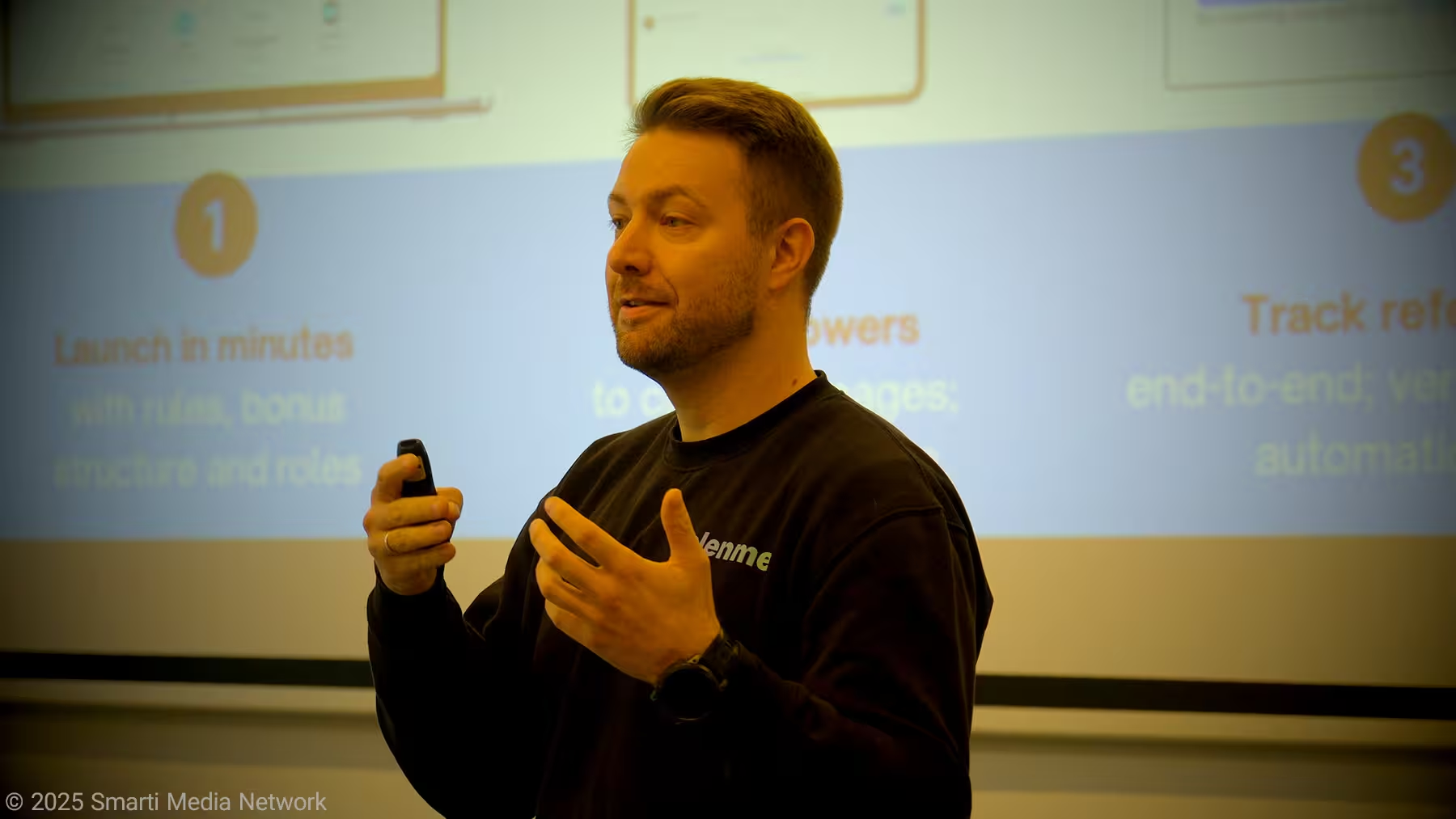
Their business model mixes predictable subscription revenue (90%) with a 10% success fee, balancing steady cash flow and performance incentives. Talenme is currently raising €250,000–€350,000 to accelerate product development and expand globally, inviting partners and investors to join in scaling community-driven recruitment.
The platform is live at talenme.com, and lists open jobs with total referral bonuses exceeding €30,000, illustrating the traction and real-world incentives driving community referrals.
NEDx — Nano Education for Micro-Moments of Learning
Closing the pitch segment, NEDx (short for Nano Education) presented a new approach to learning that leverages very short, contextual learning units to embed education into daily life.
Founder Vitali framed the problem succinctly:
“We all want to learn, grow, and improve — but most of us simply don’t have enough time or focus for traditional education.”
He noted that companies spend over $370 billion annually on learning and development, yet much of that spend fails to deliver meaningful engagement. Many programs are outdated, time-consuming, and not tuned for modern attention patterns.
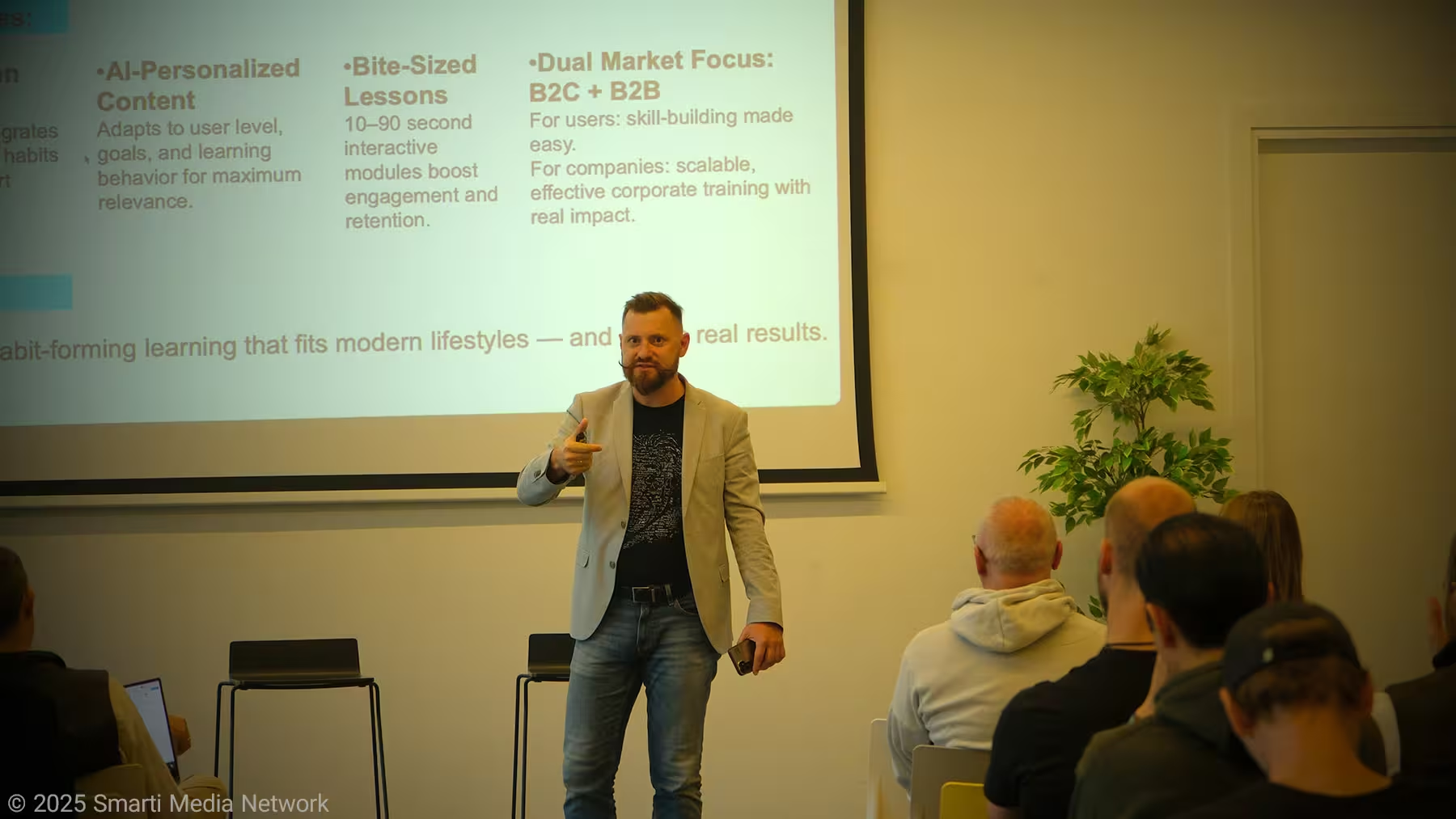
NEDx promotes "nano education" — splitting learning into tiny units that take 10 to 90 seconds to complete. Instead of blocking time for study, NEDx leverages micro-moments (like short phone checks) to deliver short, interactive prompts that gradually build competence and retention.
Users seeking to learn English, Lithuanian, or driving theory can ask NEDx’s AI assistant to generate personalized nano-lessons that identify knowledge gaps and tailor micro-tasks. Each interaction is brief, contextual, and designed for repeated exposure to boost long-term learning.
NEDx includes smart notifications that act as learning triggers rather than simple reminders. As Vitali explained, these prompts require a short interaction to dismiss, creating friction that encourages engagement and helps convert idle moments into focused practice.
“You can’t just dismiss them — to continue using your phone, you need to complete a short task or answer a question. It’s a quick, engaging way to reinforce learning.”
This behavioral design aims to make continuous learning habitual and effortless, integrating skill development into everyday routines without requiring dedicated study blocks.
NEDx is testing both B2C and B2B models and already runs pilots with eight companies. Early use cases suggest strong potential in corporate training, language learning, and personal development, while the edtech market targeted by NEDx continues to grow at over 20% annually.
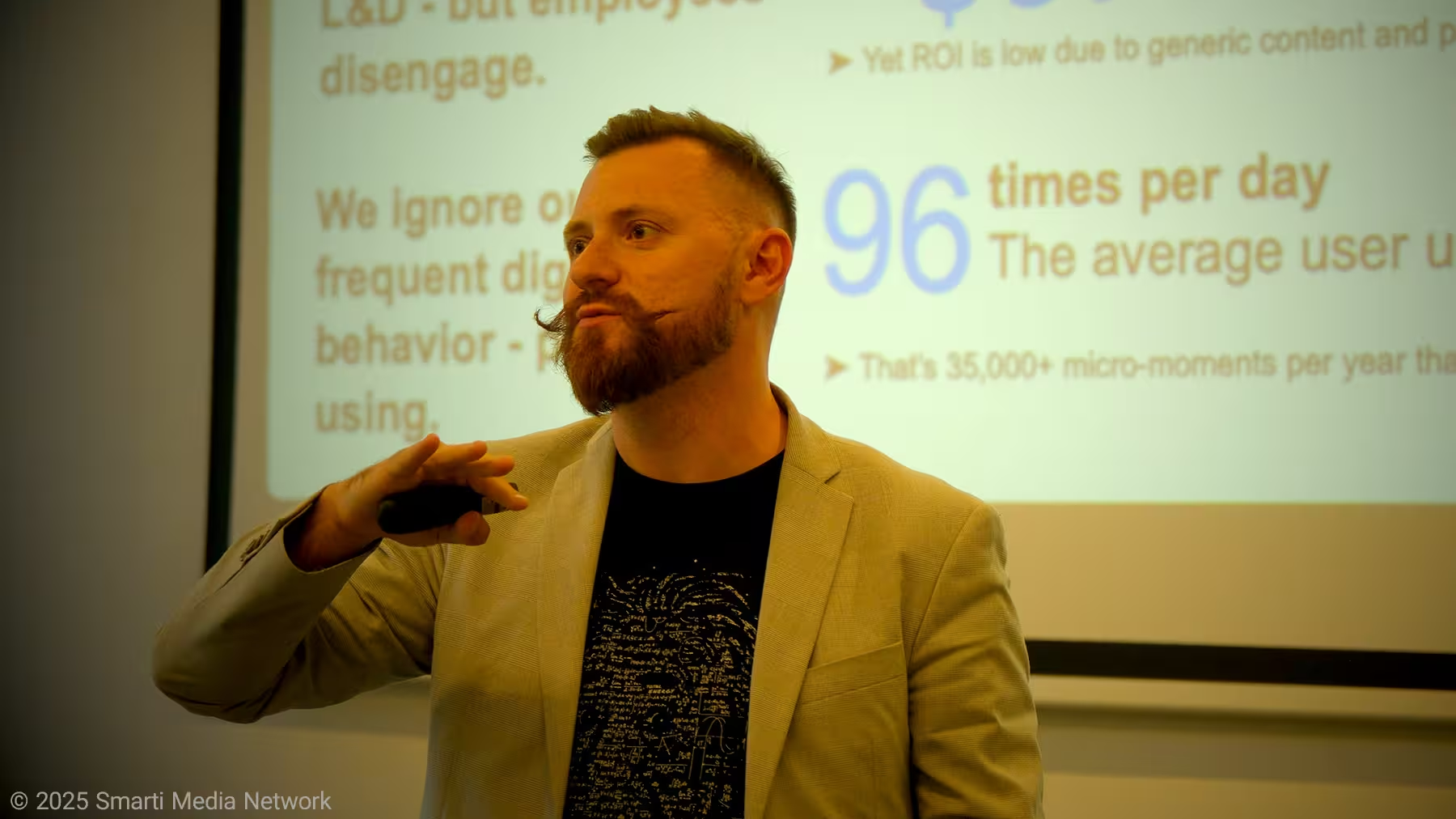
By focusing on personalized, AI-driven, and time-efficient learning, NEDx aims to redefine everyday education and offer scalable solutions for continuous upskilling in both workplace and consumer markets.
Audience Vote & Winner Announcement
After the five pitches, the audience participated in a live public vote to choose the standout startup of the evening.
When votes were tallied, SensoFarm won the public prize, securing the highest number of votes from attendees. As the winning team, they received two complimentary tickets to Startup Fair 2025, Lithuania’s flagship startup conference on October 9.
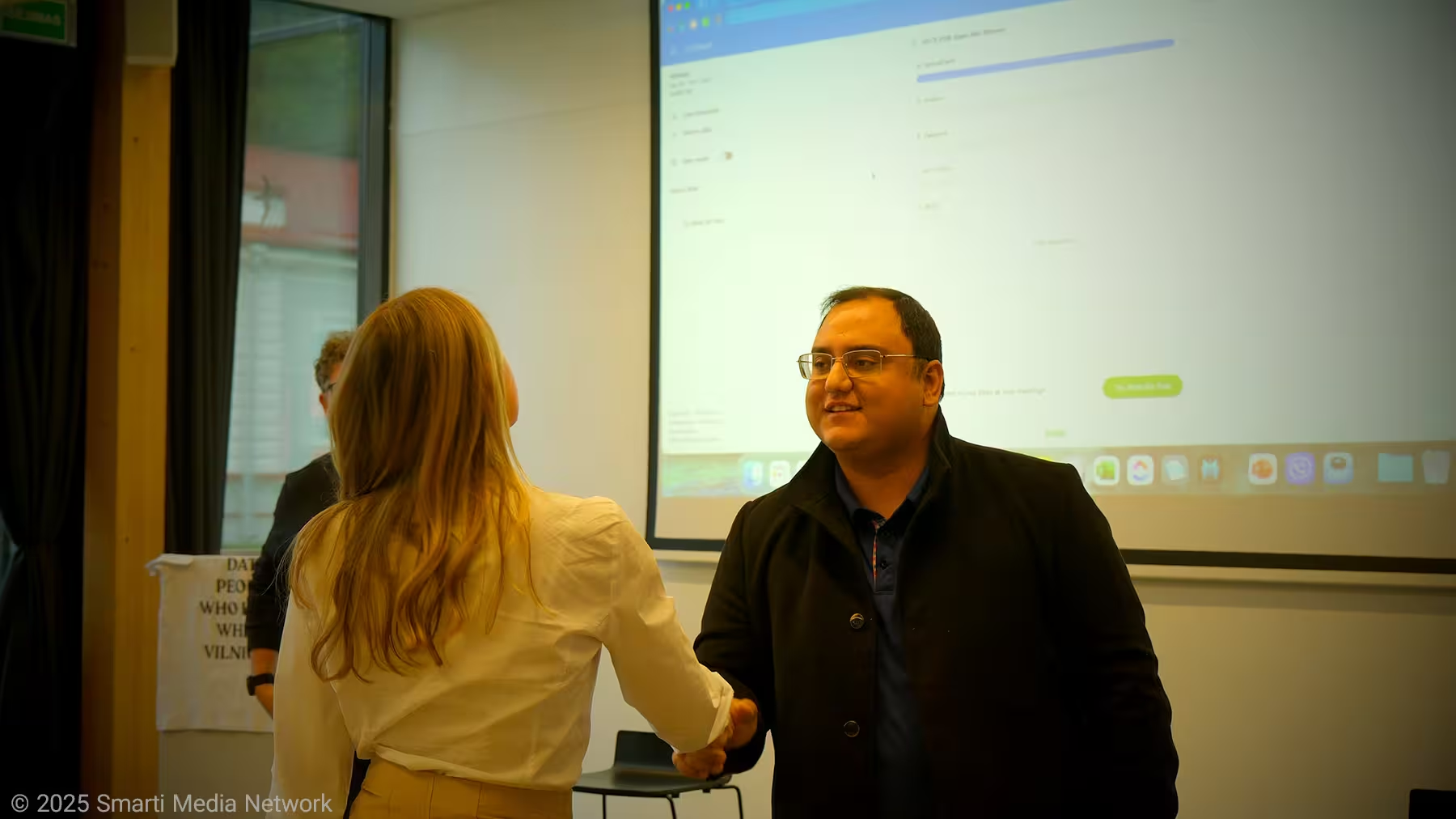
The prize was accepted by Iman Soleimani, founder of SensoFarm, who expressed gratitude to the community and enthusiasm for the opportunity to network, gain exposure, and scale pilots at the larger event.
Conclusion
Startup Meetup Vilnius 2025 reaffirmed its role as a valuable forum for Lithuania’s expanding startup ecosystem, combining inspiration, practical insights, and community-driven momentum. Attendees benefited from candid founder stories, actionable product and growth advice, and the chance to evaluate early-stage solutions across food tech, agri-tech, ad automation, recruitment tech, and edtech.
From Andrius Bičeika’s reflections on luck, culture, and execution to Karolina Urbonaitė’s call to the Startup Fair and the diverse startup pitches, the event showcased the creativity, technical talent, and ambition powering innovation in Vilnius. For founders and investors alike, the meetup underscored key themes: prioritize execution, design culture intentionally, validate through real user data, and be willing to iterate quickly to achieve product-market fit.
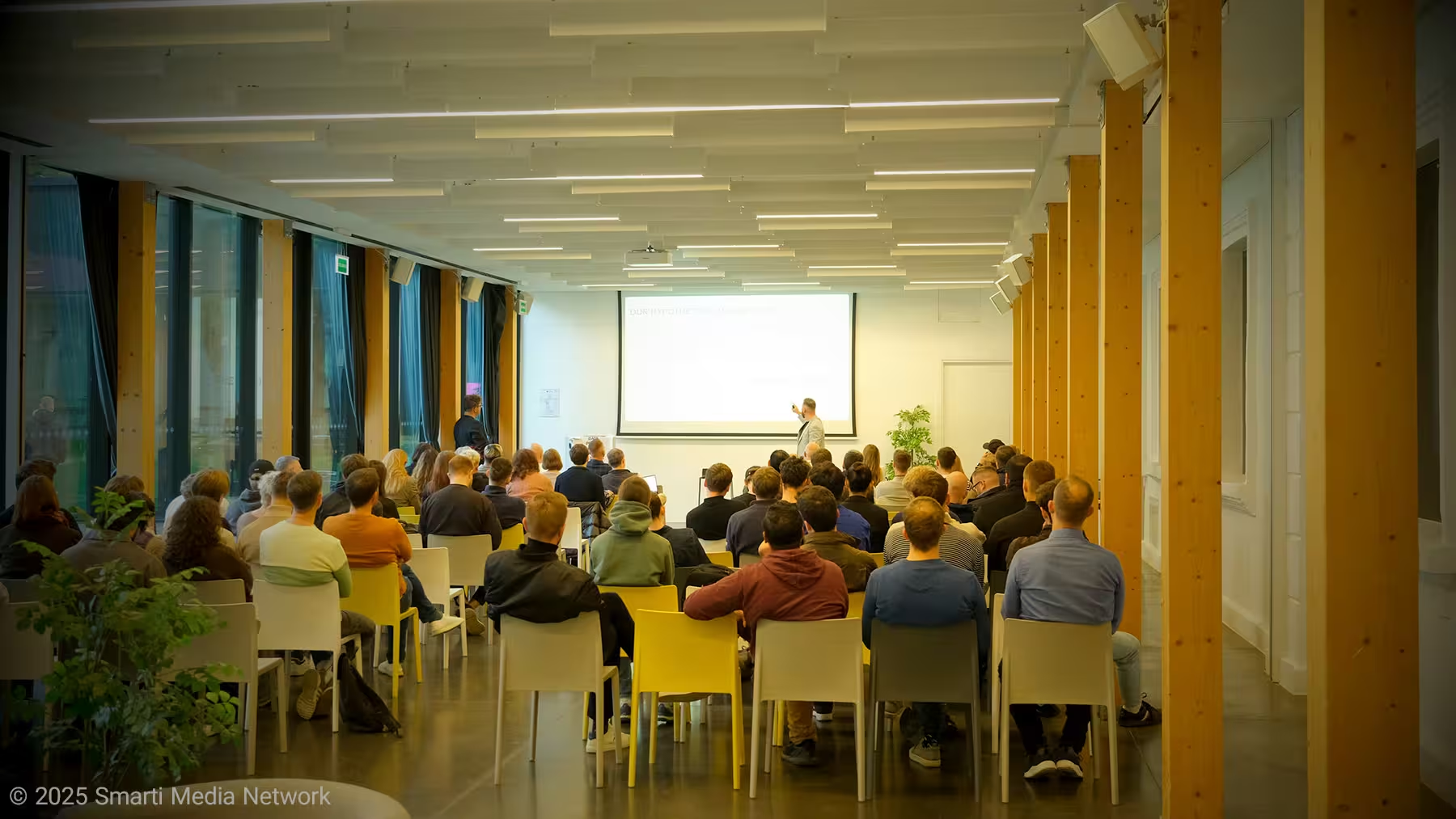
More than a single event, the evening highlighted Lithuania’s collaborative startup spirit — experienced founders sharing hard-earned lessons, new teams testing bold ideas, and the community coming together to celebrate progress and connect with investors, mentors, and service providers. Such meetups play a key role in strengthening the local startup ecosystem and positioning Vilnius as a regional hub for innovation, startups, and technology-driven entrepreneurship.
As attendees moved into networking, one sentiment kept recurring across conversations:
Keep building, keep learning, and keep showing up.
In a community that thrives on shared effort and consistent action, every small spark can grow into the next significant venture success.

“Some times I write about breakthrough startups, digital ecosystems, and how innovation is changing the way we build businesses.”

Discussion
Leave a Comment