
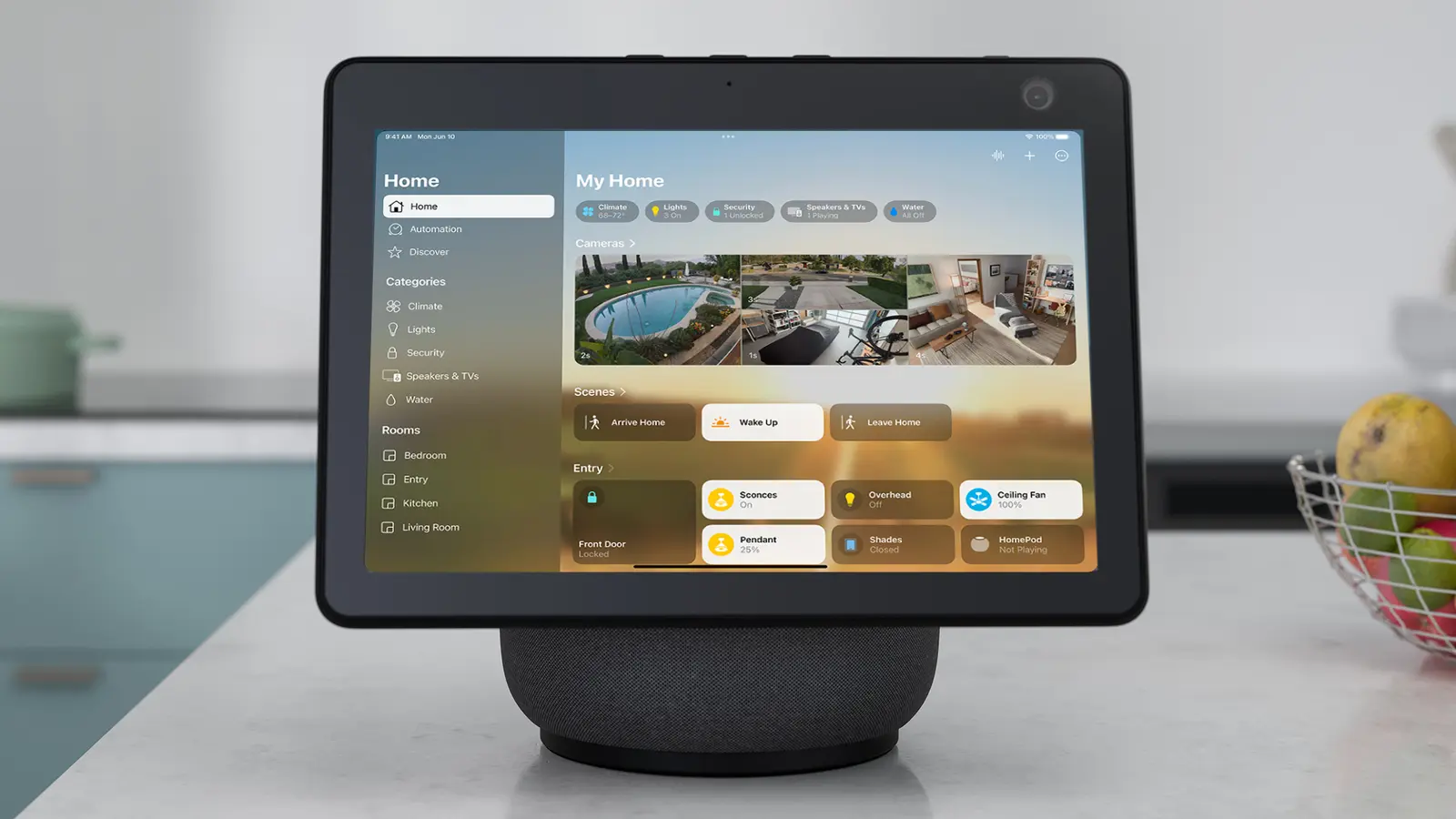
Imagine a HomePod that looks back. That seems to be Apple’s plan, according to Bloomberg’s Mark Gurman: a Home Hub arriving as early as October or slipping into early next year, and it’s being sold on one big idea—a smarter Siri paired with a touchscreen.
The device is essentially a HomePod with a 7-inch display. But Apple isn’t just slapping a panel on a speaker. The company is building a fresh software layer rooted in tvOS, but with visual and interaction cues borrowed from watchOS and iOS. Expect a grid of icons, tappable widgets and apps, plus customizable clock faces that make the device feel personal rather than generic.
How Apple wants the Home Hub to live in your rooms
Think multiple units. On a table. On a wall. In the kitchen and the living room. Apple expects people to buy more than one and to place them around the house. It will ship in tabletop and wall-mounted versions so placement is flexible, and the interface adapts as you move: UI elements scale up when you approach, shrink when you walk away.
Built-in cameras and facial recognition are core features. The Home Hub will identify who is speaking and surface tailored information for that person. Incoming FaceTime calls will use the display. The Hub will also function as a security monitor and an intercom when several units exist in the same home. The aim is convenience without forcing users into a single central screen.
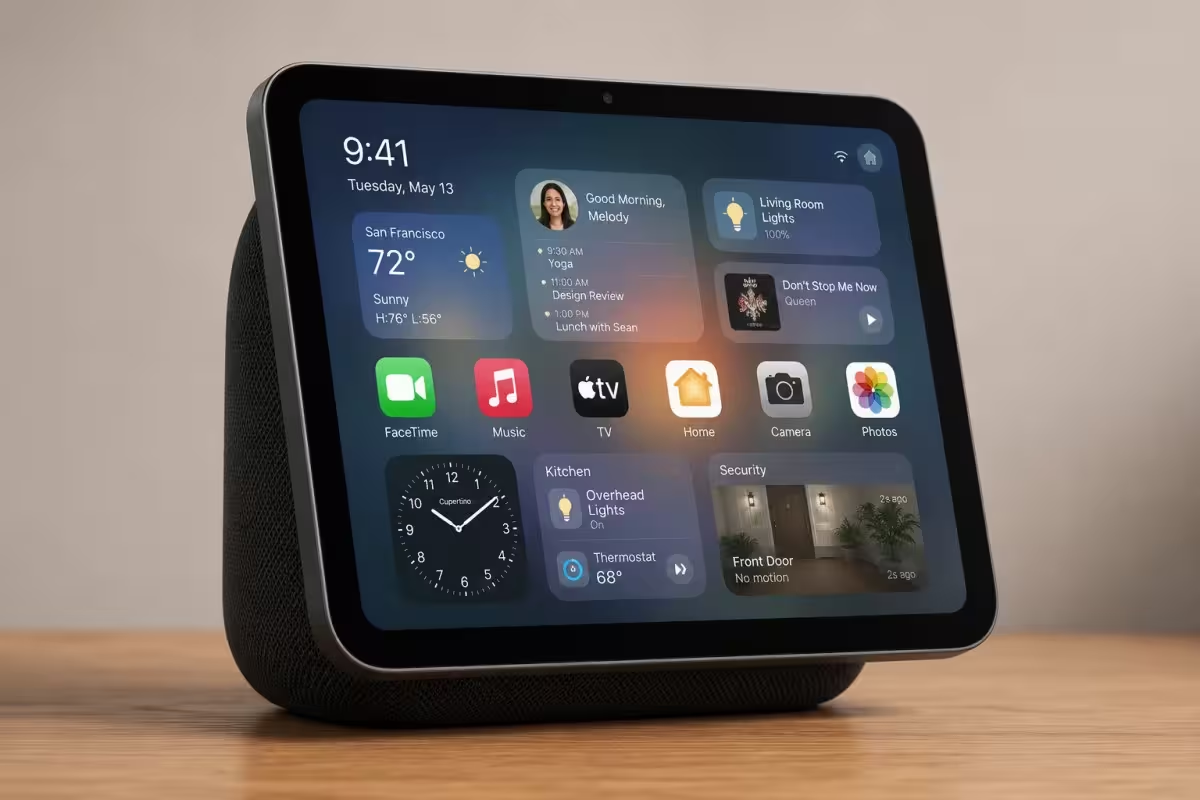
Apple is betting that combining a screen, smarter Siri, and presence-aware sensors will turn a speaker into the household nerve center.
There are hints of bigger ambitions down the road. Gurman reports an enhanced model in development with a 9-inch display and a small robotic arm that moves the screen to capture more people or objects during FaceTime calls. It sounds futuristic, yes. But it also signals Apple is thinking beyond a static tabletop device.
Beyond the Hub itself, Apple is said to be working on several other connected-home updates: an in-home security camera designed to compete with Amazon’s Ring, a refreshed Apple TV set-top box, and an upgraded HomePod mini. The Apple TV and the new HomePod mini are reportedly planned for release this fall, while the Home Hub’s window spans October into early next year.
The real question is whether consumers will embrace a speaker that watches and personalizes, or whether privacy concerns will limit adoption. Apple has long positioned itself as privacy-forward, so details on on-device processing and how facial data is handled will matter.
Either way, the Home Hub marks a clear shift in how the company sees the smart home—less a collection of gadgets and more a network of attentive surfaces. If Siri truly gets an AI upgrade, the device could change how people interact with everyday tasks: quick face-aware reminders, seamless room-to-room handoffs, and video calls that feel less boxed in.


“I love exploring gadgets, apps, and trends that redefine how we connect, work, and play in a digital world.”

Discussion
Leave a Comment
Comments (2)
Wild! A HomePod that watches, personalizes and follows you around? kinda futuristic but also lowkey creepy, not sure yet
Is Apple really putting cameras in every room? privacy concerns big, but home automation could get neat. hoping face data stays on device tho