
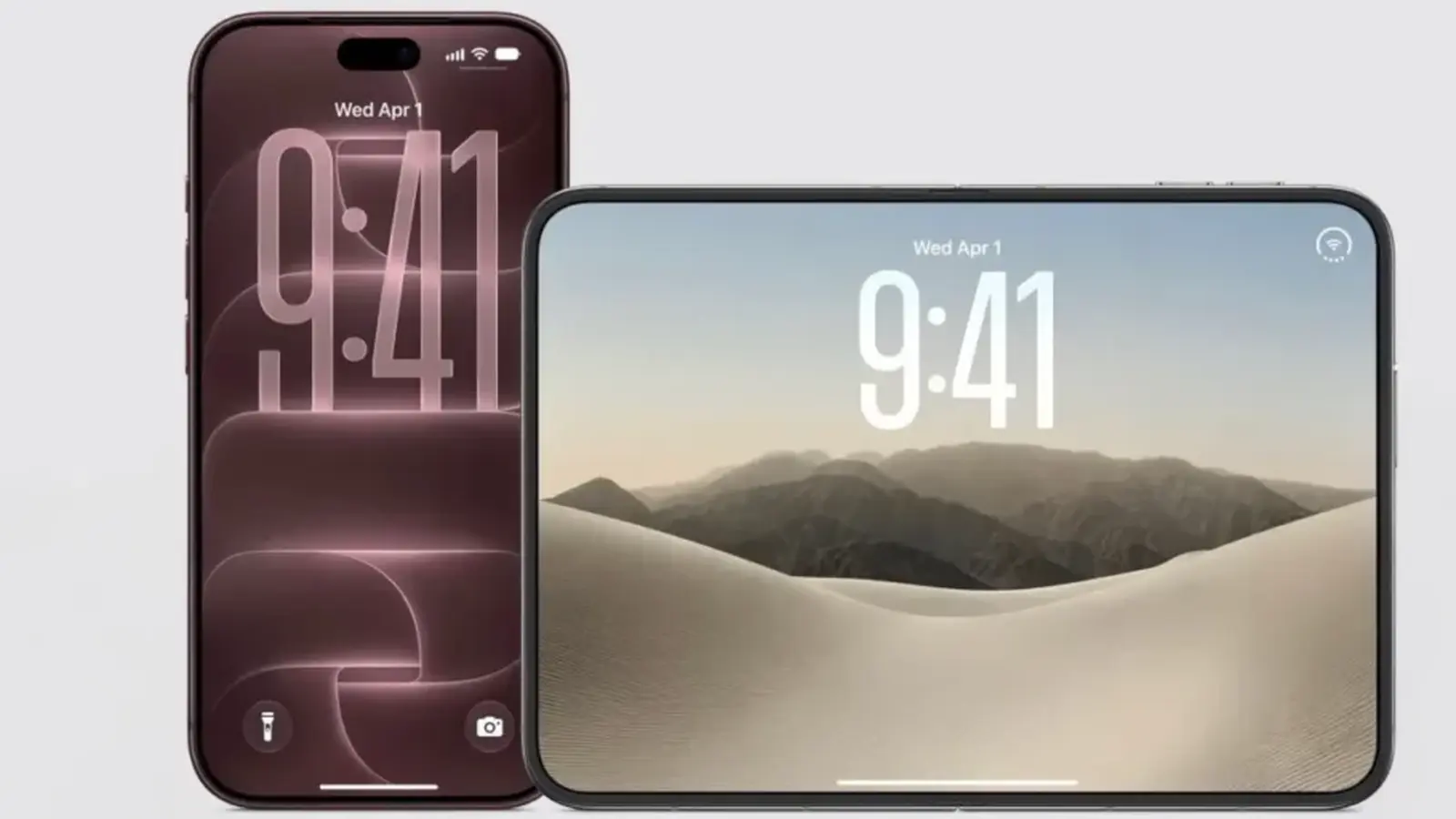
Apple has waved a very visible flag about battery life this year. The company calls the gains in the new lineup the biggest jump in iPhone battery life ever. Bold claim. But the numbers they shared are specific, and they reveal a clearer picture when you line models up next to one another.
The numbers Apple wants you to notice
Apple uses online video playback as a headline metric. By that yardstick, the iPhone 17 Pro handled up to 30 hours, while the iPhone 17 Pro Max reached 35 hours. The iPhone 18 Pro rises to 33 hours — roughly a 10 percent bump. The 18 Pro Max moves from 35 to 40 hours, about a 14 percent increase. Those are tidy gains on paper.
There’s a second, newer metric Apple introduced to capture everyday patterns: messaging, photography, gaming, browsing and so on. Under this blended test, an iPhone 18 Pro Max with eSIM can run up to 30 hours, and the 18 Pro up to 24 hours. Important nuance: those numbers apply to eSIM-only models like the US variants. International phones that still ship with a physical SIM slot lose around two hours in the video-playback test according to Apple.
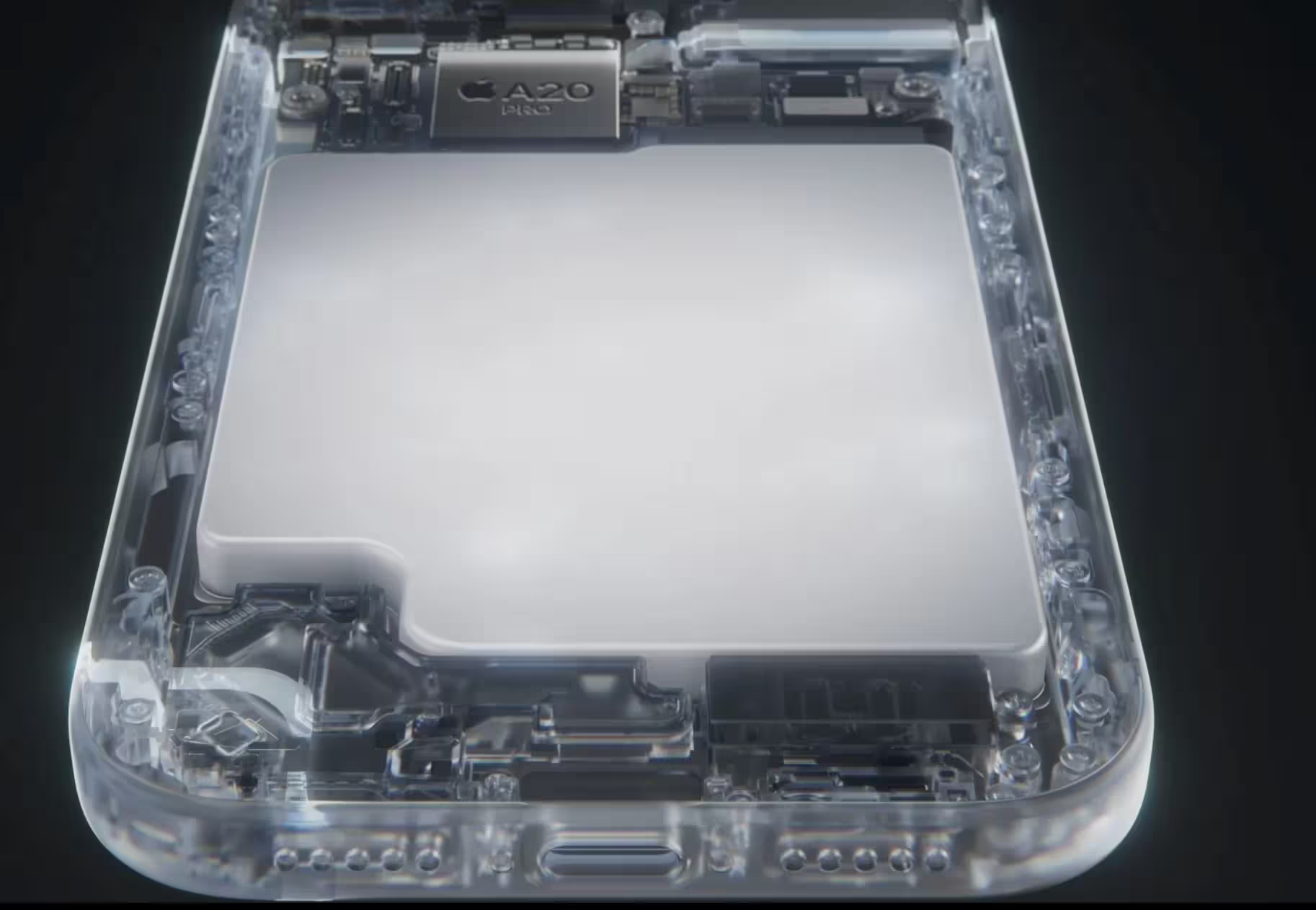
What’s powering the change? Three things, per Apple: a redesigned internal battery layout, efficiency wins from the A20 Pro chip, and software-level power optimizations. Each plays a role. The battery hardware buys bulk. The chip brings smarter, leaner consumption. Software ties it together with scheduling and background restraints. Still, laboratory metrics are one thing; daily life is another. Real-world testing will tell us how those gains translate when you push a camera, a game, or a heavy multitasking day.
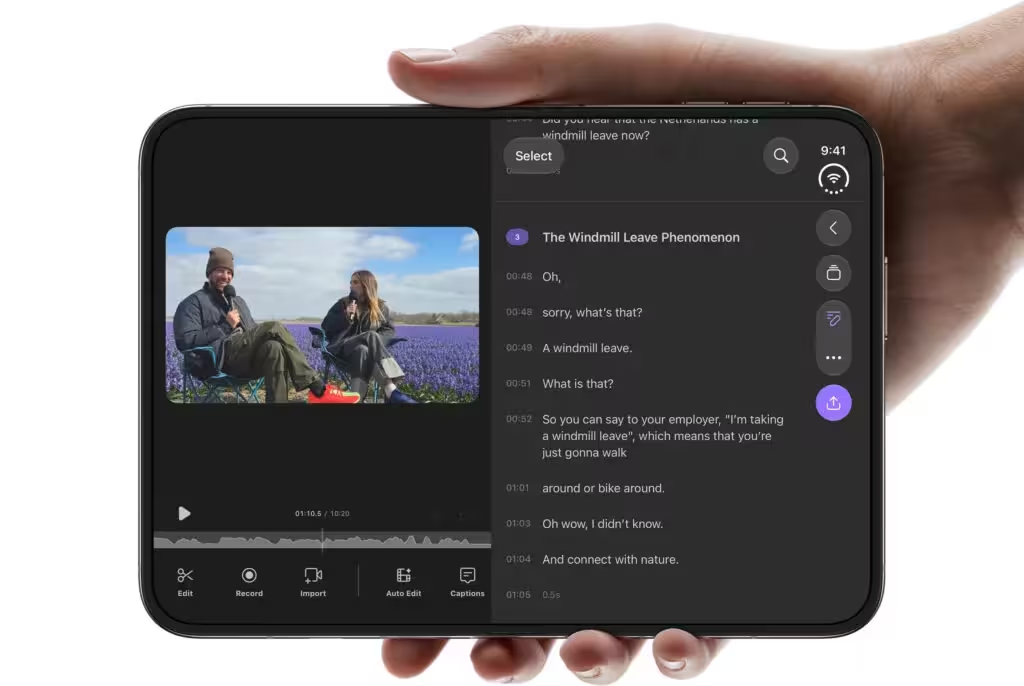
And then there’s the iPhone Duo — Apple’s first foldable. It carries two battery cells placed in each half of the chassis. It also powers two screens: a large internal 7.8-inch panel, which is the biggest display Apple has ever put in an iPhone, and a smaller external panel. The Duo’s dual-cell approach and foldable form factor create a different trade-off profile.
Apple’s claims for the Duo are intriguing. With the internal display in active use, the phone can apparently deliver about 26 hours of online video playback. Switch to the outer display and that figure climbs to roughly 37 hours. Put bluntly: heavy internal-display users should expect battery performance close to the older iPhone 17 Pro. Lighter use, or relying on the external screen, pushes endurance into Pro Max territory on paper.
So what should buyers actually expect? If you prioritize raw screen time and long stretches away from a charger, the 18 Pro Max still looks like the endurance champion. If you want a smaller Pro with a real improvement over last year, the 18 Pro’s roughly 10 percent gain is meaningful. For early adopters of the Duo, the verdict depends on how much you use that massive internal panel; the foldable’s dual-cell design delivers decent stamina, but it’s not a clear win across every scenario.
Timing matters too. iPhone 18 Pro preorders begin this weekend. The Duo won’t arrive until October 23, so reviewers and long-term testers will get more time to map out real-world usage curves. Until then, treat Apple’s figures as a roadmap rather than a final destination.
One last point: battery claims are important, but they rarely tell the whole story. Display brightness, 5G use, background refreshes, and whether your phone uses an eSIM or a physical SIM will nudge those numbers up or down. The best approach is simple: wait for independent tests, then match the results to the way you actually use a phone.

“I cover emerging technologies, digital innovation, and the intersection of tech and everyday life. My goal is to make complex trends accessible and inspiring.”

Discussion
Leave a Comment
Comments (2)
Solid step forward, 10-14% gains are real enough for me. The Duo tho depends on how you use that big inner screen. Waiting on reviewers, brightness and 5G will kill numbers
Those numbers smell like PR... eSIM only models get +2 hrs? Duo 26 hrs with inner screen? Feels optimistic, wait for real tests, not just lab fluff