
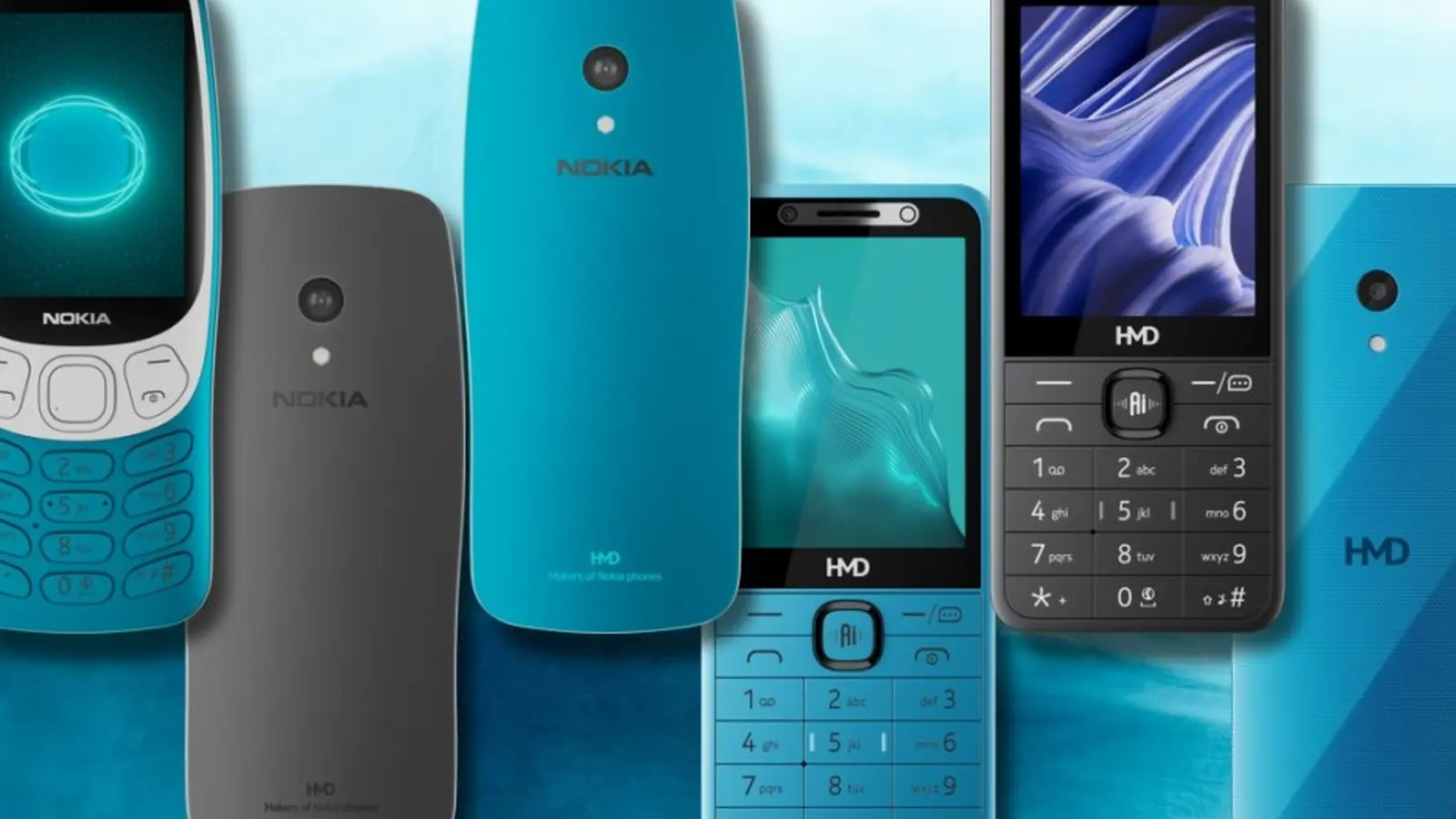
A familiar phone has reappeared with a different name under the screen. At a glance, nothing has changed: same curves, same AI button, same plastics. But where you once saw Nokia, there is now an HMD logo. It feels small. It matters a lot.
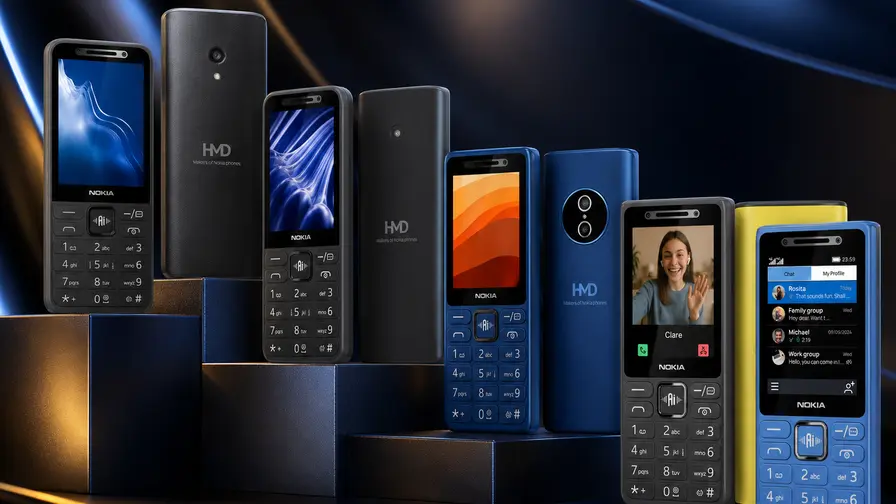
An online retailer has just listed the HMD 215 4G and HMD 235 4G. The listings match the Nokia 215 4G (2026) and Nokia 235 4G right down to the dedicated AI key and trim. The only visible tweak is the brand printed under the display, even though HMD branding was already present on the phones' backs.
 |  |  |
Same electronics, different lettering
There is a third model in the mix. The HMD 3210 shows up in Scuba Blue and Grunge Black on the retailer site; earlier sightings had it wearing FC Barcelona colors. Oddly, the product image still shows a Nokia badge while the listing calls it HMD 3210. That mismatch tells a clearer story than any spec sheet: these are rebadged devices, not redesigns.
Why do this? Simple: licensing and territory rules. HMD Global holds rights to build Nokia-branded feature phones, and that license was recently extended by three years. But the extension appears to be patchy — valid in some regions, restricted in others. Where the Nokia name can’t be used, HMD seems to be swapping in its own mark and keeping the rest unchanged.
 |  |  |
For buyers, the result is confusion more than innovation. You get the same hardware, the same software behavior, and the same little AI button that manufacturers are betting will sell feature phones to a modern audience. But the brand story changes depending on where you live.
Models showing up under HMD on retailer pages include:
- HMD 215 4G (same as Nokia 215 4G, 2026)
- HMD 235 4G (same as Nokia 235 4G, 2026)
- HMD 3210 (color variations echo earlier Nokia launches)
There’s a strategic logic here. Rebadging reduces packaging and marketing friction when rules vary by country. It keeps shelf presence consistent without the cost and delay of redesigning hardware. But it also chips away at the neat narrative customers expect: are these Nokia phones, or are they HMD phones pretending to be Nokia phones? The line is blurring.
 |  |  |
The practical takeaway is straightforward: identical devices are being sold under different badges depending on region, and that patchy licensing is the likely cause.
Ultimately this is less about new products and more about brand management in a fragmented market. If you care about which name sits below the screen, check local listings. If you care about what the phone does, compare specs. Both routes will lead you to the same hardware — just with a different emblem on the front.

“I cover emerging technologies, digital innovation, and the intersection of tech and everyday life. My goal is to make complex trends accessible and inspiring.”

Discussion
Leave a Comment
Comments (1)
Wait so they just slap HMD under the screen and call it a day? Feels like legal patchwork, not a proper launch. Why not just say it?