
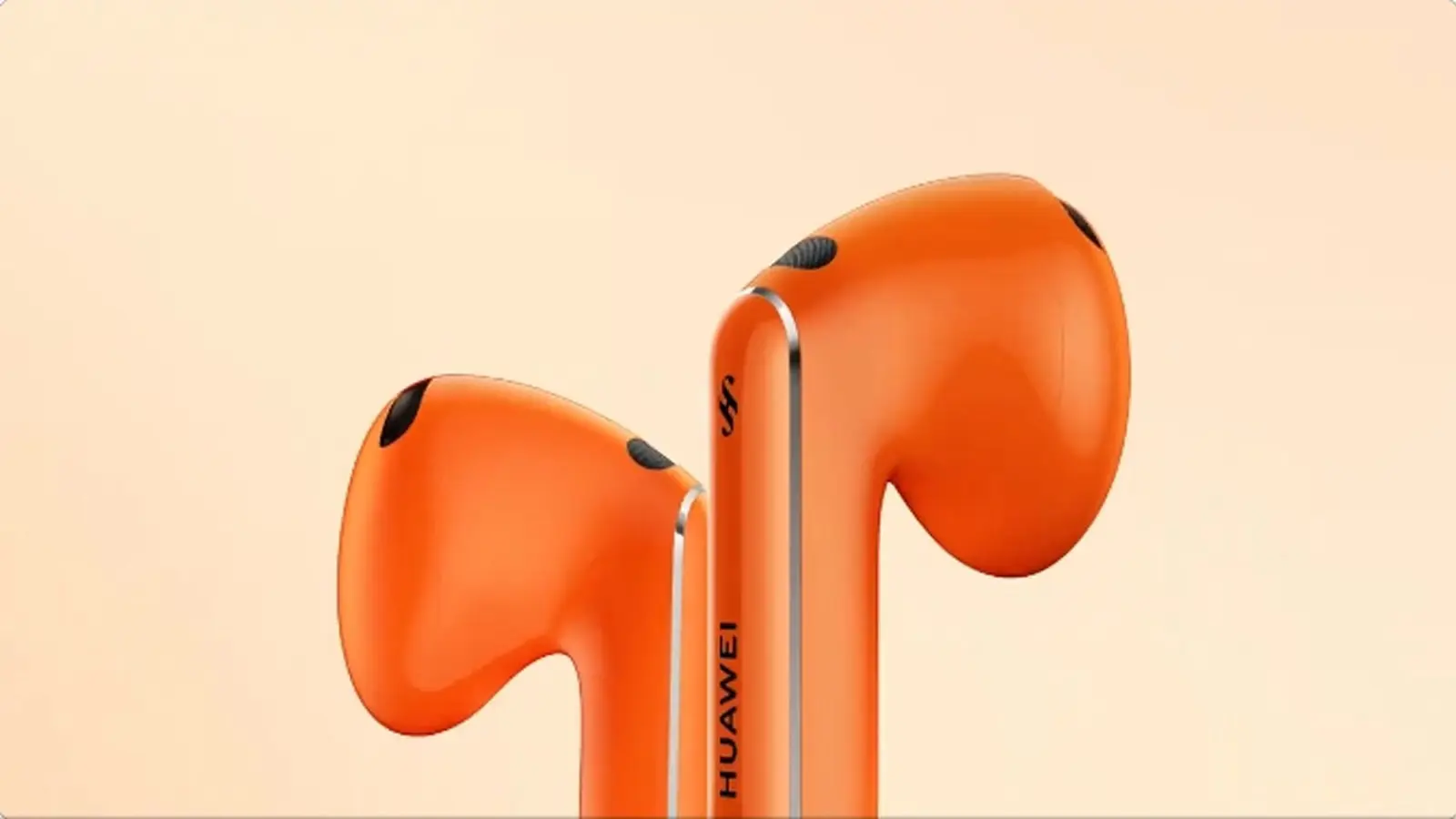
Picture this: a packed commuter train, a nearby construction site, and your phone call coming through like you are in the same room. That’s the promise Huawei is selling with the new FreeBuds 7, unveiled alongside HarmonyOS 7 and the Mate XT 2. The company says the buds balance aggressive noise suppression with a lightweight, semi-in-ear fit that won’t jam your ears but will still block the chaos around you.
Small design, heavy-duty audio smarts
At the heart of the FreeBuds 7 is Huawei’s third-generation audio AI chip. The company claims this silicon doubles the computing power of the previous model and can sample ambient noise as often as 400,000 times per second. Latency for noise processing drops to just 8 microseconds, which Huawei says translates into a much deeper and wider noise reduction footprint compared with its last generation.

Numbers the company cites are eye-catching: an average noise reduction depth that’s 230 percent better and a noise reduction bandwidth roughly 275 percent wider. What does that feel like? Less hiss, fewer sudden intrusions, and a smoother background whether you’re in a cafe or a crosswalk.
Calls are another focus. The FreeBuds 7 support what Huawei describes as 100 dB two-way silent calls, a feature designed to keep voices clear even in loud environments. The earbuds use a semi-in-ear silhouette rather than a deep canal seal. Each bud weighs only 4.3 grams, and Huawei says the center of gravity has been nudged 17 percent inward to improve stability and comfort during long listening sessions.
- Price: €130
- Earbud weight: 4.3 g per bud
- Noise sampling: up to 400,000 times/sec
- Processing latency: 8 microseconds
Huawei also trimmed the charging case, calling it 25 percent smaller and 17 percent lighter than the previous design, which makes pocketability a genuine upgrade rather than a marketing line.
An AI whisper that watches and adapts
Beyond raw silicon, the FreeBuds 7 lean on a new AI perception noise reduction algorithm that runs persistently in the background. It monitors your surroundings, the contours of your ear, and how the earbuds sit more than 10,000 times per second. Huawei says algorithm convergence is now 750 percent faster, which suggests the buds will recognize and react to changing acoustic environments more quickly than before.

All of this points toward a pair of true wireless earbuds aimed at people who put call quality and adaptive noise control high on the checklist. Huawei’s approach isn’t just louder specs; it’s a push to make on-the-go listening feel less like a compromise between comfort and performance.
Are these the earbuds to replace your current pair? If you prize clear voice calls in busy places and want a lightweight fit, the FreeBuds 7 are worth considering. For audiophiles chasing the deepest passive isolation, the semi-in-ear form factor still won’t mimic an in-ear seal, but it does offer a different balance of comfort and situational awareness.
Huawei’s pitch is confident: smarter processing, faster adaptation, and a lighter case. Whether the real-world experience matches those claims will depend on software tuning and how these earbuds perform across the messy variety of everyday soundscapes.


“I love exploring gadgets, apps, and trends that redefine how we connect, work, and play in a digital world.”

Discussion
Leave a Comment
Comments (2)
Nice try Huawei. Lighter case and faster AI sound promising, but semi-in-ear = less passive bass, wind noise maybe worse. Want a hands-on ASAP
Is this even true? 400k samples/sec sounds wild curious about battery drain and real-world calls. Specs hype vs actual use...