
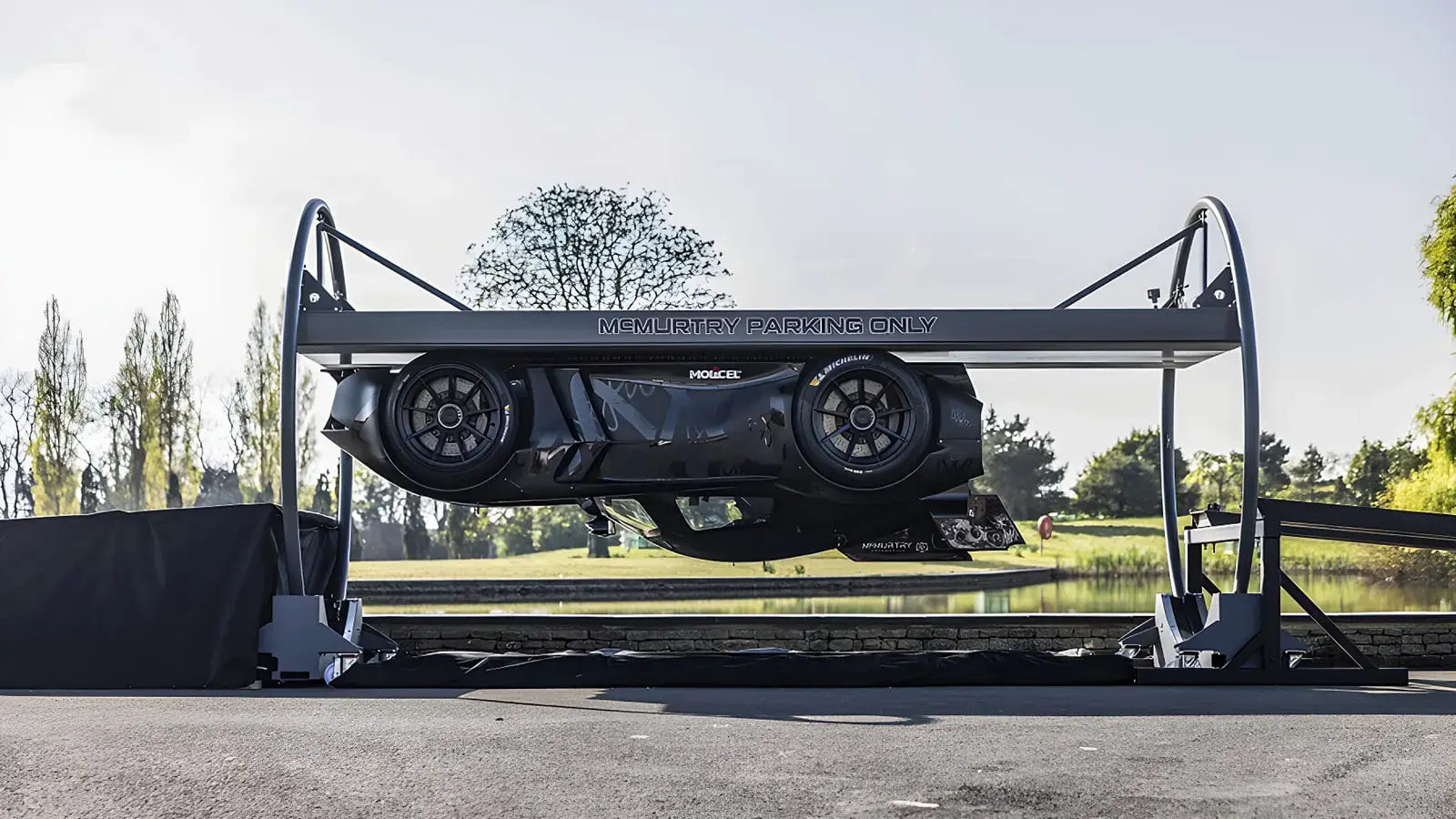
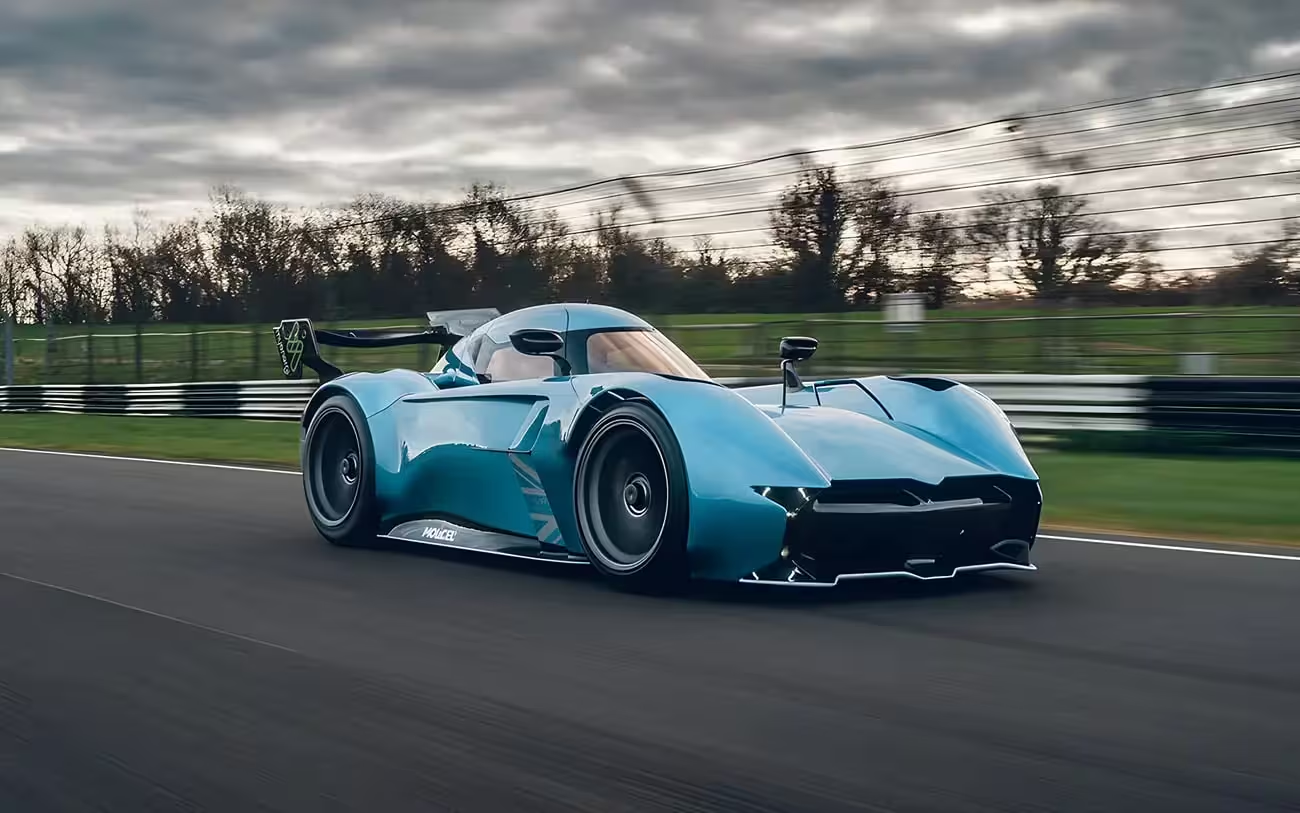
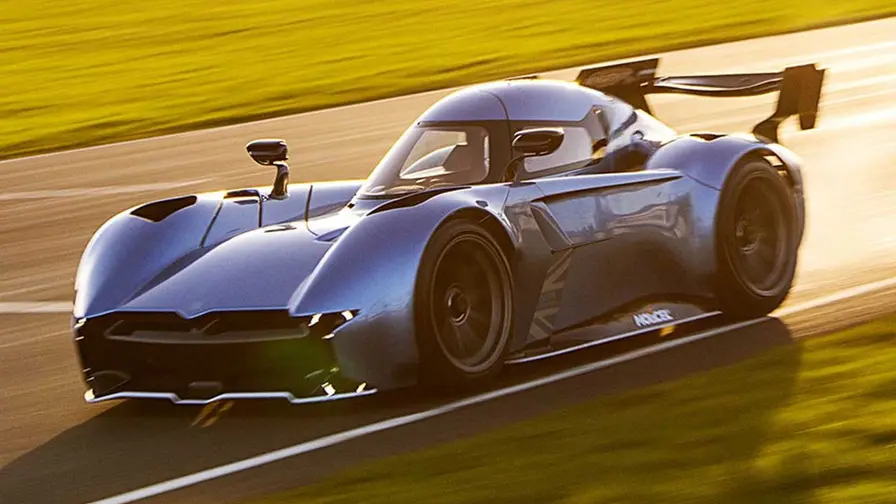
McMurtry has shown that aerodynamic downforce need not depend on speed. Using two high-speed fans, the British electric hypercar Spéirling produced enough suction to stick to a surface and, in a controlled demonstration, run inverted across a ceiling.
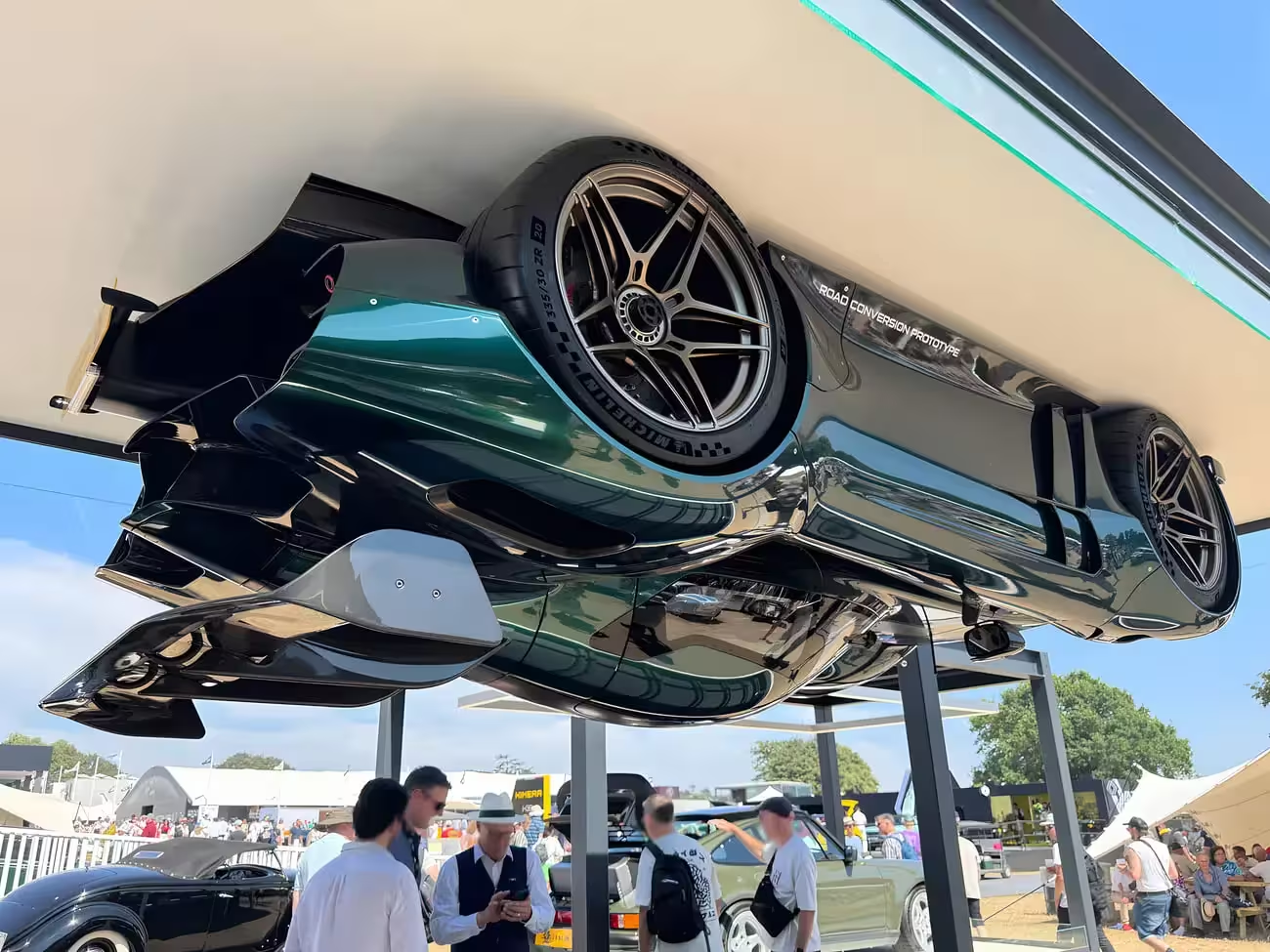
According to McMurtry, the twin fans sit behind the driver and can spin at up to 23,000 rpm. They extract air from beneath the car through engineered ducts and vents, dropping pressure under the body and creating a measurable downward force even when the car is stationary.
How the fans stick the car to the surface
In conventional race cars, most downforce comes from wings, diffusers and the airflow generated by motion. That makes aerodynamic grip a function of speed; slower speeds mean less downforce. McMurtry avoided that constraint with what it describes as a downforce-on-demand system built around two rapid-speed fans that pull air from the underfloor and route it out through exit paths around the bodywork.
The underbody itself is shaped to make that suction more effective, so the Spéirling does not rely on forward motion to generate grip. The manufacturer states the fans can produce roughly the equivalent of 2,000 kg of downward force, a figure greater than the car's own weight. That margin is what allowed the Spéirling to remain inverted and move while attached to a ceiling.
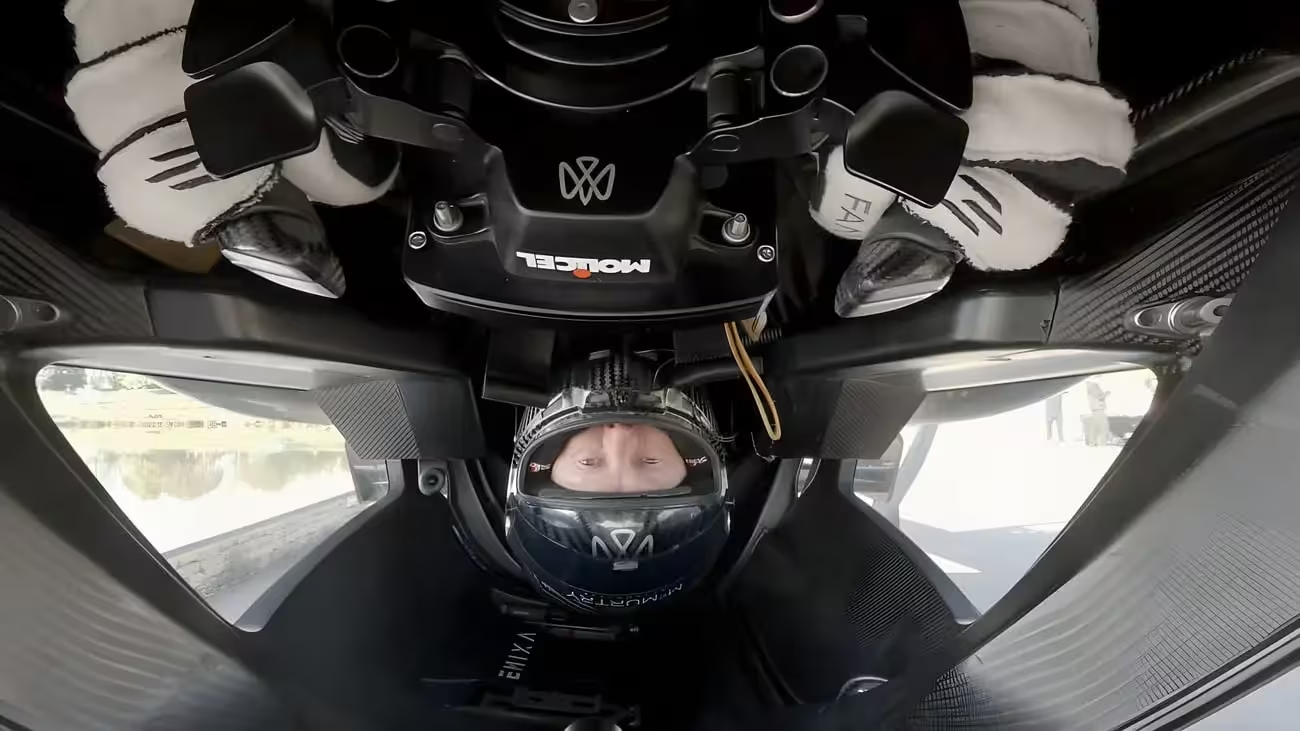
McMurtry demonstrated the effect in April 2025. The Spéirling drove up a ramp onto a rotating platform that flipped the car fully upside down. Once the fans produced sufficient negative pressure beneath the car, the driver was able to move the vehicle a short distance along the inverted surface without external straps or supports. The test illustrated that the system can overcome gravity at standstill, not just when the car is in motion.
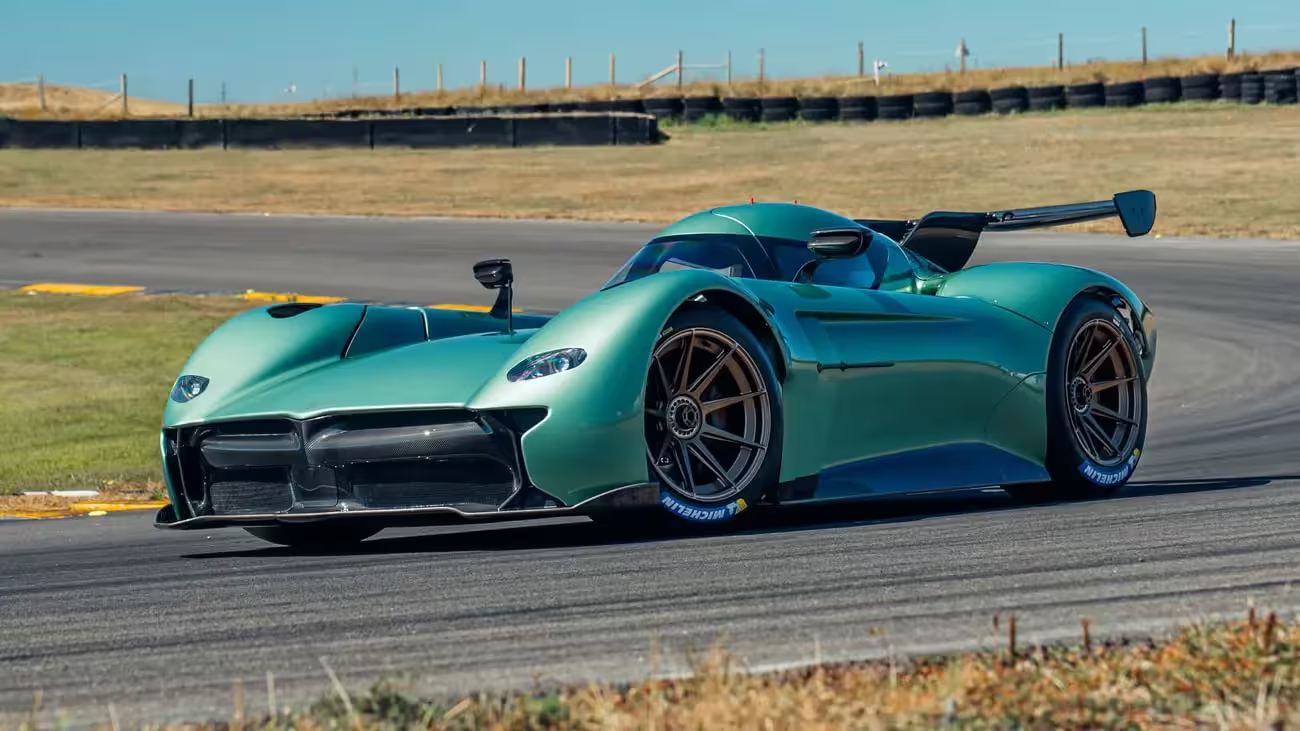
Practical benefits of the technology are most apparent on track. Downforce available at low speeds can increase tyre contact and allow higher cornering speeds and improved braking stability without requiring the car to first accelerate. The roof-driving stunt is largely a demonstration of the fans' capability; McMurtry notes the system needs an appropriate surface and controlled conditions and does not mean the car can climb arbitrary walls or ceilings.
The April 2025 inversion test, in which the Spéirling drove a short distance across a ceiling without external restraints, is the latest public demonstration of McMurtry's fan-based downforce claims.

“Cars are evolving faster than ever. I cover electric vehicles, smart mobility, and the future of transportation worldwide.”

Discussion
Leave a Comment
Comments
No comments yet. Be the first.