
Imagine starting a Windows machine that feels like it was built for coding. No distractions. No extra menus. Just tools and a clear path to work. That is the promise behind Microsoft's Project Zenith.
Unveiled as part of Microsoft's effort to make Windows friendlier to developers, Project Zenith presents a streamlined edition of Windows tailored for high-end developer rigs. The company describes it as "ready-to-code and distraction-free," aimed at systems with 64 GB of RAM and very high memory bandwidth. The first devices to ship with Zenith will be AMD's Ryzen AI Halo mini-desktop, with more hardware partners expected to follow.
Built for local AI — and a different workflow
At the heart of the announcement is a clear shift: Microsoft is leaning into local AI. According to Logan Eyer, a senior Windows platform executive, Project Zenith will let developers run models with more than 30 billion parameters locally without arbitrary consumption limits. That opens the door to experimenting with larger machine-learning models on your own machine, rather than always relying on cloud services.
The trade-off is obvious. To run these models comfortably you need beefy hardware. Lots of memory. Fast memory channels. And a desktop that can keep up. Project Zenith is designed around that reality.
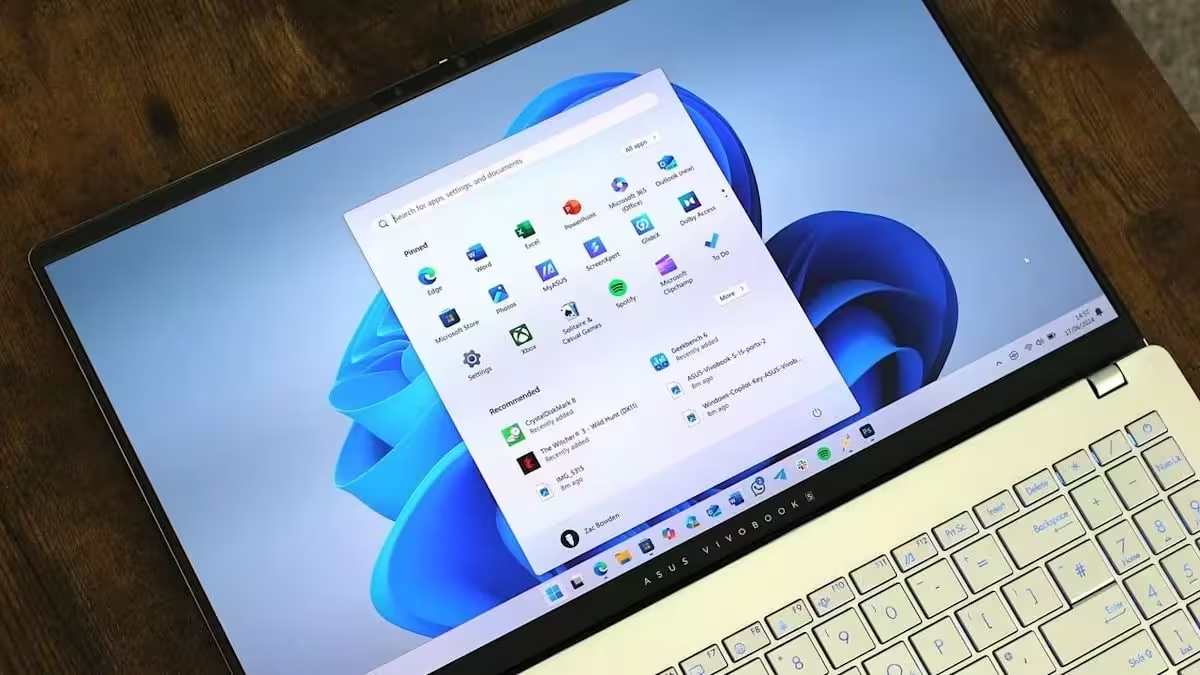
Project Zenith aims to make Windows a first-class developer workstation when hardware is ready.
To achieve a cleaner experience, Microsoft plans to remove or hide many of the UI distractions that get in the way of focused development. The system will ship with a set of preinstalled tools and runtimes for multiple languages, and Windows itself will adopt developer-friendly defaults—things like showing full file extensions and revealing hidden files out of the box. The idea is to offer a better baseline so a fresh machine requires less initial tweaking.
Microsoft is careful to note that Zenith won't force a single workflow. You can still customize your environment, choose your tools, and pick frameworks. The project's goal is to start developers from a smarter default that speeds up the initial setup and matches common developer habits.
That sounds appealing. Who wouldn’t want a cleaner, faster Windows for coding? Yet the focus on high-end hardware raises questions. Requiring 64 GB of RAM puts Zenith out of reach for many independent developers and small teams. Memory shortages and higher prices—exacerbated in part by the broader push for AI compute—make that bar even tougher to clear.
Still, the move signals a notable change in Microsoft's approach. Rather than treating Windows as a one-size-fits-all consumer OS, Project Zenith acknowledges that developers and AI workloads often demand a different starting point. If Microsoft can broaden device availability beyond boutique high-end desktops, this could become a useful option for anyone building or experimenting with local AI models.
For now, developers curious to try Zenith should watch the AMD Ryzen AI Halo launch and expect a gradual rollout. The real test will be whether Microsoft can deliver the promised simplicity without locking useful features behind expensive hardware.


“I cover emerging technologies, digital innovation, and the intersection of tech and everyday life. My goal is to make complex trends accessible and inspiring.”

Discussion
Leave a Comment
Comments (2)
Clean defaults and local AI is tempting. But feels niche atm, unless MS pushes cheaper hardware or cloud options stay cheap.
Wow, a Windows just for devs? Sounds sweet but 64GB min is rough… who’s gonna afford that? hmm