
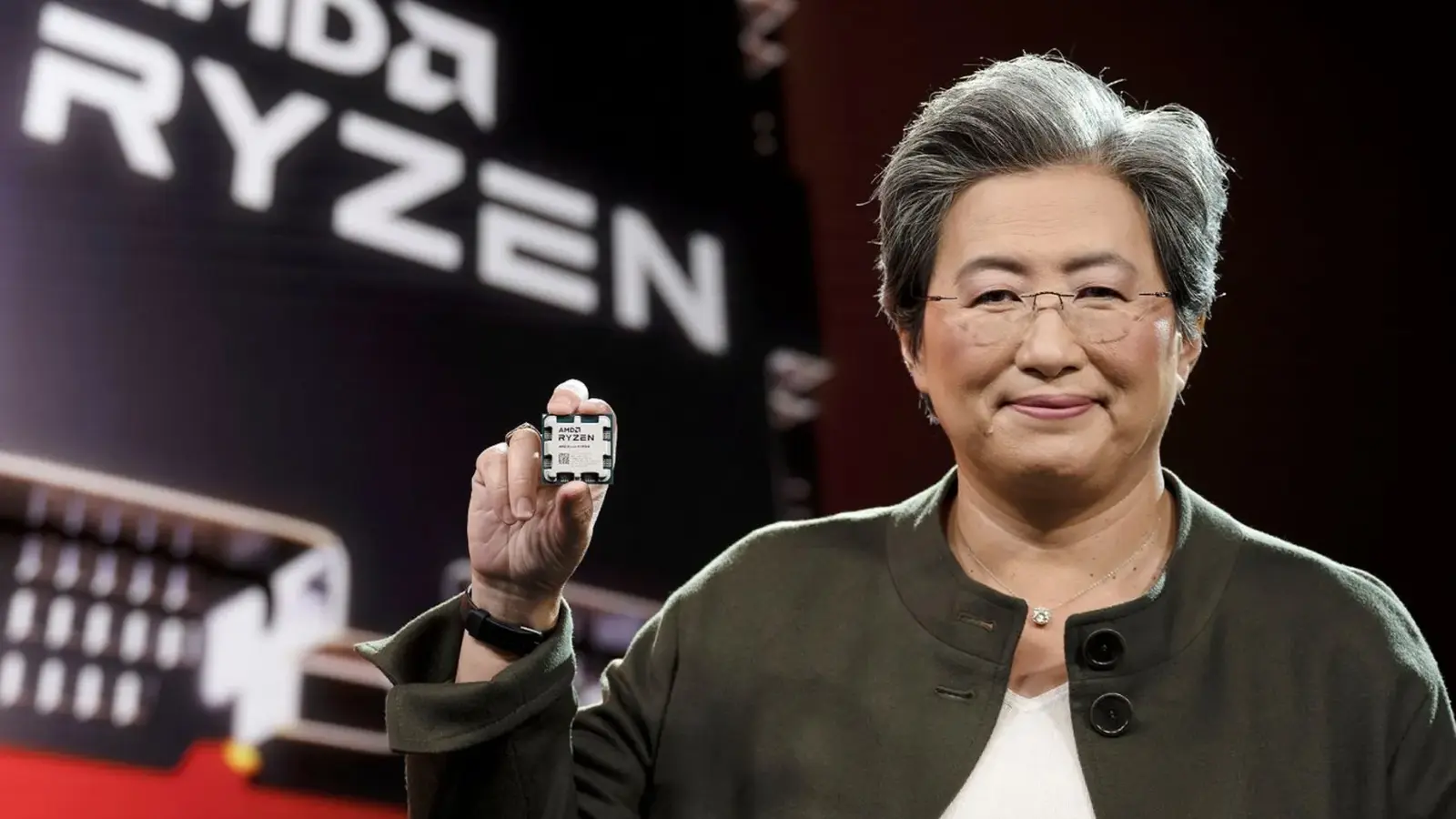
Computex is loud this year. Flashy rigs and eye-wateringly priced flagship hardware vie for attention. And then there’s AMD, quietly nudging a different idea across the stage: hold on to what you already have.
AMD's counterintuitive bet: longevity over annual upgrades
At Taipei's show AMD laid out a simple promise that changes the calculus for many PC builders and gamers. The company will continue supporting the AM5 desktop socket with new Ryzen processors through 2029. That means, if you buy an AM5 board today, you can realistically upgrade CPUs for several years without swapping your motherboard.

Why does that matter? Because it turns a one-time investment into a longer-lived platform. Instead of chasing the next chipset every generation, you get meaningful headroom to refresh the CPU and extend the usable life of the whole system. Less wrenching open a case. Fewer compatibility headaches. Lower long-term cost.
AMD didn't stop at future-proofing. It also dug into the past—bringing back three well-liked chips as pragmatic, budget-friendly options. Take the Ryzen 7 5800X3D: a special tenth-anniversary edition is set to reach shelves on 25 June, priced around €325. For many gamers who value price-to-performance, that’s compelling, especially if you already sit on an AM4 board.

For those already eyeing AM5, AMD is nudging you gently forward with a refreshed mid-range X3D option. The Ryzen 7 7700X3D will land at roughly €307. Early signs suggest it's a modestly scaled-down cousin of the pricier 7800X3D, which historically sold for between €353 and €419 and sometimes dipped to around €298 during rare promotions. On paper the newer 7700X3D looks like a near-equal in gaming workloads, at a friendlier price.
Yes, these are older architectures. The 7800X3D arrived in 2023; newer 9000-series replacements appeared late in 2024. Yet age isn't the whole story. The 7800X3D still delivers strong performance where it counts for gamers, and it tends to sip far less power than some of the most recent high-end chips. Efficiency has a practical value: lower energy bills and cooler, quieter PCs.

Graphics are part of the same playbook. AMD is finally shipping the Radeon RX 9070 GRE globally after initially limiting it to China. The GRE will retail at about €511. That figure used to be the entry price AMD pitched for the full RX 9070, but the original model rarely sat at that tag in stores. During the shortage era the card briefly touched that level, then settled to roughly €557 to €577 once supply normalized. The GRE is a pared-down SKU and, in benchmarks, it trails NVIDIA's RTX 5070—so it is not a flagship killer. Still, as a more affordable Radeon option, it nudges AMD’s lineup into better value territory.

What ties these moves together is a clear theme: value and longevity. AMD is leaning into the reality that parts are expensive, and that buyers are tired of forced obsolescence. Keep your board. Buy a smart CPU that fits your budget. Pick a mid-range GPU that delivers playable frame rates without breaking the bank. Stay in the ecosystem and upgrade in meaningful steps rather than wholesale swaps every year.


Is this strategy enough to sway shoppers? For price-conscious builders and gamers who prize practical performance over headline specs, it could be persuasive. For enthusiasts chasing the fastest silicon, it’s less of a sales pitch and more of a shrug. Either way, AMD has drawn a line: efficiency and extended support are now part of its story. That matters at a time when many buyers are asking a simple question—what gives me the most value for my money?

“I love exploring gadgets, apps, and trends that redefine how we connect, work, and play in a digital world.”

Discussion
Leave a Comment
Comments (2)
Sounds sensible but is it just marketing? 7700X3D vs 7800X3D, I want real gaming benches. And the GRE trailing RTX makes me skeptical, price alone wont cut it
wait, AMD betting on longevity? wow, I kinda love this. Save money, less junk, and still good perf. Not flashy but practical. Curious how long support really lasts...