
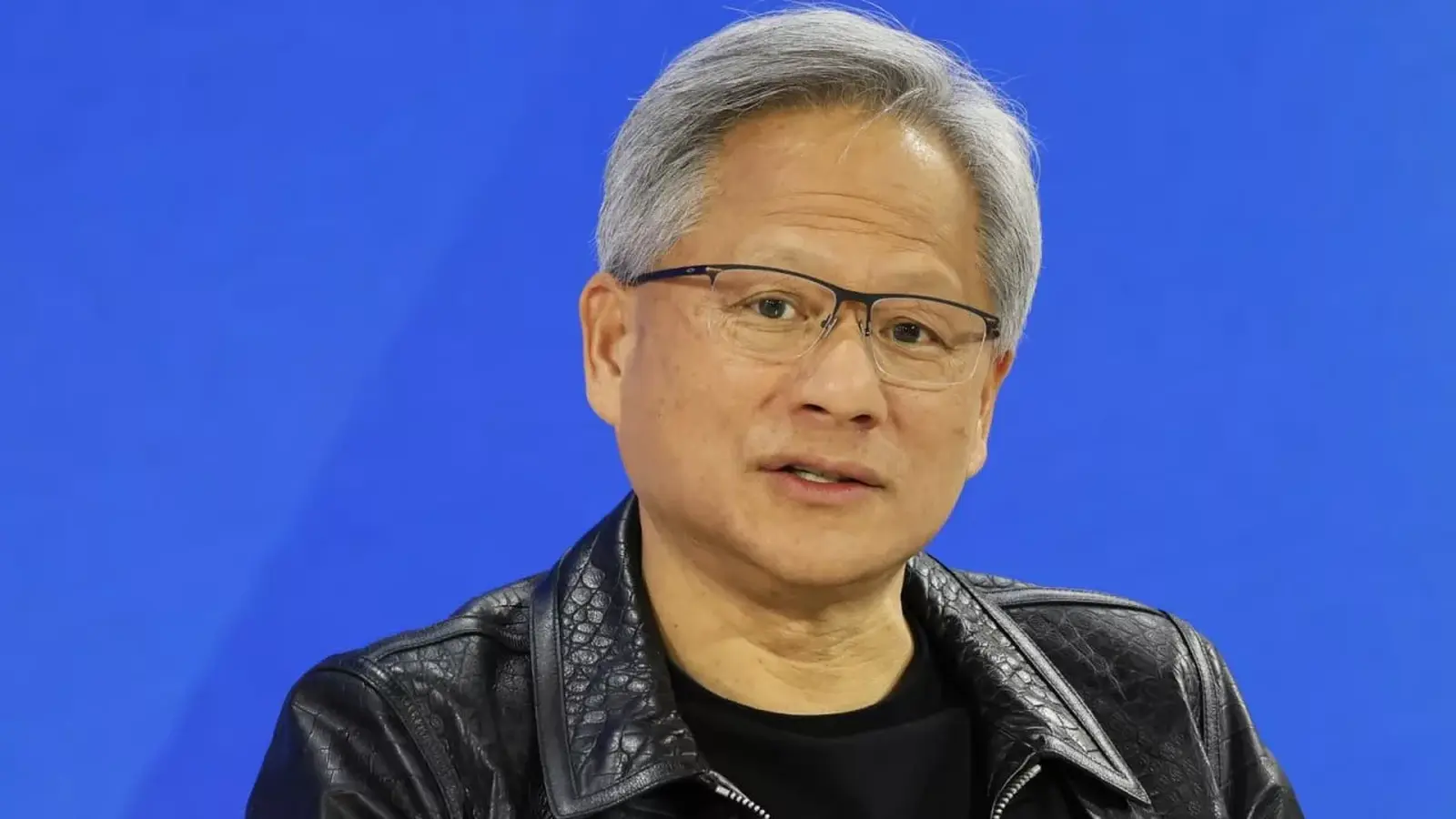
Jensen Huang's short message on X read like a curtain call. He praised OpenAI for releasing Astra and declared that artificial general intelligence had arrived. Concise. Confident. Controversial.
OpenAI unveiled Astra last Thursday, presenting it as the company's most capable and best-aligned model yet — a system designed to tackle demanding professional tasks with speed, precision, and nuanced judgment. Huang quickly highlighted that Astra was trained on Nvidia hardware, underscoring the role of advanced GPUs and systems in pushing model scale and performance.
A milestone or marketing?
When Greg Brockman, OpenAI's president, told reporters 'welcome to the AGI era', the room split between exhilaration and skepticism. Is this the moment AI transitions from specialized superpowers to general reasoning? Some researchers say yes. Others push back hard. Debate followed like thunder after lightning.

Gary Marcus, a long-time critic of bold AI claims, called Huang's congratulations premature. Marcus argued that OpenAI has not provided the rigorous definitions, benchmarks, or reproducible evidence that would settle a claim of genuine general intelligence. According to Marcus's own multi-criterion test for AGI, Astra checks only a couple of boxes so far, not the full set that would convince the broader scientific community.
That disagreement reveals something crucial: AGI is as much a conceptual battleground as it is a technical one. Companies paint milestones in sweepingly simple terms. Academics ask for granular proofs. Investors and customers look for practical results. All three perspectives matter, but they rarely march in lockstep.
OpenAI frames Astra as a jump forward in delegating complex work to machines. The model is already being made available to customers, a move that turns theoretical claims into real-world use cases overnight. Production deployments will be the fastest way to judge whether Astra truly generalizes across hard tasks or whether it excels in narrow, well-tuned domains.
Huang's public nod also performs another function. It signals the tight coupling between software breakthroughs and the hardware that enables them. Training trillions of parameters demands not just clever algorithms but immense compute, specialized chips, and data center orchestration. For Nvidia, celebrating an ecosystem win is part technical pride, part market narrative.
So where does that leave readers trying to make sense of the headlines? Treat the Astra announcement as a notable step, not as the final chapter. Expect more demonstrations, independent evaluations, and debates over definitions. The conversation around AGI is accelerating — messy, fast, and consequential.
One takeaway is simple: Astra raises the stakes, but consensus on AGI will require transparent evidence, reproducible tests, and time.


“I cover emerging technologies, digital innovation, and the intersection of tech and everyday life. My goal is to make complex trends accessible and inspiring.”

Discussion
Leave a Comment
Comments
No comments yet. Be the first.