
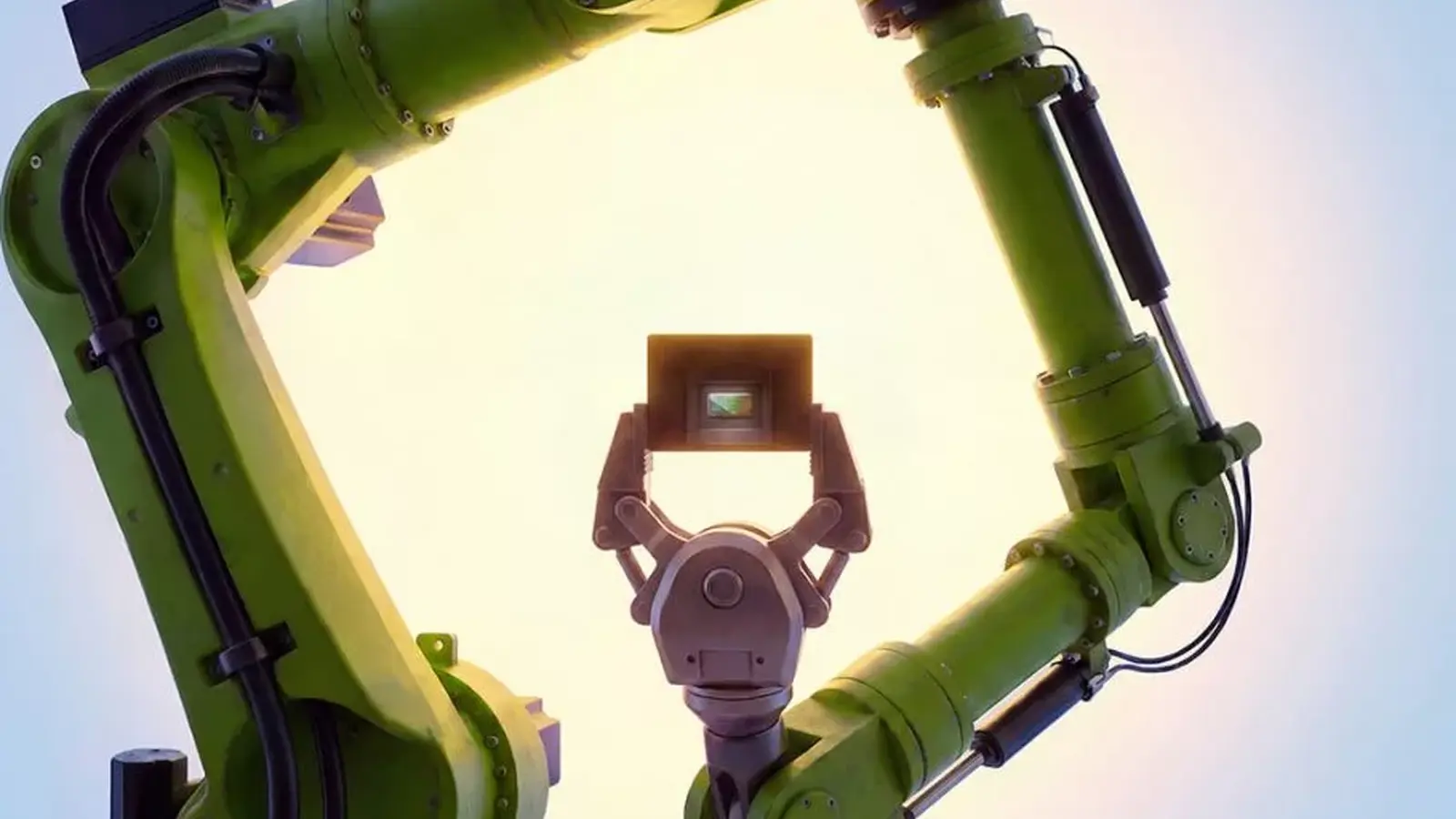
When Jensen Huang landed in Japan, the rumor mill went into overdrive. People expected a big announcement. NVIDIA answered with two new Jetson Thor modules that feel like a nudge to anyone building real-world AI: move from lab demos to machines that actually work in factories, warehouses and on mobile robots.
Small packages. Big ambitions.
Meet the Jetson Thor T3000 and T2000. They are not incremental updates. Think of them as tighter, more efficient siblings in the Jetson AGX Thor family, designed to put serious inference power at the edge without bloating size or power budgets.

The T3000 is the lean, high-efficiency variant. It delivers about 865 teraflops of FP4 compute while trimming roughly half the size and power draw of the flagship Thor T5000. Under the hood: a Blackwell-based GPU, up to eight Arm Neoverse cores, 32 gigabytes of LPDDR5X memory running at a claimed 273 gigabytes per second, and 25 GbE connectivity. NVIDIA says it matches T5000 on many inference workloads that matter most to robotics and multimodal AI, from large language models to vision-language systems, all while capping typical power around 70 watts.
The T2000 targets a different corner: budget-conscious, mobile and vision-first agents. It packs about 400 teraflops FP4 and ships with 16 gigabytes of memory. The power envelope here is around 40 watts. That makes it a natural choice for autonomous mobile robots, basic humanoid applications, and developers exploring embodied AI without committing to top-tier hardware.
- High compute density with scaled power profiles
- Hardware aimed at mass-market robotics and edge AI
- Software-first optimizations to cut memory use and cost
Why does this matter now? Because the industry is moving from experimentation to deployment. Companies like Boston Dynamics, Amazon Robotics, Tesla, Agility and Agile Robots are all pushing into physical AI. The economics change when the compute fits into power and cost constraints seen on factory floors and logistics hubs.
NVIDIA is not stopping at silicon. It introduced a set of software tools called Jetson Agent Skills to help developers squeeze more out of the stack. The idea is straightforward: optimize the whole software pipeline so an application needs less RAM and can run on a lower-tier SKU. The payoff is practical. NVIDIA showed cases where Jetson AGX Orin setups cut memory usage by half while delivering comparable results. That kind of optimization translates directly into smaller bills and longer battery life for deployed robots.

On availability, the company says the T3000 will be accessible in simulation now with JetPack version 7.2.1, while the T2000 will appear in future software updates. Commercial shipments for both are slated for the first quarter of 2027.
These modules are about removing barriers: lower cost, lower power, and the software to make it all fit together.
For system builders the choice is clearer. If you need near-flagship inference at a fraction of the footprint, the T3000 is the pick. If you are building large fleets of vision agents or compact humanoids and must balance performance with energy and price, the T2000 offers a sensible entry point.
Expect to see Jetson Thor appear inside next-generation robot controllers, autonomous logistics vehicles, and embedded machines that need real-time multimodal AI. The company has filled the product map from entry-level Orin-based computers up through the higher-end Thor family, positioning itself to be the go-to for robotics designers who must turn AI research into dependable hardware.
Not every breakthrough is flash. Sometimes progress looks like efficiency: smarter software, tighter silicon, and a clearer path from prototype to production. NVIDIA’s new Jetson Thor modules are a reminder that, in robotics, usable compute often matters more than headline benchmarks.


“I love exploring gadgets, apps, and trends that redefine how we connect, work, and play in a digital world.”

Discussion
Leave a Comment
Comments (2)
Is NVIDIA just repackaging Thor for edge sales? 865 TFLOPS sounds wild, but are those real energy savings in a busy factory, or marketing?
Wow this actually matters... T3000 might finally make robots usable in the wild, not just flashy demos. curious about battery life tho