

Picture a TSMC clean room humming at night, wafers glinting under soft lights. Engineers smile. Not because one chip is finished, but because there are two paths forward. Qualcomm appears to be testing a split strategy for its next-generation Snapdragon: a standard model using LPDDR5X memory and a higher-end Pro variant equipped with LPDDR6 and UFS 5.0 storage.
On paper the chips share core clock speeds. In practice the choice of memory rewrites the user experience. LPDDR6 promises wider bandwidth and lower latency, which accelerates heavy multitasking, graphics workloads, and on-device AI tricks that increasingly define flagship behavior. LPDDR5X keeps costs down without sacrificing the feel of a premium device for most users.

Practical engineering, not marketing theater
This is as much about supply and cost as it is about raw specs. The Pro configuration, with faster memory and UFS 5.0 storage, is aimed at the highest-tier phones that need every ounce of bandwidth for top-tier gaming, pro-level camera processing, and AI features that run locally. Expect manufacturers to weigh that extra performance against a meaningful price bump. Reports suggest the top-tier Pro version could add over €280 per unit to manufacturing costs, which is why a dual-track plan makes sense.
There’s another advantage to this approach. It gives OEMs flexibility. Want to ship an Ultra-class phone with full bells and whistles? Pick LPDDR6 and UFS 5.0. Need near-flagship performance at a more accessible price? Stick with LPDDR5X. The result: a broader range of devices built on the same silicon family, each tuned to different buyer priorities.
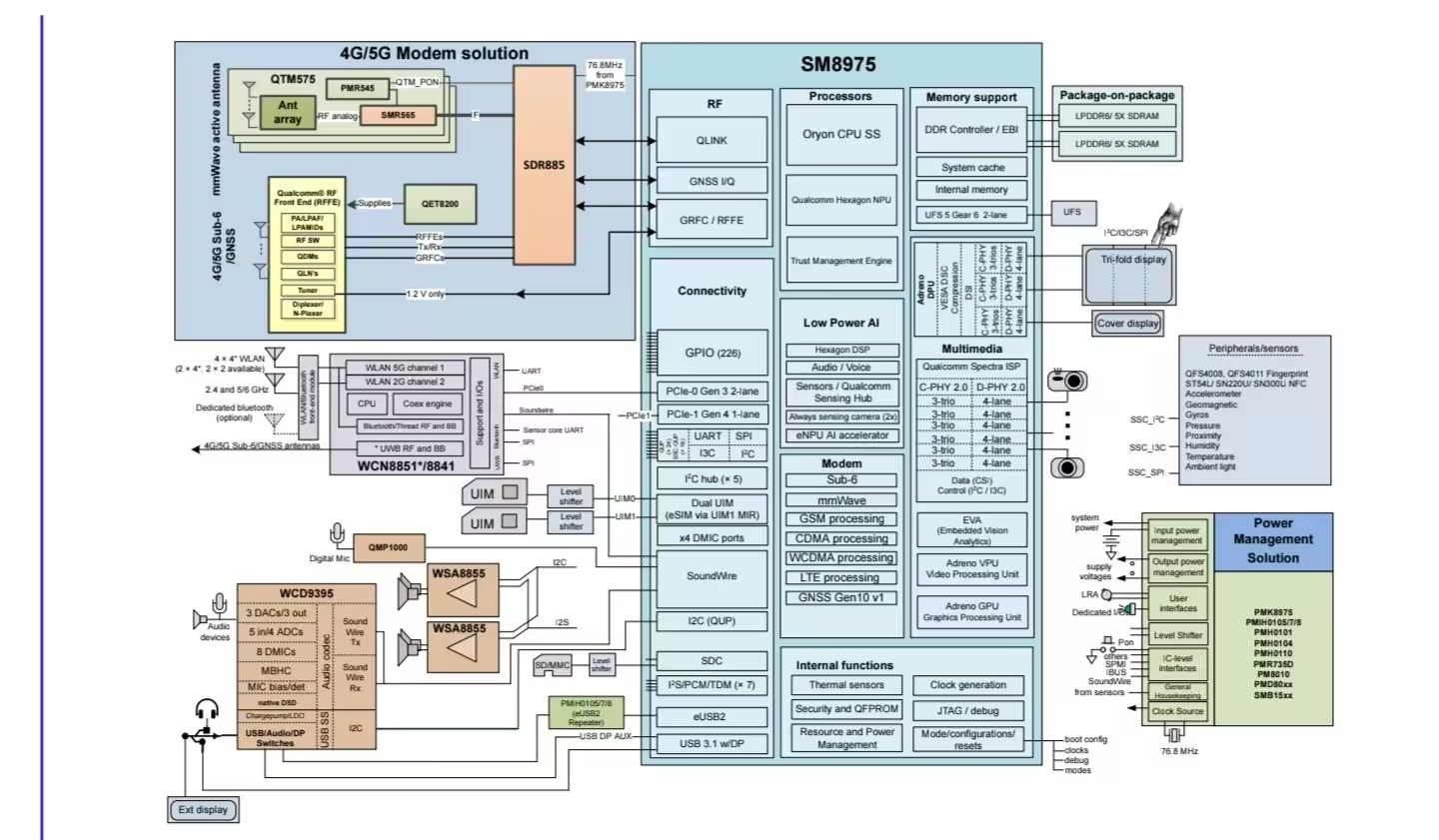
Technically the chipset is slated to be produced on TSMC’s 2nm node, which should bring tangible gains in both efficiency and sustained performance compared with older processes. Early block diagrams point to a beefed-up GPU in the Pro model, with rumors naming an upgraded Adreno unit. We should also expect binned variants with different CPU core counts to hit several price points, a familiar pattern in premium SoC launches.
So what does this mean for consumers? Simply put, you will see more tailored flagships. The LPDDR6-equipped phones will chase absolute performance milestones and push on-device AI forward. The LPDDR5X models will offer most of that experience at a lower cost, making near-flagship speed more common across 2027 phones.
Qualcomm’s move is pragmatic. Margins matter, supply chains matter, and consumers want both power and value in different measures. Splitting the memory strategy lets Qualcomm and its partners chase both ends of that spectrum without reinventing the chip design for each target.
Expect official details later in 2026. If the rumors hold, the Snapdragon 8 Elite Gen 6 Pro family will be the silicon backbone for next year’s high-end Android phones, balancing peak capability with the practical realities of manufacturing and pricing.
LPDDR6 for peak performance; LPDDR5X for a smarter cost-performance balance.


“I cover emerging technologies, digital innovation, and the intersection of tech and everyday life. My goal is to make complex trends accessible and inspiring.”

Discussion
Leave a Comment
Comments (2)
Is the 2nm yield even ready for mass phones? Rumors sound neat but I worry about delays, price hikes, and few actual phones getting LPDDR6. If that's real then…
LPDDR6 for the hardcore, LPDDR5X for the rest. Makes sense tbh But if Pro adds €280 to cost, only niche phones will get it. Curious how battery life/power will actually change.