
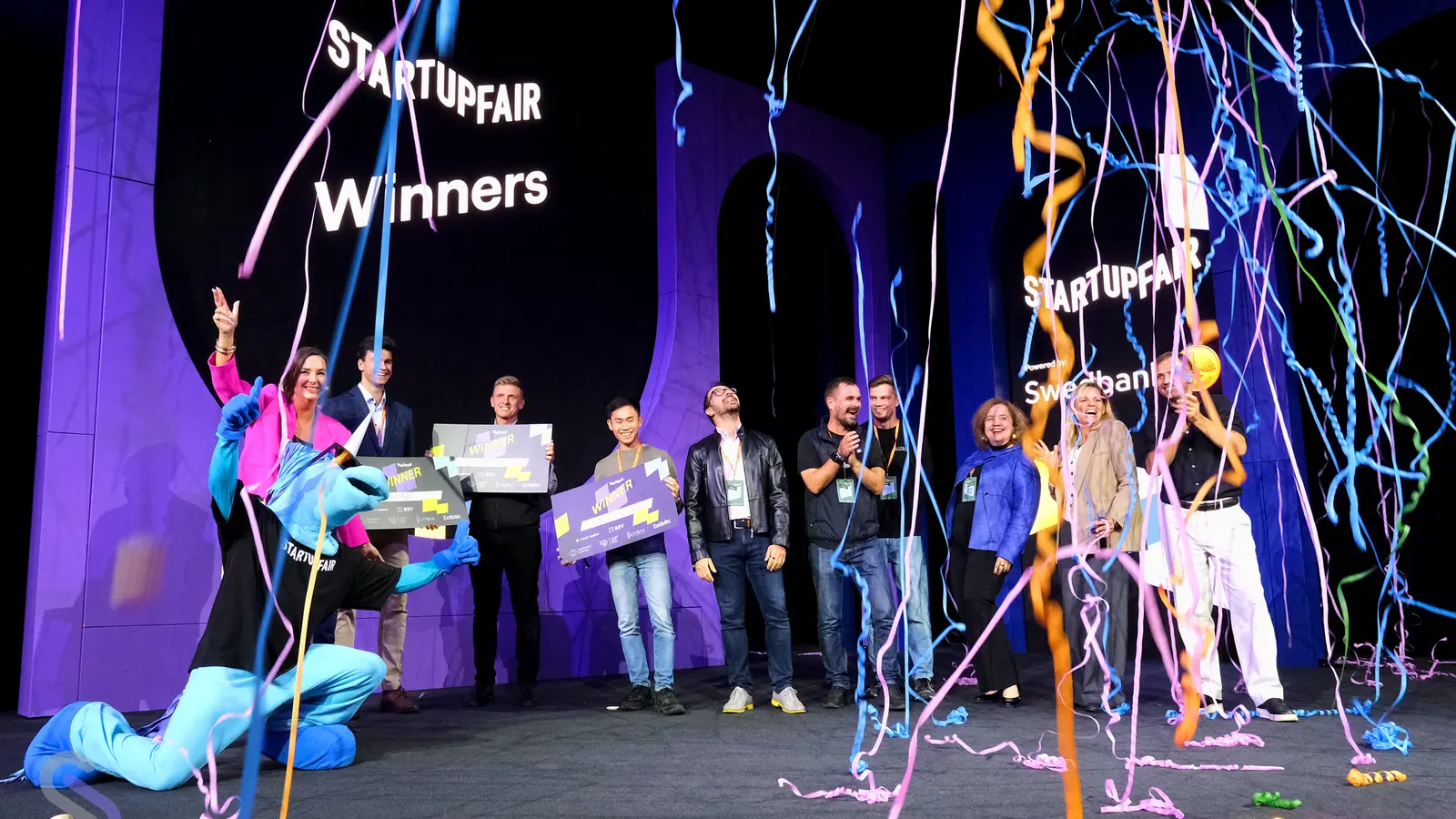
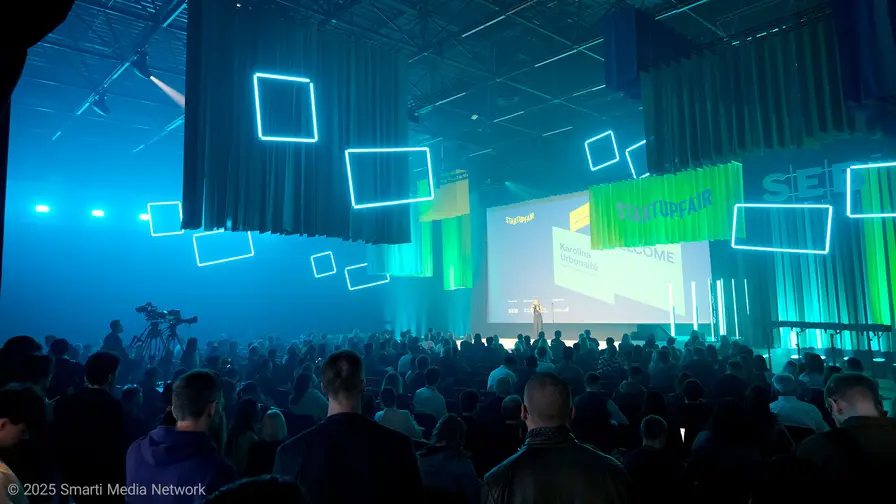
Startup Fair 2026 brought more than 2,000 founders, investors, ecosystem builders and technology leaders to LITEXPO in Vilnius on September 17, turning the venue into one of the busiest meeting points in the Baltic startup calendar. This year, however, the event felt deliberately less like a conference built around stages and more like a platform built around people.
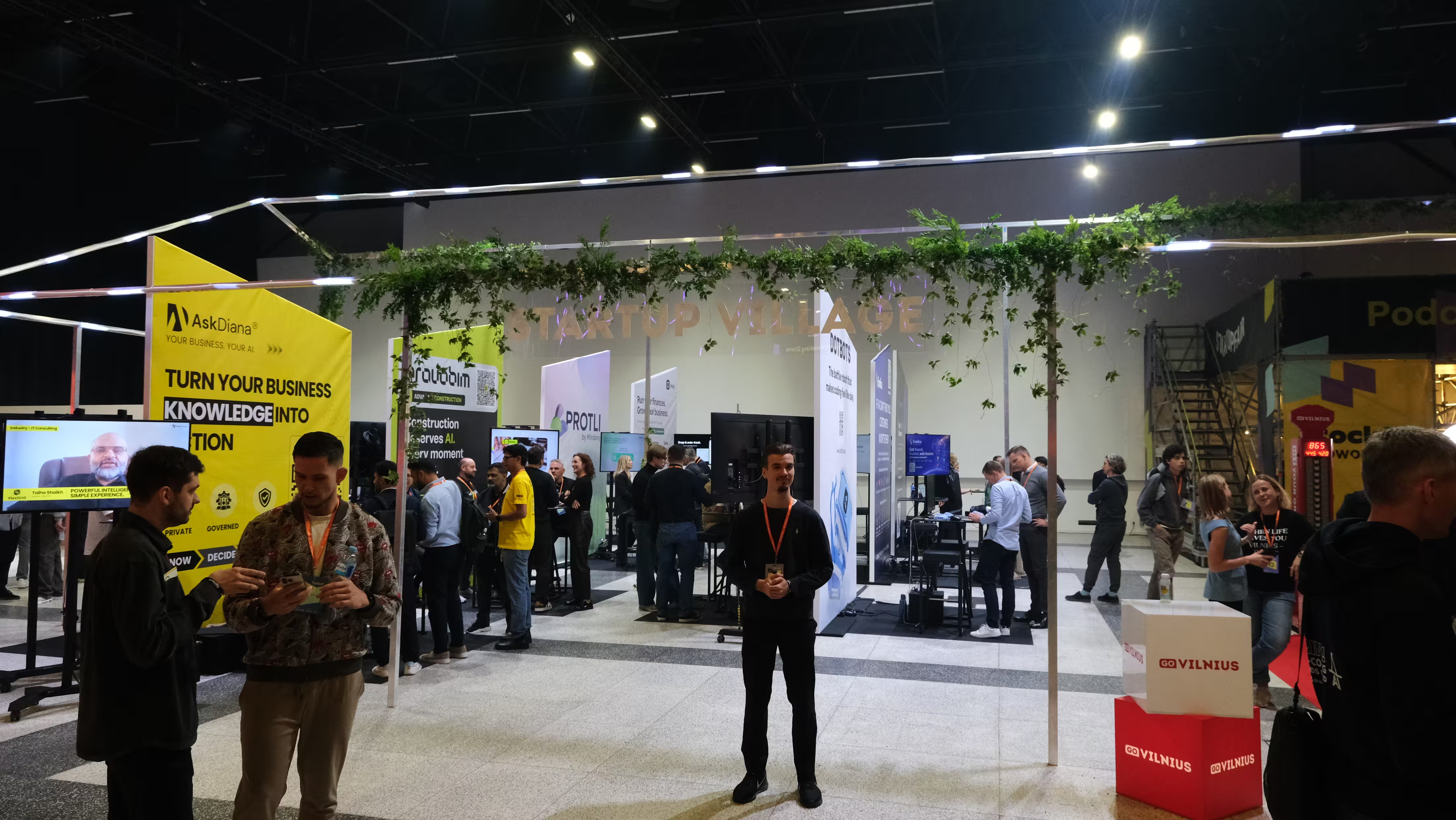
One of the clearest changes compared with previous editions was the stronger emphasis on networking. More space, more meeting infrastructure and more opportunities for one-to-one conversations had been built into the event experience, reflecting what organizers themselves described as a focus on meaningful connections and high-quality matchmaking. Startup Fair offered dedicated networking and expo areas, a matchmaking platform and structured opportunities to meet investors and ecosystem players, while the Startup Area was explicitly designed around turning attendance into meetings, feedback and business opportunities.
That shift was visible throughout the day. Panels and keynotes remained important, but much of the real activity happened between the stages: founders introducing products, investors moving from one scheduled meeting to another, startup teams talking to potential partners and dozens of smaller conversations unfolding around the venue.
.avif)
 |  | .avif) |
A bigger meeting place for the Baltic startup ecosystem
Startup Fair 2026 was organized by Startup Lithuania together with ROCKIT and took place under the theme “Future Belongs to Builders.” Official pre-event figures pointed to more than 2,000 attendees, over 450 startups and 430+ investors representing more than 60 countries.
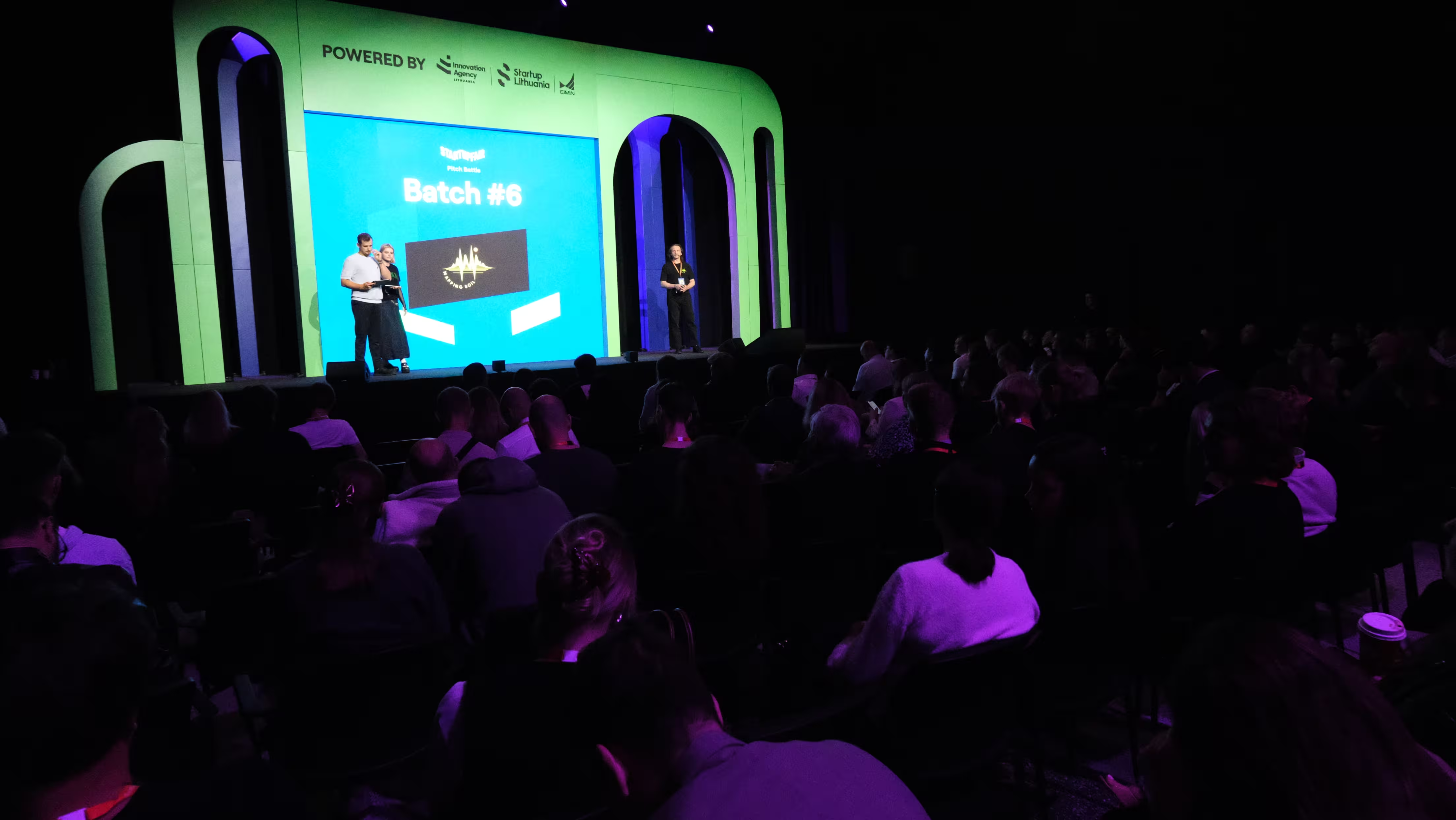
The program was spread across several different environments. The Main Stage hosted the major keynotes, panel discussions and opening sessions, while the Podcast Studio and Garden Stage provided more focused or informal formats. A separate Pitch Battle area became one of the central attractions as startup teams competed throughout the day for investor attention and the opportunity to advance to the final round.
For those walking through LITEXPO around midday, the scale of that structure was immediately apparent. The event no longer depended on one central stage to hold the audience together. People were moving continuously between talks, startup booths, meetings and networking spaces, making the conference feel more distributed and, importantly, more useful for attendees who had come primarily to build relationships.
That was later reflected in the numbers announced from the stage. As the Pitch Battle jury deliberated, the hosts said that more than 2,000 people had attended Startup Fair and that close to 1,000 connections or meetings had been made through the Brella platform during the day.
.avif)
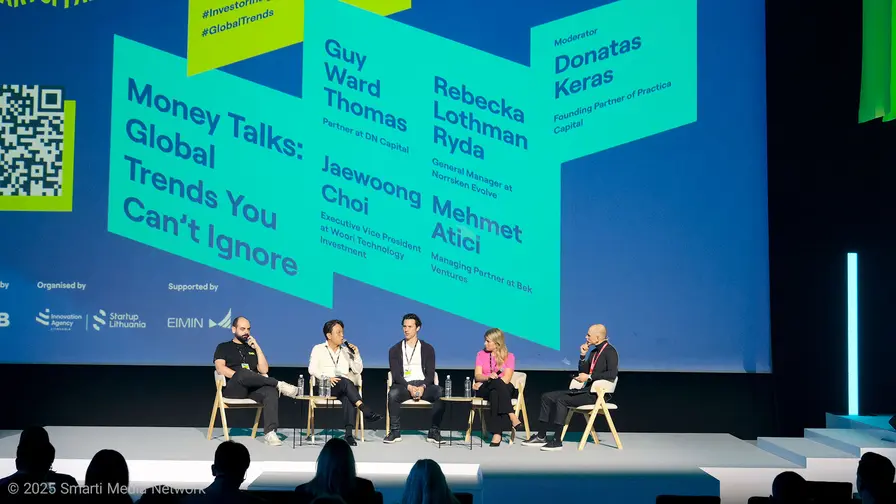
Main Stage conversations set the context
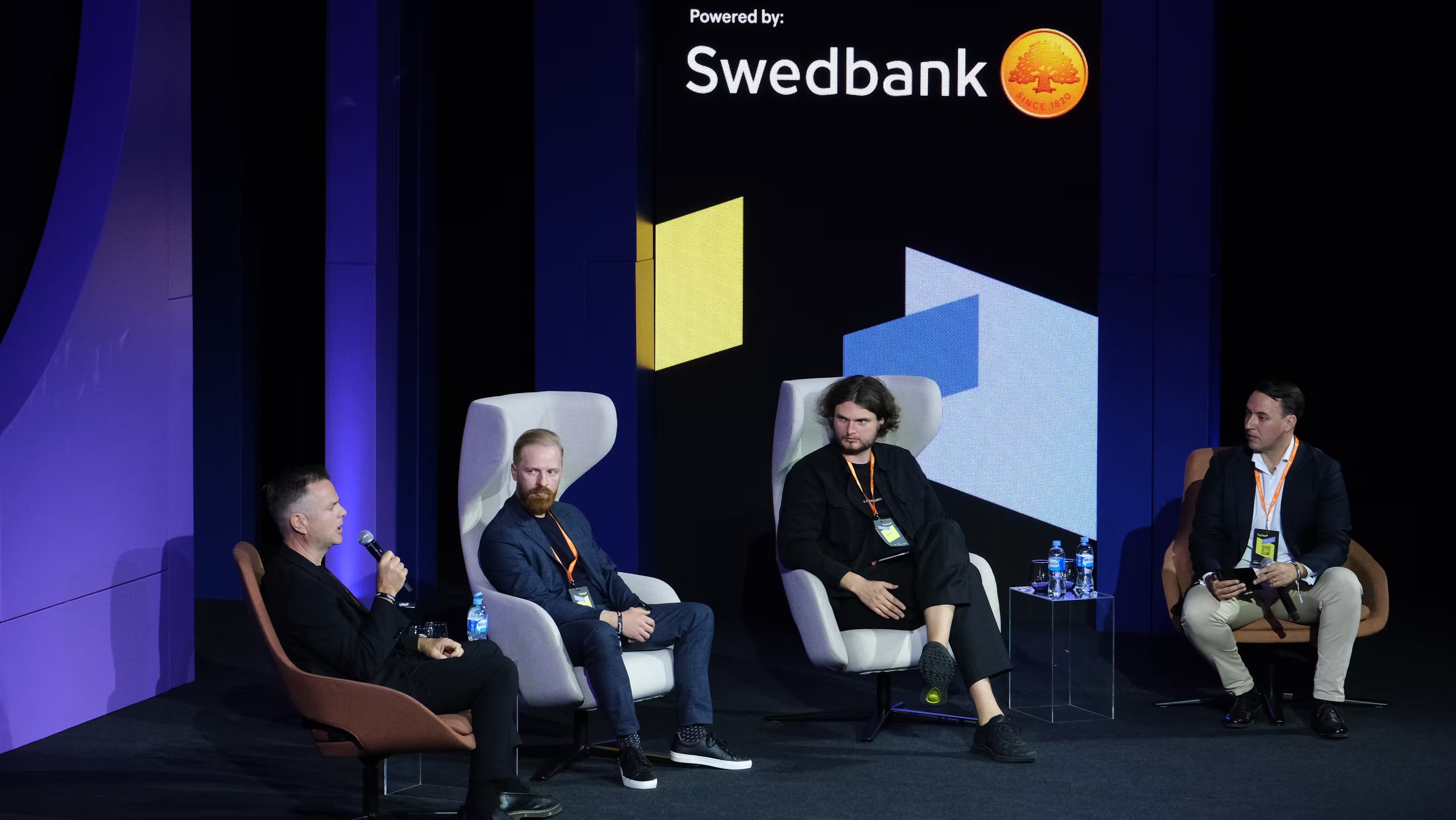
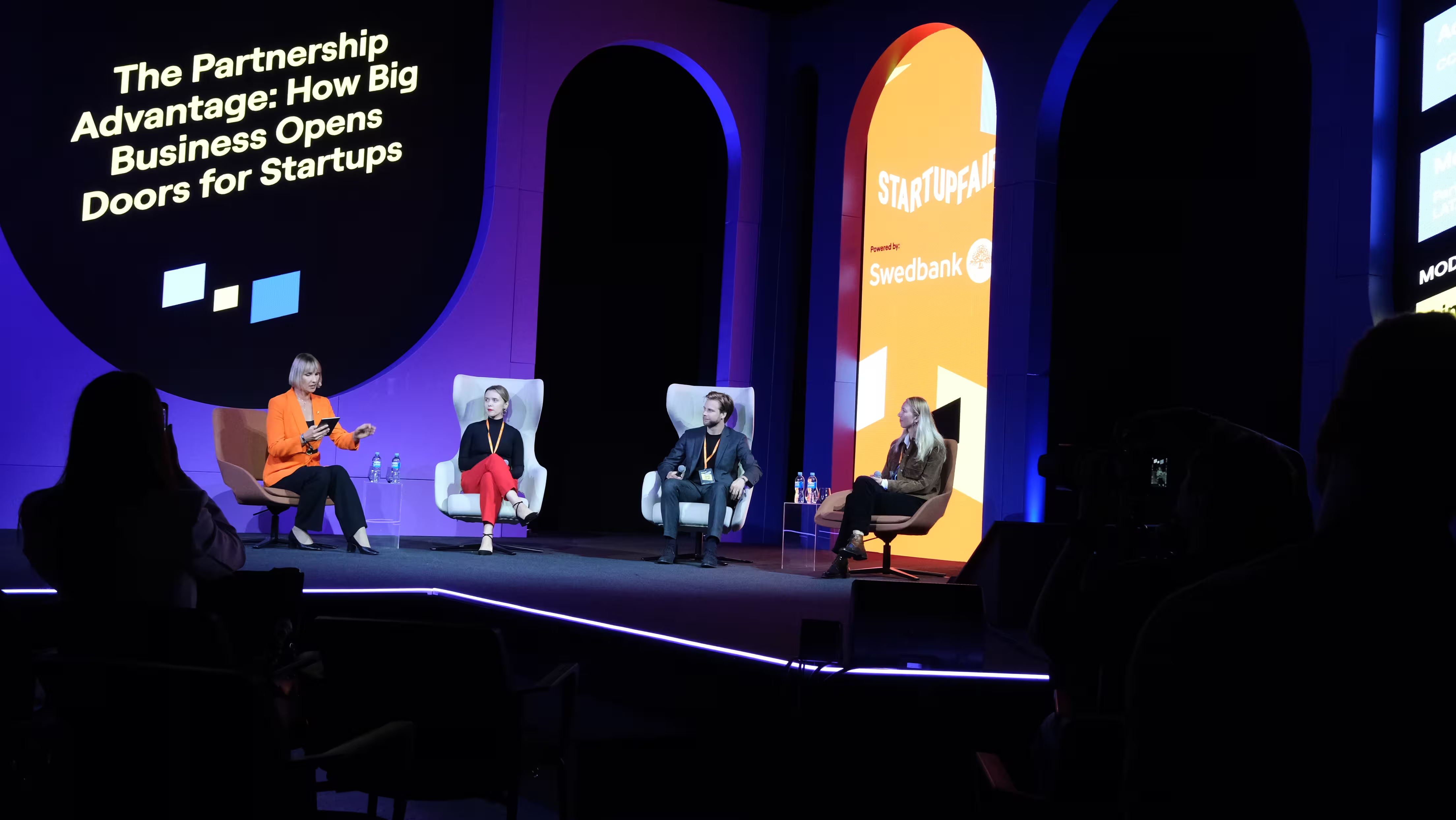
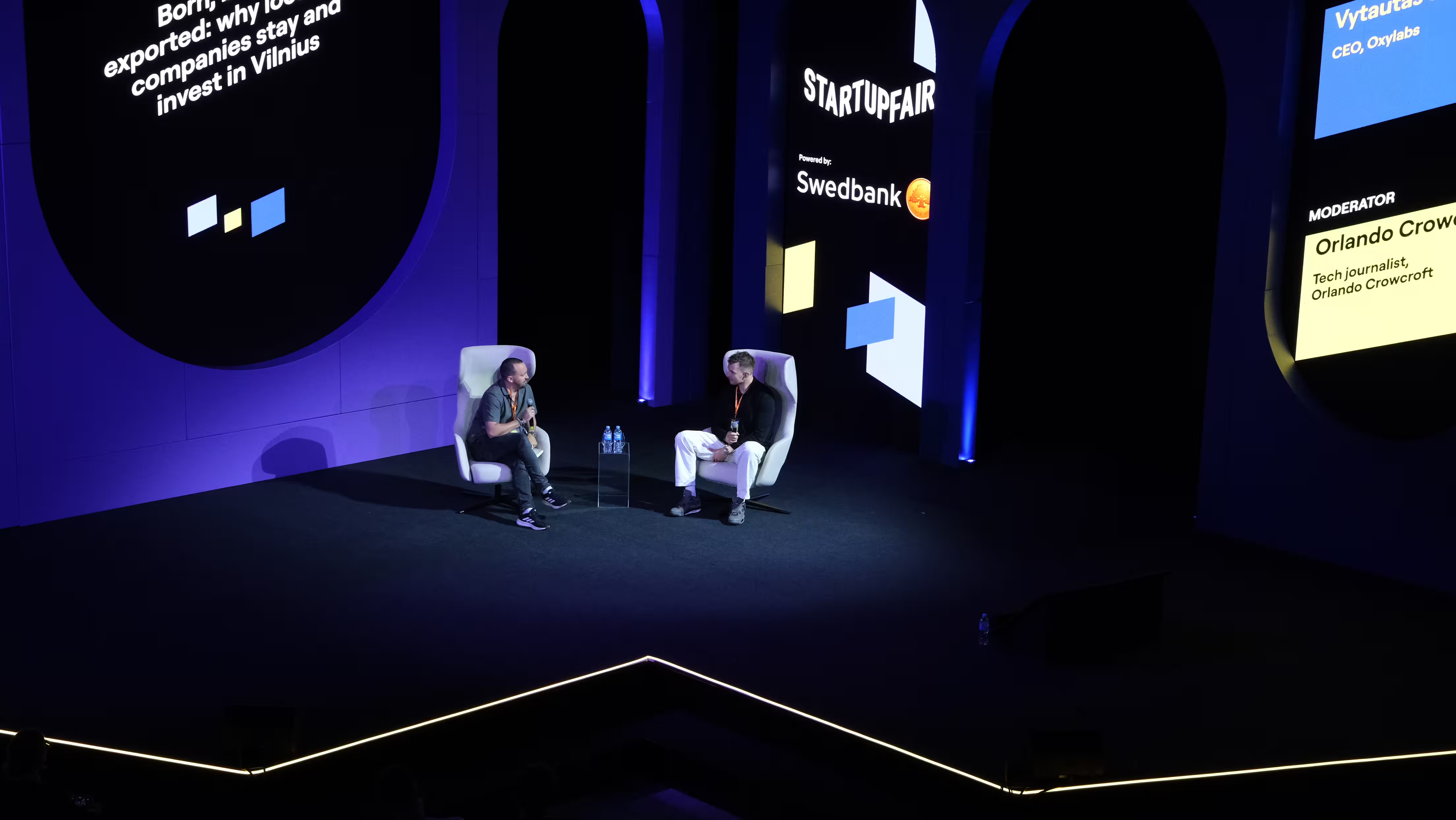
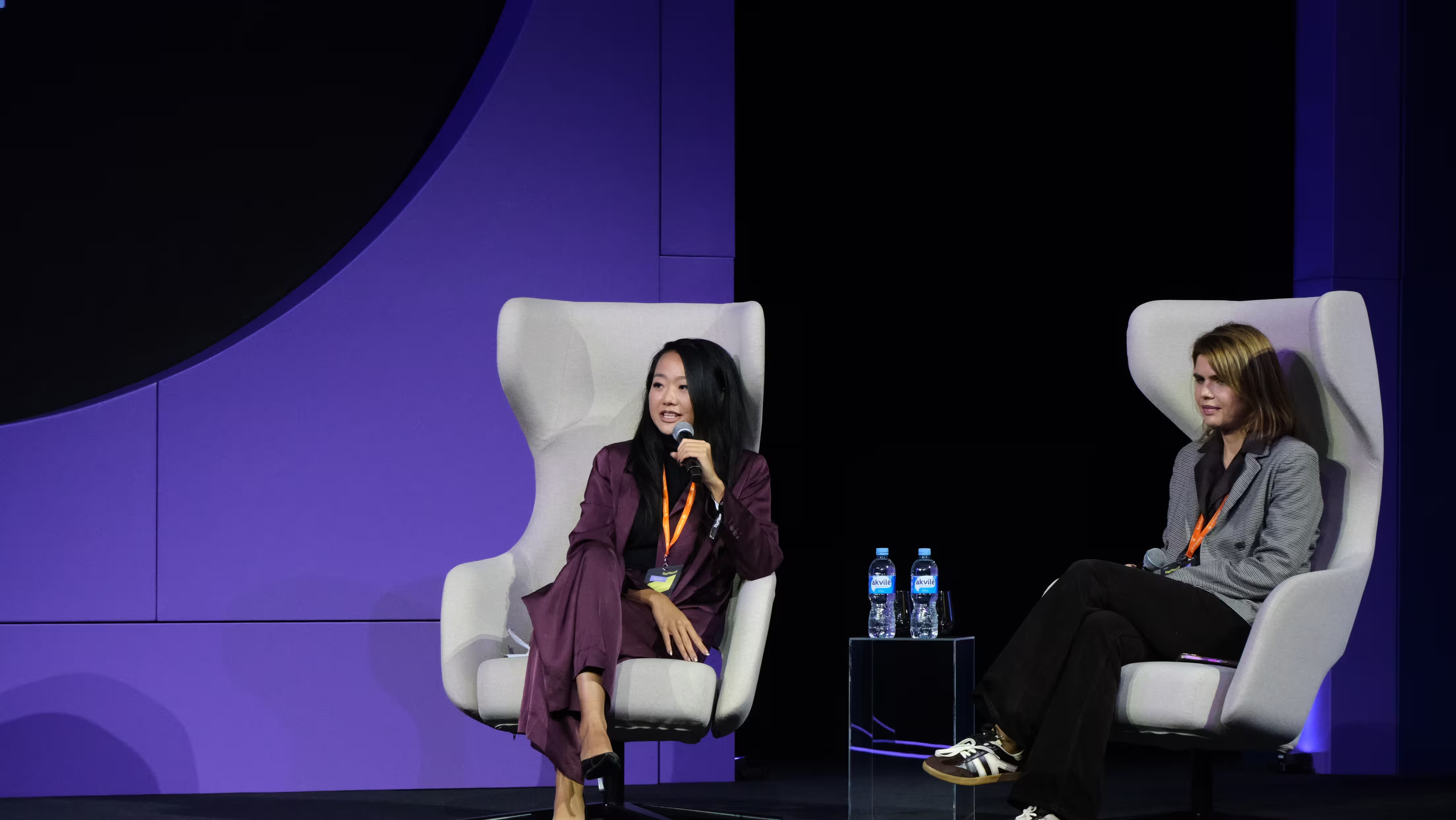
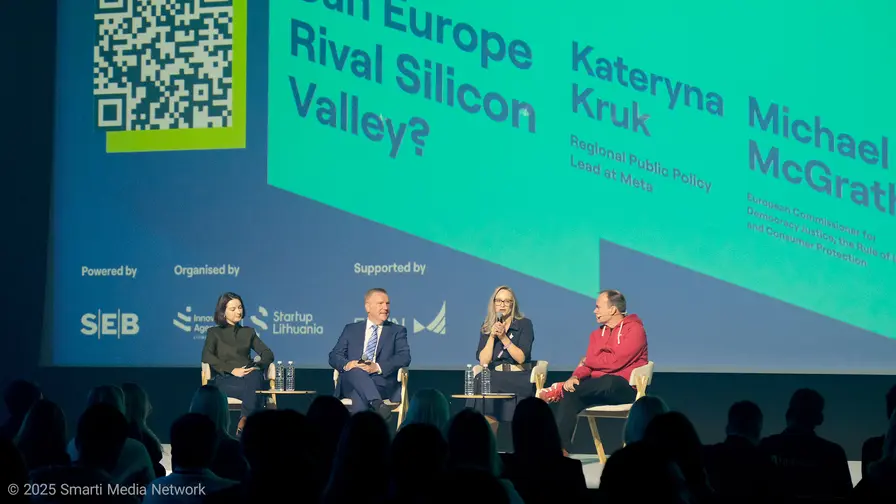
The Main Stage remained the intellectual center of the conference, bringing together founders, investors, executives and ecosystem leaders to discuss the forces shaping technology companies in Europe.
Startup Fair positioned its 2026 program around builders rather than hype alone. The agenda moved through questions of company building, market expansion, investment, artificial intelligence, regulation, European competitiveness and the practical realities of scaling technology businesses.
Speakers announced ahead of the event included figures such as former WIRED UK editor David Rowan, Financial Times technology editor Elaine Moore, Cast AI co-founder Einaras von Gravrock and Oxylabs CEO Vytautas Savickas, alongside founders and executives from the wider Lithuanian and European technology ecosystem.
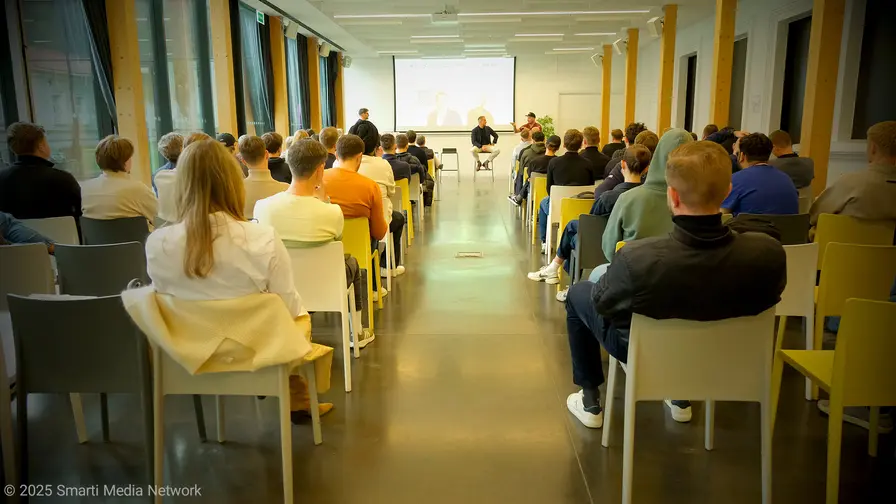
The result was a day in which content and networking reinforced one another. A discussion heard on stage could continue minutes later in a hallway conversation, at a startup booth or in a scheduled investor meeting.
 |  |  |
Pitch Battle moved from dozens of startups to eight finalists
If networking was the defining structure of Startup Fair 2026, Pitch Battle provided its competitive climax.
The wider competition invited dozens of startups to pitch in front of investors during the day. Startup Fair had initially planned for up to 40 teams to take the stage, with teams judged on the scale of the problem, quality and scalability of the solution, traction, team and the strength of the pitch itself.
By late afternoon, the field had been reduced to eight finalists.
The format was ruthless in its simplicity. Each team had only a few minutes to explain what it was building, why the problem mattered, why its solution could scale and why investors should pay attention.
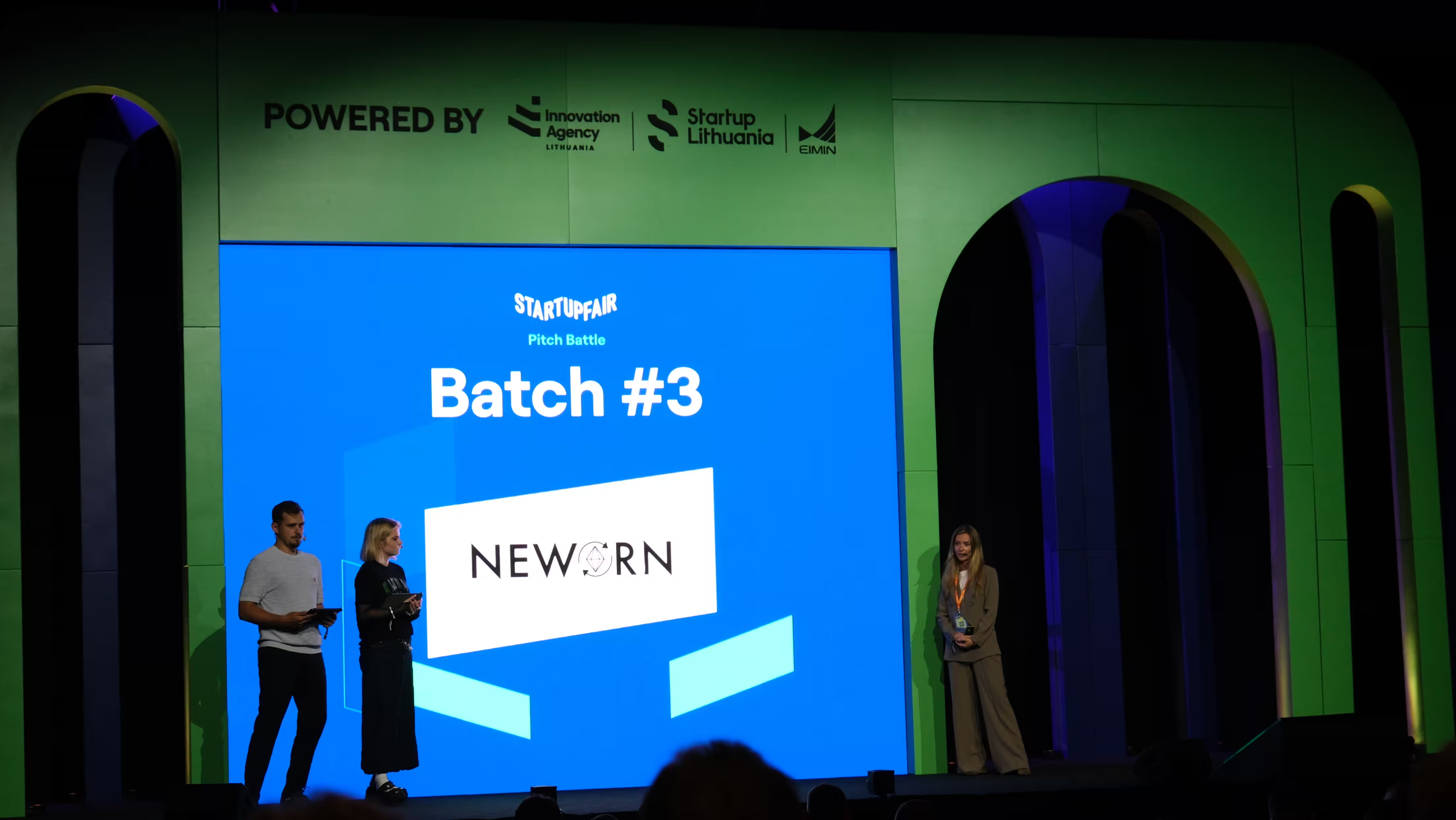
The transcript from the final confirms the eight-team structure: midway through the final, the host announced that four startups remained; BeBright came next, followed by PulpTronics as startup number six, then TrueMarket and finally Vuberitas.
Smarti followed the latter part of the final closely, where the diversity of the companies was striking. Education technology, sustainable electronics, agricultural trade finance, health technology and space propulsion were all competing for the same thing: investor conviction.
 |  |  |
BeBright wants to find the gaps teachers cannot always see
BeBright, presented by co-founder and CEO Mantas Vičius, approached a familiar problem from a data-driven angle: students often struggle with mathematics not because of the subject currently in front of them, but because of gaps created months or even years earlier.
The platform is designed to diagnose those missing foundations and recommend personalized learning content including exercises and videos.
Vičius said BeBright had already reached 40,000 paying students during the previous year, representing roughly one-third of Lithuanian schools. The business charges €25 per student per school year, with schools and municipalities among its customers.
The company is now looking beyond Lithuania. BeBright is raising €1.5 million to expand into Central and Eastern Europe, with Poland identified as its next target market.
The pitch stood out because it combined an easily understood educational problem with measurable existing adoption. This was not simply a concept seeking its first classroom.
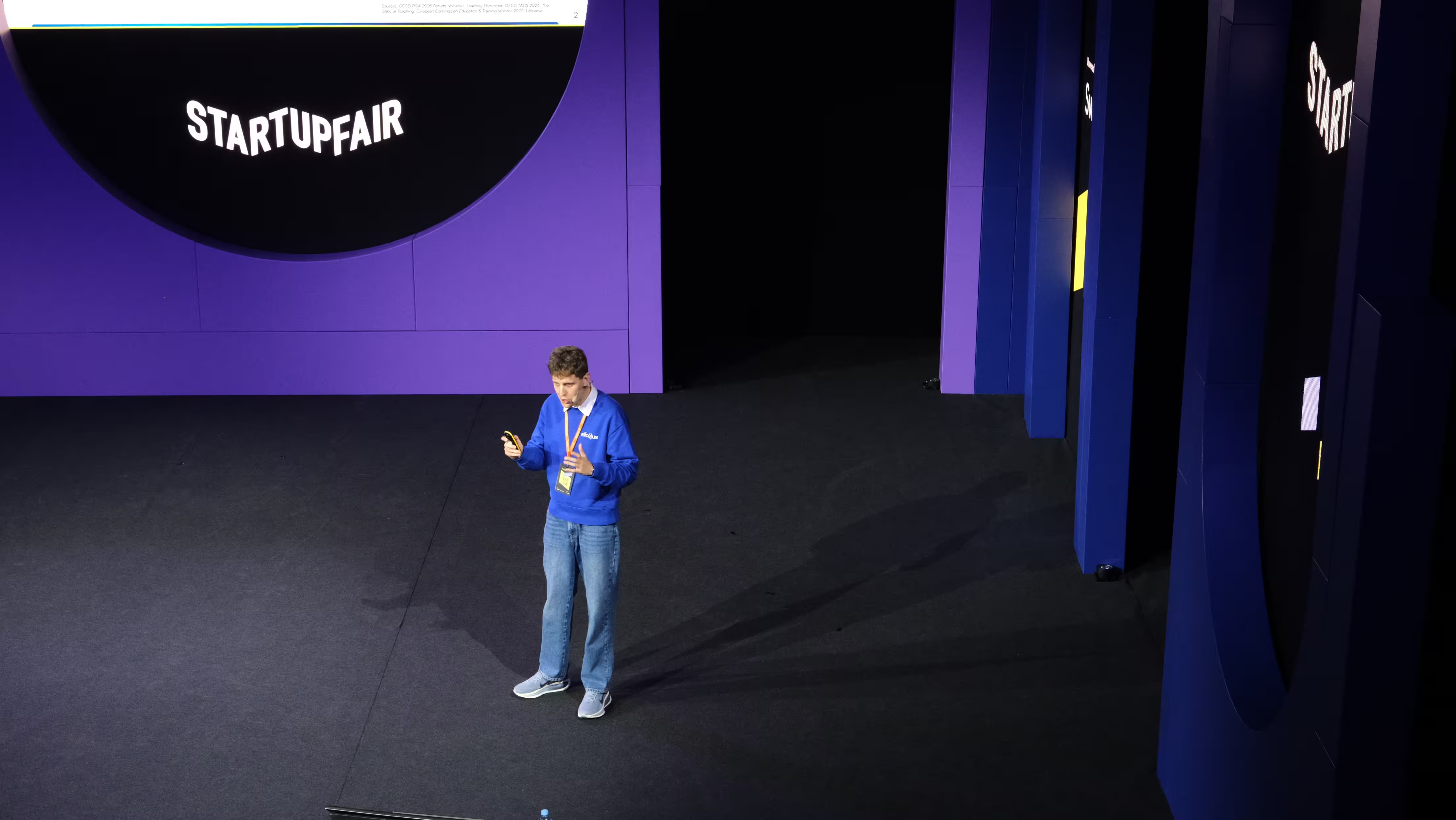
PulpTronics wants to remove metal from billions of disposable RFID tags
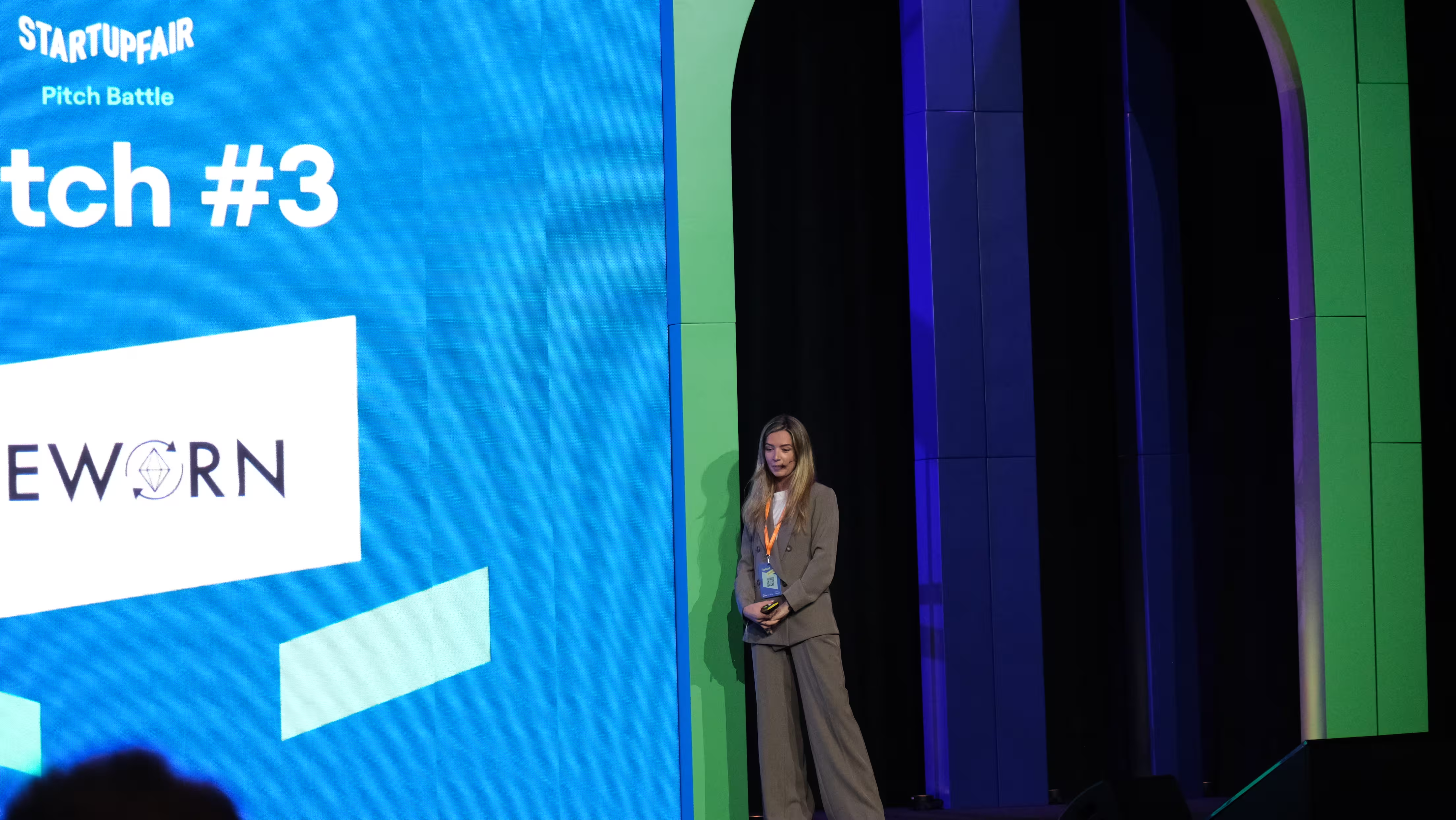
PulpTronics took the stage with a very different proposition: paper electronics.
RFID tags are used throughout retail and logistics, from inventory management to automated checkout. According to co-founder and CEO Chloe, more than 45 billion such tags are produced for single use each year.
The problem is what those apparently simple tags contain. Conventional RFID products combine chips, adhesives and metal antennas, creating waste in a product that is often discarded almost immediately.
PulpTronics says its patented laser-based technology can turn carbon already present in paper into a conductive material, allowing the company to build a recyclable RFID tag without a metal antenna.
According to the pitch, the solution could reduce costs by 30 percent and CO2 emissions by 60 percent. The company has secured eight letters of intent, selected four global brands for partnerships and recently raised £2 million to automate more of its production.
Its ambition also goes beyond RFID. The team sees the underlying technology as a platform for other forms of disposable electronics.
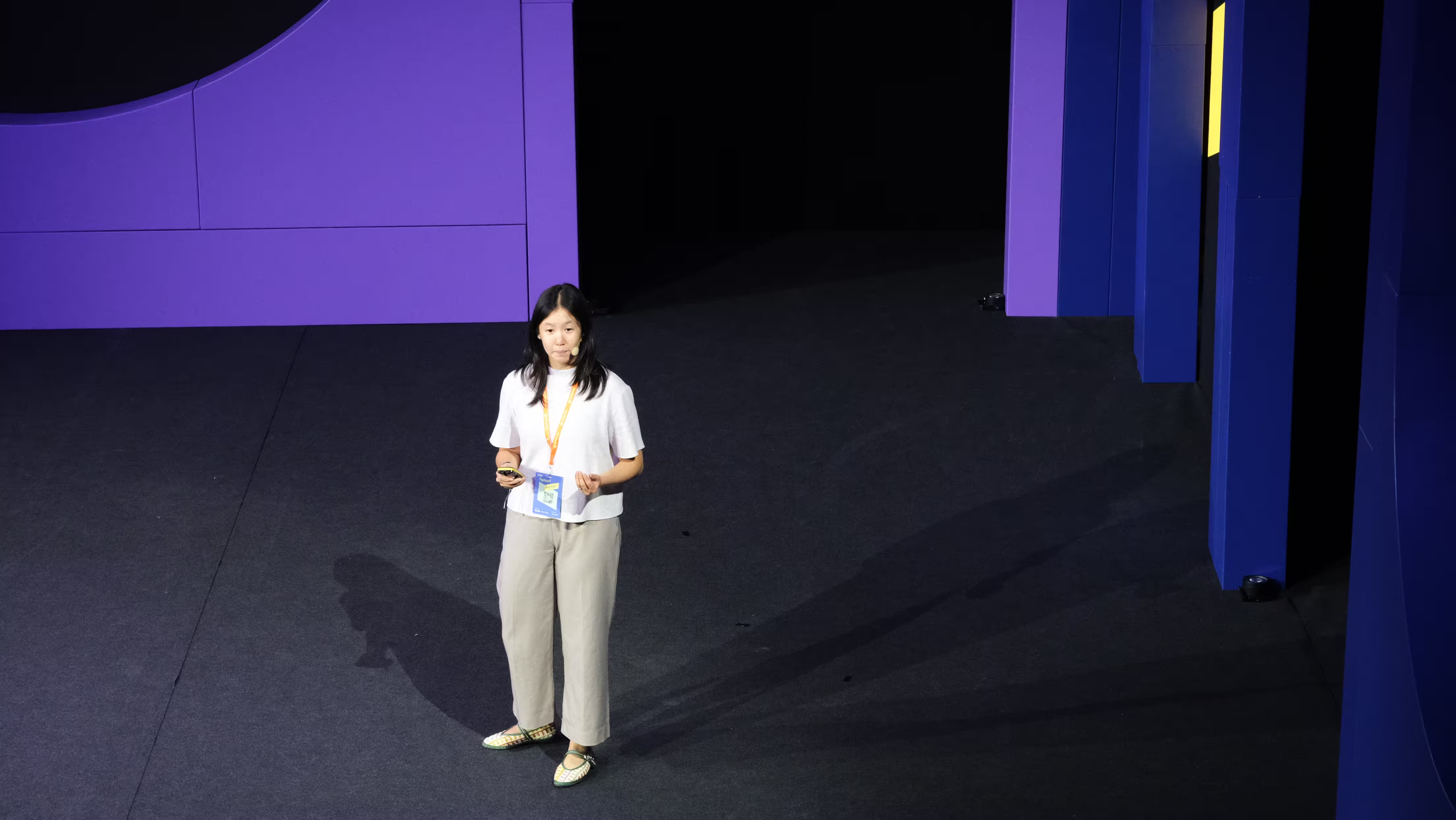
TrueMarket turns agricultural trade into an investable asset
TrueMarket CEO and co-founder Chiara built her pitch around a fictional small mango farmer named Pepe.
The story illustrated a very real financing problem. Small agricultural producers can have legitimate buyers abroad but still struggle to access short-term working capital. Buyers may delay payment to protect themselves from fraud or delivery risk, while traditional lenders may be unwilling to finance the producer.
TrueMarket is trying to close that gap with an AI-powered infrastructure for agricultural trade.
Contracts are created on the platform, the parties and transaction receive an AI-assisted credit profile, and investors or financial institutions can provide capital against the trade. Funds can then be released as predefined milestones are completed.
The company said it processed more than $20 million in transactions, generated $700,000 in revenue last year and is targeting $1 million in revenue this year.
TrueMarket is currently raising a $1 million round. According to the pitch, 55 percent had already been secured, leaving approximately $450,000 available.
It was one of the more financially mature pitches in the final, with both transaction volume and revenue already available to support the story.
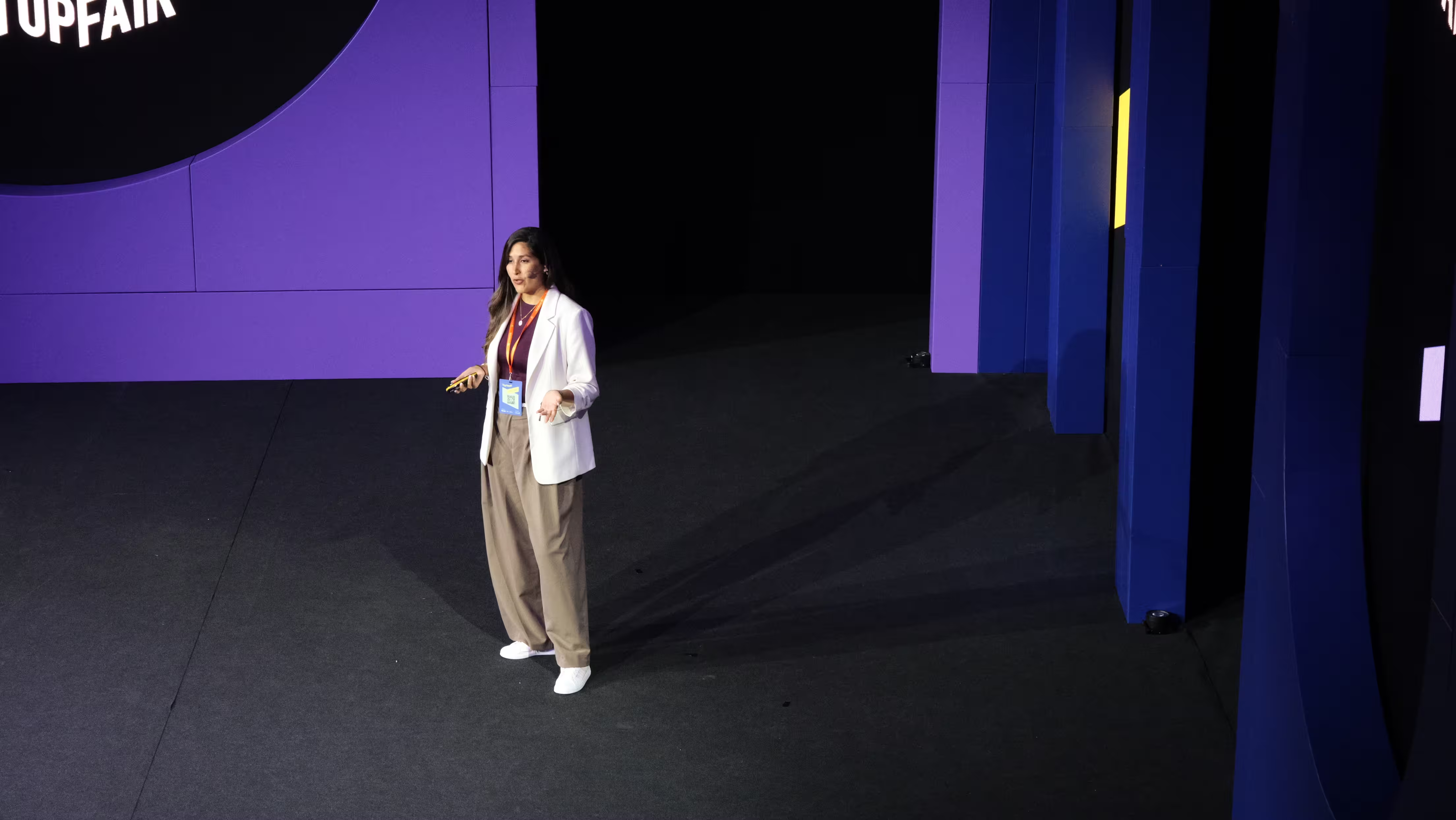
From xenon to bismuth: UVIRESO looks to change small-satellite propulsion
The final pitch brought the competition into space.
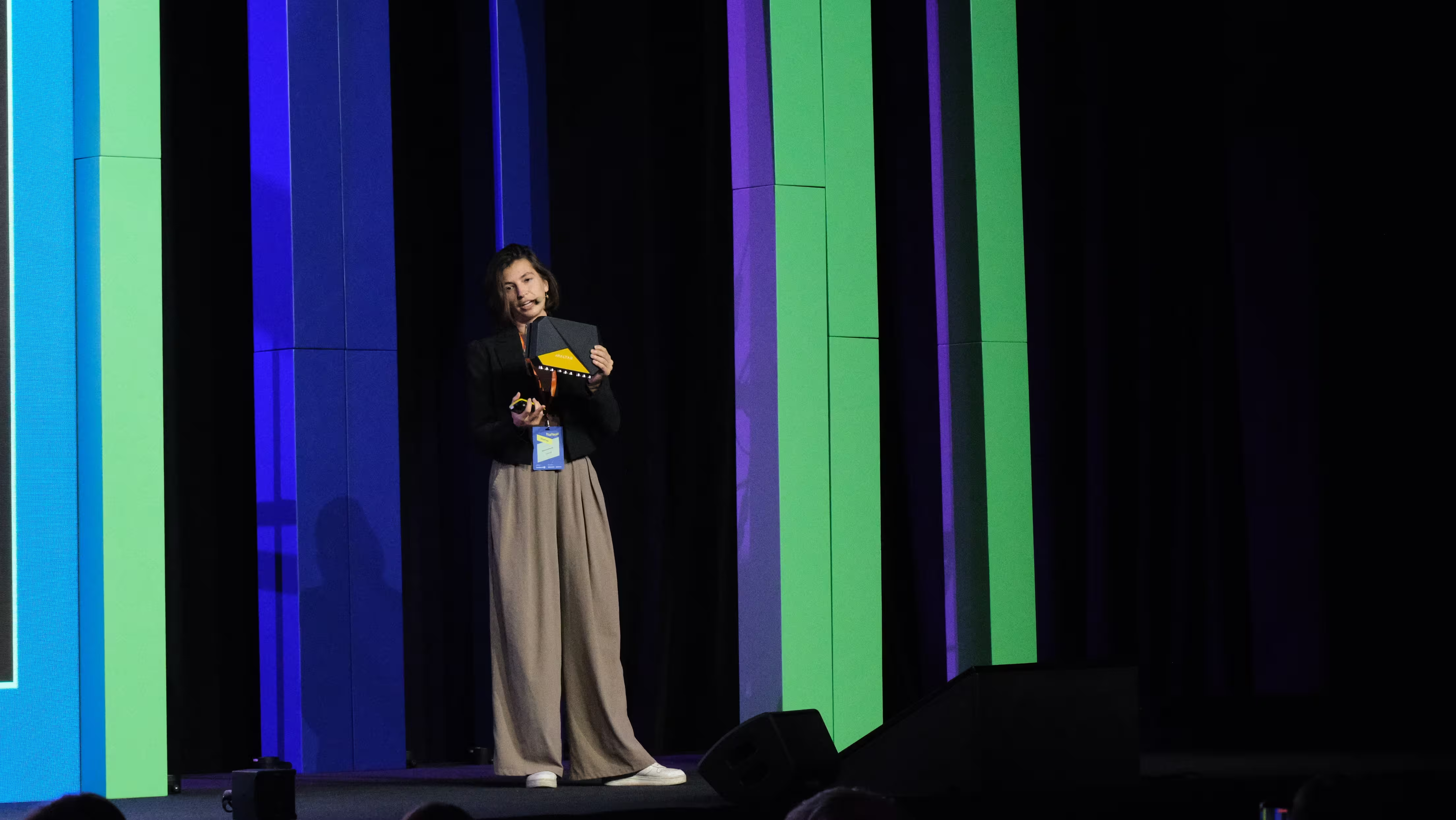
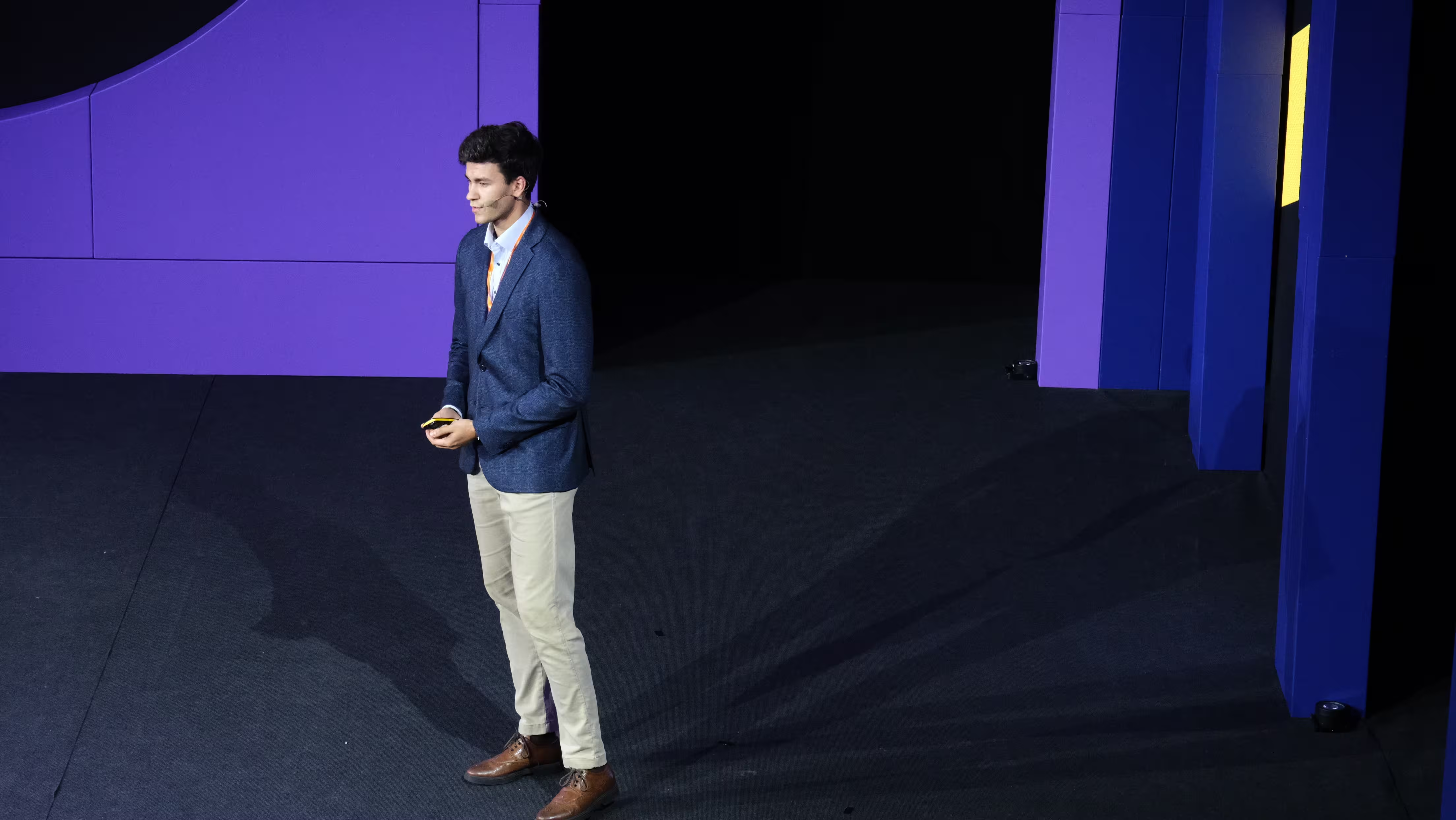
Vincentas, representing UVIRESO, presented an electric propulsion system for small satellites that uses bismuth as a metallic propellant instead of the xenon commonly found in existing electric propulsion systems.
The argument is partly economic and partly engineering-driven. Xenon is expensive, limited in supply and requires relatively large storage systems. UVIRESO believes bismuth can offer a cheaper and more compact alternative.
The team said its thruster is expected to cost around €210,000 and could save approximately €140,000 compared with competing systems. NanoAvionics is already involved as the company's first customer.
The team also highlighted progress in lowering the temperatures required to work with bismuth. While competing research approaches may require temperatures of around 800 degrees Celsius, UVIRESO said its technology can operate at around 450 degrees.
At the time of the pitch, the company was seeking €360,000 in investment as part of a broader €1.3 million funding requirement and preparing to begin another prototype project in a vacuum chamber.
Minutes later, UVIRESO would return to the stage for a very different reason.
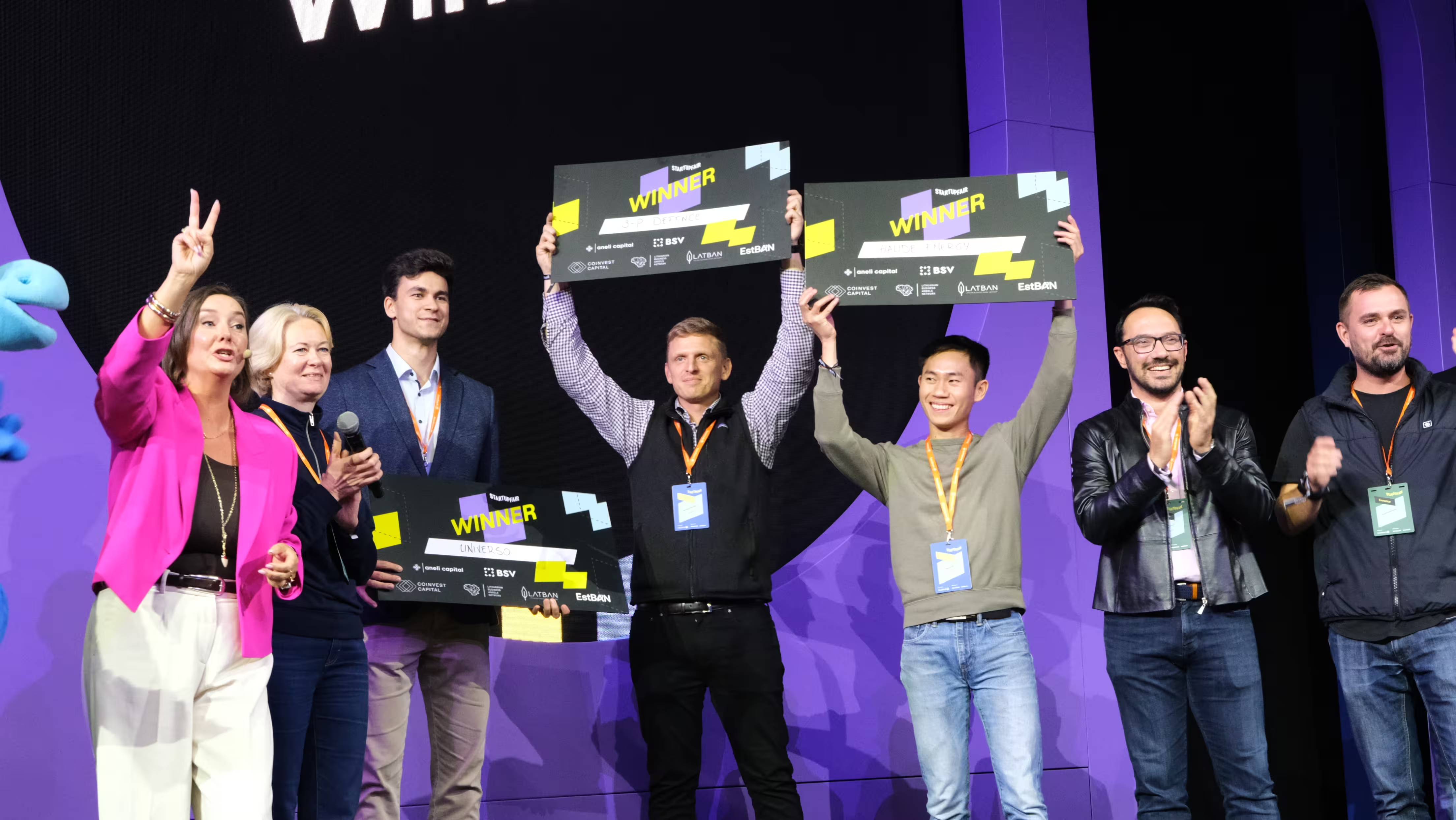
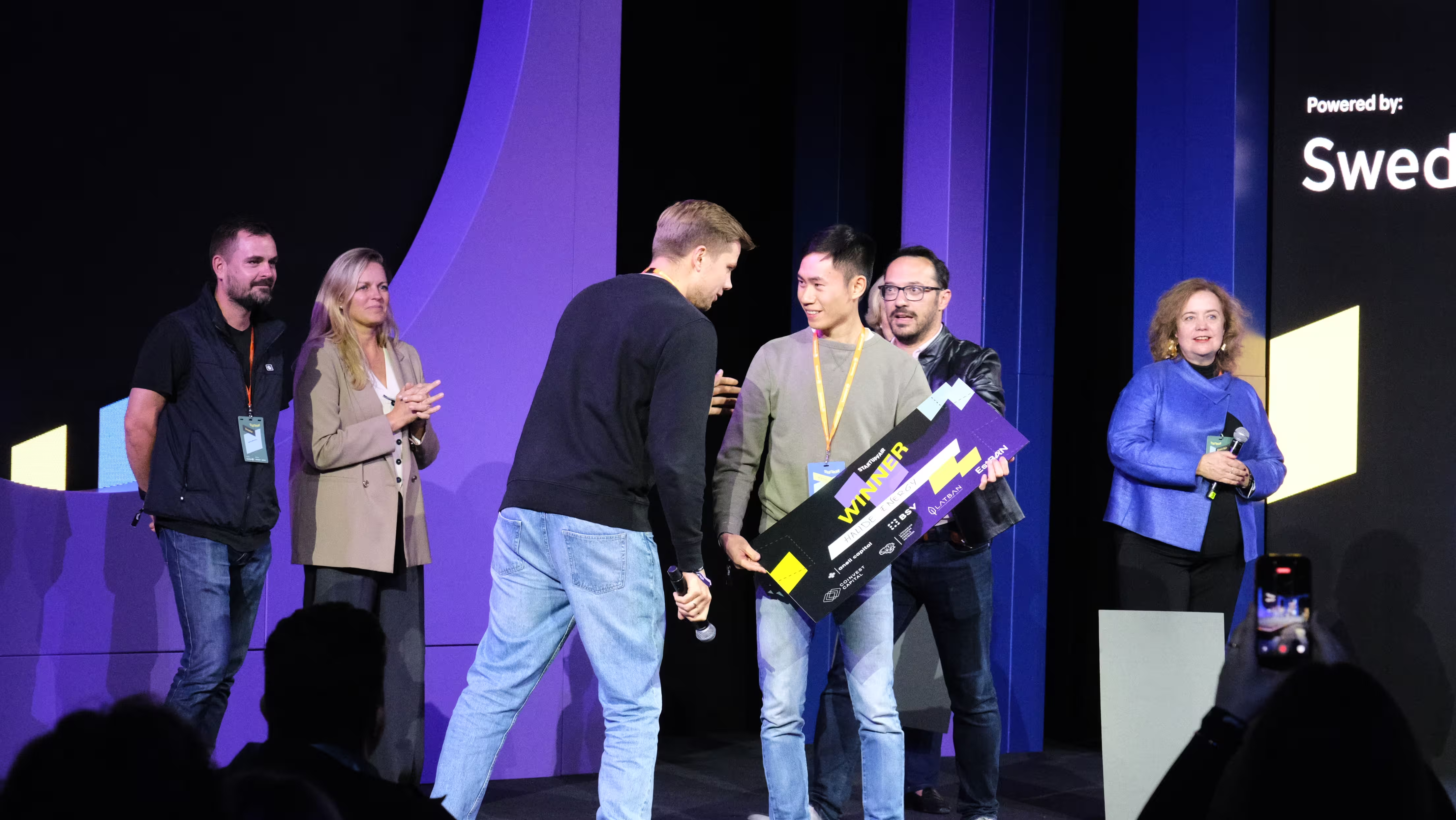
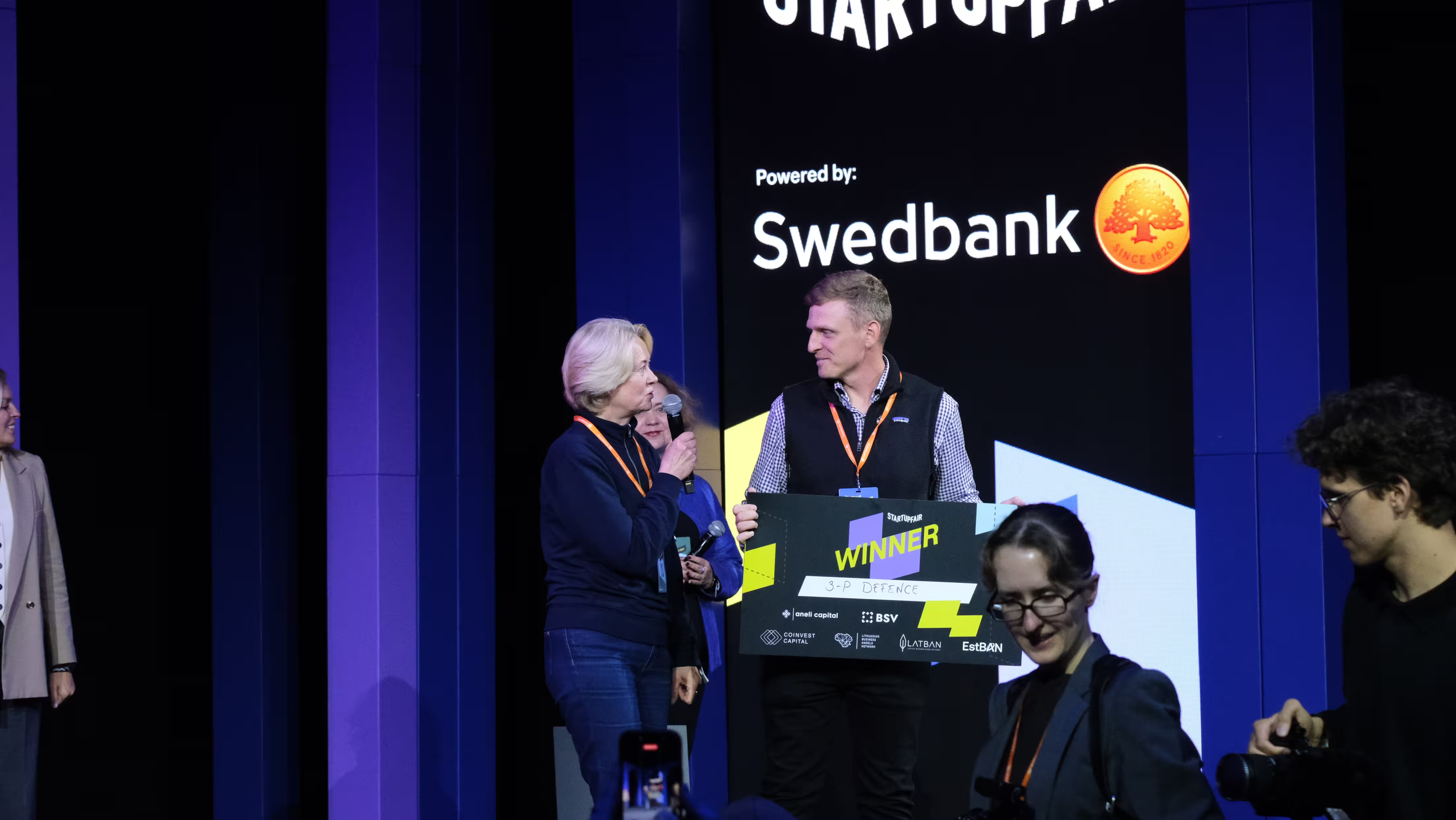
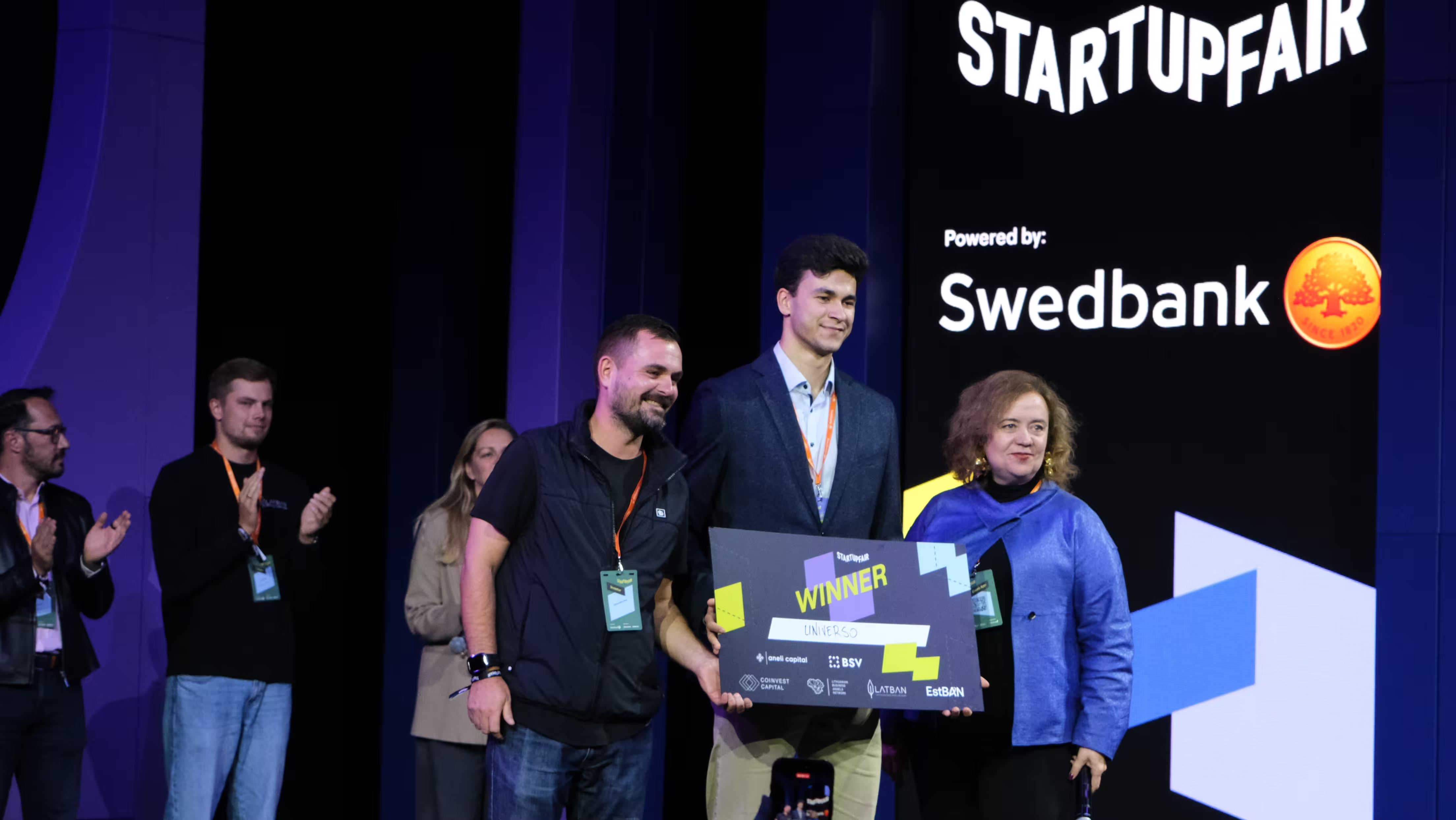
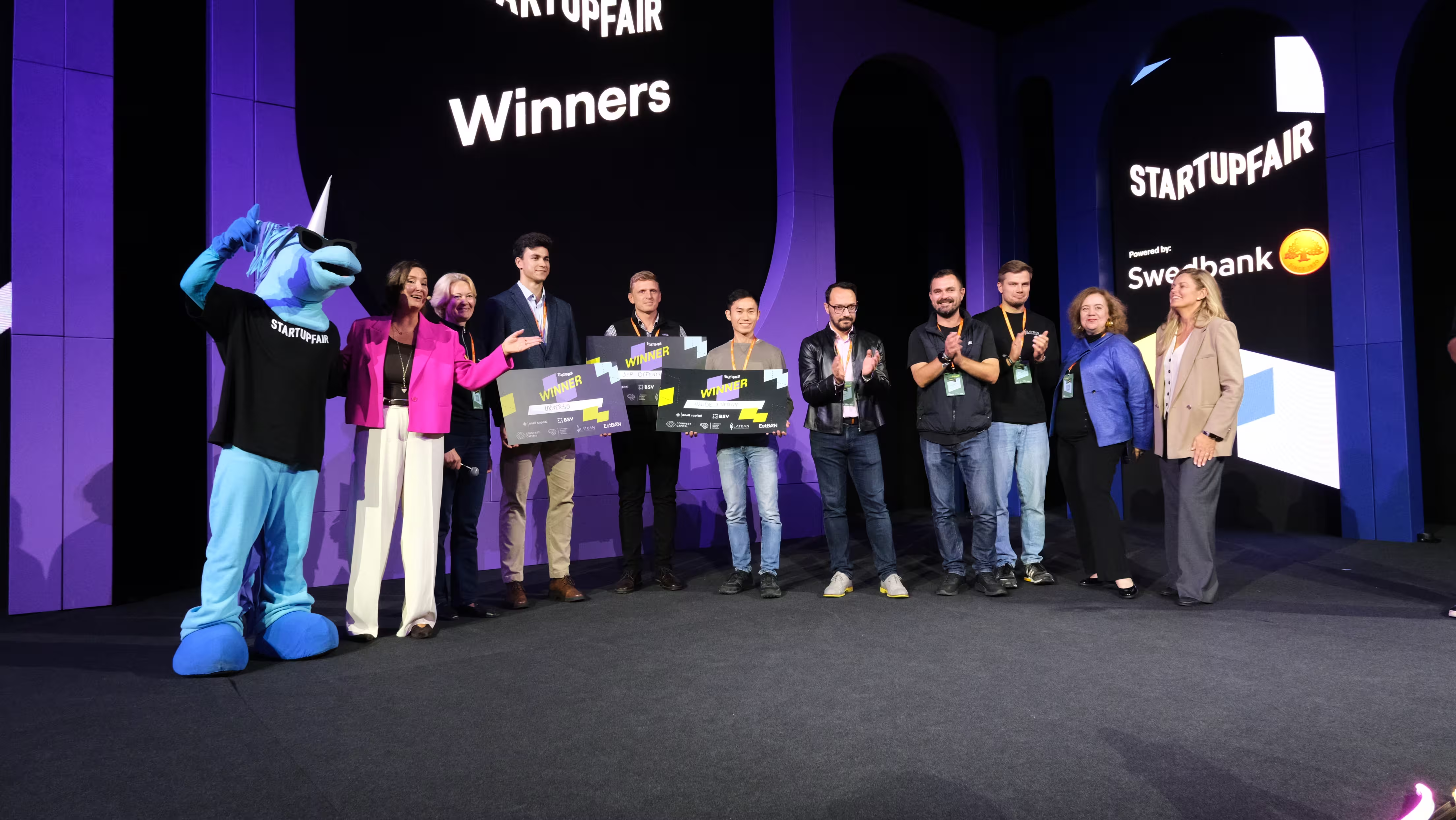
Halide Energy, 3P-DEFENCE and UVIRESO emerge as the main winners
After the final pitch ended, the jury left to deliberate.
The hosts initially described the available investment pool on stage simply as being worth more than €1 million.
The final announcement went considerably further.
Startup Fair subsequently confirmed Halide Energy, 3P-DEFENCE and UVIRESO as the three main Pitch Battle winners, with the companies invited to enter negotiations for more than €5 million in potential investment involving Aneli Capital, BSV Ventures, FIRSTPICK, LitBAN, EstBAN, Latvian Business Angels Network and Coinvest Capital.
It is an important distinction: the figure represents potential investment negotiations, rather than €5 million being automatically divided among the three companies.
The three winners also illustrated how broad the investor appetite at the event had become.
Halide Energy is developing energy-storage technology, 3P-DEFENCE is operating in the defence technology space, while UVIRESO is developing electric propulsion for small satellites. The result placed energy, defence and space technology at the top of this year's competition.
 |  |  |
Special prizes spread the recognition much further
The three principal winners were not the only startups to leave Startup Fair with new opportunities.
A series of partner prizes were also announced:

- Cornea Sense received the Life Sciences Baltics prize.
- UVIRESO received the Plug and Play prize.
- Cornea Sense also received the Sorainen prize.
- Callsy AI received the Copla prize.
- 3P-DEFENCE received the Talent Hub prize.
- Halide Energy received the Google Cloud prize.
- Alongwave received the Freshmango prize.
- Vocali received the TRINITI prize.
Startup Lithuania also announced that selected startups would receive tickets to Web Summit, extending the opportunity to continue building international connections beyond Vilnius.
The importance of these secondary awards should not be underestimated. Startup competitions are often framed around the headline investment figure, but access to accelerators, cloud infrastructure, legal expertise, recruitment support, media exposure and international events can be equally valuable to a young company.
Startup Fair itself says Pitch Battle alumni from 2024 and 2025 have already gone on to raise more than €22 million, suggesting that the value of the competition is often measured months after the stage lights are switched off rather than on the day itself.
Startup Fair is increasingly becoming a network, not just an event
There was plenty on stage at Startup Fair 2026 to justify attending: prominent speakers, investor discussions, ambitious founders and a Pitch Battle that ended with more than €5 million in potential investment negotiations.
But the most notable development this year may have happened away from the microphones.
Compared with previous editions, the conference devoted visibly more attention to creating places and tools for people to actually meet. More networking space, dedicated meeting infrastructure, matchmaking through Brella, the expanded Startup Area and a program designed to keep investors, founders and partners moving between conversations changed the rhythm of the event.
That direction was consistent with Startup Fair's own positioning. The organizers repeatedly described the conference as a place for meaningful connections and matchmaking, while encouraging startups to treat networking itself as a central part of the event rather than an activity squeezed between panels.
And by the end of the day, with more than 2,000 attendees and close to 1,000 meetings or connections reported from the stage, that strategy appeared to have worked.
Startup Fair 2026 therefore felt less like a collection of talks with a startup competition attached and more like an active marketplace of ideas, capital and relationships.
The Pitch Battle produced its winners. Panels produced their talking points. But for many people in LITEXPO, the most valuable outcome may have been much simpler: meeting the right person at the right time.
And that, increasingly, seems to be what Startup Fair wants to be about.

“Some times I write about breakthrough startups, digital ecosystems, and how innovation is changing the way we build businesses.”

Discussion
Leave a Comment
Comments (5)
Feels a bit like hype but also useful. Panels ok, matchmaking sounds a bit like PR spin until followups prove it. still, cool vibes overall
I've seen this matchmaking work at smaller meetups, those 1k meetings can turn into real money months later. Curious how many became term sheets tho, not just intros
Was UVIRESO's bismuth claim really at 450C? sounds low compared to papers, if true that's huge. Anyone got follow up links or papers? kinda skeptical
Makes sense tbh, investors hunting off-stage, startups living in booths. More meetings, less theatre. Pace felt different, in a good way.
Wow, made me rethink conferences, networking first, talks second. Love the focus on real meetings, but curious if Brella matches actually turn into deals? Feels promising tho...