
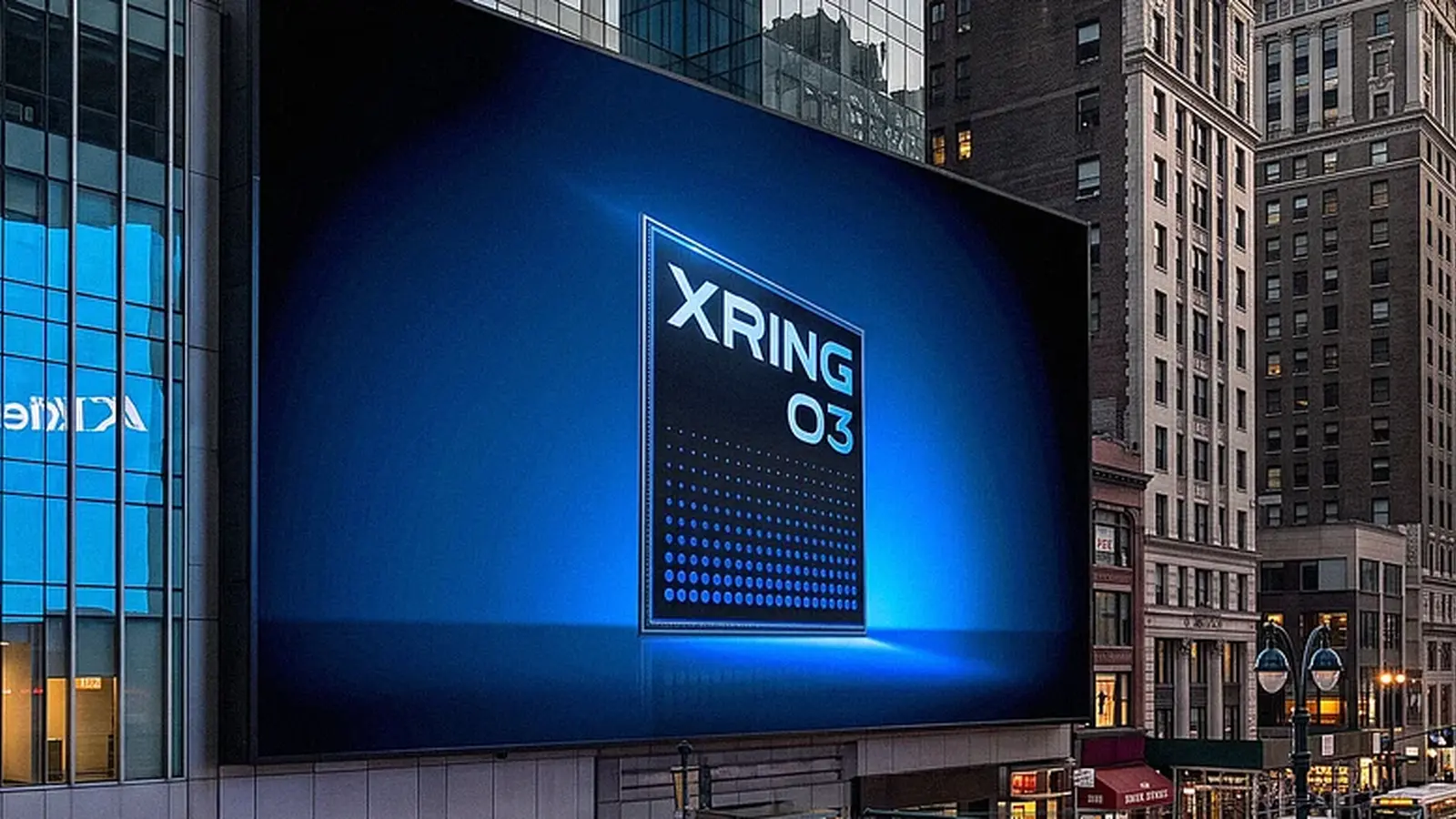
Something is stirring beneath Xiaomi's next slate of devices. A mysterious model marked M367FC popped up on Geekbench and, in plain numbers, began rewriting expectations.
Early benchmark runs put the Xiaomi tablet’s multi-core score north of 14,000 — peaks of 14,319 and 14,153 were recorded, while single-core results landed between 3,474 and 3,710. Those figures offer the first concrete glimpse of the Xring O3's raw pace long before the silicon reaches stores.
A real contender, with an odd mix of choices
The chip itself is a 10-core design: four cores at 3.15 GHz, four at 3.69 GHz, and two high-performance cores hitting 4.36 GHz. Graphics duties fall to a 16-core Mali-G2-Ultra-NX GPU. On paper Xiaomi is claiming dramatic generational jumps — about 60 percent CPU gains, an 85 percent GPU uplift, and roughly 64 percent better GPU power efficiency — numbers that, if accurate, would put the Xring O3 comfortably in flagship territory.
There’s an interesting caveat. While rivals are chasing 2 nm processes, Xring O3 is built on 3 nm. But Xiaomi counters with a memory story: this is reported to be the first mobile chip to support LPDDR6. Expected pairings include 16 GB of CXMT LPDDR6 memory running at up to 12,800 Mbps and delivering memory bandwidth close to 113.8 GB/s. Fast memory can blur the line between process-node disadvantage and real-world performance.

On the AI front the chip also promises heavy firepower — around 200 TOPS tensor performance and 3.13 TFLOPS in vector workloads, plus claims of up to 45 percent better NPU performance. Xiaomi has even posted an AnTuTu number of 5.22 million, which, if validated on retail hardware, would be a milestone for mobile SoCs.
Which devices will carry it? Reports point to the Xiaomi 18 Fold and the Xiaomi Pad 9 Pro Max, the latter likely being the M367FC that showed up in testing. The combination of a ten-core CPU, a beefy Mali GPU, LPDDR6 memory and elevated AI throughput suggests Xiaomi is targeting multitasking, heavy productivity and AI-assisted features rather than just headline CPU clocks.

Benchmarks are an early cue, not a final verdict. But the Xring O3’s appearance raises the question: can smart platform choices and faster memory offset node differences and still deliver class-leading experiences? If Xiaomi's claims hold up in real-world apps and sustained workloads, the answer may well be yes.
If validated in shipping devices, the Xring O3 could reshape expectations for performance and AI in high-end Android hardware.

“I cover emerging technologies, digital innovation, and the intersection of tech and everyday life. My goal is to make complex trends accessible and inspiring.”

Discussion
Leave a Comment
Comments
No comments yet. Be the first.