
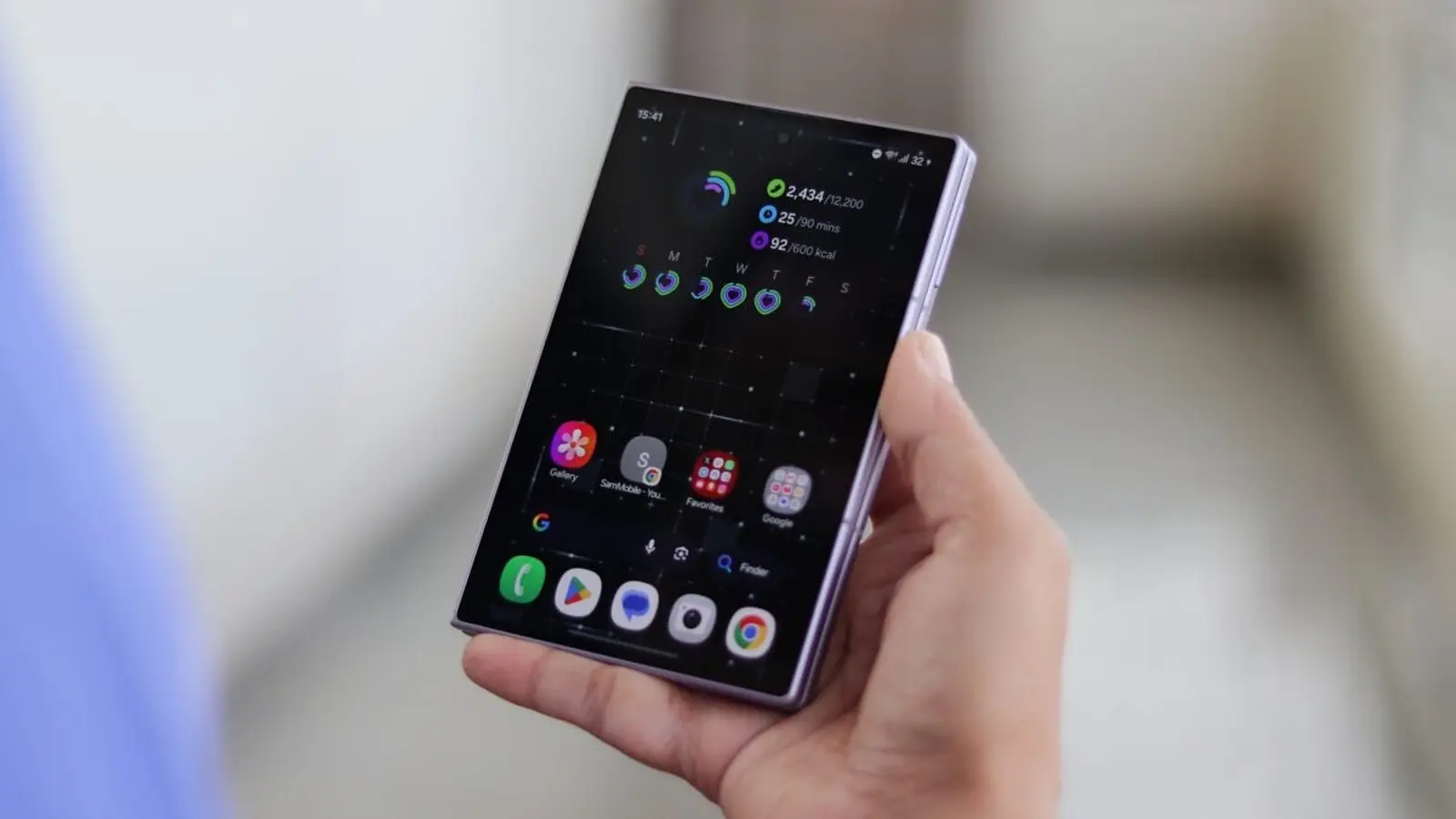
Picture a foldable that wants to stop the conversation about which phone has the fastest chip. That’s the story Xiaomi is starting to sell. The company confirmed its next flexible phone will carry the name Xiaomi 18 Fold and arrive in September, and it will debut the homegrown Xring O3 processor.
Not just a number on a spec sheet
The Xring O3 doesn’t whisper performance. In AnTuTu V11 it posted a staggering 5,228,014 points. Short sentence. Big implication. That score tops every smartphone system-on-chip we’ve seen so far, at least in the tests Xiaomi chose to show.

Under the hood, the chip is a deca-core design. Two C1-Ultra cores reach up to 4.35 GHz. Four C1-Premium cores hit up to 3.68 GHz. Four C1-Pro cores run up to 3.15 GHz. Mix that with LPDDR6 memory support and a reported 113.8 GB/s bandwidth, and you’re looking at a platform built around sustained throughput as much as peak bursts.

Geekbench 6.5 numbers tell a similar story. Single-core sits at 3,945 while multi-core surges to 15,221. Apple’s A19 Pro still holds an edge in single-threaded work, but in multi-core workloads the Xring O3 stretches ahead. Does that shift the balance for heavy multitaskers and pro-style apps? It very well could.
GPU gains are dramatic in Xiaomi’s internal comparisons. In selected tests the new graphics engine outpaced the Xring O1 by 85 percent, 94 percent and even 182 percent. Those are wide margins. And Xiaomi says the O3 also beats Apple’s A19 Pro in the three GPU tests it shared.

So what does this mean for the Xiaomi 18 Fold? Expect a device that leans into power: faster app loading, smoother edge-to-edge animations, and better performance when you push multiple apps or games on the unfolded display. Real-world stamina will depend on thermals and software tuning, but the silicon is no longer the weak link.
This is the moment Xiaomi's chip effort steps out of the shadows and looks like a legitimate contender against Qualcomm, MediaTek and Apple.

Names matter. Xiaomi skipped the Mix Fold 5 label and went straight to 18 Fold, signaling a fresh chapter rather than an incremental update. Launch timing in September gives the company a chance to set the conversation for the fall — not just about folding displays, but about whether vertically integrated chip design can be more than a marketing line.

One caveat: benchmark dominance doesn’t always translate to everyday dominance. Software optimization, thermal behavior and battery management determine how that horsepower feels across a day. Still, the Xring O3’s specs and numbers make a clear statement: Xiaomi intends to fight at the high end.
If you track the arms race in mobile silicon, this is one to watch. September will tell us if the Xiaomi 18 Fold is a headline-grabber or the start of a more serious challenge to established chipset leaders.

“I love exploring gadgets, apps, and trends that redefine how we connect, work, and play in a digital world.”

Discussion
Leave a Comment
Comments (2)
Is that AnTuTu score legit? Sounds insane but benchmarks are easy to game, and software tuning + thermals decide the day to day. I'll wait for reviews...
Wow, Xiaomi actually aiming for chip supremacy? 5.2M AnTuTu... wild. Hope thermals dont ruin it, but excited to see real world tests.