
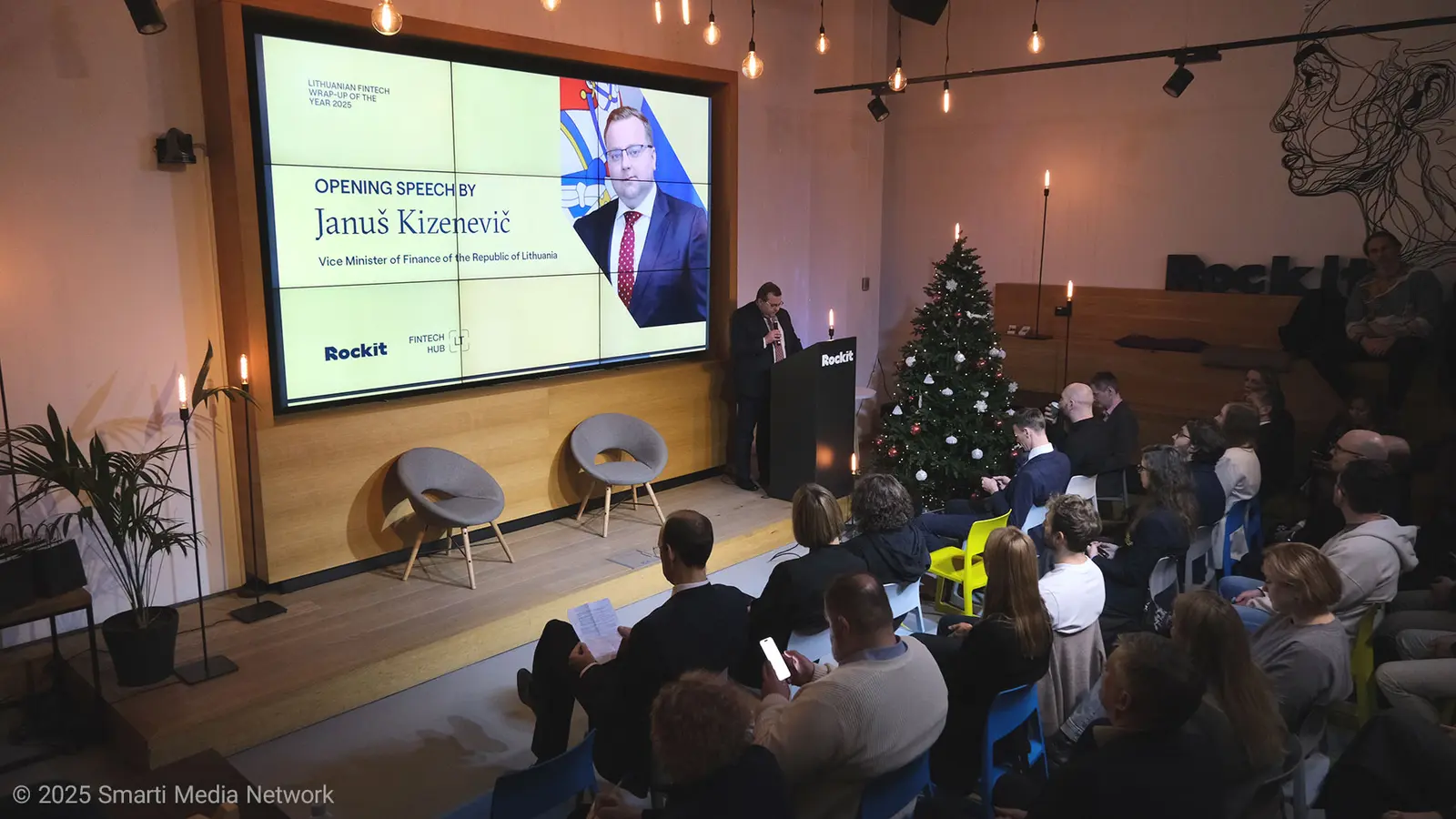
VILNIUS – Opening the year-end gathering of Lithuanian Fintech Wrap-up of the year 2025 at ROCKIT, Vice Minister of Finance Januš Kizenevič delivered a clear message to the community: while the past decade has been a success story, resting on laurels is not an option.
In a speech that bridged the gap between regulatory caution and aggressive innovation, Kizenevič outlined a refreshed roadmap for the sector, emphasizing that the Ministry views the fintech community not just as market participants, but as a “strategic national asset.”
A Decade of Courage
Reflecting on the journey, the Vice Minister reminded the audience of the bold decision Lithuania made nearly ten years ago to prioritize fintech—a gamble that required courage but ultimately paid off.
“Our fintech ecosystem stands out because of cooperation, trust, and a shared drive to innovate,” Kizenevič stated, noting that the country has successfully built a respected regulatory environment that continues to attract international innovators.
He highlighted recent legislative wins that prove the government’s commitment to continuity, including the implementation of DORA and instant payments ahead of EU timelines, and crucial adjustments to reduce disproportionate AML burdens for low-risk companies.
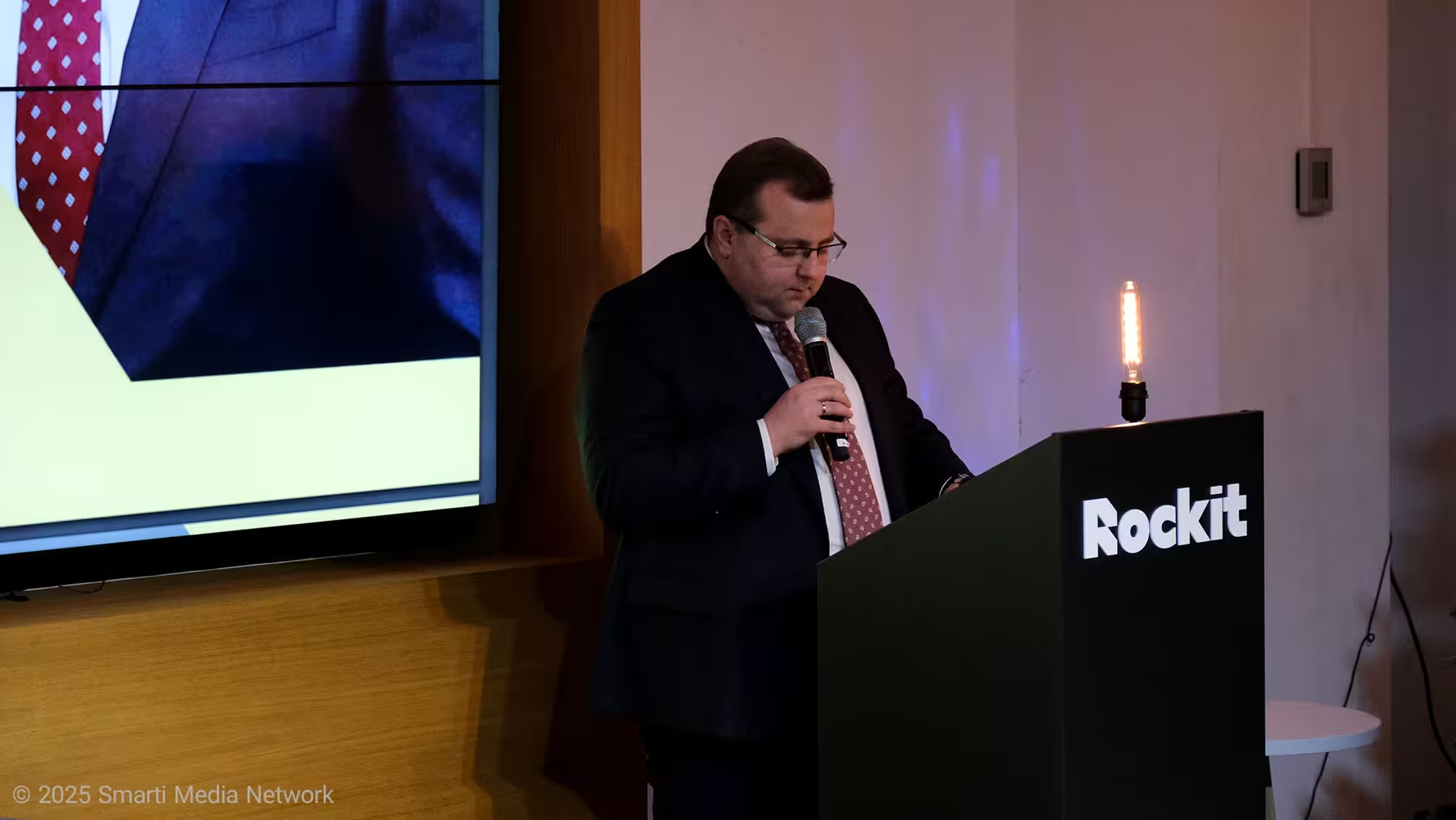
The Ambition Gap: “We Need to Keep Moving”
However, the core of Kizenevič’s address was not celebratory, but forward-looking. He argued that the global landscape is shifting so rapidly that previous benchmarks are becoming obsolete.
“What was impressive a few years ago is not enough today. Definitely not enough,” he asserted. “To stay competitive, we need to keep moving.”
To address this, the Ministry of Finance has reviewed the existing Fintech Guidelines (2023–2028). While the long-term vision remains, the measures have been updated to reflect immediate technological realities. Kizenevič unveiled six new directions for the next phase of growth:
1. Embracing Web3 and Blockchain Clarity Perhaps the most significant update for the tech-heavy audience was the promise of clearer rules for blockchain-based solutions. The Vice Minister explicitly mentioned Smart Contracts, Decentralized Autonomous Organizations (DAOs), and the tokenization of Real-World Assets (RWA). “Clarity encourages innovation and investments,” he noted.
2. Activating the AI Sandbox With Artificial Intelligence reshaping financial services, the Ministry is calling on fintechs to actively use the AI Sandbox. The goal is twofold: to allow companies to test solutions safely and to help the regulator build national expertise in AI governance.
3. A Single Fintech Innovation Institution In a move to cut red tape, the government is exploring the creation of a "single fintech innovation institution." This body would aim to streamline processes, speed up experimentation, and improve support for market entrants.
4. Addressing the Talent Crunch Acknowledging the specific shortage of Anti-Money Laundering (AML) specialists, Kizenevič announced plans to work closer with employment services to promote fintech careers and strengthen national competencies.
5. Global Competitiveness & Public Sector Education The final points focused on constant international benchmarking to identify gaps early, and a new initiative to have fintech companies present their business models directly to public institutions to improve decision-making.
The Road Ahead
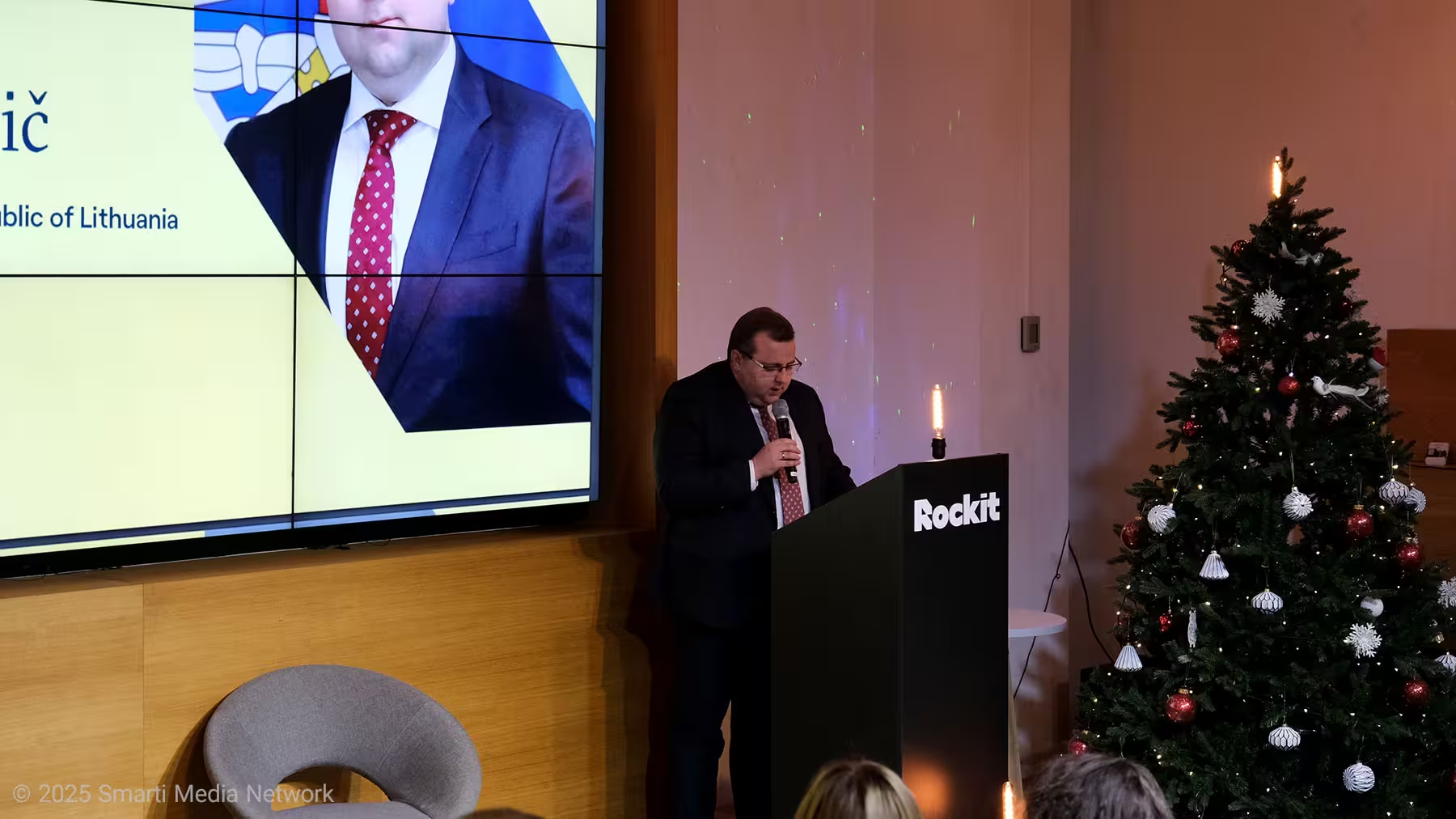
Concluding his remarks, Kizenevič reiterated the ultimate goal: to keep Lithuania at the "front line" of financial innovation in AI, blockchain, digital identities, and real-time payments.
“The Ministry of Finance remains open to dialogue and new ideas,” he promised, setting a collaborative tone for the panels to follow. “I’m confident that next year will bring constructive discussions, hard work, and strong results.”


“Some times I write about breakthrough startups, digital ecosystems, and how innovation is changing the way we build businesses.”

Discussion
Leave a Comment
Comments (2)
Quick take: ive seen single innovation hubs turn into slow gov bodies. If they really cut red tape and train AML ppl in fintech, fine. but i'm skeptical, needs action fast
Hmm, can Lithuania actually keep this pace? Web3 rules sound good but enforcement, AML gaps... curious how they'll staff the AI sandbox tho and who pays?