
The narrative of Lithuania’s fintech ecosystem has shifted. It is no longer a story of a scrappy startup scene trying to prove its existence, but rather a mature economic engine facing the complex realities of adulthood.
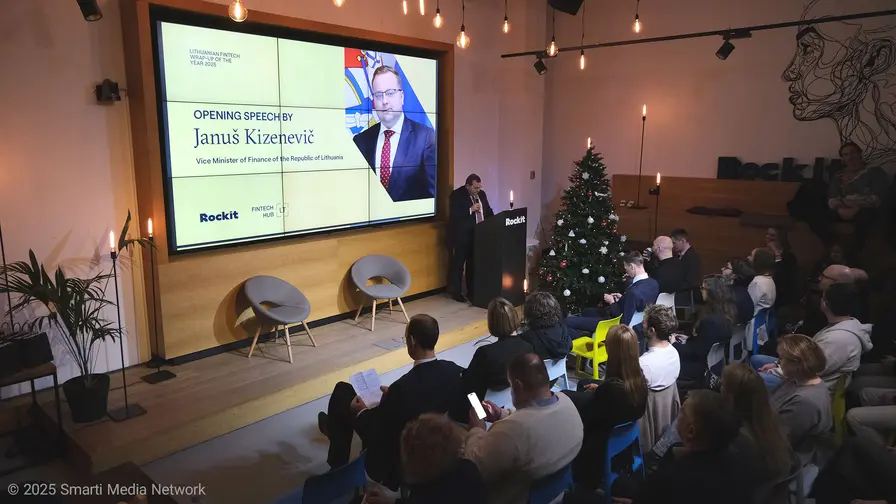
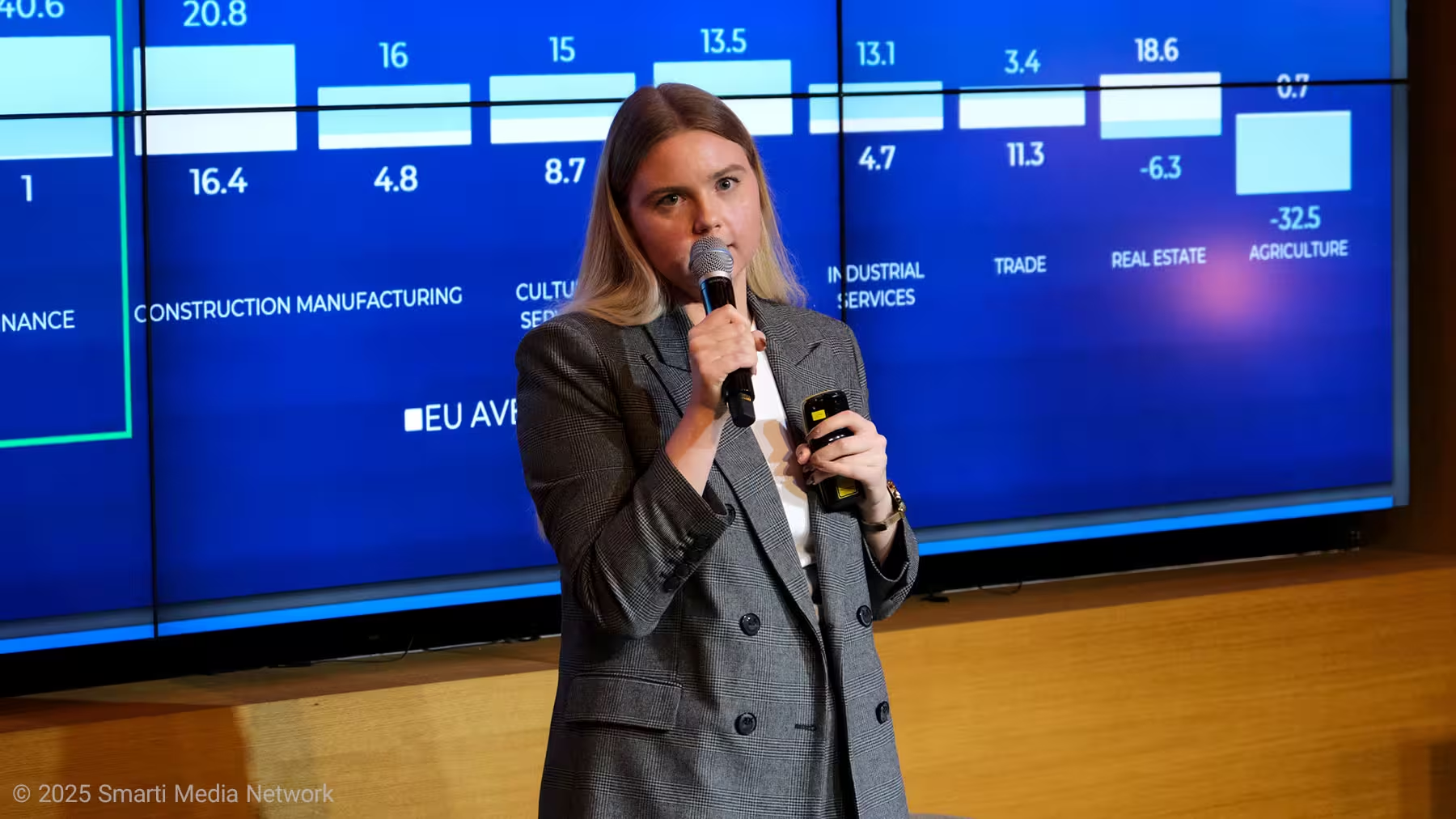
This evolution was the centerpiece of the "Lithuanian Fintech Wrap-up of the year 2025" presented today at ROCKIT by Greta Ranonytė, Head of Fintech Hub LT. Speaking to a packed room of industry leaders, regulators, and innovators, Ranonytė provided the most comprehensive data set of the year, painting a picture of a sector that now serves as a critical pillar of the national economy while bracing for significant structural changes in 2026.
The Macro Impact: A €3.6 Billion Asset
Ranonytė began by addressing the fundamental question often asked by skeptics: How do we measure the real value of fintech companies that operate from Lithuania but serve the world?
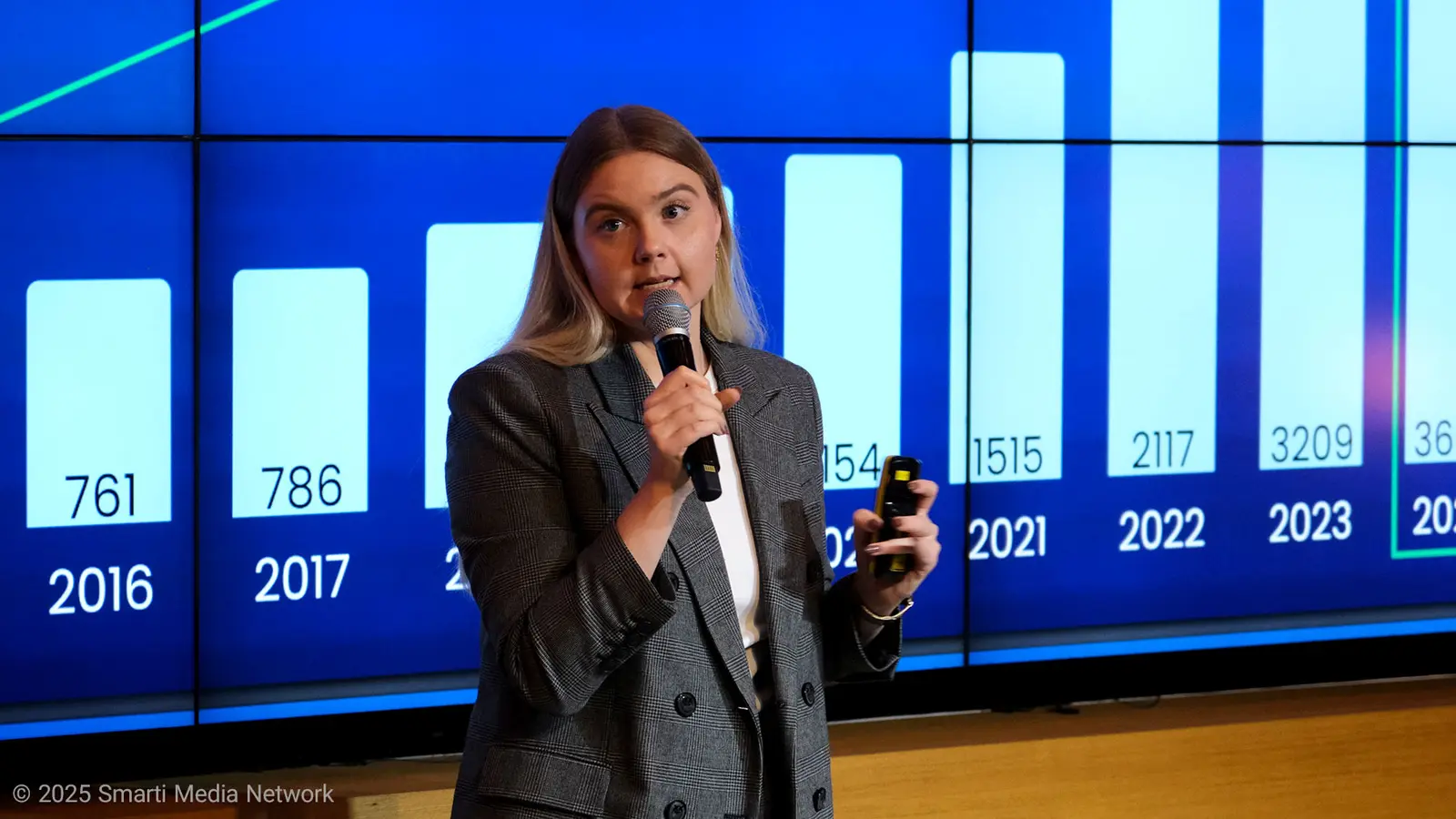
Citing fresh data from Eurostat, the verdict was definitive. The "value added" by the sector to the Lithuanian economy has reached €3.6 billion in 2024. "We can see that the exponential growth started exactly when fintechs joined the ecosystem," Ranonytė noted, pointing to a ten-year trend line that spikes dramatically with the rise of the sector.
However, the impact goes beyond GDP numbers; it has fundamentally reshaped the labor market. Over the last decade, the number of people working in finance and insurance in Lithuania has grown by a staggering 40%. To put this in perspective, the EU average growth for this sector is a mere 1%.
"What is distinct about Lithuania is where these people are working," Ranonytė explained. "Unlike the EU average, where talent is concentrated in large legacy corporations, our growth is driven by small and medium-sized fintech businesses."
The Tax Reality and the "Binance Effect"
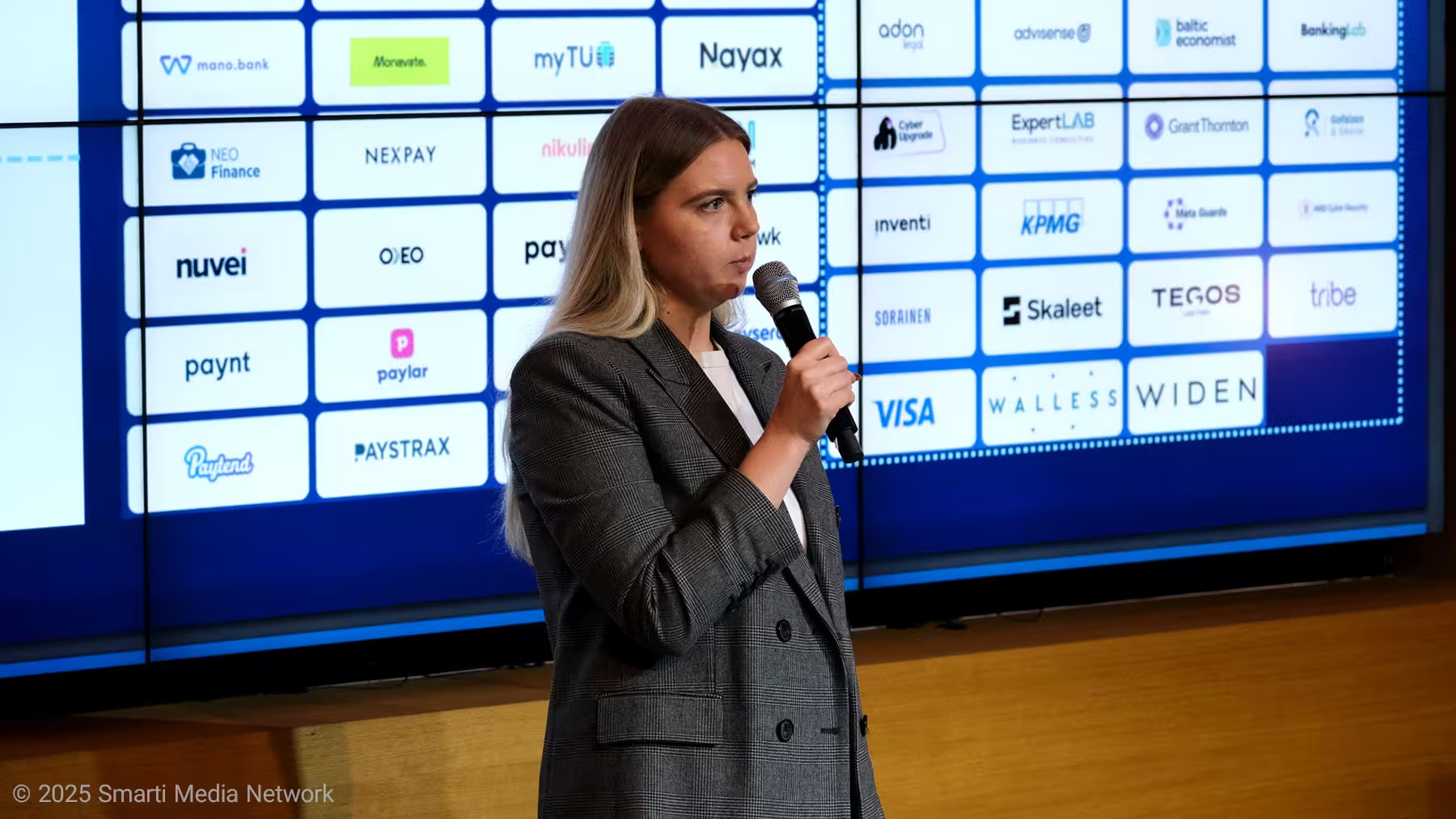
The financial contributions of the sector have hit record highs. Data from Okredo reveals that in just the first three quarters of 2025, fintechs contributed €232 million in taxes—a figure that nearly equals the total tax contribution for the entire year of 2024.
Yet, Ranonytė issued a candid warning about interpreting these numbers for the future. She highlighted that the second-largest taxpayer in the sector remains DFINITY (Binance).
"It is very probable that when I stand here next year, the tax number will be lower," she admitted. With the transitional period for MiCA (Markets in Crypto-Assets) regulation ending this year, the shifting operations of major crypto players could leave a dent in the fiscal statistics of 2026.
Sector-by-Sector Deep Dive
Breaking down the ecosystem, Ranonytė provided a granular look at the health of different verticals:
1. Specialized Banks: Gaining Ground The sector now includes seven specialized banks, with a new license recently granted to Rato Credit Union. These institutions are no longer niche players; their total assets have exceeded €1.5 billion, marking a massive 50% growth compared to the second quarter of last year.
2. Payments & EMIs: Volume Over Quantity Electronic Money Institutions (EMIs) and payment companies processed €161 billion in transactions over the last 12 months (a 23% increase). However, Ranonytė noted a shift in the market's nature: "We are looking at qualitative growth. The number of licenses is not growing; it’s actually decreasing. But we see growth in volumes and products." She pointed out that this impressive volume brings increased scrutiny from the government regarding fraud and Anti-Money Laundering (AML), issues the association is taking "very reasonably" and seriously.
3. Lending: Overtaking Tradition Perhaps the most striking statistic came from the Peer-to-Peer (P2P) lending sector. These platforms have now amassed the largest non-bank consumer credit lending portfolio in the country, surpassing traditional consumer credit lenders. "They are showing fast growth—32% in financed amounts," Ranonytė said, adding that Crowdfunding is also surging, with Lithuania now ranking fourth in Europe for issued licenses.
The Consumer Trust Gap
Despite the industrial success, the sector faces a hurdle with the average Lithuanian citizen. A survey commissioned by Fintech Hub LT showed that while 36% of the population uses fintech services (often citing specific names like Revolut to understand the question) and 19% are eager to try, a large segment remains resistant.
The primary barrier? Loyalty to legacy banks. The number one reason cited for not using fintech was: "I trust my bank. I get everything I need there." "We need to work a little bit more on the knowledge of society and, of course, about trust," Ranonytė acknowledged.
2026 Outlook: Consolidation and Compliance
Looking ahead to 2026, the presentation outlined a landscape defined by consolidation and intense regulatory work.
M&A Wave: With competition heating up and license numbers stabilizing, the market is seeing more mergers and acquisitions.
Infrastructure Access: A key development to watch is the push for direct access to payment systems for non-bank fintechs.
The Crypto Wind-Down: For the crypto sector, the message was stark: "Wind down planning." Few new licenses are expected as the market adjusts to the full weight of EU regulations.
Ranonytė concluded with a direct message to the founders and CEOs in the room regarding their internal teams:
"When you go back to your companies, just hug your second-line specialists and officers. They are going to have a very intense year in 2026 when it comes to compliance functions."
With new AML packages and regulatory expectations rising, the "Wild West" era is definitively over, replaced by an era of professionalization, consolidation, and high-stakes compliance.


“Some times I write about breakthrough startups, digital ecosystems, and how innovation is changing the way we build businesses.”

Discussion
Leave a Comment
Comments (2)
Ive seen this in startups, compliance kills fast scaling, true. Hug your second line, theyll be buried in AML paperwork next year. oof
Is this even true? €3.6B sounds huge, but if Binance/DFINITY leaves, that tax spike will vanish. Curious how many firms actually profit long term