
The year 2025 will be remembered as the watershed moment for European financial regulation. It was the year the theoretical became operational—when the Digital Operational Resilience Act (DORA) went live, when the Markets in Crypto-Assets (MiCA) regulation finally bared its teeth, and when the AI Act began to reshape the boundaries of automated finance.
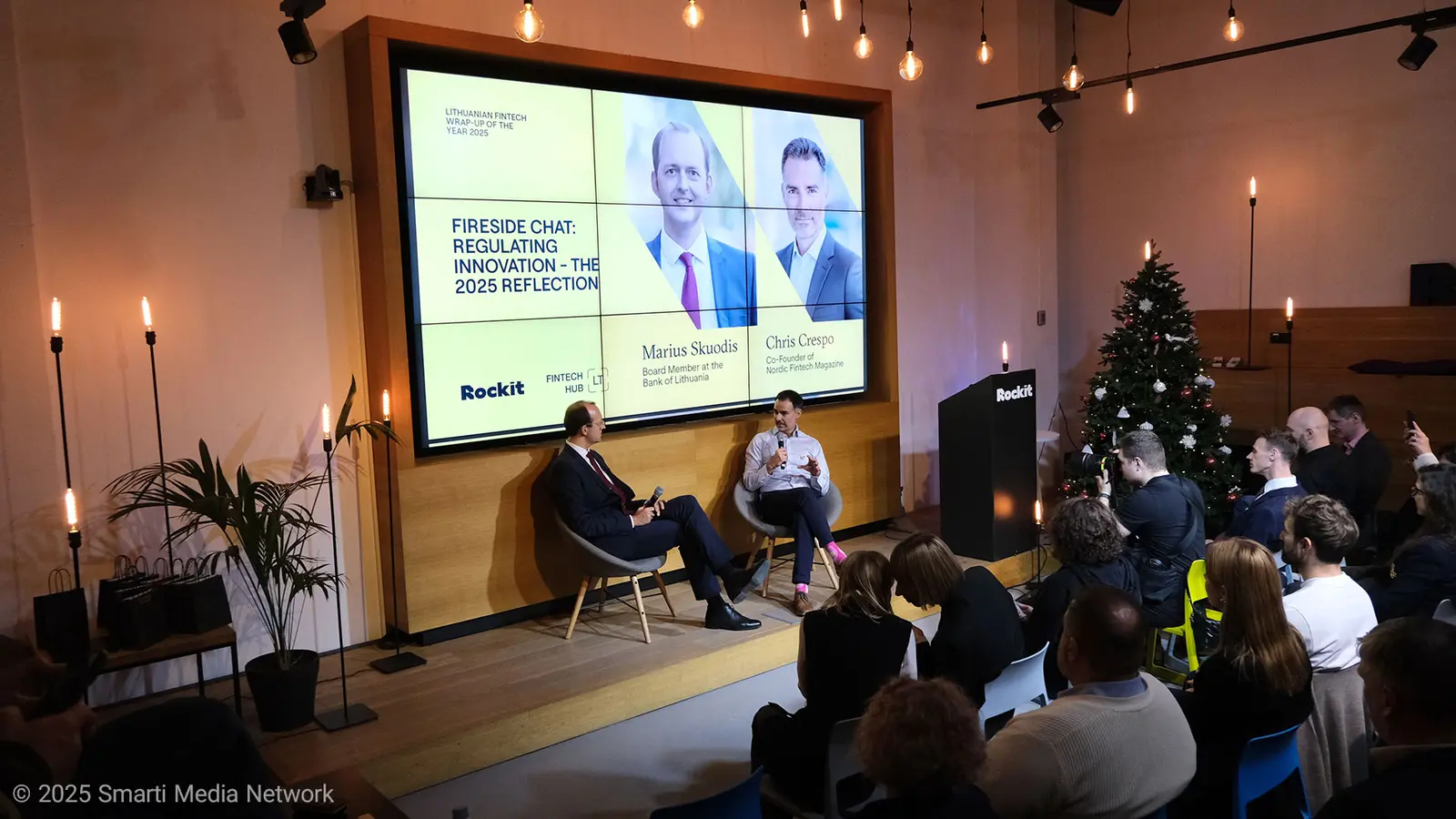
Against this backdrop of seismic shifts, the Lithuanian Fintech Wrap-up of the year 2025 at ROCKIT hosted a candid, high-stakes fireside chat that cut through the usual regulatory jargon. On one side sat Marius Skuodis, Board Member at the Bank of Lithuania, representing one of the continent's most progressive yet scrutinized regulators. Opposite him was Chris Crespo, Co-Founder of Nordic Fintech Magazine, tasked with asking the uncomfortable questions.
What followed was not a standard recitation of policy, but a raw reflection on missed expectations in the crypto sector, the "invisible threat" of competition lowering mortgage rates, and a redefined vision for 2026.
The 2025 Reality Check: "We Are Still Hungry"
Crespo opened the dialogue by acknowledging the momentous nature of the year. With DORA, MiCA, and the AI Act all landing simultaneously, the pressure on the regulator has been immense. His first query struck at the core of the central bank's philosophy: Has the weight of compliance dampened the appetite for innovation?
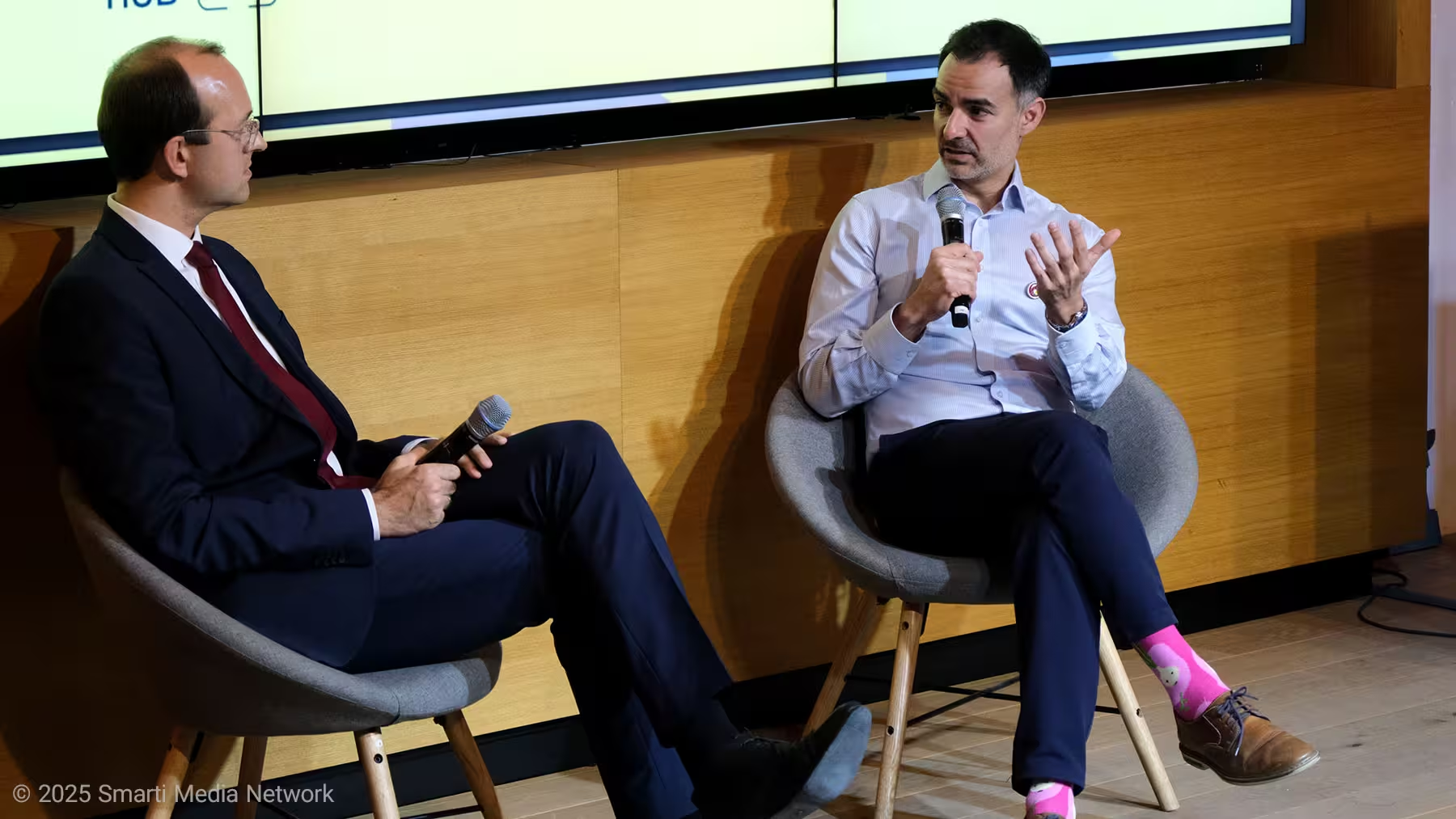
Skuodis’s response was immediate and defiant. "We are committed to innovations. We have always been. The question is, how fast are we adapting to new realities?"
He pointed to concrete wins as evidence that the regulator hasn't lost its edge. The issuance of the first MiCA license to Robinhood was a headline moment, but Skuodis hinted that more are in the pipeline ("I still expect some to come soon").
He also highlighted the DLT Pilot Regime, a cutting-edge regulatory sandbox for blockchain infrastructure.
But innovation wasn't just about startups. Skuodis drew attention to the traditional banking sector, noting the entry of PKO, the largest Polish bank, and the operational launch of FIBU. "I very much hope PKO will soon move to a normal subsidiary," he added, underlining the regulator's push for deeper commitment from foreign banks.
The Revolut Effect: The "Invisible Threat" to High Rates
One of the most compelling segments of the conversation revolved around the tangible impact of fintech on the average consumer. For years, Lithuanians have grappled with high interest rates on mortgages, a phenomenon often dismissed by experts as the cost of "geopolitical risk premium."
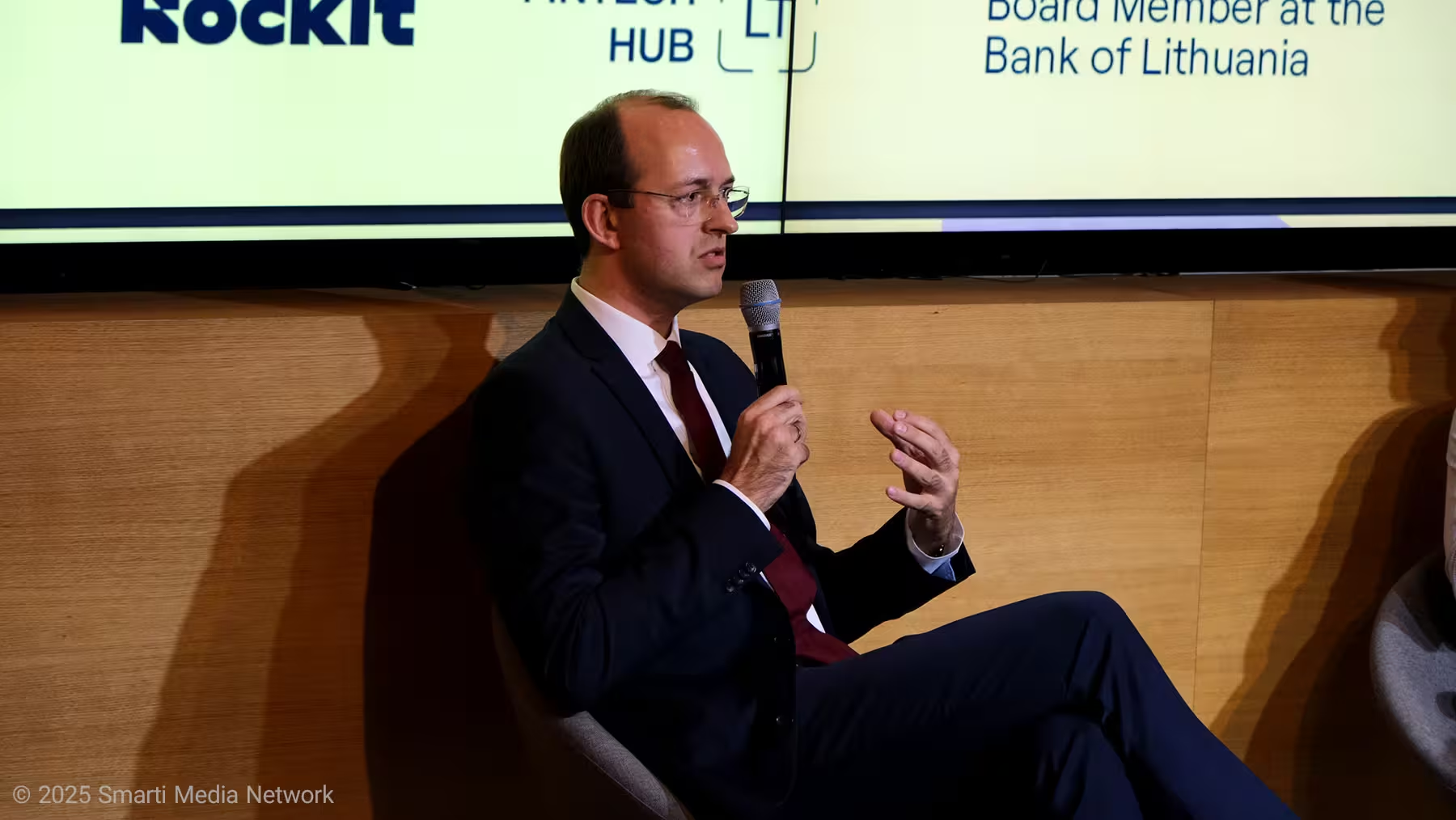
Skuodis challenged this narrative with hard evidence from 2025. "When Revolut decided to enter the mortgage market, it really had a very strong impact on what has been happening here in Lithuania," he explained. "Interest rates on mortgages actually started to decrease."
Crespo aptly dubbed this "The invisible threat."
Skuodis elaborated: "I have been hearing for many years that we pay high rates because of geopolitical risk. But think about it—geopolitical risks have been increasing recently. Yet, at the same time, our interest rates started to decrease. Why? Competition."
This acknowledgment from a central banker is significant. It validates the long-held fintech promise that digital challengers can force legacy incumbents to improve pricing, even in complex products like home loans. It serves as a case study for why the Bank of Lithuania continues to court new entrants: consumer welfare is directly tied to market contestability.
Redefining KPIs: From License Factory to Maturity
A critical pivot in the Bank of Lithuania’s strategy became clear when Crespo pressed Skuodis on Key Performance Indicators (KPIs). For years, the metric of success for Lithuania was volume—how many licenses could be issued? How fast could the ecosystem grow?
In 2025, that metric is dead.
"Our KPI is not the number of licenses," Skuodis stated firmly. "It's not about the number of new licenses. I think what we have been talking about is the maturity of the system."
The regulator now uses a "composite indicator" to measure the health of each vertical. This includes the quality of reporting, the timeliness of submissions, and the number of infringements found during inspections.
"Our wish is for the market to move to a more mature situation in contrast to what we used to have in the past," Skuodis said. He emphasized that for the AML (Anti-Money Laundering) regime, the ultimate goal is reputation—ensuring international bodies like the IMF and the Council of Europe view Lithuania as a "trusted jurisdiction," keeping it far away from any "gray lists."
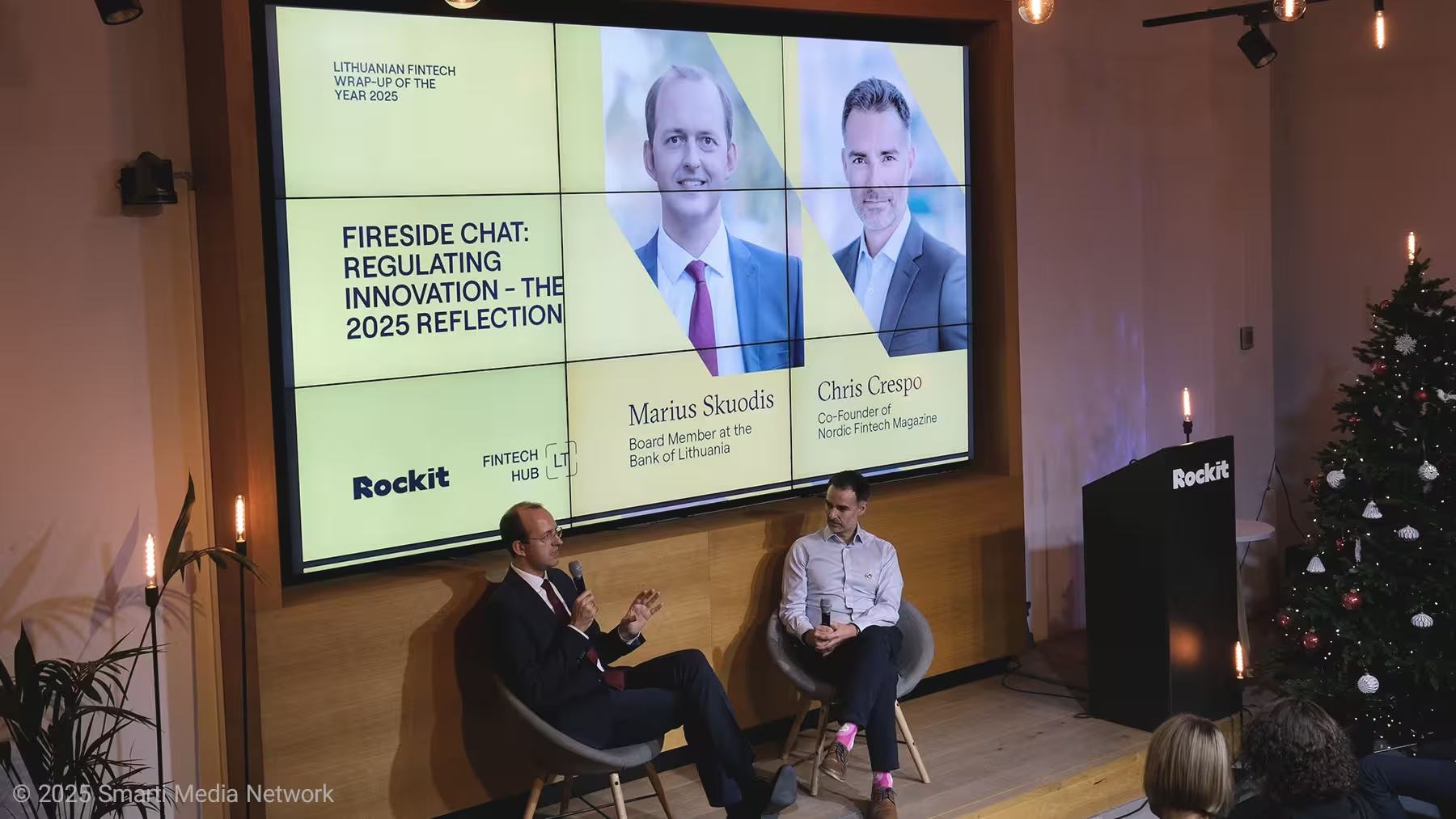
The "Too Tired" System: A Warning on Profitability
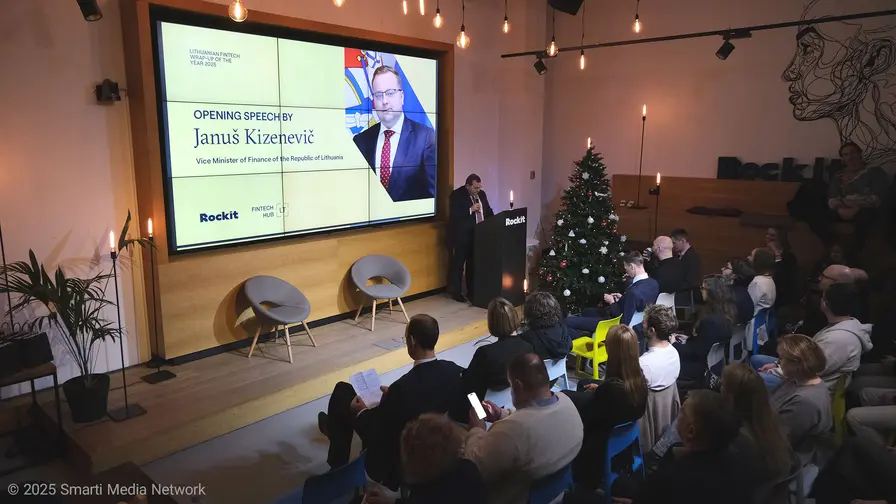
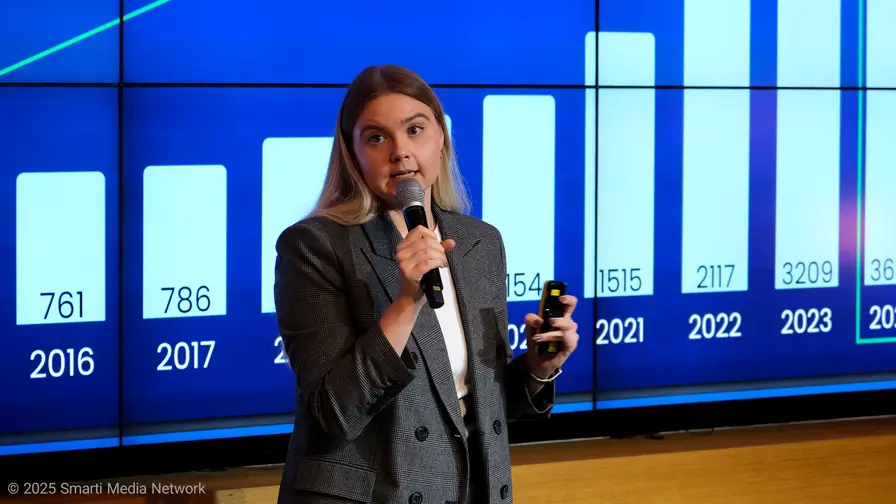
While the aggregate numbers look good—as presented earlier in the event by Greta Ranonytė—Skuodis offered a nuanced, somewhat worrying look at the underlying profitability of the sector.
"I'm really afraid, and I could tell that openly, whether we are not moving to a 'too tired' system," he confessed.
His concern lies in market concentration. While the sector as a whole is profitable, Skuodis observed that a few large players "occupy almost the entire market" and generate the bulk of the profits. Meanwhile, a long tail of smaller entities struggles to find a viable business model.
"If you are not profitable for one year, probably it's okay. Second year, it could happen. Third year, let it be. But if you are not profitable from your establishment five or six years ago, then there is a question," he argued.
This "tiredness" suggests a potential consolidation wave or a culling of "zombie" fintechs that have existed on investor money without finding product-market fit. With new models like stablecoins entering the fray, the regulator is wary of an ecosystem that looks healthy on the surface but is fragile underneath.
The Crypto Disappointment: "We Expected Much More"
Perhaps the most candid moment of the fireside chat came when discussing the crypto sector and MiCA implementation. Lithuania, having positioned itself early as a crypto-friendly hub, had high hopes for the transition to the MiCA regime.
Those hopes, Skuodis revealed, have not been fully met.
"We expected much more from the sector as such," he said bluntly. Despite holding numerous events, sending letters of expectation, and signaling best practices, the conversion rate has been underwhelming.
"Out of all virtual asset service providers registered in Lithuania... only about 50 applied for a license to the Bank of Lithuania," Skuodis disclosed. Even worse, 40% of those applications came in during the last two months, creating a bottleneck.
.avif)
"According to legislation, the minimum process to assess the application is around five months," he noted, highlighting the logistical impossibility created by late applicants. The Bank of Lithuania even hired 17 additional full-time employees (FTEs) specifically to handle the expected influx—an influx that arrived late and in lower numbers than anticipated.

Why the shortfall? Skuodis offered a diagnosis rooted in maturity. "When you don't have a board of directors, you need to have that before applying for the license. When you can't show who your shareholders are, not to mention the source of funds... this is the basic thing for any company working in the financial sector."
He also pointed out a broader European trend. "Out of all MiCA licenses in Europe, 70% were issued by just four countries." These countries, he noted, had pre-existing regulations similar to MiCA, giving their companies a head start. For the rest, the leap from unregulated "Wild West" to full financial compliance has proven too wide a chasm for many crypto startups to cross.
Removing Friction: The "Low-Risk" Pivot
Crespo steered the conversation toward the concept of "friction" and the regulator's role in removing it. Here, Skuodis highlighted a major legislative victory from 2025: the introduction of a differentiated approach for low-risk payment models.
"If you are a fintech and your clients are low risk in general, why should you have the same AML standards as a company dealing with the crypto sector?" Skuodis asked rhetorically.
The Bank of Lithuania actively participated in legislative discussions to carve out these exceptions, proving that they are willing to reduce the compliance burden where it makes sense. Skuodis also mentioned a new practice of "administrative agreements" after inspections—allowing companies to negotiate settlements and fix issues without going to court.
"We are really trying to check... Is it really the reality [that we are strict], or is it only lawyers inventing something?" he joked, emphasizing a willingness to listen to valid market complaints.
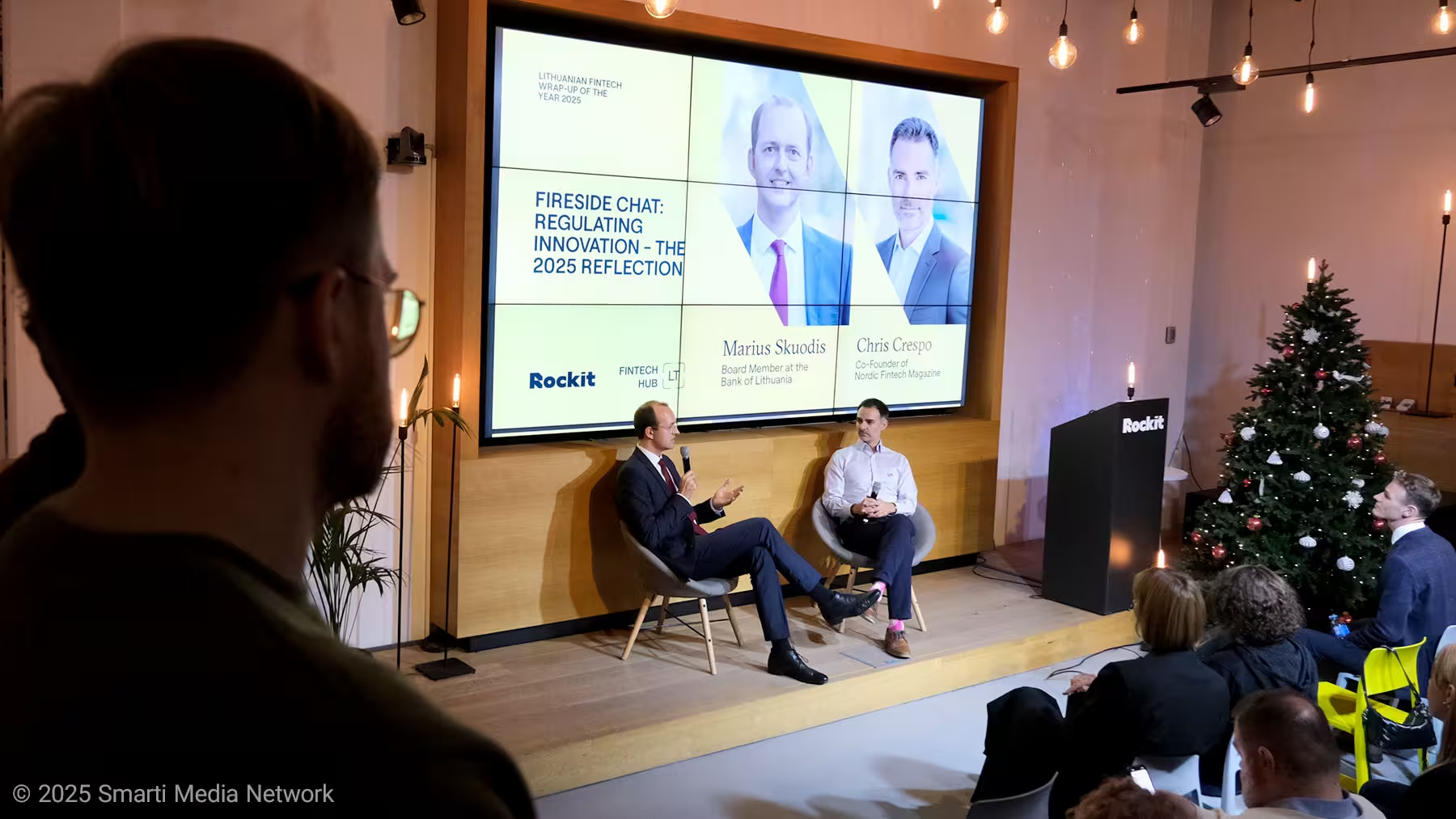
The "Silent Competition" in the Baltics
When asked about the regional dynamic—the "silent competition" between Lithuania, Latvia, and Estonia—Skuodis was pragmatic. He acknowledged that while the Baltics are often viewed as a monolith, each country is fighting for talent and capital.
"Our strength is our ecosystem," he asserted. "You can build a bank from scratch in Lithuania. You can start with some participants and provide different services."
However, he admitted a branding problem. "From my experience when talking with fintech companies in further jurisdictions, they basically don't know about Lithuania," he said. While they know Luxembourg as a hub and Estonia as a digital pioneer, Lithuania often flies under the radar despite having an equally, if not more, digitized private sector.
To counter this, Skuodis suggested that Lithuania needs a new "killer feature" comparable to what they offered years ago: direct access to the central bank's payment system (CENTROlink).

"We need to have something on the top," he mused, inviting the market to brainstorm what that next competitive advantage could be. "We are a mature sector... standards should stay high. But what should be that additional layer of advantages?"
2026 and Beyond: Resilience, AI, and the Digital Euro
Closing the session, Skuodis outlined the strategic priorities for the next three to five years. The keyword is Resilience.
"It's going to be about resilience, first of all, of the Central Bank and the financial sector as a whole," he said. This focus is understandable given the geopolitical climate and the operational mandates of DORA.
But innovation remains on the agenda. Skuodis flagged three major areas that will define the regulatory landscape of 2026:
AI in Supervision: Grappling with the EU AI Act and how artificial intelligence reshapes financial services.
Blockchain Integration: Proactively reacting to new blockchain models, particularly stablecoins, and how they link with traditional finance.
The Digital Euro: preparing for the rollout of both wholesale and retail digital euros.

"These are developments that are going to affect us, and we will have to find our way how to use that to our advantage," Skuodis concluded.
As the fireside chat ended, the mood in the room was one of sober determination. The "party phase" of fintech growth may be over, replaced by a more serious, high-stakes era of mature compliance and deep-tech integration. But as Skuodis made clear, the Bank of Lithuania has no intention of becoming a passive observer. They remain, in his words, "still hungry.

“Some times I write about breakthrough startups, digital ecosystems, and how innovation is changing the way we build businesses.”

Discussion
Leave a Comment
Comments (5)
Feels a bit overhyped, low risk carveouts sound nice but who defines 'low'? regulators or lawyers? need a clear CENTROlink roadmap, not just PR 😏
Pretty balanced take. Love the 'still hungry' line. But worried about 'too tired' firms — consolidation could backfire, big players getting complacent hurts ppl
I've seen this in practice, when KPIs focus on numbers you get noise. Maturity metrics actually fix AML, ops etc. but culture change takes time honest talk
Is it true only 50 applied? sounds off. 40% in last 2 months, how did they expect a smooth review? regulators overloaded, or startups lazy, weird timing
Wow didn't expect Lithuania to push that hard, Robinhood MiCA license? Wild. But the late crypto apps... feels like a missed chance, hope they tighten onboarding tho