
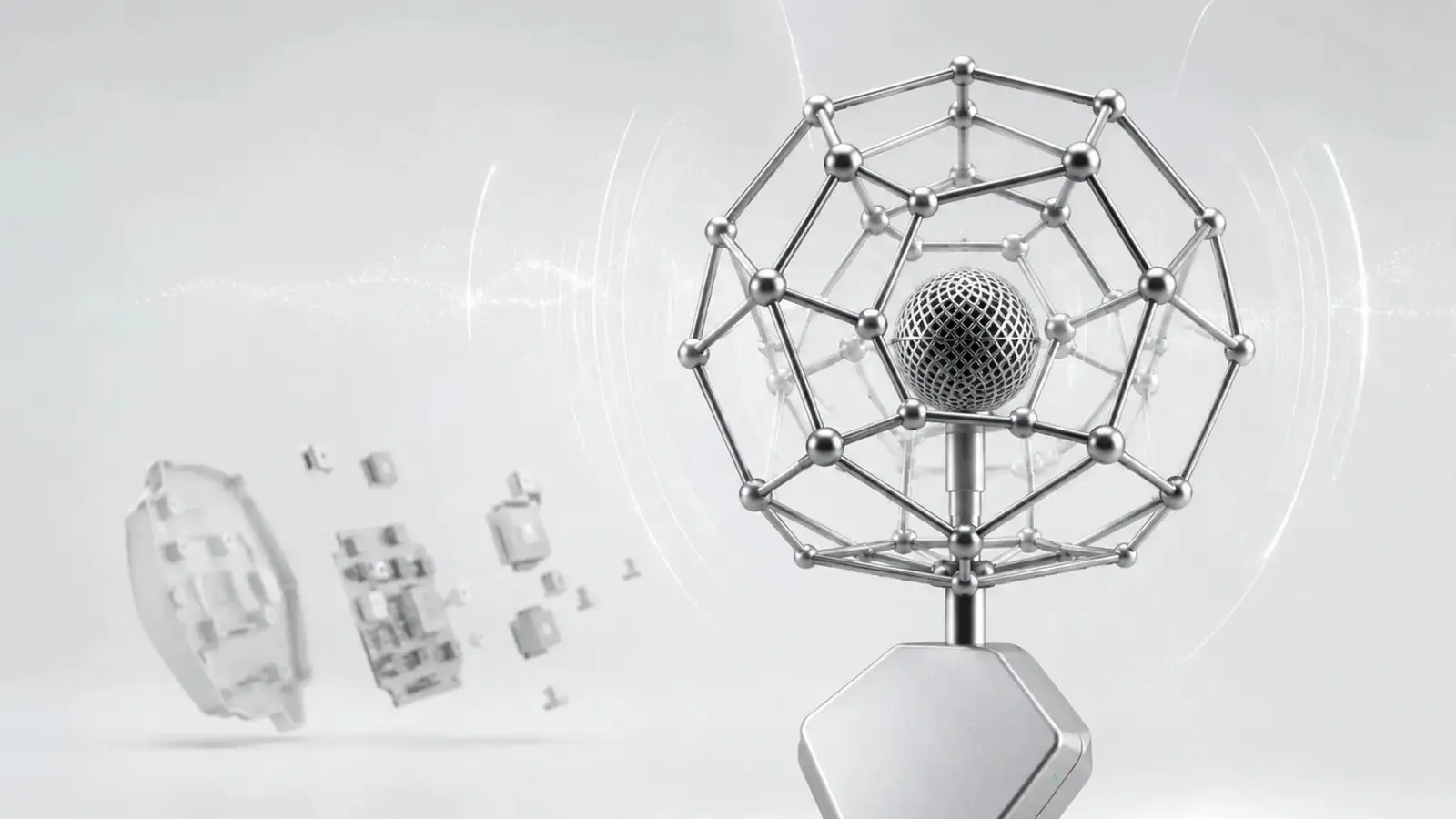
Imagine a tiny globe that listens from every angle. That’s the image Apple’s latest patent serves up: a sphere made from a multi-faced shell, studded with acoustic capsules, each one sitting the same distance from the center to capture sound in full three-dimensional detail. It reads like a prop from a sci-fi set, but the idea is grounded in real audio engineering.
Why the geometry matters
Instead of a single directional mic, Apple’s concept spreads dozens of small MEMS capsules across a spherical frame. Engineers—some of whom previously worked at Bose—laid out the sensors on a polygonal shell so each pickup point shares an equal radius from the core. Short sentence. Precision matters.

The design aims to produce true spatial recordings: audio that preserves where sounds come from, how they move, and how they interact in a space. Think immersive film soundtracks. Think mixed-reality experiences where audio anchors virtual objects to real locations. Think acoustic holography and advanced field analysis that can map pressure and phase with far greater fidelity than a conventional microphone array.
The patent also notes practical touches. The capsules are MEMS devices, tiny microelectromechanical transducers that are common in smartphones and consumer audio gear because they’re compact, robust, and accurate. The outer frame is modeled so it could be manufactured as a single piece using 3D printing. Low-cost prototyping. Rapid iteration. That’s the play.
What’s striking is the focus on integration. Rather than shoehorning a complex array into an existing chassis, the whole object is treated as a single acoustic instrument. It’s less a component and more a platform for capture.
Applications named in the filing are textbook-future: cinema production, content for Apple’s Vision Pro mixed-reality headset, acoustic holography, and scientific sound-field analysis. Each use case leans on the same promise—spatial fidelity that conventional arrays struggle to deliver.
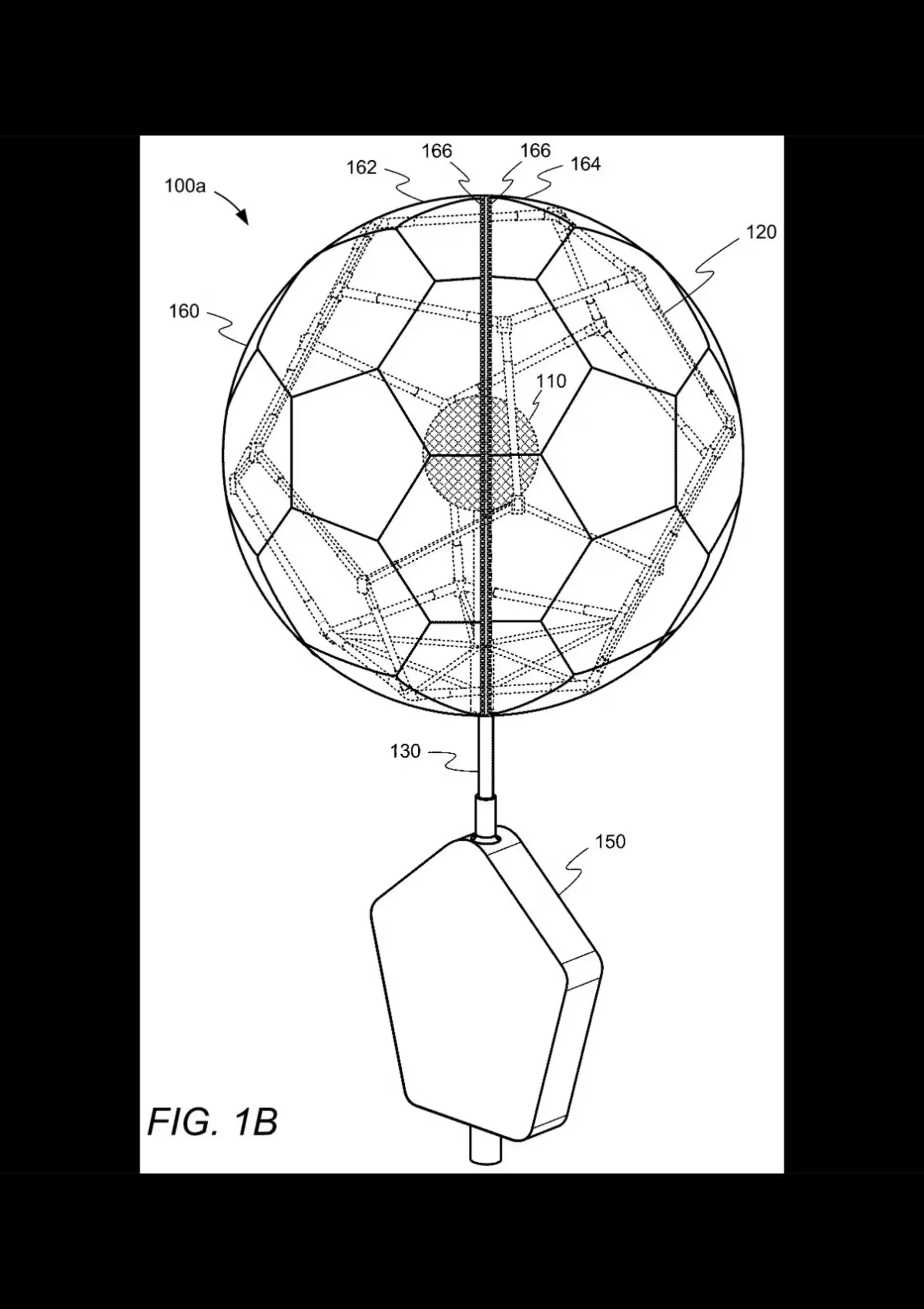
The document is a patent, not a product announcement. No release date, no pricing, no roadmap. But patents are a peek behind the curtain; they reveal directions a company is exploring even if most never reach store shelves.
So why should listeners care? Because spatial audio is more than a gimmick. When done well it changes how we perceive scenes, making virtual objects feel planted and mixes feel like places you can step into. Apple’s spherical approach is an intriguing answer to the problem of capturing that reality, raw and untwisted.
Images and early diagrams of the device circulated on X, credited to International Cyber Digest. For now, it remains a sketch on paper. Still, the sketch points at a future where microphones don’t just point—they surround.


“I love exploring gadgets, apps, and trends that redefine how we connect, work, and play in a digital world.”

Discussion
Leave a Comment
Comments
No comments yet. Be the first.