
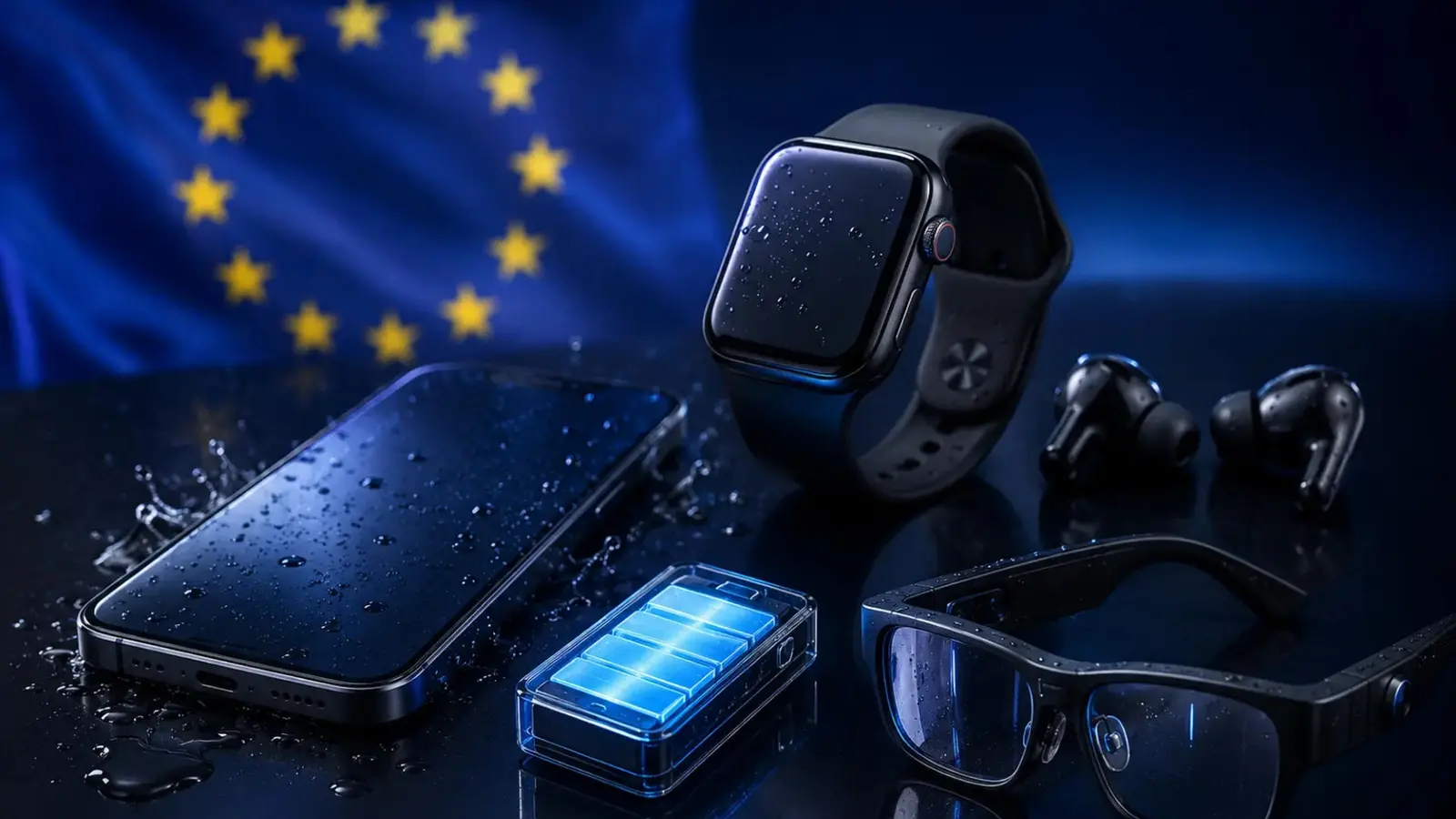
Rain on a run. A dead fitness tracker. You tap the screen. Nothing. You can’t pull out the battery. And that’s not an accident — it’s a design choice with new political cover.
When waterproofing outranks peel-and-swap repairs
Brussels has quietly tightened the user-replaceable battery rule it first wrote in 2022 and plans to enforce from 2027. The original aim was straightforward: push manufacturers to make batteries easy for owners to swap, extending device life and easing repairs. But engineers and regulators pushed back for a simple reason — tiny, sealed, water-resistant devices don’t tolerate amateur surgery.
The European Commission has published a new set of exemptions that effectively creates a category it calls wet devices. Think earbuds, heart-rate sensors, smart glasses, and wristwatches. Also on the list are electric toothbrushes and outdoor wireless speakers. These gadgets are designed to meet real-world conditions where water contact or brief immersion is likely. For them, opening the case to rip out a battery would often defeat the primary protective engineering and increase the risk of damage or even fire.
Size matters. In very small devices, components are densely packed. One wrong tug can shear a ribbon cable or expose batteries to short circuits. The Commission’s compromise: battery replacement in those products should be carried out by trained technicians rather than end users. That preserves safety and waterproof integrity while still nudging repairability where it’s realistic.

Smartphones get a tailored detour. A phone can escape the user-replaceable mandate if it meets two conditions: a baseline IP protection of at least IP67 and a battery longevity threshold. Specifically, the battery must retain at least 83 percent of its capacity after 500 full charge cycles or at least 80 percent after 1,000 cycles. That clause gives premium device makers room to keep sealed, slim designs while forcing measurable endurance performance.
Why this balancing act matters goes beyond convenience. It’s the collision point of two movements: the right-to-repair push that demands user agency, and product safety standards that prioritize resilience in wet or compact form factors. Regulators are signaling they will mandate repairability where it is safe and sensible, but will tolerate sealed designs when safety or function would be compromised.
For consumers, the practical effect is mixed. Expect easier battery swaps for many larger gadgets and clearer service pathways for tiny or waterproof wearables. For manufacturers, the message is equally clear: design for durability and prove it. Numbers will be the proof — meet the cycle-retention targets and you keep your sealed look.
In the end, this is not a rollback of repair goals. It’s a calibrated nudge. A recognition that one-size-fits-all rules collide with engineering realities. The debate now shifts to implementation: who qualifies as an authorized technician, how tests are verified, and whether these exemptions will expand or tighten as devices evolve.

“I cover emerging technologies, digital innovation, and the intersection of tech and everyday life. My goal is to make complex trends accessible and inspiring.”

Discussion
Leave a Comment
Comments (2)
I fix devices, tiny sealed watches are a nightmare. Waterproofing matters, but manufacturers should offer easy pro service locally, not mail-away.
So they'll force tiny wearables to be serviced only by techs? sounds like they solved one problem and made another. who even vets 'trained' people tho...