
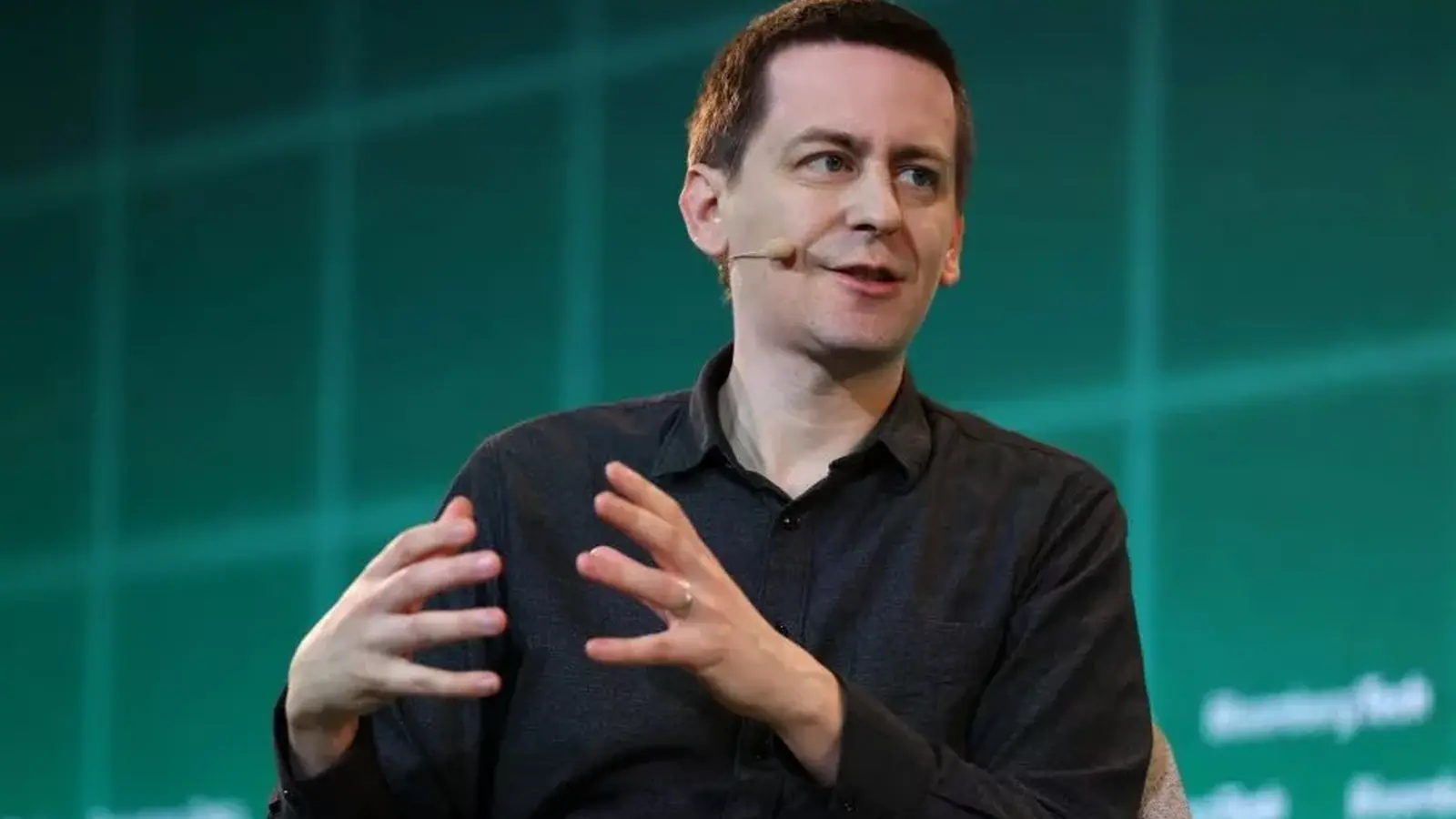
On a lab monitor, a protein snaps into place. It looks almost effortless. That illusion is the product of years of work and a single mind whose name has become shorthand for a revolution: John Jumper.
Jumper, a co-recipient of the 2024 Nobel Prize in Chemistry alongside Demis Hassabis and David Baker, built the core of AlphaFold, the AI system that transformed protein science. AlphaFold has predicted three-dimensional structures for more than 200 million proteins from their amino acid sequences. The result was not a marginal gain. It slashed years from biological research timelines and became a practical tool for vaccine design, cancer research, and tackling antibiotic resistance.
When talent rewrites the rulebook
After roughly nine years at DeepMind, Jumper has left for Anthropic. The move comes barely two days after Noam Shazeer, a senior Google engineering leader, departed for OpenAI. Timing matters. This is not random churn. It’s a signal.
Why now? Startups like Anthropic and OpenAI are no longer just challengers. They promise flatter decision-making, fewer hoops to jump through, and a singular focus on pushing artificial intelligence toward new frontiers. For scientists who want to pair deep domain knowledge with agile engineering, that can be irresistible.

Anthropic’s recent actions make the picture clearer. In April, the company acquired biotechnology startup Coefficient Bio for around €370 million in stock, an asset play intended to bring molecular modeling expertise into its fold. Anthropic’s healthcare and biosciences team has publicly said it wants Claude, its AI, to shoulder a meaningful share of global bioscience work. Adding a Nobel laureate who reimagined how proteins fold gives that ambition a layer of hard scientific credibility.
Jumper is young for a Nobel laureate. Born in 1985, he earned a PhD in theoretical chemistry from the University of Chicago and became the youngest winner of the chemistry prize in more than seven decades. His work on AlphaFold is not just academic accolade; it’s a tool used by more than two million scientists in 190 countries, accelerating efforts from malaria vaccines to new cancer therapies.
Anthropic has not disclosed Jumper’s exact role. That omission is intentional. Strategic hires can serve many purposes: lead research, validate a roadmap, or open doors to partnerships in biotech. What’s clear is that his expertise aligns with Anthropic’s push into biological modeling and the medical applications of large models.
There’s another layer. Anthropic is preparing a major scientific event on June 30. The arrival of a scientist of Jumper’s stature will draw attention, useful when a company is navigating intense legal and regulatory scrutiny from U.S. authorities. Talent can be a spotlight. It can also be a shield.
So what changes on the ground? For DeepMind, it’s a loss of momentum in a specific niche where domain knowledge and model engineering meet. For Anthropic, it’s a credibility boost and a tactical advantage as the race to commercialize bioscience applications of AI heats up. And for the wider field, it underscores a brutal reality: the demand for top AI scientists is so high that nimble startups can outmaneuver legacy firms by promising focused missions and less bureaucracy.
The larger question now is not who won a recruitment battle. It is how the redistribution of talent will shape what gets researched and how fast breakthroughs reach patients. Are we at the start of a new era where proprietary AI models drive the next wave of biological discovery? Watch the lab monitors. They might just tell you.

“I cover emerging technologies, digital innovation, and the intersection of tech and everyday life. My goal is to make complex trends accessible and inspiring.”

Discussion
Leave a Comment
Comments (2)
Seems like talent chasing cash and power, not science. Are these hires about innovation or PR? hmm...
Wow didn't expect Jumper to jump ship so fast... Anthropic scoring big, but hope they keep open science. feels messy but exciting, tbh