
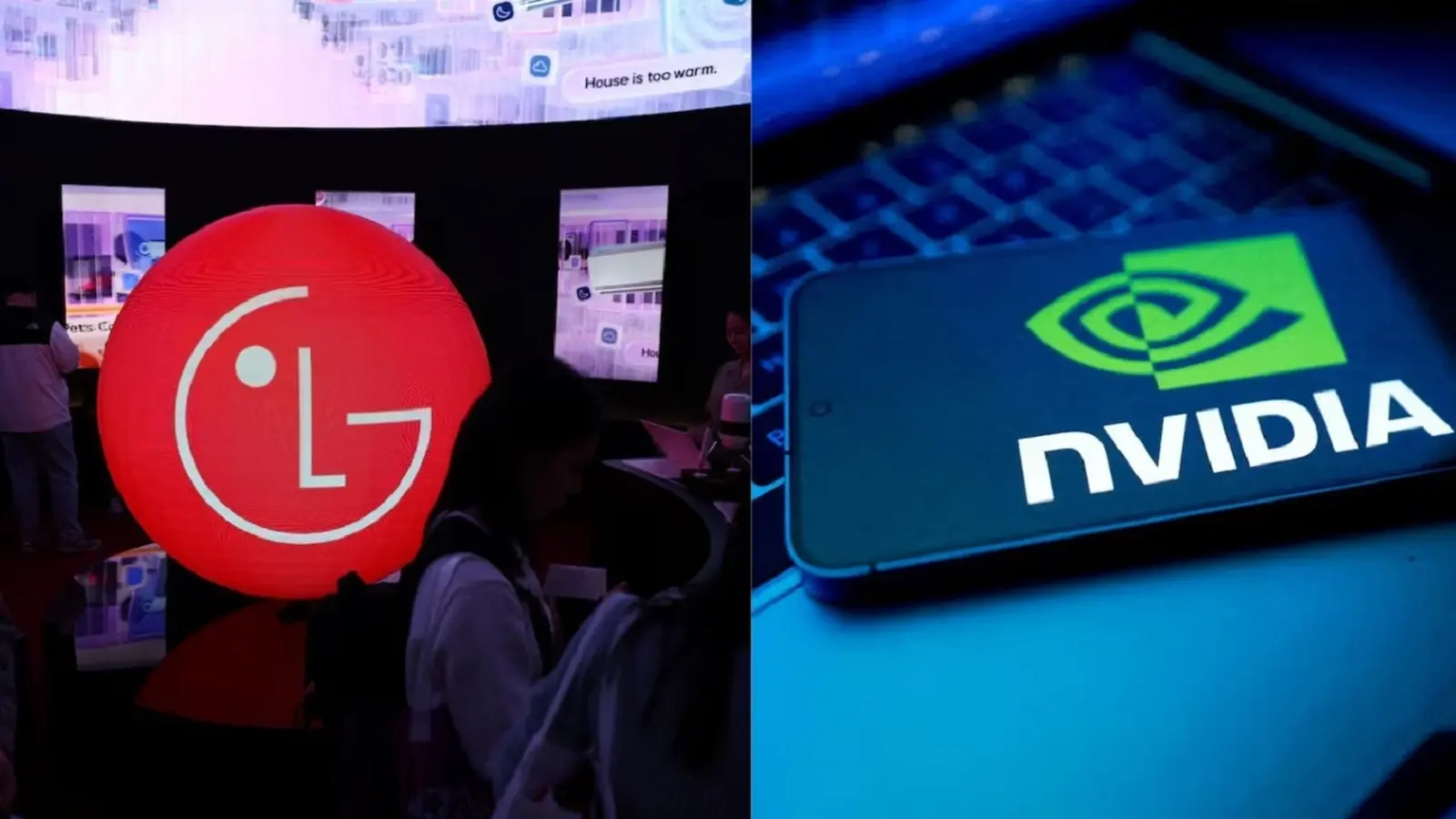
Imagine a lab where the air buzzes with servers, lights blinking in patient rhythm as thousands of cores chew through training data. That image may soon be LG’s reality. According to Reuters, citing South Korea’s Maeil Business Newspaper, LG Group has finalized a deal to buy 10,000 Nvidia graphics processors. The goal: train advanced AI models and power a humanoid robot project under development at LG’s AI research arm.
A strategic pivot into compute-heavy AI
That number—ten thousand—is more than a headline. It marks a clear move from consumer electronics toward infrastructure-driven AI services and robotics. Tech giants like Microsoft, Google and Amazon long ago poured massive resources into buying specialized chips and scaling cloud AI. LG’s purchase signals the company intends to jump from observer to contender, building in-house compute capacity instead of relying only on external cloud resources.
Why does that matter? Training state-of-the-art models is expensive and obsessively hardware-dependent. More GPUs mean faster iteration, bigger datasets, and the kind of experimental freedom that spurs breakthroughs. It also lets LG keep sensitive models close—important when robotics and consumer services converge and proprietary data is at stake.

Reports say these GPUs will support both general AI model training and a humanoid robot program. Robotics is a different beast: it fuses perception, motion planning and real-time inference. High-volume GPU supply helps accelerate simulation workloads and the heavy parallel computation that modern robotic systems demand.
There are risks, of course. Supply chains fluctuate, chip availability can tighten, and software still needs to catch up to hardware potential. But the move removes one big friction point: access to silicon. With compute secured, LG can focus engineers on algorithms, integration and industrialization.
South Korea’s tech ecosystem will be watching. This isn’t just an LG play. It’s an indicator of national appetite for AI sovereignty—keeping more development and production within domestic control rather than outsourcing critical infrastructure abroad. That ambition could change partnerships, talent flows and investment patterns across the region.
Still, scale alone isn’t a guarantee of success. Winning in AI requires data, talent, and thoughtful productization. LG has global supply chains and a consumer-electronics footprint to deploy practical AI-infused products. The question now is how fast they turn raw compute into meaningful services and devices.
Securing 10,000 Nvidia GPUs is a bold, tangible step that transforms LG from hardware maker to serious AI infrastructure player—now it must translate compute into capability.


“I love exploring gadgets, apps, and trends that redefine how we connect, work, and play in a digital world.”

Discussion
Leave a Comment
Comments
No comments yet. Be the first.