
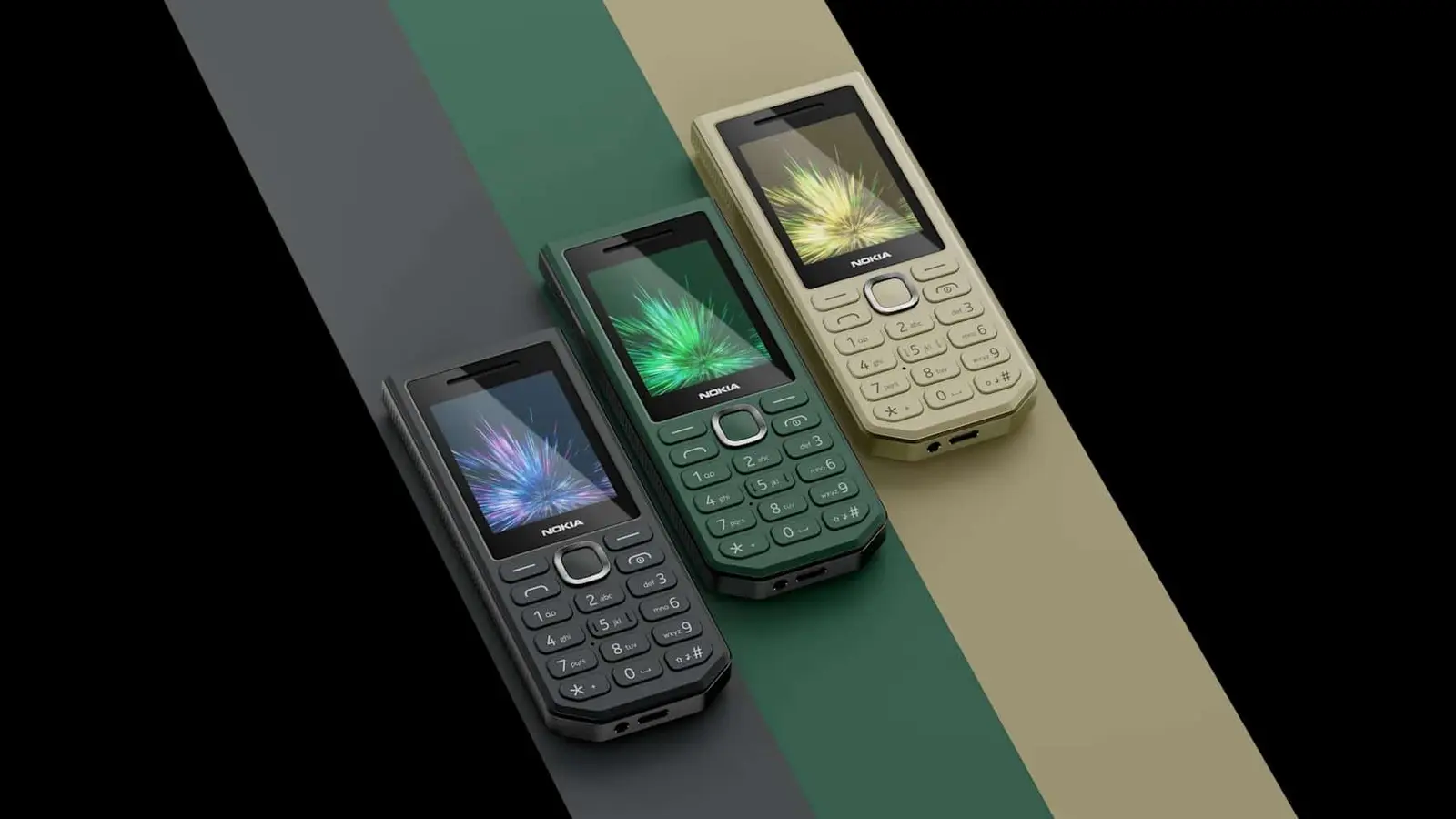
Imagine a handset that treats battery life like a luxury, not an afterthought. The Nokia 300 Charge doesn’t pretend to be a smartphone. It’s a simple, stubborn little device built around one idea: keep going.
The headline here is the battery: 3,700mAh, USB-C charging at 10W, and a side-mounted Out button that enables 10W reverse charging.
Power where it matters
That 3,700mAh cell reads enormous next to most feature phones. For context, Nokia’s own 110 Power ships with roughly half that capacity, and budget models like the Nokia 105 (2023) barely scratch 1,000mAh. The 300 Charge promises more than 40 days on standby and up to 37 hours of talk time, turning it into a credible backup for travelers, hikers, or anyone who forgets chargers.

Don’t expect multitasking. The device runs S30+ on an Unisoc SC6531E platform with 4MB of RAM and 4MB of internal storage. That’s not a typo: storage and memory are tiny, but there’s a microSD slot for cards up to 32GB and a trusty 3.5mm headphone jack for wired audio.
There’s a bright LED flashlight sitting on the top edge, billed as noticeably brighter than older Nokias and even louder in marketing comparisons against modern phones. It’s a flashlight, not a camera flash, though the phone does include a basic camera at 320 by 240 pixels if you need a quick snap.
Connectivity is where compromises show: only dual-band 2G (900MHz and 1800MHz). In many countries that means the phone will work only where legacy networks remain. Use-case: long battery life and basic calls, not mobile internet or modern voice-over-LTE services.

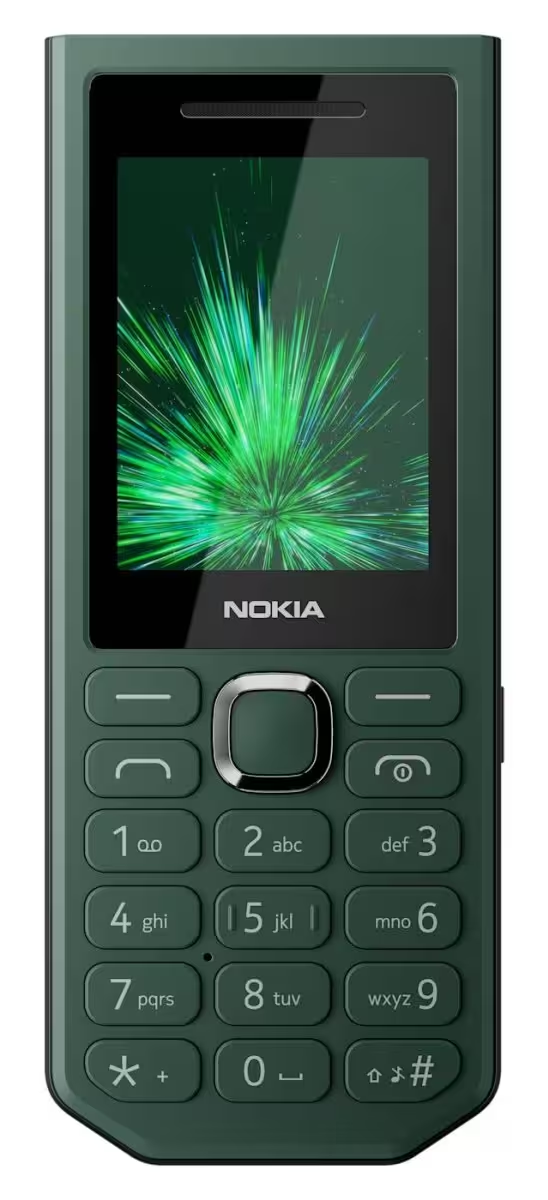
Physically, the 300 Charge is compact but chunky: about 136.6mm tall, 55mm wide, and 14.94mm thick, weighing 138g. The design leans rugged with textured sides and Sandstone and Green finishes, but there are no official claims for water resistance or impact protection. If you need certified toughness, models such as the Nokia 123 Shield (IP65) or HMD’s Terra M (IP69K) offer actual ingress protection.
At this price point the 300 Charge aims for two audiences: those who want almost absurd battery life in a pocket-sized device, and users who need reverse charging to top up earbuds or another phone in a pinch. It’s not for high-speed data, app ecosystems, or camera enthusiasts. It’s practical and very literal.
 |  |  |
Availability is already rolling out in Southeast Asia. Retail listings in the Philippines show the device priced around €30 on some sites and about €27 on others. In Malaysia it appears near €31. Note: some stores list the handset under the name Nokia 300 Power Bank instead of Nokia 300 Charge.
Small phone. Big battery. Limited ambition. The Nokia 300 Charge is appealing because it solves real, specific problems without pretending to do everything.

“I cover emerging technologies, digital innovation, and the intersection of tech and everyday life. My goal is to make complex trends accessible and inspiring.”

Discussion
Leave a Comment
Comments (2)
2G only?? That kills it for me. Reverse charging is handy but 10W is slow, and if networks drop 2G then it's useless for many ppl...
Wow didn't expect a feature phone pushing battery like this. 40 days standby? Sign me up for hiking trips, no faff, just power.