
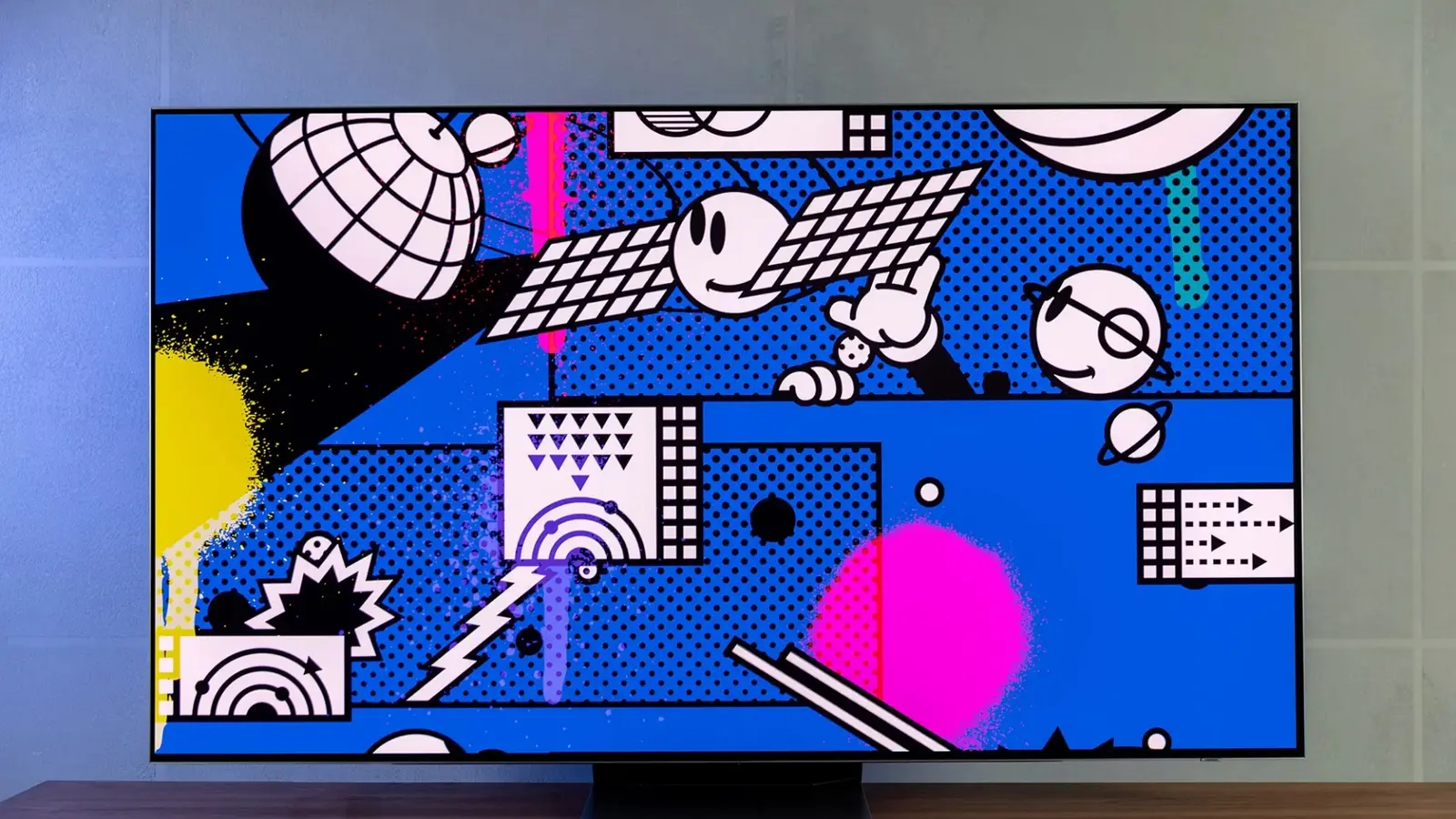
The steady glow of a news ticker can feel harmless. Until it doesn’t. Ten thousand hours of the same logos, crawls and channel bugs leave a mark, and OLED panels—despite years of engineering—can still wear that mark into the screen.
Ten thousand hours, and the strain becomes visible
Independent lab work by Rtings replayed a newsroom loop on a wide selection of OLED TVs to mimic heavy, real-world use. The sample set included an LG C7 from 2017, four models from 2020, six from 2021, seven from 2022 and two from 2023. Every single television showed some degree of burn-in after the simulated 10,000-hour run.
That result isn’t a screaming verdict against OLED as a whole. What it does say is that the phenomenon hasn’t been eliminated. Burn-in remains a physical consequence when organic pixels are driven hard and repeatedly by static content.

Still, the story is subtler. Newer OLED generations are far brighter and far more efficient. Rtings measured a roughly 28 percent higher sustained brightness for 2023 models at a 10 percent picture window compared with the 2017 unit. When the whole screen lit up, the 2023 panels delivered more than twice the brightness of that older set.
That jump in performance comes with better power economy. Designers trimmed energy use so a 2023 set reaches 100 nits consuming about 95 watts, compared with roughly 130 watts for the 2017 model. Less wasteful hardware and smarter drive electronics mean you get more light for less power.
Why does that matter for burn-in? Because higher efficiency lets viewers hit comfortable brightness levels without driving the panel to its limits. Lower operating stress on organic pixels translates into a slower march toward visible burn-in. In plain terms: you can watch brighter, but you don’t have to burn the panel to get there.
- Same risk: burn-in still appears after extreme, repetitive use.
- Better brightness: modern OLEDs reach higher luminance at lower energy cost.
- Longer life in practice: efficiency and automatic care features push visible wear farther down the road.

So should you panic if you own an OLED? Not unless your viewing habits are unusually repetitive. For viewers who rotate content—movies, shows, games and streaming—burn-in is much less likely to become a practical problem. The caveat is simple: leave the panel care and automatic pixel management tools enabled. Those systems are designed to redistribute wear and reduce the chance that persistent elements etch themselves into the image.
Think of it like shoe leather. High-quality leather can still scuff under heavy, one-way use, but better construction and occasional care keep it looking new longer. OLED manufacturers have improved construction and care routines. The result is a more forgiving screen in everyday life, even if the material physics remain unchanged.
Rtings’ tests underline a clear point for shoppers and power users: OLED burn-in is not dead, but it is a much smaller worry for ordinary viewing thanks to brighter, leaner panels and smarter firmware. If you stream a variety of content and don’t disable the TV’s maintenance features, the odds of a noticeable burn-in are low.

“I cover emerging technologies, digital innovation, and the intersection of tech and everyday life. My goal is to make complex trends accessible and inspiring.”

Discussion
Leave a Comment
Comments (2)
I had an old OLED at the office, static logos left faint ghosts after years. Newer sets are brighter and seem less fragile, just keep pixel care on and rotate content.
wait, every OLED showed burn-in after 10k hrs? scary, but that sounds like extreme lab torture. anyone tried this in a normal living room with mixed content? seems different IRL