
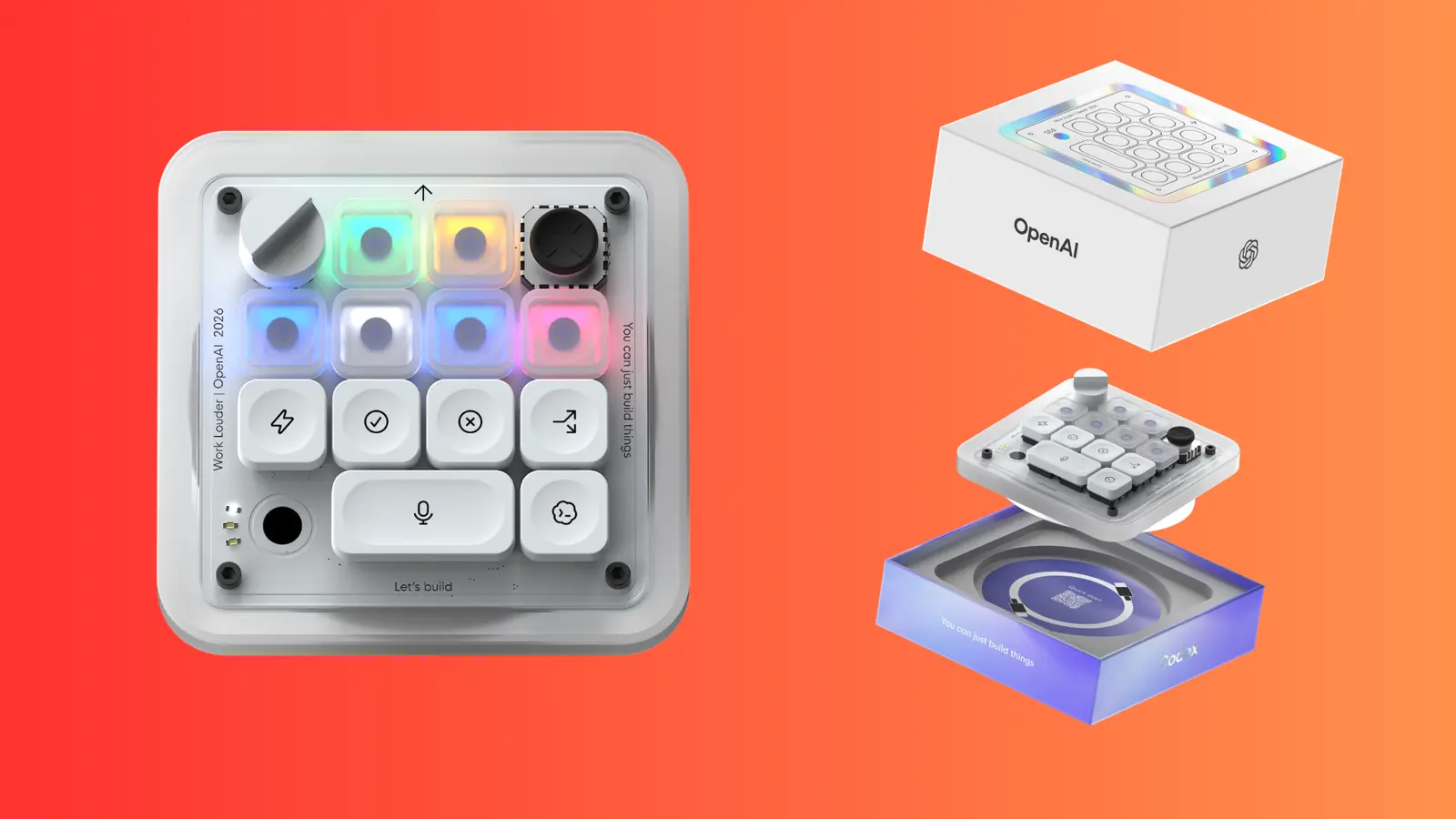
Plug it in and the silence is the point. No screen to stare at. No notifications grabbing attention. Just a compact chunk of metal and plastic that hands control back to your fingers.
The Codex Micro is a programmable macro keypad built for people who spend long stretches with OpenAI's Codex agents. It packs 13 mechanical keys. Six of those are illuminated Agent Keys that change color to show an agent's status. You get assignable Command Keys for accepting or rejecting code suggestions, launching new chats, toggling voice input, or switching tasks. There is a rotary dial you can turn to nudge Codex's reasoning effort up or down and a joystick that maps to repeatable flows like stepping through a debugger or running a refactor.
A tiny control surface with big ambitions
Why a keypad? Think of it as tactile shortcuts for conversational coding. Keystrokes replace menu diving. Actions become muscle memory. OpenAI teamed with keyboard maker Work Louder to design the accessory, and the package includes 32 interchangeable keycaps so developers can label shortcuts that match their workflow.

Connectivity is simple: Bluetooth and USB-C. It works on Windows and macOS. OpenAI positions the Codex Micro for users who are already embedded in the Codex ecosystem, particularly now that Codex has stretched beyond pure code generation into broader productivity features.
Pre-orders are open at €214, sold in limited quantities via OpenAI and Work Louder.
Don’t mistake this for the other device people have been speculating about. The Codex Micro is a focused developer tool, not the pocket, screenless companion that Bloomberg and others have linked to a collaboration between OpenAI and io Products, the startup associated with former Apple design lead Jony Ive. That separate project is expected later and is tipped to provide conversational AI, smart home control and media features.
For developers who want a more physical dialogue with their AI assistants, the Codex Micro promises speed and a layer of ergonomics that keyboard shortcuts alone struggle to deliver. It is small. It is deliberate. And for certain workflows, it might be the fastest way to get from idea to runnable code.

“I cover emerging technologies, digital innovation, and the intersection of tech and everyday life. My goal is to make complex trends accessible and inspiring.”

Discussion
Leave a Comment
Comments
No comments yet. Be the first.