
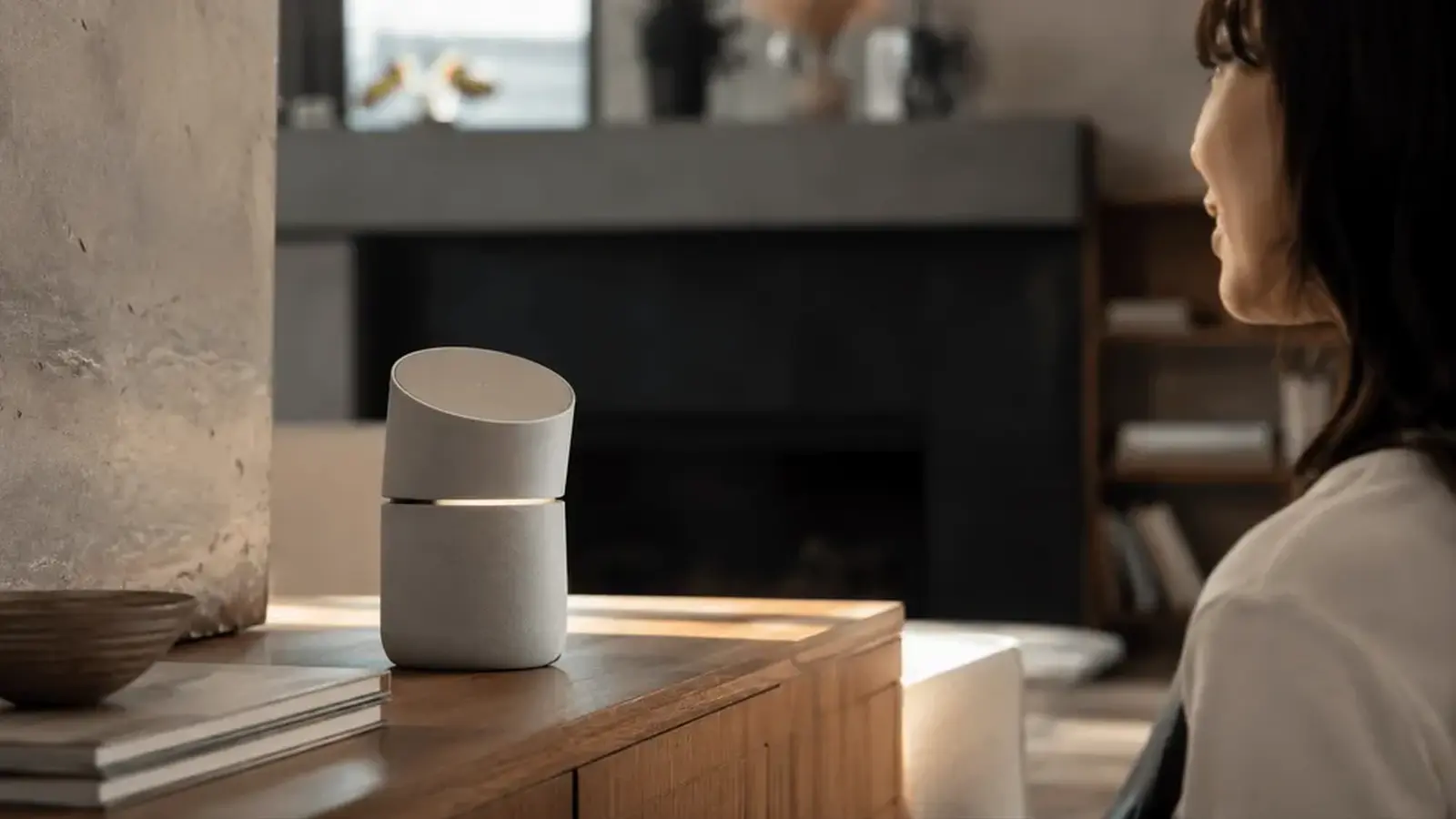
Picture a small orb drifting from the kitchen counter to the sofa armrest, pausing to listen as you call its name. Strange idea? Perhaps. Inevitably familiar. That is the image Bloomberg sketches of OpenAI's first consumer hardware: a screenless, portable smart speaker meant to behave less like a device and more like a presence.
When a speaker becomes a companion
Rather than shipping a smartphone, the company is reportedly building a compact speaker with a rechargeable battery, cameras and environmental sensors. The difference from the smart speakers you know lies in motion and manner. Tiny actuators and mechanical parts would let the unit shift, tilt or orient itself during conversation. The aim is psychological: to give responses a social cadence and a hint of personality, not just a mechanized voice.
The voice stack is said to be GPT-Live, OpenAI's low-latency conversational system that can listen and reply in real time. Expect routine features: home automation controls, music playback, answers to quick questions and message reading. Expect something else too. Over time the device would learn household patterns by accessing calendars, contacts and other personal signals so it can preempt requests and tailor replies.

That learning raises obvious questions. How will data be stored? What defaults will govern access to personal calendars and messages? OpenAI has not published full privacy details. The promise of a speaker that anticipates needs rubs up against user expectations for control. Short of clear boundaries, charm can feel intrusive.
Design apparently matters here. Sources name former Apple executives and designers from LoveFrom as part of the product team, hinting at an emphasis on materials and movement that reads more boutique than appliance. A public launch is not imminent. Bloomberg suggests the device could arrive in 2027, though snippets of information might appear later this year. Early price estimates put it around €185 to €275.
There is a legal subplot. Apple has filed a trade-secret lawsuit alleging that OpenAI recruited employees and used confidential information to accelerate its own efforts. OpenAI has denied those claims and maintains the speaker would be materially different from any Apple product. Legal noise like this can complicate timelines and marketing, but it rarely kills engineering momentum overnight.
So what should we expect beyond the attention-grabbing idea of a moving speaker? Practically, a more conversational, contextual assistant that can shift its behavior based on presence and prior interactions. More provocatively, a new category: an ambient device that blends voice AI, cameras and motion to occupy physical space in a house.
Will people welcome a companion with subtle movement and memory, or will novelty wear off when privacy trade-offs become clear? The answer will shape whether this is a niche luxury or the first familiar face of everyday household AI.

“I love exploring gadgets, apps, and trends that redefine how we connect, work, and play in a digital world.”

Discussion
Leave a Comment
Comments (2)
Wow, a speaker that moves? kinda adorable, also slightly unnerving. If it actually learns our routines tho, where do we draw the line
Is this even true? A roaming speaker that 'listens' and remembers feels kinda creepy. Cool tech, but privacy??