
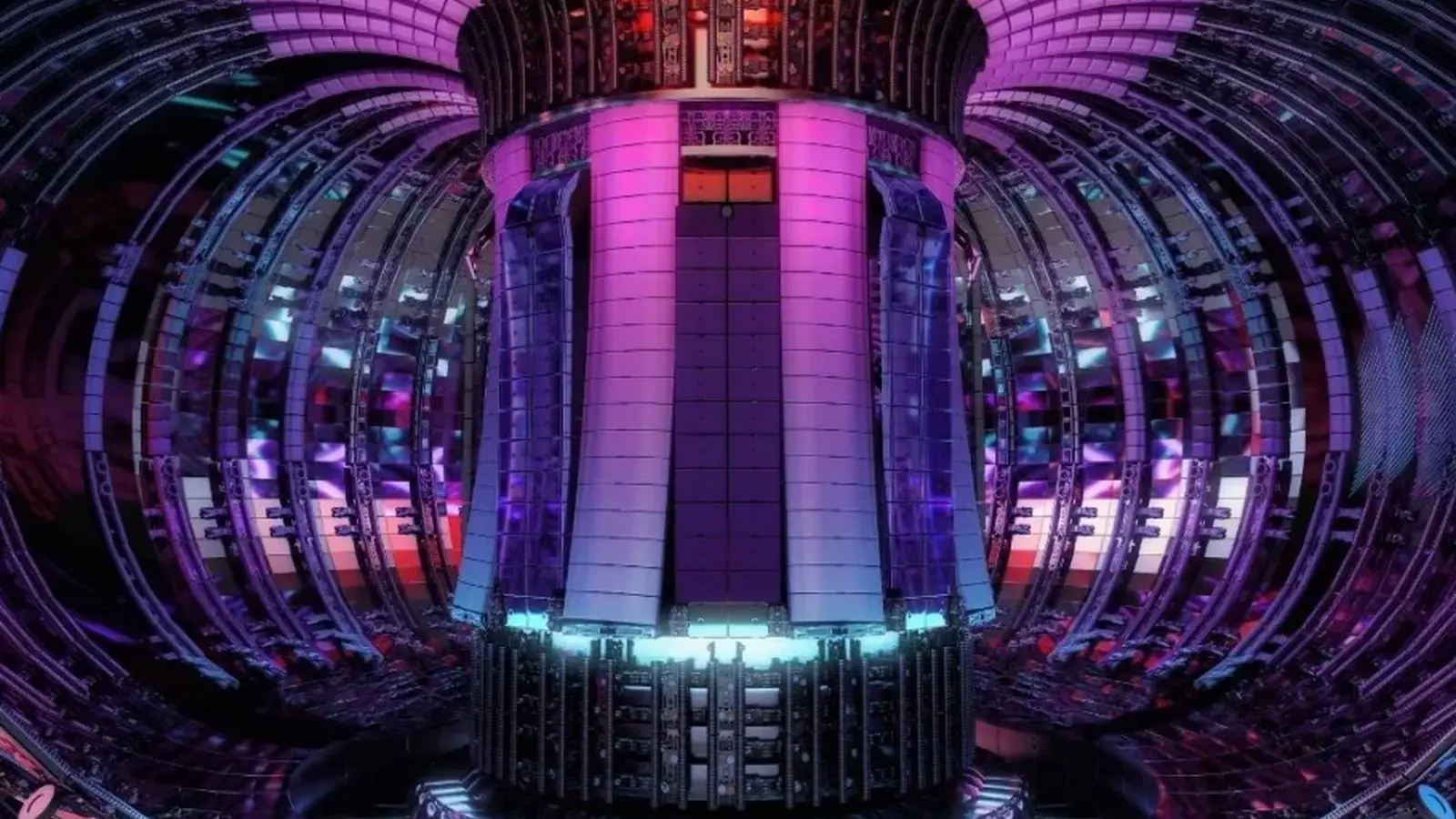
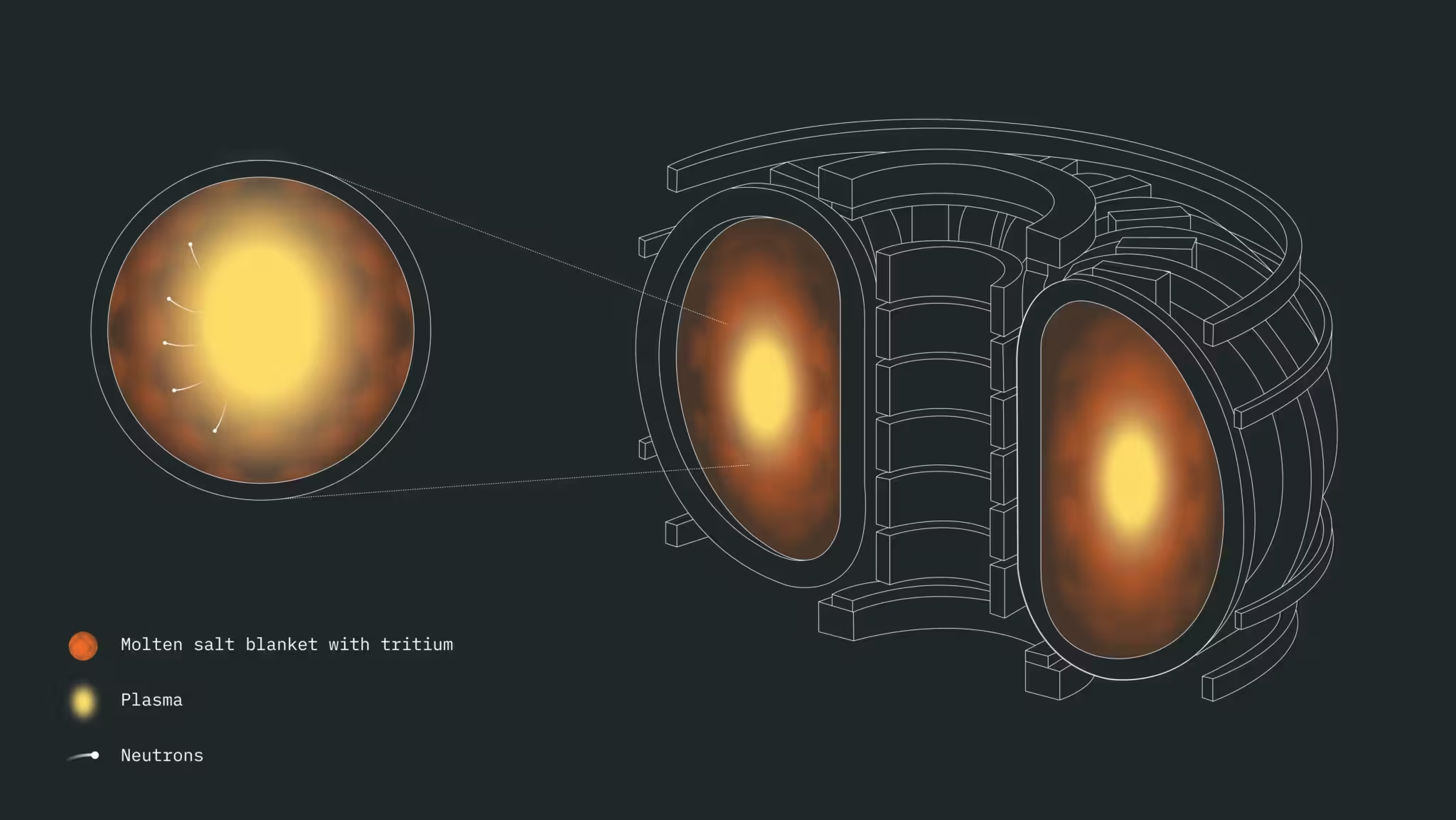
Imagine a bath of glowing molten salt lining the inner wall of a fusion reactor, quietly catching the blast of energetic neutrons and turning them into the fuel the reactor will need. That image is no longer just science fiction. It is the sketch at the center of a new collaboration that used quantum computers to rechart how we might produce tritium at scale.
Commercial fusion designs, especially tokamaks, almost always plan to burn deuterium and tritium. Deuterium is everywhere, dissolved in seawater. Tritium is another story. It is radioactive, scarce on Earth, and has a short half life, so reactors cannot rely on natural supplies. To make fusion practical, engineers must breed tritium inside the reactor itself.
Salt, neutrons and a race against scarcity
One leading candidate for that job is FLiBe, a molten salt made from lithium fluoride and beryllium fluoride. When fast neutrons from the fusion plasma slam into lithium nuclei inside FLiBe, the nuclear chemistry can produce tritium. Sounds straightforward. It is not. The precise electronic structure and molecular bonding of the products control how efficiently tritium forms and how easily it escapes to be collected.
Until now, those microscopic details were stubbornly out of reach. Classical simulations hit a wall when trying to model the complex quantum interactions that govern bond strength and electron behavior under reactor conditions. So a multi-institution team took a different route. They repurposed quantum simulation techniques, originally used for protein geometry in drug research, and trained them on the atomic-scale problems of fusion materials.
Researchers from Cleveland Clinic, Oak Ridge National Laboratory, IBM Research at the Thomas J. Watson Center, and Michigan State University ran those quantum models and came back with something unexpected: nine distinct molecular arrangements relevant to FLiBe and tritium chemistry. Nine. Not a single answer, but a shortlist of stable candidates that experimentalists can now target.
Why does that matter? Because each candidate has different binding strengths, stability and likely yields of tritium. Picking the best routes in advance narrows the search enormously. Instead of expensive, time consuming trial and error in hot-cell experiments, lab teams can prioritize the most promising chemistries. That saves money and reduces risk.
This is not a switch that flicks immediately to industrial tritium production. The work remains at the simulation stage; models need validation under real reactor-like conditions. Yet the shift is meaningful. Quantum computing went from a niche tool in theoretical physics to a practical accelerator of materials discovery for one of the most pressing energy challenges of our time.
Short sentence. Big implication. If those nine configurations withstand the test bench, fusion designers will have a clearer map for building breeder blankets that actually deliver fuel, not just hope. And that would be a concrete step toward reactors that are not only powerful, but self-sustaining.


“I love exploring gadgets, apps, and trends that redefine how we connect, work, and play in a digital world.”

Discussion
Leave a Comment
Comments (2)
Simulations look cool, but is QC really ready for reactor chemistry? Where's the bench data… if that holds up then ok, curious
Molten salt making tritium? Wow. Nine candidate molecules — wild. Excited but nervous, labs gotta proove this under real heat, fast