
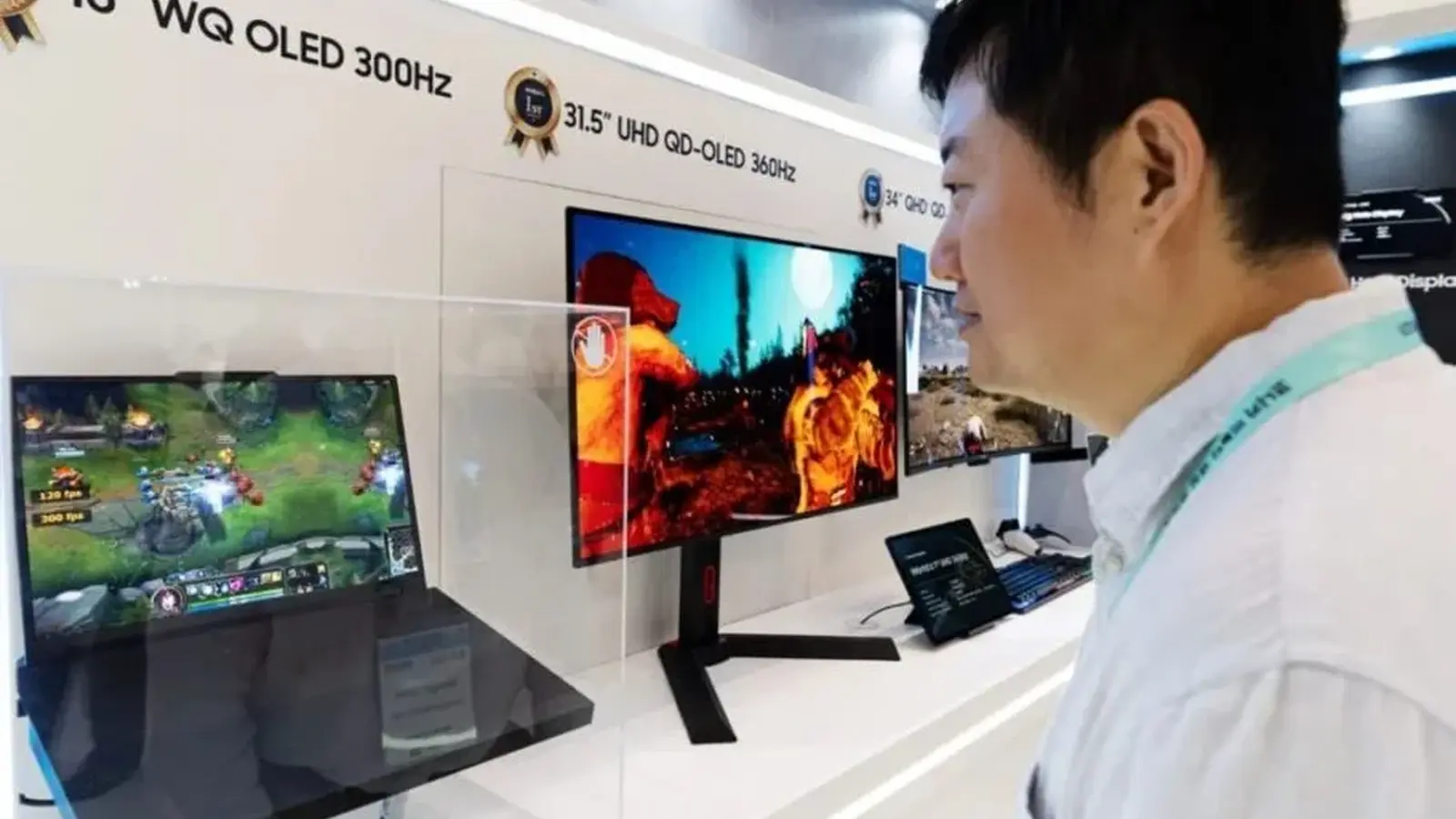
Imagine a laptop screen refreshing 300 times every second. Blink and you might miss a frame. Samsung Display brought that reality to Busan, unveiling a 16-inch OLED laptop panel running at a variable 300Hz during IMID 2026.
It’s a milestone more than a spec. The panel packs a 2.5K resolution in a 16:9 canvas and supports variable refresh up to 300Hz, a combination tailored for high-end gaming laptops where motion clarity and input responsiveness matter most. Samsung is billing this as the first laptop OLED to reach such a refresh ceiling, and laptop makers chasing the next performance leap will be watching closely.
Why this matters for gamers and designers
High refresh rates aren’t just for esports pros. They reduce motion blur, tighten perceived latency, and make animations feel weightless. That’s lucrative for competitive play and seductive for anyone who wants buttery-smooth UI transitions. The OLED architecture adds other benefits: true blacks, per-pixel light control, and effectively infinite contrast. Samsung hasn’t shared peak or average brightness figures yet, but HDR support is expected, which suggests the company is balancing speed with dynamic range.

So what’s the trade-off? Battery life and thermal management will be under scrutiny. A 300Hz panel that can scale down when idle—thanks to variable refresh—can help preserve power. Still, hitting the sweet spot will be up to laptop designers: chassis cooling, battery capacity, and GPU efficiency will determine whether this is a headline feature or the core of next-gen gaming rigs.
Samsung didn’t stop at the laptop panel. On the show floor it displayed a new 7.6-inch foldable OLED with wider viewing angles, and two QD-OLED gaming monitors that push refresh even further: a 31.5-inch 4K panel and a 34-inch ultrawide, both offering variable refresh rates up to 360Hz. The message is clear—Samsung is marrying OLED’s contrast advantages with the high-refresh expectations of gamers and pro users.

And then there were the concept pieces: a 6.9-inch Humanoid Display with eye-tracking aimed at robotics; an AI pendant or plaque fitted with an OLED panel; and an analog-styled gramophone reimagined with an integrated OLED screen. Playful? Yes. Indicative of where display tech could land? Also yes.
Will mainstream laptops adopt 300Hz OLED quickly? Expect a staged rollout. Early adopters will be flagship gaming machines and desktop-replacement systems where buyers accept the trade-offs for top-tier performance. Over time, as production scales and power management improves, we could see this tech trickle into thinner, lighter devices.
Samsung’s 300Hz OLED is a clear signal: OLED no longer concedes speed to LCD. It wants the crown in clarity and responsiveness too.

“I love exploring gadgets, apps, and trends that redefine how we connect, work, and play in a digital world.”

Discussion
Leave a Comment
Comments
No comments yet. Be the first.