
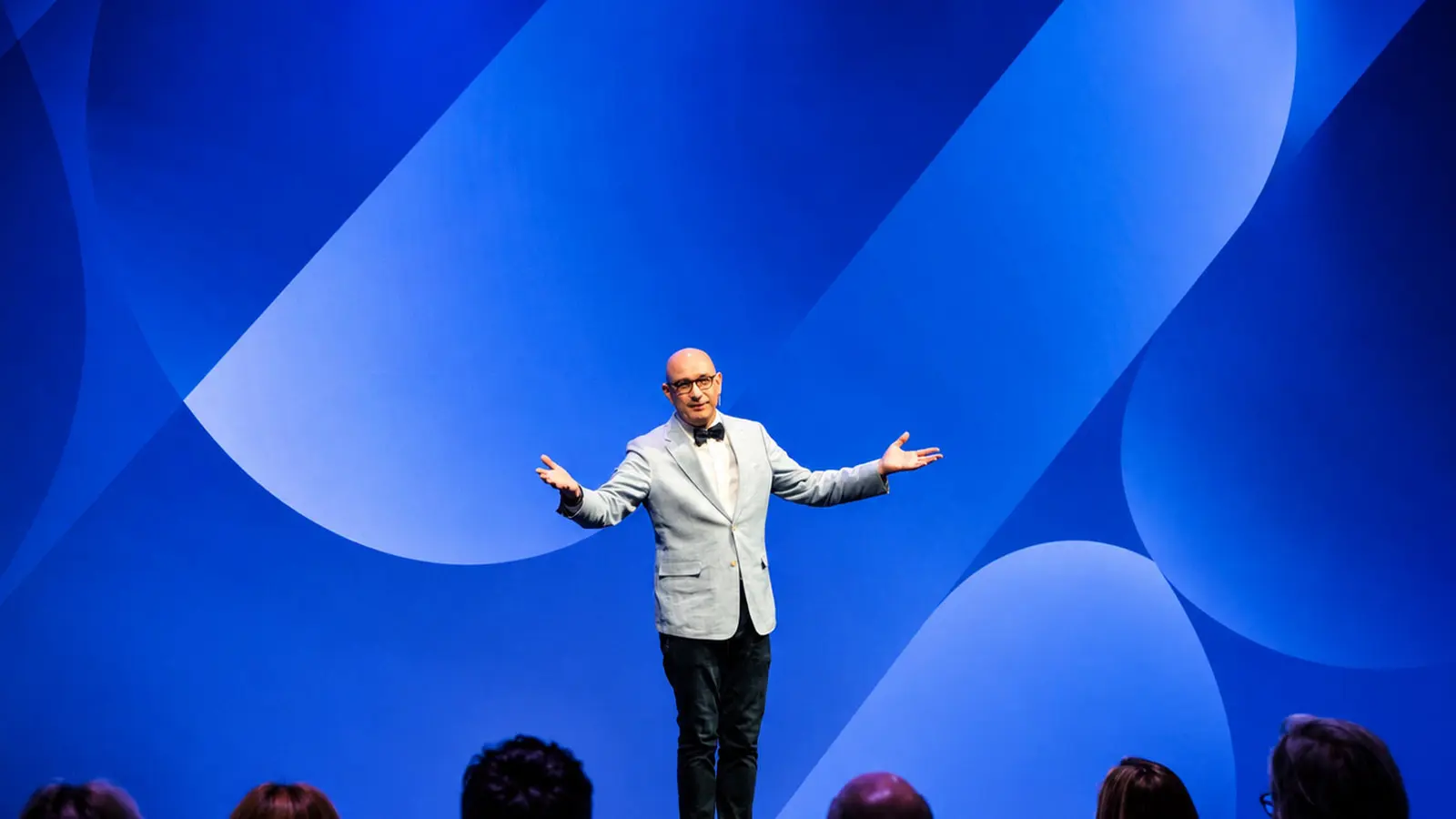
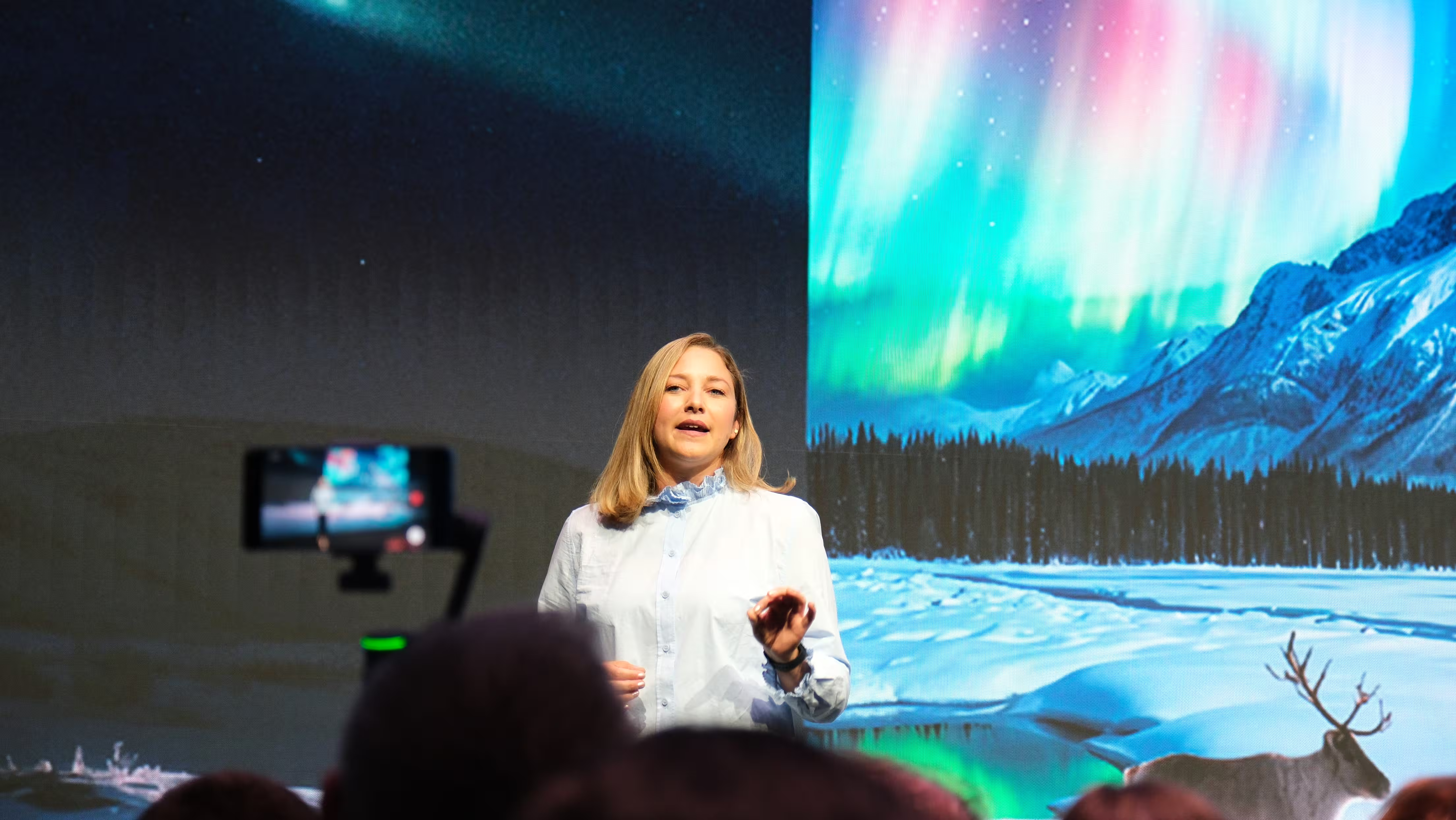
Samsung gathered media, creators and partners at Humboldt Carré on Behrenstraße in Berlin for Samsung Connect, an evening built around one central idea: making artificial intelligence genuinely useful in everyday life.
BERLIN, Germany: Samsung did not begin its IFA 2026 presentation with a product.
Instead, Benjamin Braun, Chief Marketing Officer of Samsung Europe, began with Alexander von Humboldt.
Speaking to media, creators and partners gathered at Humboldt Carré on Behrenstraße in central Berlin, Braun recalled the explorer’s fascination with connections in nature and used it as a bridge to a word that has become almost unavoidable in consumer technology: ecosystem.
Samsung has plenty of reasons to use it.

Its SmartThings platform now serves more than 430 million users worldwide, connecting Samsung products alongside compatible devices from other manufacturers. At Samsung Connect, the company’s new immersive IFA venue open from September 2 to 6, that ecosystem became the framework for almost everything shown during the evening, from washing machines and refrigerators to televisions, gaming monitors, Galaxy smartphones and laptops.
The products were varied. The message was not.
Samsung wants AI to stop looking like a collection of isolated features and start behaving more like a layer running quietly across the devices people already use.
“AI should deliver tangible benefits that people can see and experience in their everyday lives,” Braun said in Samsung’s official IFA statement.
That idea, practical AI rather than AI for its own sake, ran through the entire event.
Samsung takes IFA into central Berlin
Samsung Connect itself is part of a broader change in the company’s IFA presence.
Rather than limiting its activities to Messe Berlin, Samsung has created a second experience in the city center at Humboldt Carré, with product demonstrations aimed at media, creators, retailers and business partners. Samsung is also the main sponsor of the IFA Creator Hub at the exhibition grounds.
The setting worked particularly well for what Samsung was trying to communicate.

The evening was not constructed around one flagship launch. Visitors moved between different zones showing home appliances, mobile products, entertainment devices and gaming hardware, making the ecosystem argument considerably easier to understand than it would have been from a traditional keynote stage.
Braun’s own example was deliberately mundane.
When his washing machine finishes a cycle, he explained, SmartThings can notify his watch, phone or television. For someone with three children and a lot of school uniforms to wash, the connected-home promise becomes less about futuristic automation and more about remembering to hang up the laundry.
That small example captured much of Samsung’s strategy at IFA.
Make the technology sophisticated underneath, but make the benefit easy to explain.
A washing machine that pushes efficiency further
Energy efficiency was one of the clearest examples.
Samsung previewed future Bespoke AI Washer models with capacities of 10 kg and 13 kg. The new 10 kg machine is designed to consume up to 70 percent less energy than the minimum requirement for Europe’s Class A energy-efficiency rating, according to Samsung.

The larger 13 kg model takes a different approach. Using SpaceMax technology, Samsung has increased drum capacity while keeping the machine within the standard 600 mm depth expected in European homes.
There is an important caveat: Samsung describes the Bespoke AI washers shown at IFA as development-stage models, meaning specifications may still change before commercial release.
Still, the direction is clear.
Samsung sees AI appliances partly as a way of reducing the invisible costs of daily routines, particularly energy use. That argument has become more relevant in Europe as consumers have become increasingly sensitive to household energy prices.
The refrigerator increasingly knows what is inside
The latest Bespoke AI Refrigerator Family Hub pushes the same concept into food management.
Its AI Vision system has been improved to recognize more food items and help keep track of what enters and leaves the refrigerator. That information can then support recipe recommendations and other connected kitchen functions through the wider Samsung ecosystem.
Samsung has been moving in this direction for several years, but the latest generation illustrates how quickly the role of the refrigerator is changing.
It is no longer being presented simply as an appliance that keeps food cold. Samsung increasingly wants it to become an information point for the kitchen.
Whether consumers ultimately want that level of intelligence in every appliance is another question, but Samsung is clearly betting that convenience will make the case more effectively than novelty.

Gaming arrives in Berlin straight from Gamescom
Samsung Connect also came only days after Gamescom in Cologne, where the company unveiled its 2027 Odyssey gaming monitor lineup.
Braun pointed visitors toward that portfolio during the presentation, and Samsung had good reason to keep it visible.
The new range includes the 49-inch Odyssey OLED G9, 42-inch curved OLED G7, 32-inch OLED G8 and Odyssey G6.
The numbers are increasingly extreme.
The OLED G9 combines a Dual QHD resolution with a refresh rate of up to 360 Hz, while Dual Mode can push the display to 720 Hz at a lower resolution. The Odyssey G6 goes even further, reaching a claimed 1,100 Hz refresh rate in its fastest mode.

Samsung is also expanding HDR10+ Gaming support through a partnership with Activision Blizzard, including Call of Duty: Modern Warfare 4.
During the Samsung Connect presentation, a football-themed demonstration provided a lighter example of how the company wants AI to interact with entertainment.
A quick question about Robert Lewandowski’s famous five-goal substitute appearance for Bayern Munich in 2015 became a demonstration of how Samsung’s Vision AI Companion can provide context around what viewers are watching.
The joke worked because it illustrated something more significant: Samsung increasingly sees the television as an interface, not merely a display.
After 20 years at number one, Samsung wants the TV to become conversational
Samsung is celebrating its twentieth consecutive year as the world’s leading television brand, and TV remains one of the strongest pillars of its ecosystem strategy.
At Humboldt Carré, Eva Schwab, Director Corporate Marketing at Samsung Electronics Germany, took over part of the presentation to explain where the company believes television is going next.
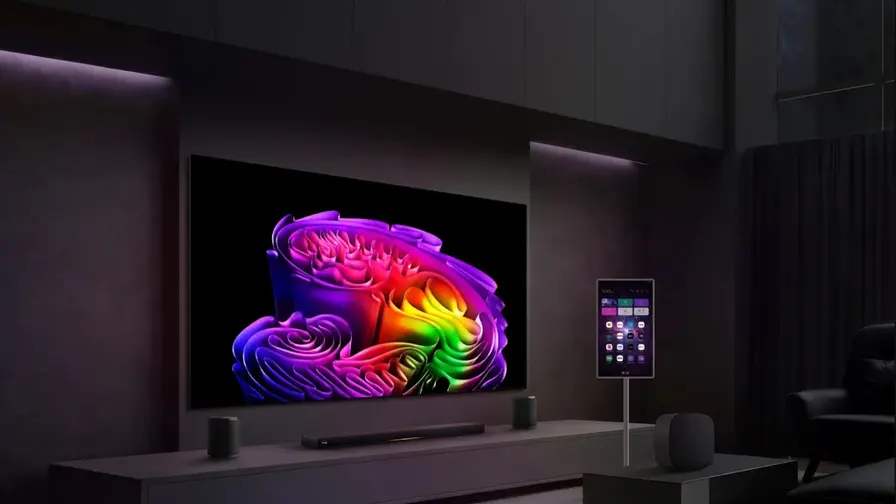
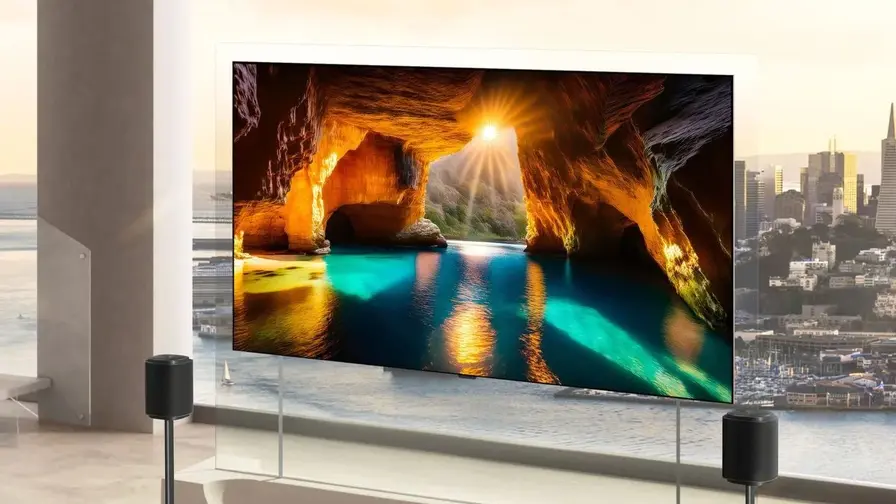
Samsung’s Micro RGB technology was one of the main visual highlights.
The 2026 flagship R95H uses individually controlled red, green and blue LEDs smaller than 100 micrometers, allowing much more precise light and color control than conventional Mini LED systems.

Samsung says the display covers 100 percent of the BT.2020 color space, a claim that has received VDE certification under its Micro RGB Precision Color designation. AI processing continuously analyzes the picture and adjusts characteristics including color, brightness and contrast.
Samsung’s S99H OLED sits alongside it at the premium end of the 2026 TV portfolio, taking a different approach with OLED HDR Pro and an industrial-style design.
But Samsung’s larger argument was not really about panel technology.
It was about what happens when the screen starts understanding the context around the content.
Vision AI Companion brings several AI services onto one screen
Vision AI Companion is Samsung’s attempt to make that interaction more natural.
Instead of navigating separate AI apps, users can access Samsung’s own Vision AI functions alongside third-party platforms including Google Gemini, Perplexity and Microsoft Copilot from a central interface.
Interaction begins with ordinary voice input through the Samsung Smart Remote.

A viewer can ask about something appearing on screen, request additional information, look for related content or ask for recommendations. Samsung also says the system can learn viewing habits and proactively suggest material that may be relevant.
Braun gave an intentionally simple example from his trip to Berlin: while packing in London, he asked his television for the Berlin weather forecast.
That may sound trivial, particularly when a phone can answer the same question in seconds.
But it shows what Samsung is trying to change.
The company does not want users to think about which device should perform an AI task. It wants the device already in front of them to become the interface.
Schwab summarized the idea more neatly during the presentation: AI should be “working for you, not just with you.”
The Frame, Serif and Freestyle still matter in an AI-heavy lineup
Not everything in Samsung’s TV strategy is about artificial intelligence.
The company continues to develop products designed around the physical spaces where televisions live.
The Frame remains built around the idea of turning the screen into digital art when it is not being used as a television. The Serif addresses more flexible interior layouts, while The Freestyle projector is designed to move with the viewer rather than remain fixed in one room.
At Humboldt Carré, Samsung also showed how Vision AI Companion can work with The Frame and Samsung Art Store to recommend art according to personal preferences and mood.
That combination of AI and physical design says something about how Samsung views the future of television.
The screen is becoming smarter, but it is also becoming more conscious of the room around it.
Samsung TV Plus has quietly become a very large platform
There was another number during the evening that deserves attention.
Samsung TV Plus has now surpassed 100 million monthly active users worldwide.
The free, advertising-supported streaming service carries nearly 5,000 linear channels across 30 countries, turning Samsung’s enormous installed base of televisions into a media distribution platform in its own right.
This is an important part of Samsung’s TV story because the company is no longer competing only on hardware.
A television sold today can generate an ongoing relationship through software, AI services, content and advertising long after the purchase itself.
Samsung’s dominance in TV hardware gives it an unusually large foundation on which to build that services business.

Galaxy AI moves further down the lineup with S26 FE
The mobile section of Samsung Connect followed the same accessibility argument.
Samsung is using the newly announced Galaxy S26 FE to bring more of its Galaxy AI experience to a less expensive tier.
The S26 FE is the first model in the Galaxy S26 family to ship with One UI 9 and combines Galaxy AI functionality with advanced camera and editing tools designed around content creation and sharing.
This is one of the places where the raw event transcript contained a clear recognition error. It referred to the “S24 FE” and One UI 6.1, but Samsung’s official IFA 2026 documentation confirms that the product shown in Berlin was the Galaxy S26 FE running One UI 9.
That correction matters because Samsung’s strategy in 2026 is very different from what it was two generations ago.
Galaxy AI is no longer something reserved primarily for the most expensive phones. Samsung is deliberately pushing its AI tools across a broader part of the Galaxy portfolio.
Foldables remain Samsung’s pocket-sized big-screen argument
Braun also highlighted Samsung’s latest Galaxy Z generation, unveiled in London in July.
The 2026 family consists of the Galaxy Z Fold8 Ultra, Galaxy Z Fold8 and Galaxy Z Flip8, giving Samsung three distinct foldable form factors rather than treating foldables as one category.
The regular Galaxy Z Fold8 is particularly interesting because Samsung redesigned its proportions around content consumption.
Its 7.6-inch main screen opens into a 4:3 aspect ratio, while a 4,800 mAh battery is rated for more than 26 hours of video playback. At 201 grams, Samsung says it is the lightest Galaxy Z Fold it has produced.
Braun described the device on stage as something closer to “a TV in your pocket” than a conventional smartphone.
The line may be marketing language, but it also neatly explains why Samsung keeps investing in foldables: the company sees them as the bridge between the portability of a phone and the larger workspace of a tablet or display.
A new Galaxy Book6 connects the PC more closely to Galaxy
Samsung also used IFA to expand the Galaxy Book6 family.
The new 14-inch model combines Intel Core 3 and Core 5 processor options with Galaxy AI features and up to 25 hours of claimed video playback.
Samsung is positioning the machine as a more accessible entry into the premium Galaxy PC experience, particularly for people who already use Samsung phones and other Galaxy devices.
Again, the raw transcript incorrectly identified the product as a Galaxy Book4 Edge. Samsung’s current IFA documentation confirms that the new machine is part of the Galaxy Book6 generation.
The distinction is more than a model-number correction.
Samsung increasingly treats the PC as another endpoint inside the Galaxy ecosystem rather than a separate product category.

The ecosystem is becoming Samsung’s real product
It would be easy to leave Samsung Connect with a list.
A washing machine that consumes less energy.
A refrigerator that recognizes food.
Gaming monitors pushing refresh rates toward absurd numbers.
A television that can talk to Gemini or Copilot.
A more affordable Galaxy phone.
A new laptop.
Another generation of foldables.
But a list misses what Samsung was actually trying to show in Berlin.
The company’s most important product may increasingly be the layer connecting all of those things.
SmartThings already gives Samsung access to more than 430 million users. Galaxy AI is expanding across mobile devices and PCs. Vision AI Companion is bringing conversational AI into the television. Family Hub is turning the refrigerator into another connected interface.
The boundaries between Samsung’s traditional product divisions are becoming less visible.
That creates obvious advantages for the company. A consumer who owns several Samsung products can receive more value from the ecosystem, but also becomes more deeply embedded in it.
For users, whether that becomes compelling will depend on something simpler: whether the connections actually save time and reduce friction.
The most convincing AI may be the least visible
The evening at Humboldt Carré was full of AI terminology, but Samsung’s strongest demonstrations were often the least futuristic.
A washing machine that tells you when the cycle is finished.
A TV that helps you understand what you are watching.
A refrigerator that remembers what food is inside.
A laptop that works more naturally with your phone.
An appliance that consumes less electricity without requiring the user to think about it.
These are not science-fiction scenarios.
That appears to be precisely the point.
Samsung’s “Companion to AI Living” vision is built on the assumption that consumers will not adopt AI simply because companies attach the letters A and I to another feature.
The technology has to become useful enough to justify its presence.
Samsung Connect gave a broad preview of how the company intends to do that across almost every major consumer technology category it operates in.
And perhaps the most revealing thing about the event was that Samsung did not ask visitors to imagine some distant AI-powered future.
It tried to show that much of it is already sitting in the living room, kitchen, laundry room and pocket.

“Some times I write about breakthrough startups, digital ecosystems, and how innovation is changing the way we build businesses.”

Discussion
Leave a Comment
Comments (6)
Feels a bit overhyped, micro RGB looks impressive tho. 1,100 Hz? ok show me real difference 🤔
Solid overview. Energy saving washer sounds practical, fridge as info hub ok, TV as interface meh — depends on execution
I've used SmartThings, some things work great, others are flaky. If Samsung irons that out, this could be huge. also that foldable as 'TV in pocket' made me smile
Cool demos, but is Vision AI Companion really private? who stores fridge pics, viewing habits? curious and worried.
Makes sense tbh, ecosystem's the move if it just works. Less hype, more reliability pls
Didn't expect Samsung to go so domestic with AI. Washing machine that reminds you? actually kinda cool, low-key impressed!