
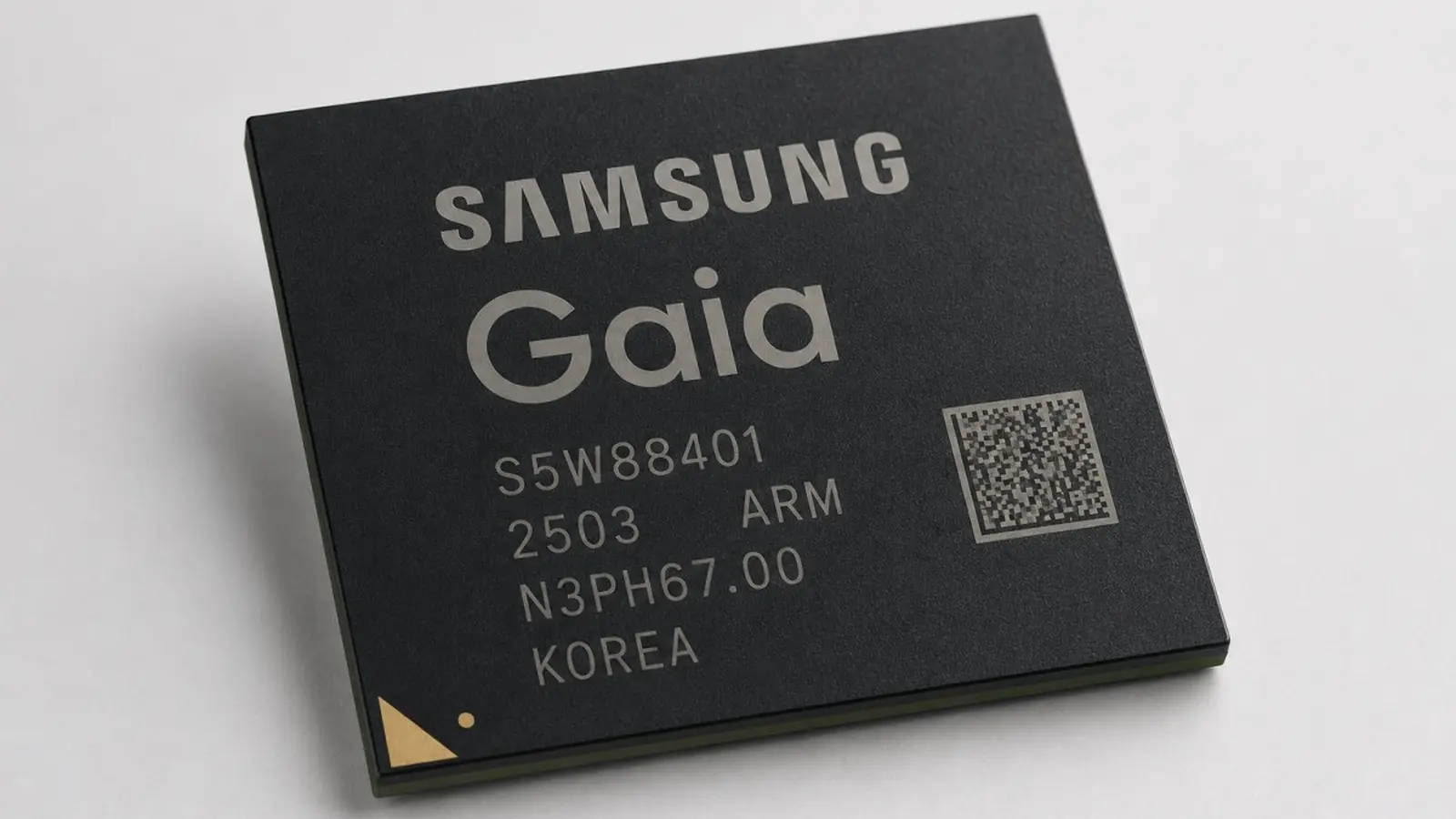
Picture a laptop that can run demanding AI tasks without phoning home. Shorter waits. Better battery life. Local smarts. That’s the promise circulating around a new Samsung chip codenamed Gaia.
Sources in Korea say Samsung is developing an AI accelerator for PCs built on a 4nm process. The design centers on an optimized NPU architecture tuned for edge inference, aiming to squeeze more performance per watt out of everyday machines. Samsung has reportedly already supplied prototypes to several unnamed major customers and plans to begin mass production next year.
Why this matters beyond benchmarks
On-device AI changes how software behaves. It lets laptops run complex models for tasks like image editing, voice understanding, and real-time translation without a constant cloud connection. Latency drops. Privacy improves. Battery budgets get gentler. It also opens doors for physical AI — think smarter robots, drones, and embedded devices that require efficient, sustained inferencing.

Gaia's focus on efficiency suggests Samsung is chasing use cases where raw GPU power would be overkill, but ultra-low power and sustained throughput matter most. That’s a different trade-off than the big discrete GPUs companies sell to data centers. If Samsung can hit strong performance per watt, it could reshape expectations for what a thin-and-light machine can do.
Competition will be intense. PC makers and silicon vendors are already working on dedicated AI silicon — from integrated neural engines to add-in accelerators. Samsung’s advantage is its process know-how and deep ties to OEMs. But shipping silicon is one thing; getting software, drivers, and developer support to play nicely is another.
If Gaia delivers, everyday PCs and robots could run far more capable AI locally without sacrificing battery life.
Details remain thin. No benchmarks, no power curves, and little clarity on memory architecture or software ecosystems. Still, the roadmap — prototype handoffs followed by a mass-production target next year — suggests Samsung expects to move fast. Keep an ear out. This could be one of those quiet shifts that suddenly makes on-device AI feel ordinary.


“I love exploring gadgets, apps, and trends that redefine how we connect, work, and play in a digital world.”

Discussion
Leave a Comment
Comments
No comments yet. Be the first.