
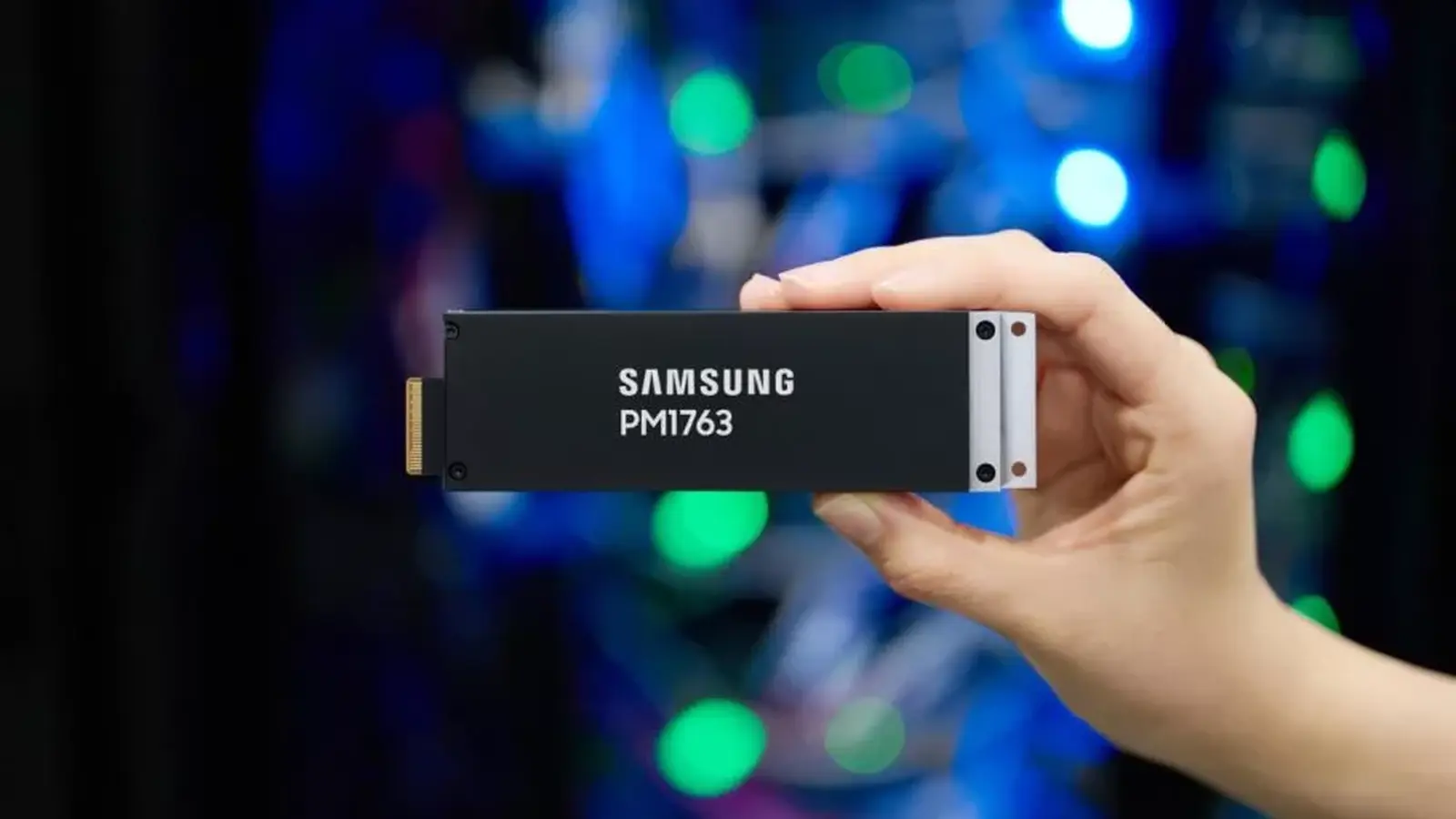
Picture a data center where storage no longer bottlenecks the smartest AI models. That future just took a tangible step forward. Samsung Electronics has begun mass-producing its PM1763 SSD, built on PCIe 6.0 and tuned for next-generation AI servers and high-performance computing platforms such as NVIDIA Vera Rubin.
Data volumes for AI training and inference are ballooning. Fast, consistent access to that data is now as critical as the GPUs and accelerators doing the math. Samsung is answering that need with a drive that pairs ninth-generation V-NAND with a newly developed 4 nanometre controller, a combo that pushes both throughput and energy efficiency.
What the PM1763 brings to the rack
Available in 4, 8 and 16 terabyte capacities, the PM1763 stakes its claim on raw speed. The 16 terabyte model hits sequential read speeds up to 28,400 MB/s and sequential write speeds up to 21,900 MB/s, according to Samsung. That represents more than twice the performance of the previous PM1753 generation.
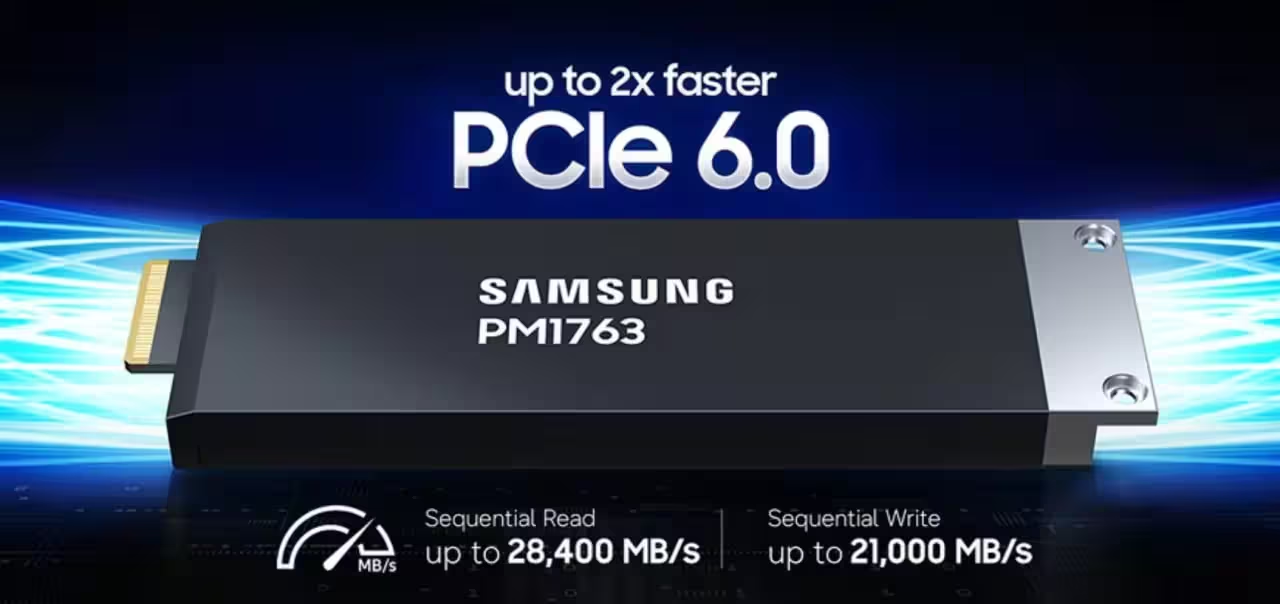
Samsung says a 40 gigabyte large language model can be moved in roughly 1.4 seconds, shrinking data latency between processors and accelerators and improving overall AI throughput.
There are engineering details behind those headline numbers. The drive supports direct-to-chip cooling, making it ready for liquid-cooled server environments where sustained workloads and long uptimes are the norm. Thermal stability under load matters for consistent performance, and Samsung also reports an energy-efficiency gain of over 1.8 times versus the prior generation, which translates to lower operational costs at scale.
So what changes for real-world AI deployments? Shorter model load times, reduced I/O wait, and the ability to feed accelerators with larger working sets without stalling. In practice, that means faster iteration for developers and more predictable latency for production inference.
Storage is no longer a passive tier in the stack. It's an active enabler for faster, denser AI compute. Samsung’s PM1763 looks like the kind of hardware update that will ripple through datacenters pushing cutting-edge models and demanding HPC workloads.
Expect early adoption in hyperscale and enterprise clusters first, then broader deployment as systems vendors integrate PCIe 6.0 NVMe devices into server designs. The race to remove every millisecond of delay in AI pipelines continues, and this is a significant new arrow in the quiver.

“I cover emerging technologies, digital innovation, and the intersection of tech and everyday life. My goal is to make complex trends accessible and inspiring.”

Discussion
Leave a Comment
Comments
No comments yet. Be the first.