
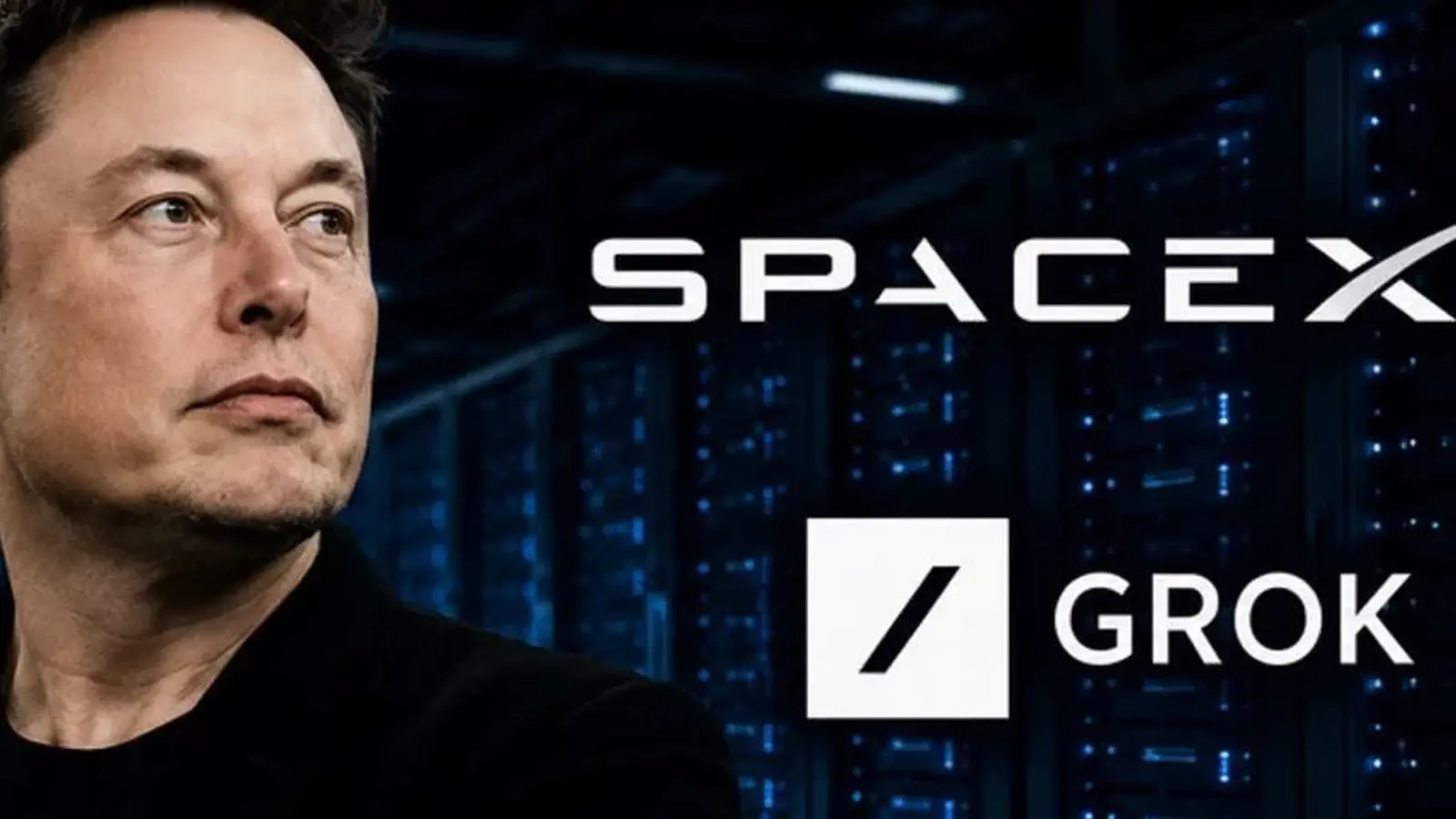
Picture a hangar where rocket engineers swap launch checklists for model weights. That swap is happening right now inside SpaceX, and it matters more than a single headline.
Elon Musk says dozens of the company’s best engineers from Starlink and Starship are spending a significant portion of their time on Grok, the conversational AI tied to xAI. The result, according to Musk, is a sharp acceleration in both model improvements and the infrastructure used to train them. Small teams. Big shifts. Faster iteration.
The long game behind the reassignment
Why pull hardware and orbital-network experts into software work? Because training advanced AI is as much about heavy lifting—massive compute, networking and systems design—as it is about algorithms. Engineers who understand satellite networks, distributed compute and rocket-scale logistics bring a different set of muscles to the problem.
There’s another piece to the puzzle: Cursor, the AI coding startup SpaceX bought for about €56 billion, has been folded into the effort. Cursor’s engineers are working on the next foundational Grok model. Meanwhile, Grok 4.5 is already running as a private beta inside Tesla and SpaceX, and Musk says SpaceX plans to release newly trained models every month through the end of the year.
That cadence—monthly, iterative releases—changes expectations. It signals a pivot from occasional big launches to a fast pipeline of continuous improvements. It also reveals the playbook: combine talent, give them access to SpaceX’s massive supercomputer fleet, and push short development cycles.
- Talent redeployed from Starlink and Starship accelerates infrastructure and training work.
- Cursor’s integration gives Grok stronger coding chops and direct access to SpaceX compute.
- Grok 4.5 running in private betas suggests an aggressive testing loop inside Musk’s companies.
There’s a catch. xAI has been reshaping itself; founders left, teams were reorganized, and Musk acknowledged Grok lagged rivals on some coding tasks. This realignment looks like an attempt to pull the project out of that rough patch by leaning on SpaceX’s engineering depth and compute muscle.
The financial backdrop helps explain the scale of the ambition. After a major stock offering that valued SpaceX around €79 billion, Musk has talked about using proceeds to build a vast, orbital compute network—potentially up to a million orbital datacenter nodes that combine Starlink connectivity and Starship logistics to train and run next-generation models. Ambitious? Yes. Technically bold? Absolutely.
So what should readers watch for? First, whether Grok’s coding performance closes the gap with rivals. Second, how quickly monthly model releases translate into measurable improvements. Third, whether SpaceX’s hardware-first advantage becomes a genuine differentiator for AI training at scale.
This move is not just a staff shuffle; it’s a bet that systems engineering and orbital infrastructure can be turned into an advantage in the AI arms race.

“I cover emerging technologies, digital innovation, and the intersection of tech and everyday life. My goal is to make complex trends accessible and inspiring.”

Discussion
Leave a Comment
Comments (2)
Is this even true? moving Starlink and Starship folks into Grok seems bold, but mixing orbital hardware with fast software sprints sounds risky. hope they test properly
holy cow, rocket engineers training AIs in a hangar? wild. monthly model drops could be huge, but rushing has me worried about safety and QA..