

Open a large TypeScript repo and you might feel it: the lag that used to haunt editors is shrinking. Files snap open. Errors appear almost instantly. That change is not a tweak. It's a rewrite.
Under the hood: Go, parallel work, and fewer surprises
Microsoft has shipped the final release of TypeScript 7 after rebuilding the compiler core in Go. The result reads like a short story about friction being removed: full-project compile times are reported as 8 to 12 times faster in many scenarios. Real-world measurements back that up. In VS Code, for example, the first reported error in a large project fell from about 17.5 seconds to under 1.3 seconds — a speed-up north of 13 times.
Speed is not the whole plot. The new release parallelizes key phases of the toolchain: parsing, type checking, and emit now run concurrently where possible. That shift matters because modern codebases are wide as they are deep. Parallelism changes the math. Teams can tune the behavior with new flags: --checkers and --builders control how many parallel workers run, while --singleThreaded lets developers force single-threaded execution for debugging or low-powered environments.
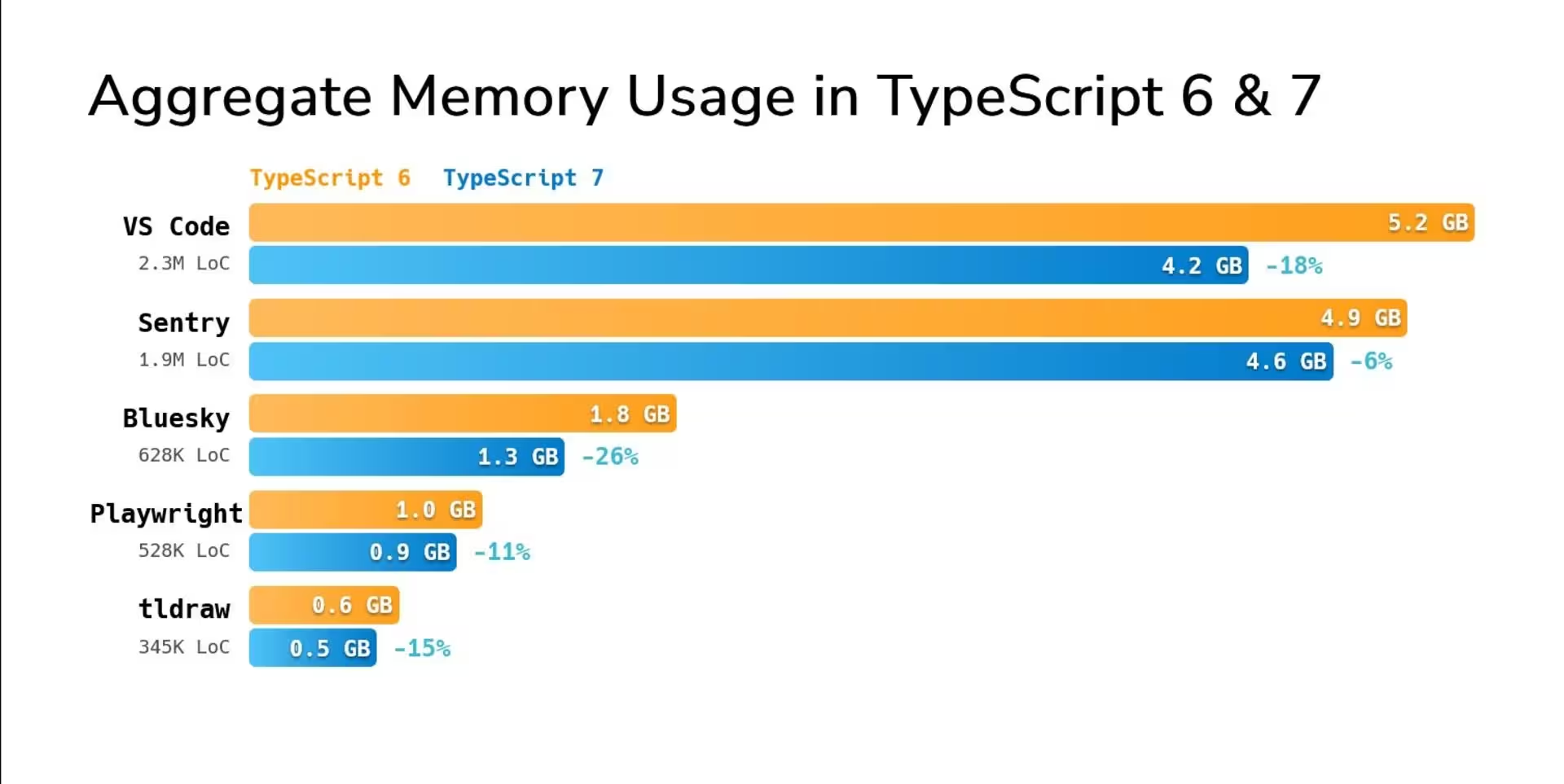
TypeScript 7 did not roll out in a lab only. Slack, Canva, Google, Bloomberg, Figma, Notion, and several Microsoft teams including Teams, Office, and Xbox participated in testing. The new compiler reduced Language Server error counts by more than 80 percent and cut server crashes by over 60 percent. Those are the kinds of numbers that translate into less time waiting and fewer unexpected interruptions.
Proof in the CI pipeline is persuasive. Slack reports a 40 percent drop in merge-queue wait times and says Type Checking in CI dropped from roughly 7.5 minutes to 1.25 minutes. Microsoft News Services estimates roughly 400 hours per month saved from reduced CI wait time after switching to TypeScript 7. Those minutes add up quickly across many developers.
Not everything switches on automatically, though. Tooling and ecosystem integrations still need time. Microsoft has not yet stabilized a tools API for the new runtime; that work is expected to arrive in version 7.1. Until then, some frameworks and tools cannot exploit the new internals fully. Vue, Svelte, Astro, MDX, and Angular are among the projects that may need updates before they can take full advantage.

To ease migration, Microsoft released a compatibility package, typescript/typescript6@, so teams can run versions 6 and 7 side by side while they update build tooling and plugins. That pragmatic move reduces risk for large organizations that cannot flip compilers overnight.
Bottom line: TypeScript 7 promises a materially faster developer experience, but the ecosystem will need a short period of catching up before everyone reaps the full benefit.
So what should development teams do now? Try TypeScript 7 in a branch, measure CI and editor responsiveness, and plan plugin updates for the next few months. The speed gains are real, but the transition is a two-step dance: a faster compiler, and an ecosystem adjusting to its rhythm.

“I cover emerging technologies, digital innovation, and the intersection of tech and everyday life. My goal is to make complex trends accessible and inspiring.”

Discussion
Leave a Comment
Comments (2)
is this even true? 13x faster sounds wild, but i'd like independent benchmarks and raw CI logs. anyone actually measured this in their org?
wow this is huge for large codebases! files open instantly, errors pop up almost real-time. feels like days saved. Plugins have to catch up tho…