
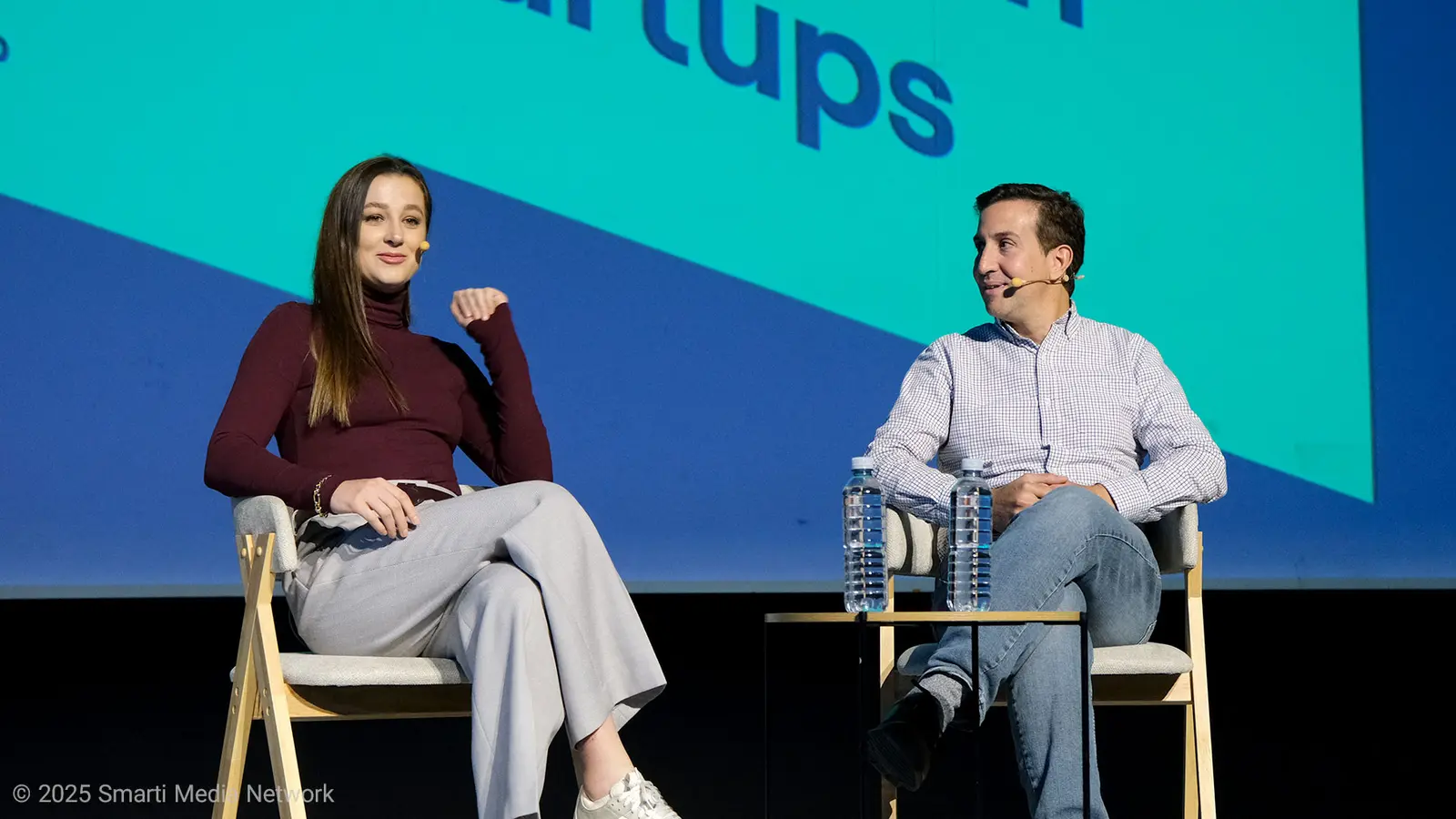
Vilnius, Lithuania – The final fireside chat of Startup Fair 2025 brought together two experienced voices from Startup Wise Guys, one of the most active accelerator networks in Europe, to explore what it really takes for Lithuanian startups to scale like Silicon Valley legends.
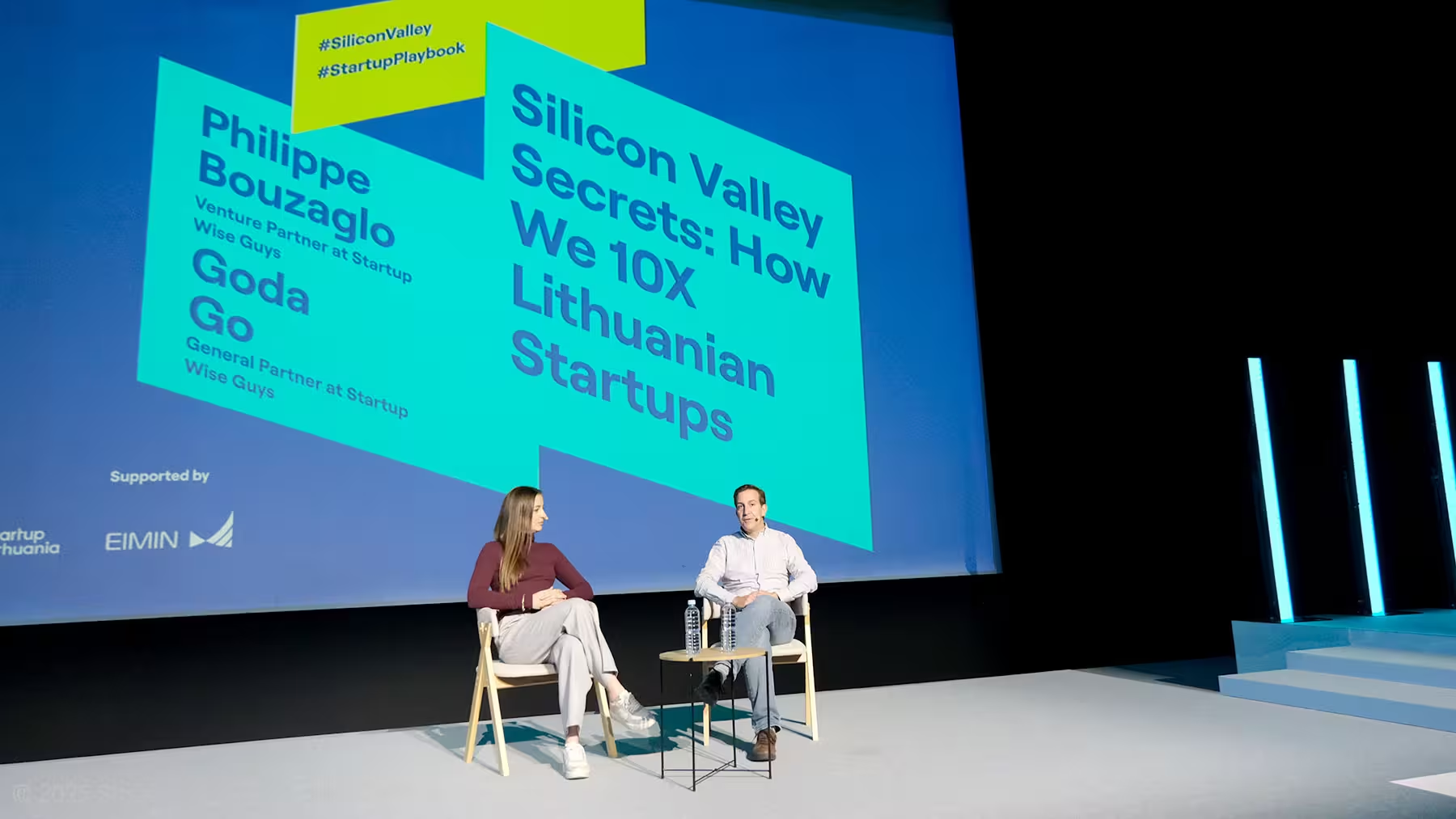
On stage sat Philippe Bouzaglou, Venture Partner, and Goda Go, General Partner at Startup Wise Guys, for a session titled “Silicon Valley Secrets: How We 10X Lithuanian Startups.”
What began as a casual discussion about the culture of experimentation soon evolved into a detailed exploration of innovation habits, AI transformation, European trade-offs, and the importance of maintaining humanity in a rapidly automated world.
Experimentation as the Heartbeat of Silicon Valley
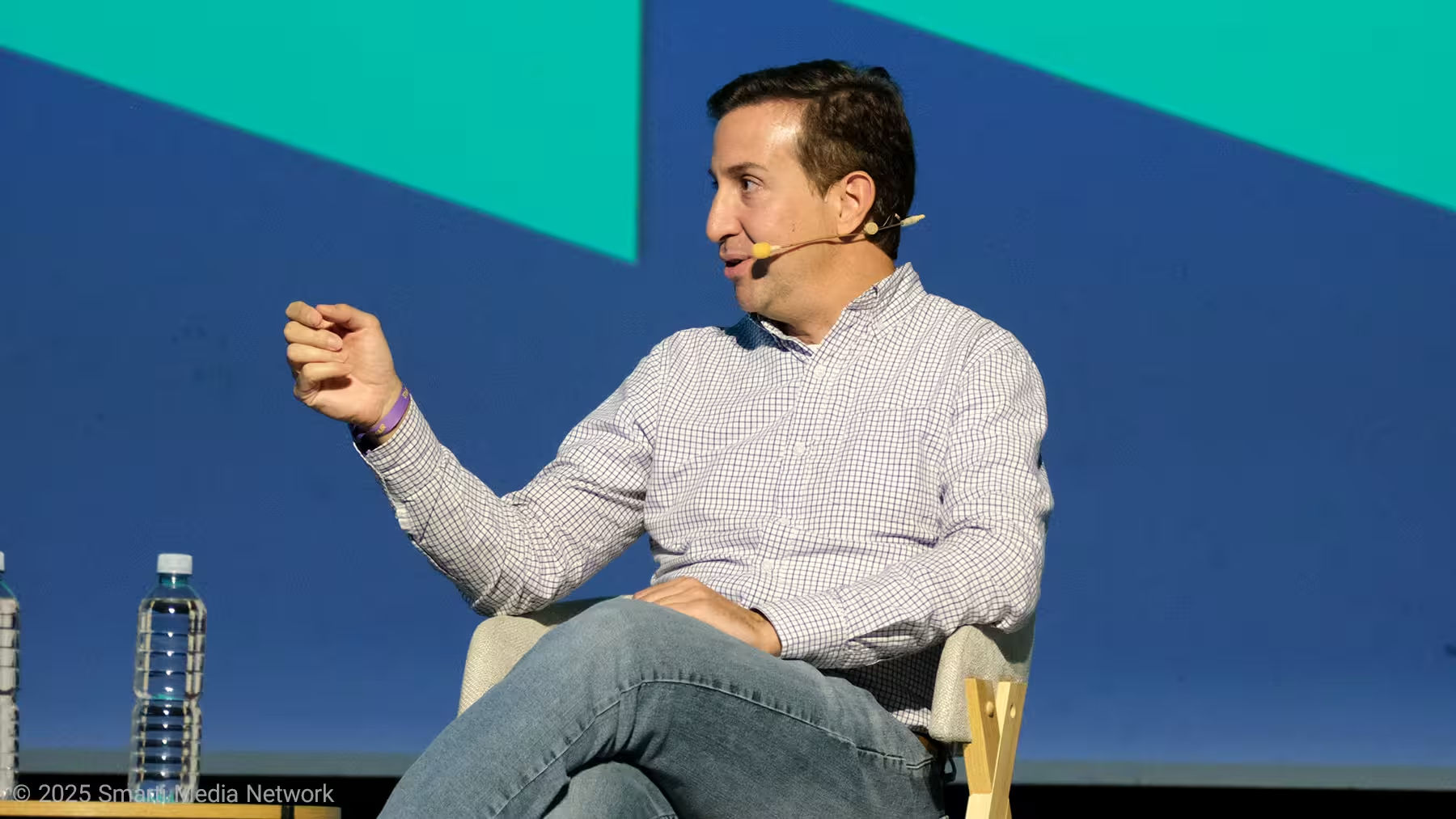
When the conversation began, Philippe smiled and admitted that whenever he speaks at events across Europe, he gets asked the same question: What is the secret sauce of Silicon Valley?
“People always assume there’s one trick — one secret mindset or one framework — that creates 10X startups,” he said. “But the truth is, it’s much more cultural than technical.”
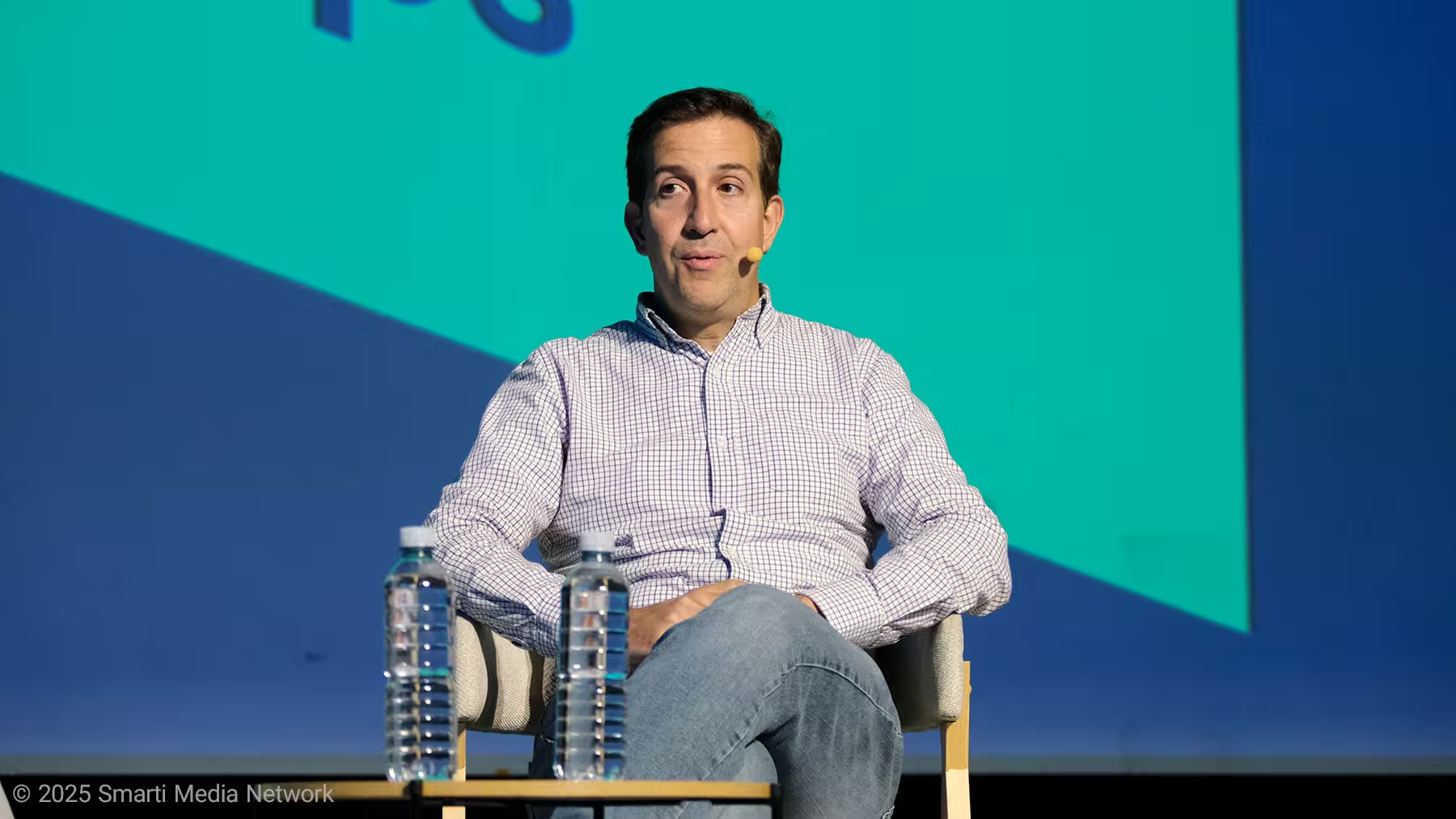
He described the relentless eagerness to try that defines Silicon Valley. Whether it’s investors, customers, or competitors, everyone wants to be the first to experience a new idea.
“In California, when you tell someone you’re building something new, their reaction is: ‘Can I try it?’ In Europe, people often say: ‘We already have something that works.’ And that difference alone changes everything.”
That willingness to test, to fail, and to adapt rapidly creates a demand pull — a self-feeding energy that keeps innovation moving faster than anywhere else.
“It’s not just startups pushing,” Philippe explained. “It’s also the audience — the ecosystem — pulling the innovation forward.”
He also noted a structural openness within Silicon Valley that’s missing in most European ecosystems. Teams and talent move fluidly between startups, knowledge circulates freely, and competition doesn’t block collaboration.
“Engineers in Silicon Valley move constantly — they take knowledge, they share it, they build again. In Europe, people hold information tightly. That slows everyone down.”
The Trade-Offs Europe Must Confront
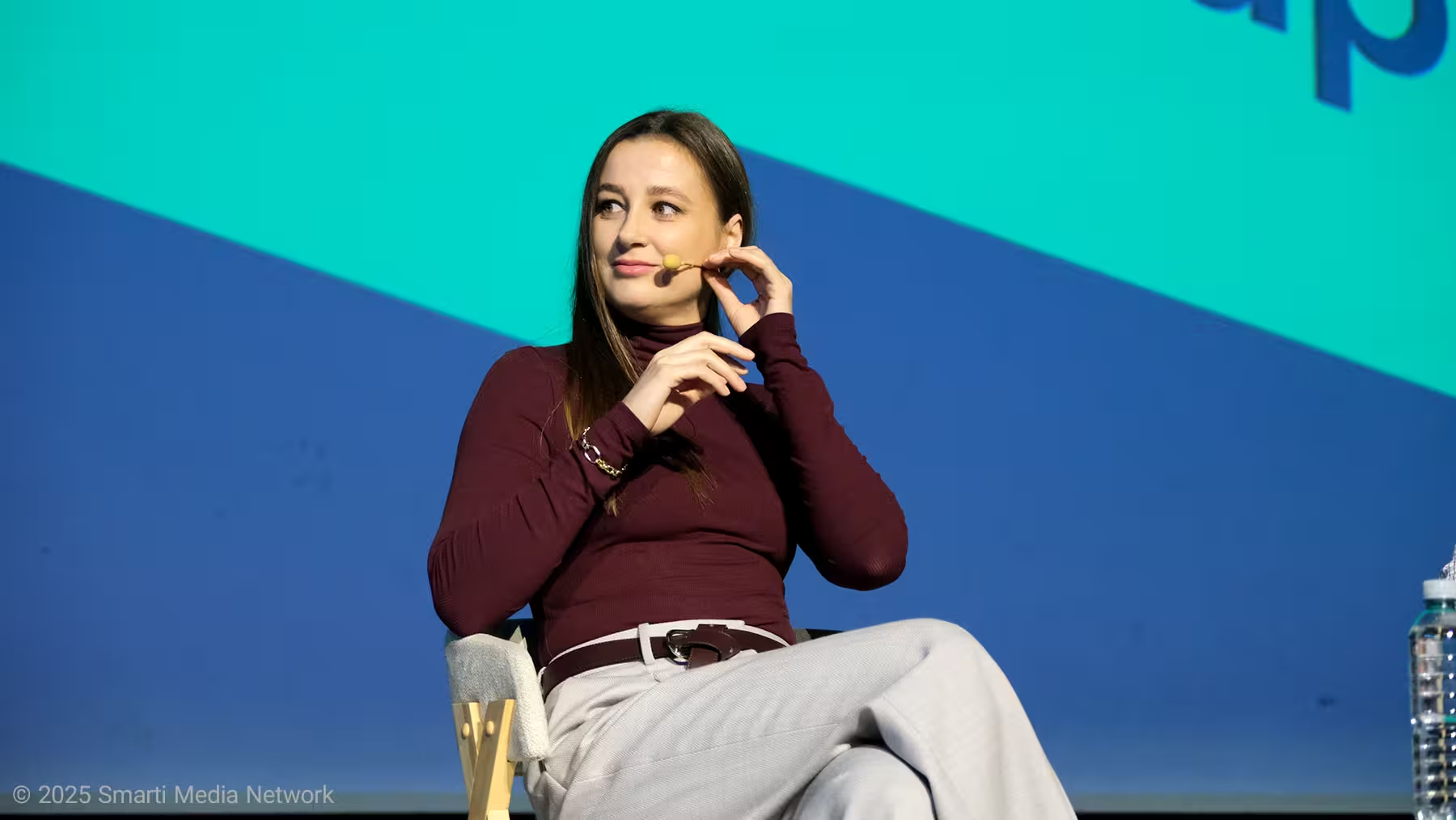
Moderator Goda Go then asked what, if anything, Europe could borrow from the Valley’s playbook without losing its identity.
“We love our lifestyle here. The family time, the balance, the social model,” she said. “But can we still move faster without losing what makes Europe special?”
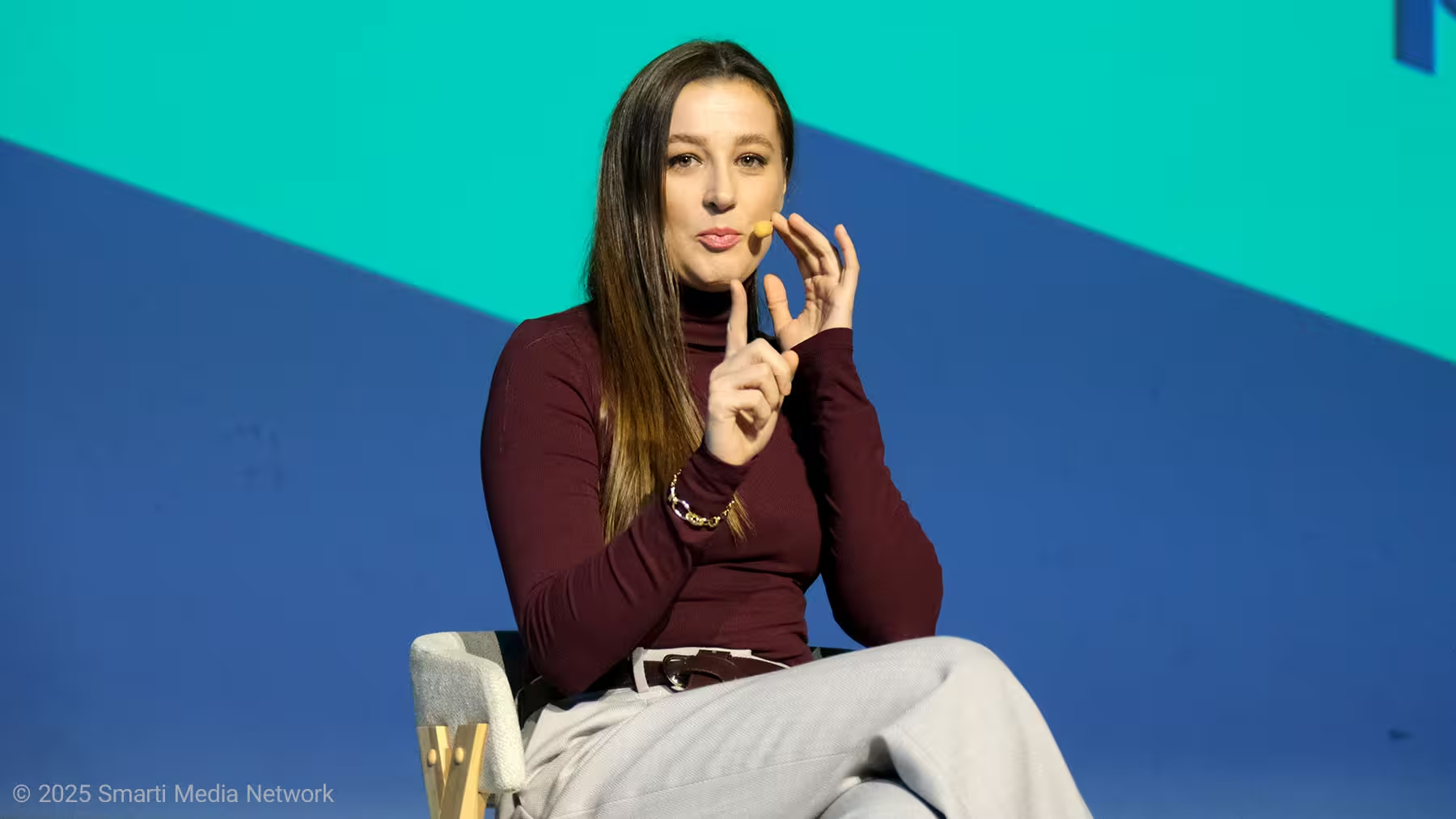
Philippe nodded.
“That’s the core question. The U.S. ecosystem didn’t grow like this by accident — it’s decades of policy and cultural trade-offs. They accepted instability for speed. Europe chose stability over chaos.”
He explained that Europe’s highly regulated markets, protective labor laws, and powerful incumbents often lead to oligopolies that slow down adoption of new technologies.
“Many big companies here don’t need to innovate,” he said. “They can survive without it. There’s no existential pressure. That’s why startups selling to corporates often struggle.”
But he was quick to add that this doesn’t mean Europe is doomed to lag behind.
“We don’t need to copy Silicon Valley’s chaos. We just need to build our own way of achieving velocity — a European version of fast growth without the burnout.”
Rethinking Systems from the Ground Up
The conversation then shifted toward AI, Lithuania’s emerging advantage, and the country’s new AI Sandbox initiative.
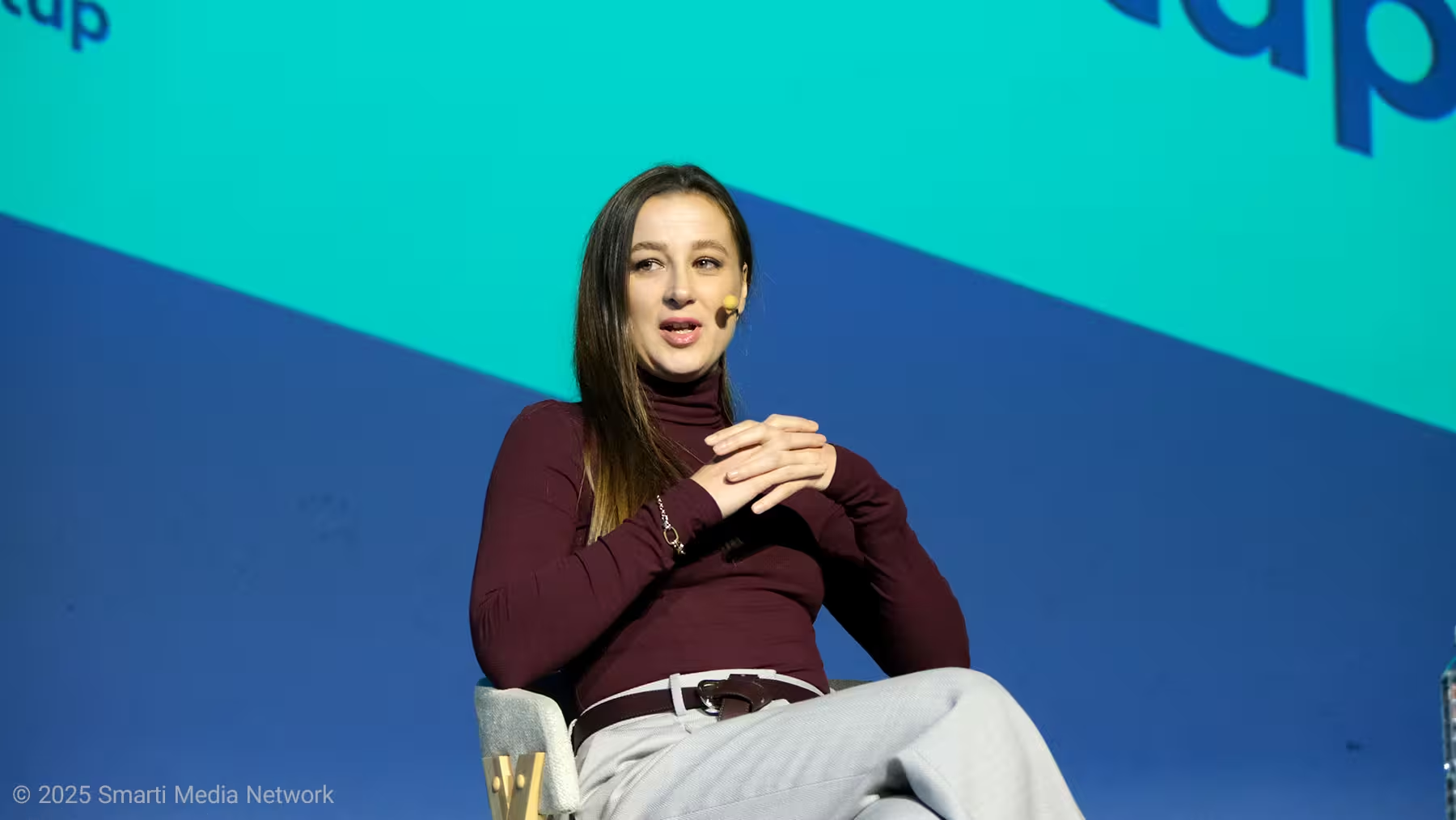
Goda, who has spent years mentoring founders and working with global enterprise clients, said the sandbox approach could transform Lithuania’s tech ecosystem — but only if done right.
“The mistake I see over and over again,” she said, “is companies trying to sprinkle innovation over their legacy systems. They add a layer of AI, but the foundation remains old. That’s not transformation — that’s decoration.”
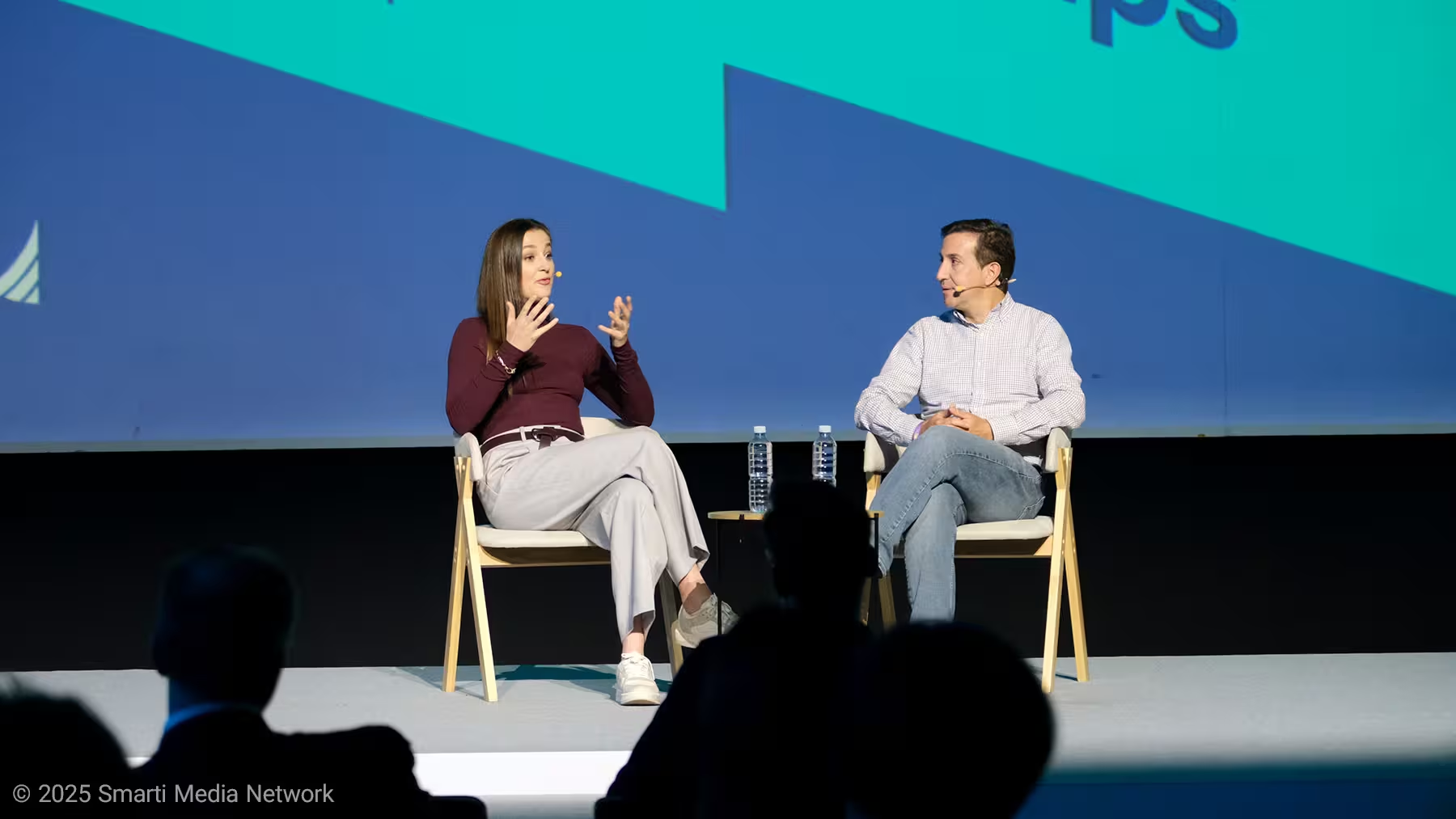
She described how most organizations still attempt to “plug” AI into outdated workflows rather than rethinking their processes from zero.
“It’s the same reason 95% of innovation projects fail,” she said. “If your process was broken before AI, it’ll still be broken — just faster.”
From her own experience building AI orchestration systems for large financial institutions, she noted how hard it is even to access internal data.
“We once spent four months just getting system access for a pilot. Real innovation starts only after that.”
According to her, startups — especially in small, agile ecosystems like Lithuania — have the advantage of being able to rebuild from scratch.
“We can rethink workflows, data pipelines, even how we define a ‘problem.’ That’s the real opportunity of the AI sandbox.”
Applying Startup Thinking to Venture Capital
Interestingly, Goda also argued that venture capital itself is ripe for reinvention.
“VCs love to say: ‘This is how we’ve always done it.’ But if you’re building a new fund, why not treat it like a startup?”
At Startup Wise Guys, she said, the team is actively redesigning internal workflows to make the firm itself more efficient through AI.
They’ve built modular systems where data from meetings, deal rooms, and reports can automatically flow through language models and vector databases — turning hours of manual work into seconds.
“I can finish a call, pick up my phone, and say: ‘Create a slide summarizing my last call with Philippe,’ and it’s done,” Goda said.
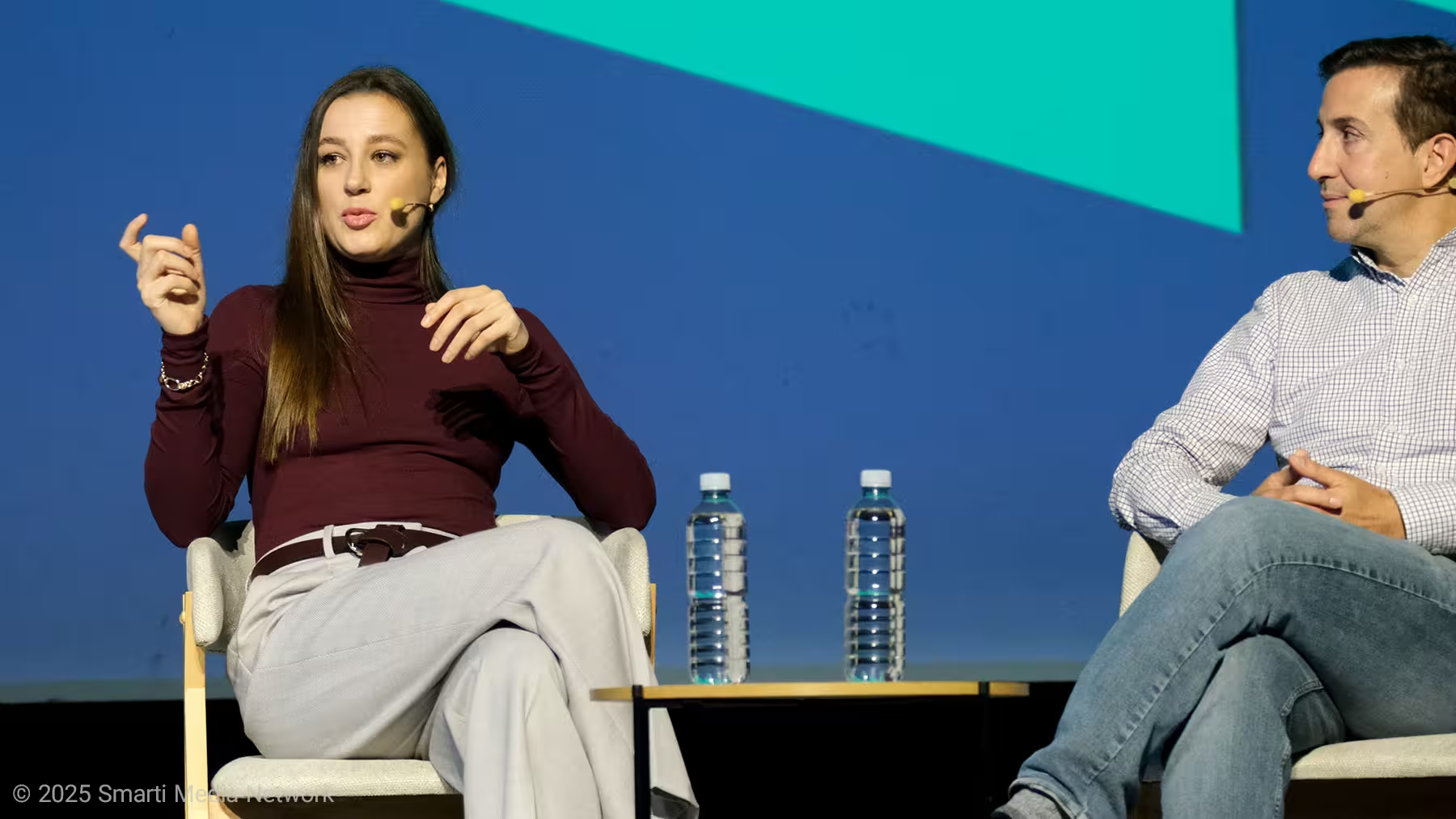
Philippe jumped in to explain the technical layer:
“We record every call. Notes are embedded into a database, vectorized, and indexed so we can search them semantically. I can ask, ‘When was the last time I talked to this founder, and what did we discuss?’ and get an instant answer.”
This isn’t just convenience — it’s creating a living institutional memory of every interaction, allowing partners across multiple countries to collaborate seamlessly.
“Even if I wasn’t on the call,” Philippe added, “I can ask, ‘How did the product discussion relate to the financials?’ and the system answers by referencing different conversations from different people. It’s like having an intelligent partner inside your fund.”
The AI-Driven Venture Capitalist
Both speakers agreed that this type of infrastructure will soon become standard.
“We’re sitting on a goldmine of data,” Goda said. “Every startup conversation generates insights — sentiment, themes, priorities. Imagine dashboards showing what founders talk about most, what challenges keep repeating, how often AI comes up in pitches. That’s the future of VC intelligence.”
She also pointed out that market monitoring powered by AI could become another superpower.
“I want to know in real time if there’s a startup in Africa solving the same problem as one in Lithuania. I want to see what’s trending on Reddit, Product Hunt, IndieHackers — all automatically. That’s the level of awareness AI gives us.”
Philippe agreed and said that AI doesn’t replace human judgment — it augments it.
“What it really does is remove friction. It doesn’t choose for us — it lets us think better and act faster.”
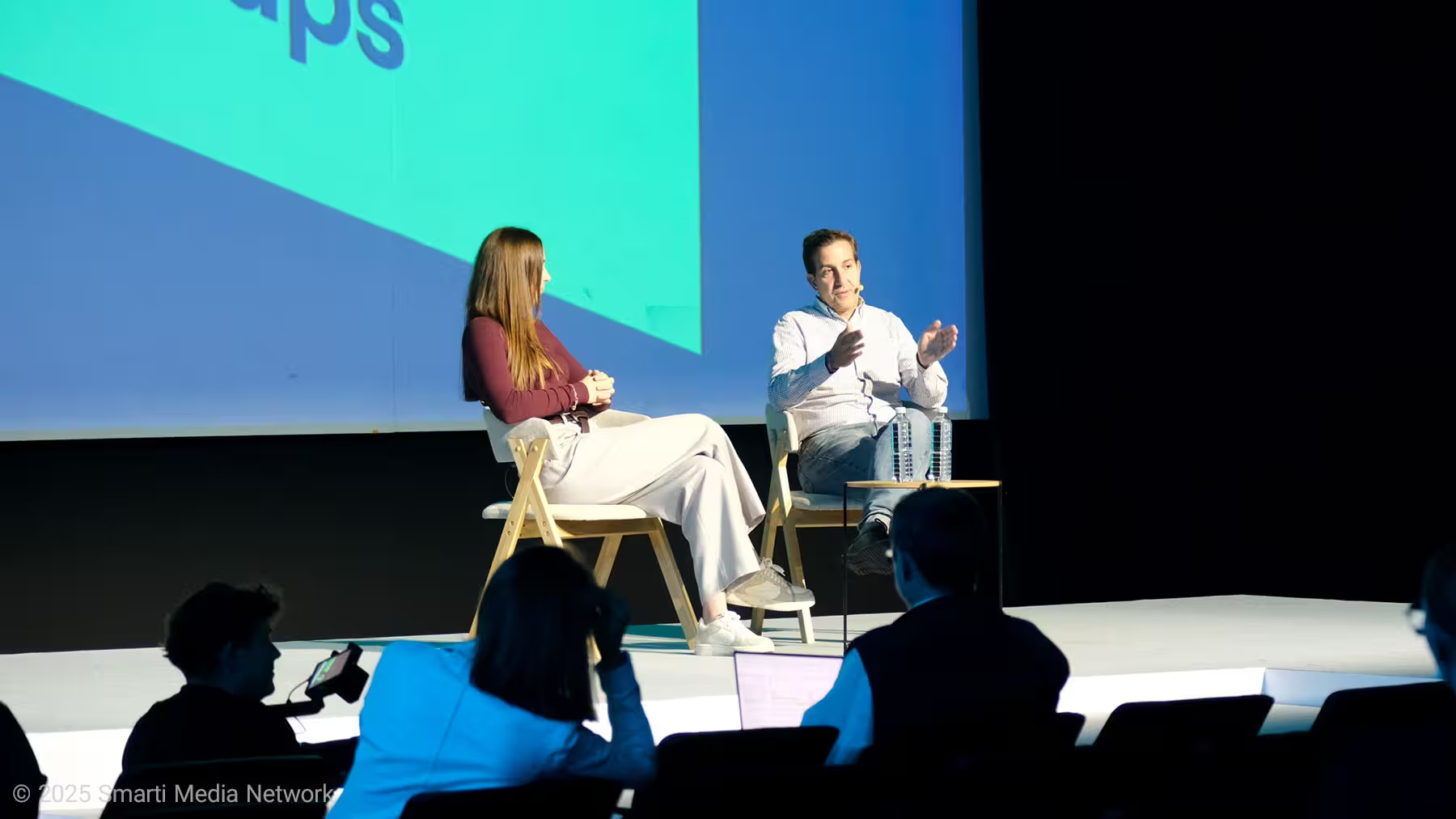
Founders, Automation, and Accountability
As the discussion continued, the moderator flipped the question back to founders. How can they use AI against the asymmetry of investor information?
Philippe laughed.
“You can use ChatGPT, Claude, PowerPoint AI — I don’t mind. Just make sure the numbers are real and you understand them.”
He emphasized that investors don’t care who made the slides — but they do care whether the founder stands behind the data.
“I don’t care if ChatGPT wrote your deck. I care if you can defend it. That’s the difference between automation and accountability.”
Goda expanded on the point:
“The AI won’t build trust for you. Relationships still matter. At the end of the day, your network — who you know, not just what you know — remains your biggest asset.”
She explained that Startup Wise Guys has built one of the largest mentor networks in Europe, and that founders should learn to leverage it interactively.
“Imagine applying for a fund and being able to ask an AI layer of that fund, ‘Do you have mentors in AI security or red teaming?’ That’s how startup–investor collaboration will look very soon.”
The Human Element: Matt Smith Joins the Conversation
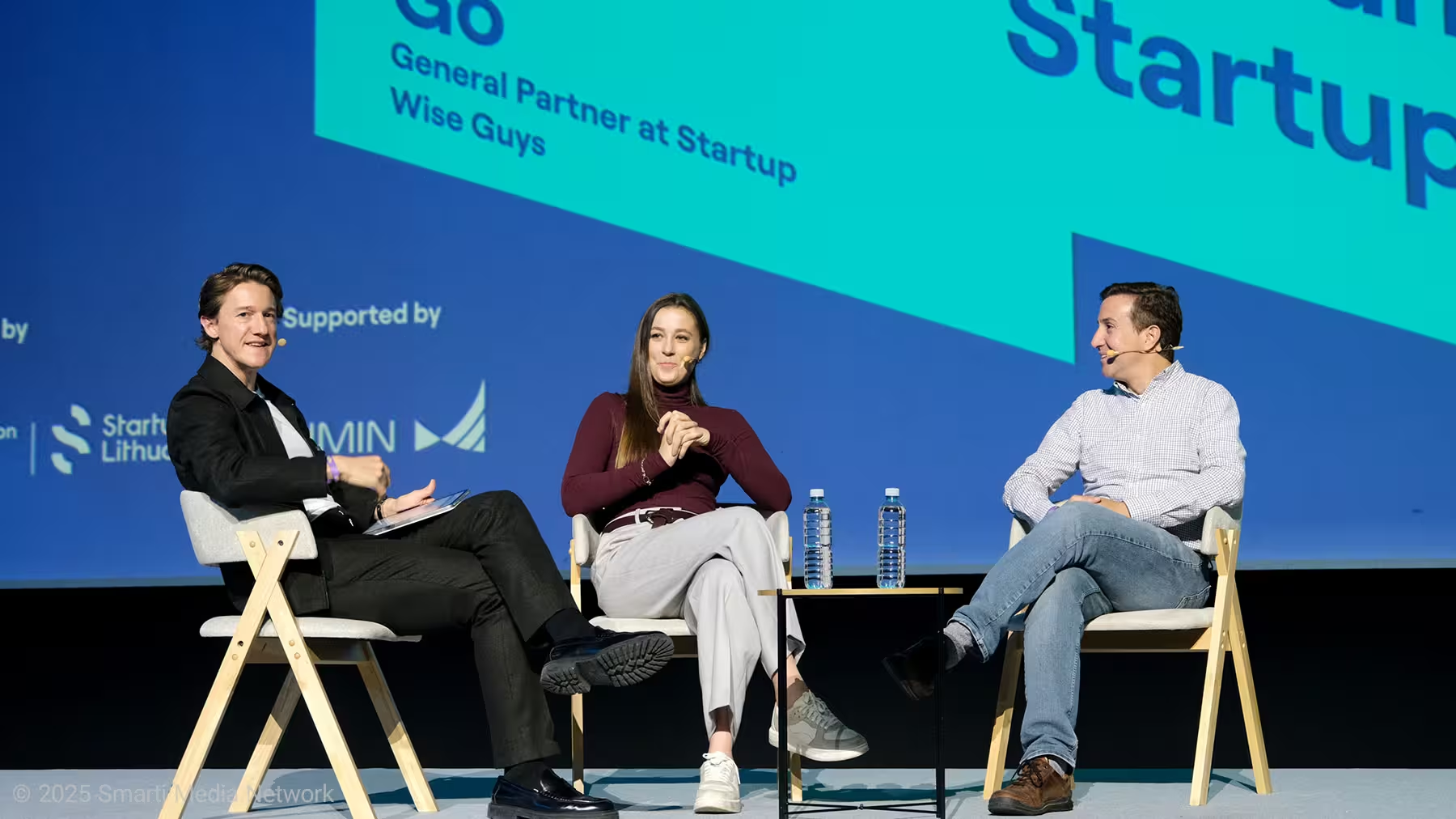
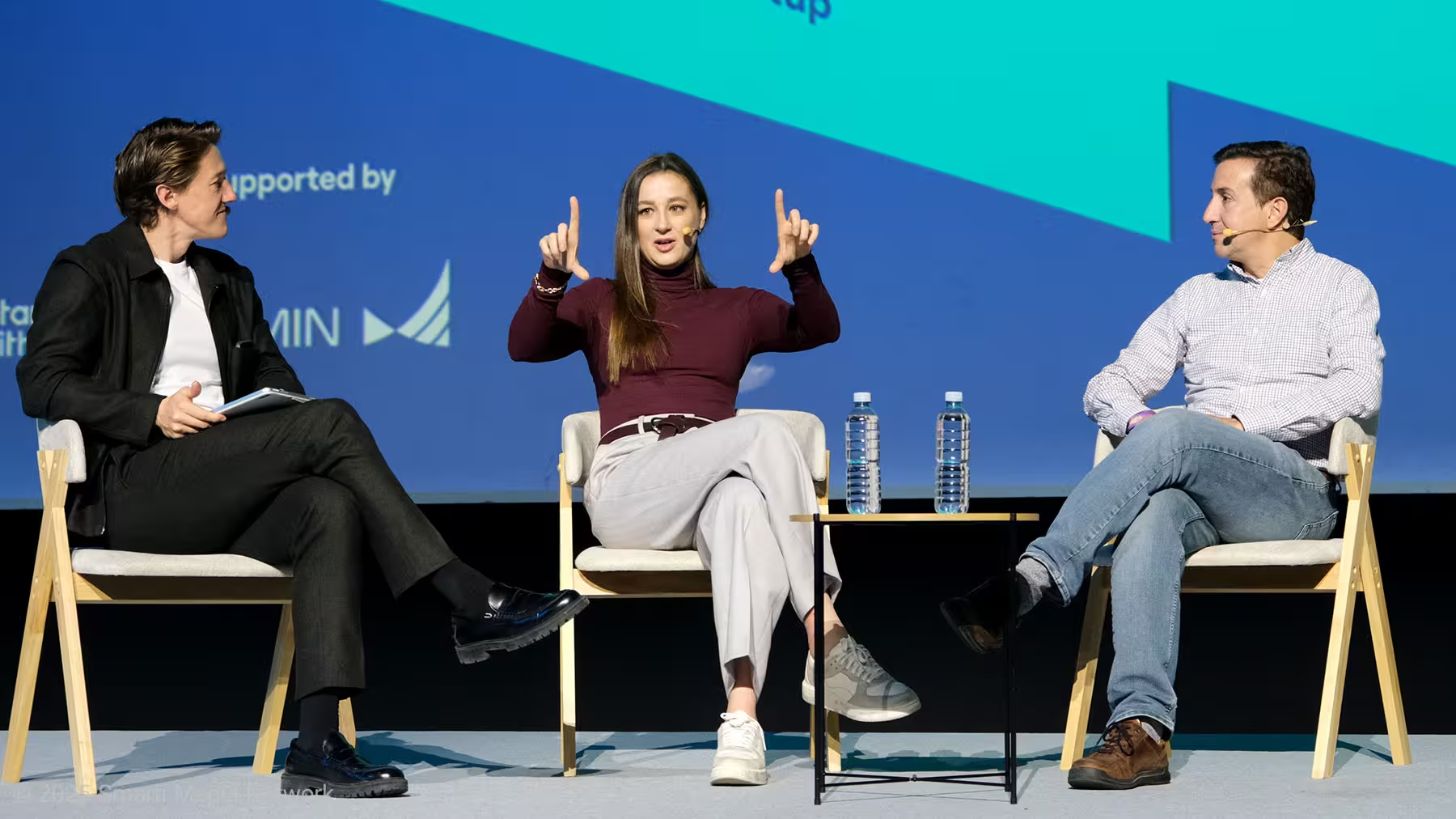
At this point, Matt Smith, the event’s main host, walked back on stage to join the chat. His trademark energy and humor lightened the tone as he posed the final question.
“So, if AI is doing all the work — from pitch decks to investor follow-ups — what happens to the human element in all this?”
Philippe smiled.
“That’s the irony, isn’t it? The more automated we get, the more important humanity becomes.”
Matt nodded, recalling a quote he’d heard just a week earlier from Zack Cass, former Go-to-Market lead at OpenAI.
“Your superpower going forward will be your humanity,” Matt said. “Your soft skills are the new hard skills — because everything else is being automated.”
Goda agreed wholeheartedly.
“Exactly. That’s what I tell every founder: technology doesn’t make you valuable — your ability to connect does. The empathy, the creativity, the courage to take risks — those are things no algorithm can replicate.”
The three of them laughed as Matt wrapped up the session, pointing toward the next activity — the Startup Fair pitch battle — before sending the crowd off with one last piece of wisdom:
“We talk about 10X startups,” he said. “But maybe the real secret is 10X’ing our humanity while we build them.”
Conclusion: Bridging Ambition and Empathy
As the lights dimmed and the audience applauded, the takeaway from this final fireside chat was clear: Lithuania doesn’t need to become Silicon Valley — it needs to build its own model of growth, powered by curiosity, collaboration, and human connection.
The lessons were practical — rethink systems, embrace AI, share knowledge — but also deeply human: success still depends on people who care, build, and trust.
Startup Wise Guys’ vision for Lithuania is not just faster startups, but smarter, more interconnected ones — able to combine AI-driven execution with European empathy.
And in the words of Philippe Bouzaglou:
“There’s no single secret. It’s the sum of many small behaviors — curiosity, speed, sharing, and care — that 10X your startup and your ecosystem.”
That might just be the most valuable Silicon Valley secret of all.
 |  |  |

“Some times I write about breakthrough startups, digital ecosystems, and how innovation is changing the way we build businesses.”

Discussion
Leave a Comment
Comments (2)
Can startups really rebuild workflows from zero tho? sounds ideal, but access to data is brutal and slow
wow, didn’t expect Lithuania to push an AI sandbox. the humanity point hit hard, makes me hopeful but nervous too