
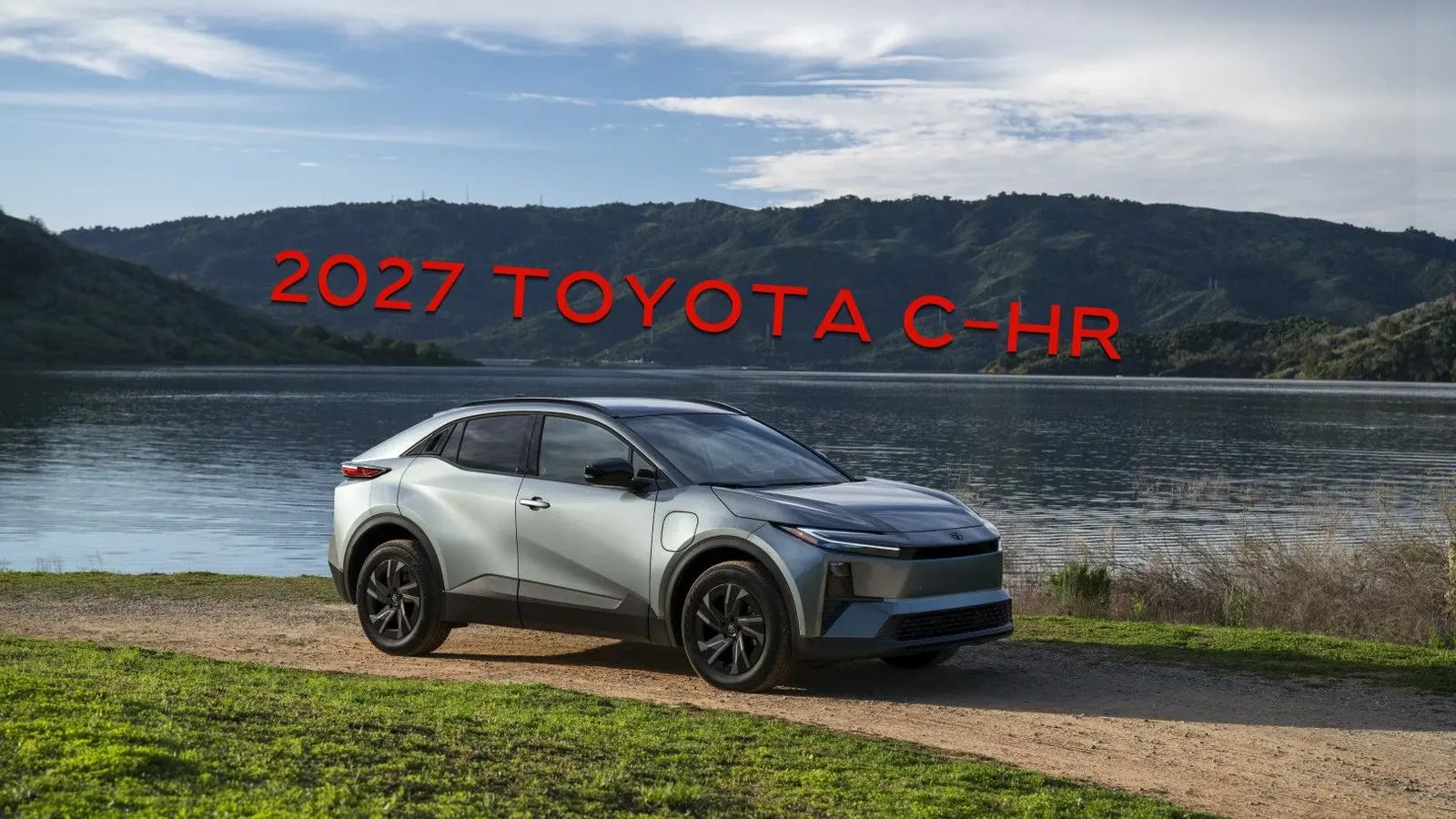
Think you remember the C-HR? Think again. The bubbly gas-powered crossover that once leaned into quirk has been reimagined as a coupe-ish electric SUV that prefers torque to theatrics. It still wears the C-HR name, but under the skin it’s a different animal: two electric drive units, up to 338 horsepower, and a clear push toward Toyota’s battery-electric future.
Where it fits, and why it matters
Price matters. Toyota opens the 2027 C-HR at about €34,480 for the SE spec, excluding destination and taxes. That gets you a clean all-wheel-drive setup and a relatively simple approach to powertrain choices: one battery option, two trim levels, both packing AWD and athletic power figures that put this model near the top of Toyota’s non-GR range.

The battery is a 74.7-kWh unit. Toyota rates the SE on 18-inch wheels at up to 287 miles (462 kilometers) per charge under EPA rules. Opt for the XSE with its 20-inch wheels and the estimate nudges down to 273 miles (439 kilometers). Those numbers are honest, but they also reveal the C-HR’s weakness: competitors routinely clear the 300-mile mark. Even Toyota’s larger bZ line claims longer range in some trims.
So where does the C-HR score? In packaging and personality. It’s compact but muscular. It accelerates: the SE needs roughly five seconds to reach 60 miles per hour (97 kilometers per hour). That snap, paired with AWD and 338 horsepower in higher trims, gives it a sportier feel than its exterior silhouette suggests.
Charging is straightforward. A NACS inlet is standard, and under ideal DC fast-charge conditions the lithium-ion pack can climb from 10 to 80 percent in about 30 minutes. That’s competitive for everyday driving rhythms though not class-leading for long-haul EV runs.

Trim choices are small but meaningful. The SE targets value and range-conscious buyers. Equipment includes a 14-inch touchscreen, a power liftgate, heated front seats, digital key functionality, Blind Spot Monitor with Rear Cross-Traffic Alert, dual wireless charging pads, cordless smartphone integration, plus Parking Assist with Automatic Braking. Toyota Safety Sense 3.0 is standard across the range.
The XSE leans into comfort and tech. Expect SofTex upholstery, an eight-way power driver’s seat, a Panoramic View Monitor, and other premium touches that justify the roughly €3,720 price step above the SE. Bigger wheels, nicer materials, and driver aids such as Traffic Jam Assist and Lane Change Assist smooth the ownership experience for buyers who want more convenience and automation.

Interior palettes are classic Toyota: options include Boulder synthetic suede with SofTex or all-black synthetic suede with SofTex. Paint choices span Wind Chill Pearl, Midnight Black Metallic, Cement, Tandoori, and Overcast, with several two-tone roof combinations available for people who like a little visual contrast.
Connectivity and ownership are familiar Toyota: both US-market C-HR trims ship with five-year trials for Connected Services such as Remote Connect, Safety Connect, and Service Connect, plus a shorter trial period for Wi-Fi Connect. The basic new-vehicle warranty remains 36 months or 36,000 miles, whichever comes first.
Summary thought: the 2027 C-HR won’t win the headline for longest range, but it does stake a claim as a compact, fun-to-drive EV with clean tech and a trim structure that keeps buying decisions simple. For many shoppers, the combination of AWD, brisk acceleration, and tidy tech will be more than enough. For range hunters? Look elsewhere in Toyota’s lineup or among rivals that push past the 300-mile threshold.

“I cover automotive innovation, electric vehicles, and the future of mobility — where technology meets sustainability.”

Discussion
Leave a Comment
Comments (2)
Range under 300? hmmm, price looks fair but I need 300+ for long trips. Any real world numbers yet, or just EPA estimates?
Whoa not what I expected, but ok. Torque over theatrics sounds fun, 5s 0-60?! kinda tempting, tho range worries me a bit