
4 Minutes
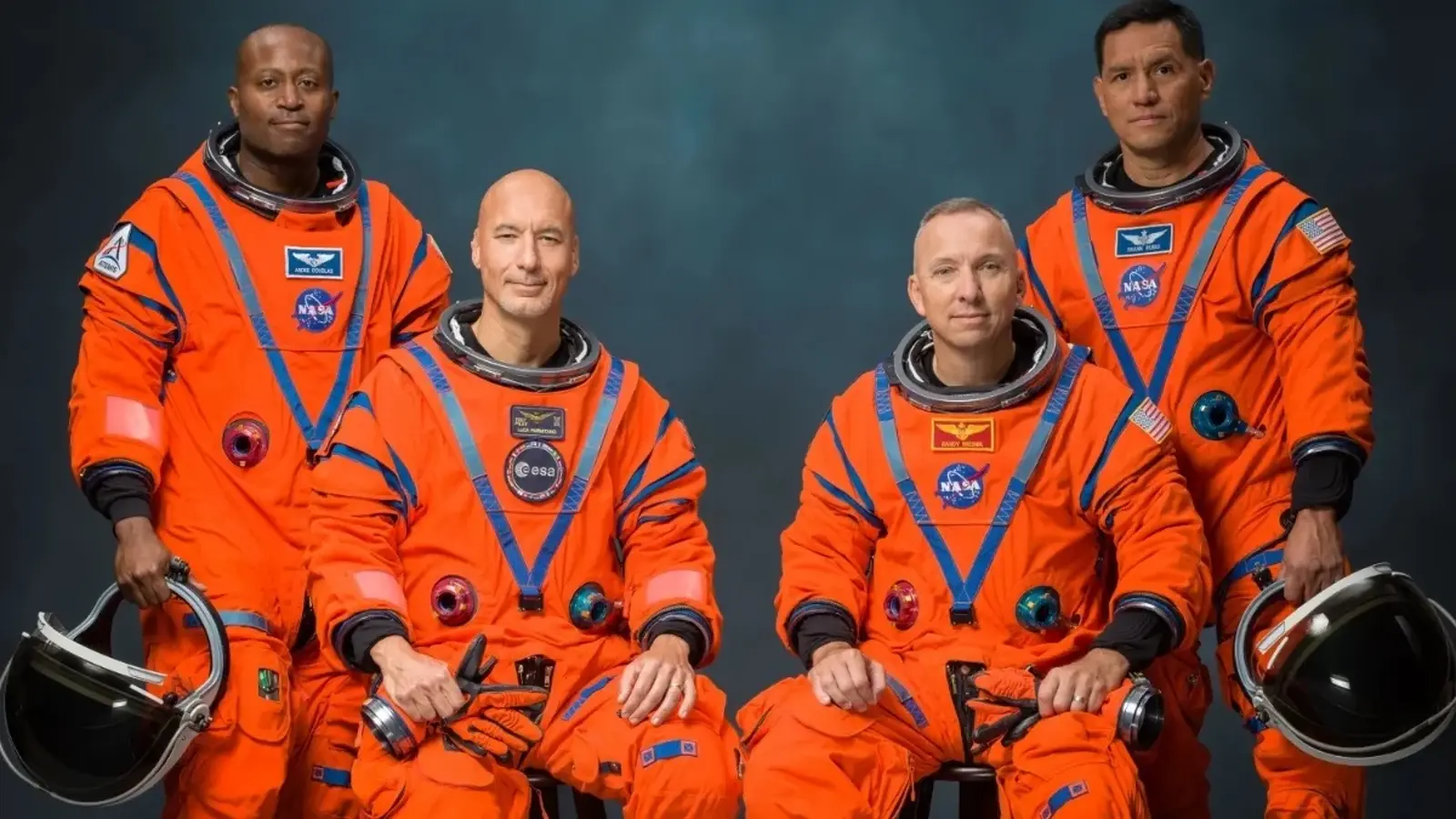
When Artemis II pushed past Apollo-era distance records, it reignited a simple question: who will take the next visible step toward returning humans to the lunar surface? On Tuesday NASA answered part of that question by naming the four astronauts who will fly Artemis III's orbital demonstration.
The team is composed of Commander Randy Bresnik, flight engineer Frank Rubio, mission specialist Andre Douglas, and European Space Agency astronaut Luca Parmitano. They will train and fly together in NASA's Orion capsule, practicing complex docking procedures with two commercial lunar landers that are being developed by private companies.
They will not land on the moon during this mission. Instead, the crew will conduct a focused, hands-on test of spacecraft interfaces and crew procedures while remaining in orbit. Short missions like this one are meant to validate hardware, crew workflows, and the interactions between a crewed vehicle and separate lander platforms before committing to a surface landing.
"To the Artemis III crew, we wish you Godspeed on the journey ahead," said NASA administrator Jared Isaacman at the announcement. The sentiment captures the mix of public expectation and technical caution surrounding the program right now.

Commercial competition and a visible setback
SpaceX and Blue Origin are the headline players in the race to supply the landers that will carry crews to the lunar surface. NASA has steered much of the Artemis architecture toward partnerships with industry; in May the agency awarded substantial contracts to four companies to design landers, rovers, and robotic systems intended for a future lunar base.
That industrial approach carries both speed and risk. Blue Origin experienced a dramatic failure during a recent engine test, when a rocket erupted on the launch pad and lit the Florida sky with an orange fireball, rattling nearby homes. The accident is under investigation, but NASA officials describe the episode as an engineering lesson rather than a showstopper. "Setbacks occur during development," said agency engineer Jeremy Parsons, "and teams learn quickly from them."
The near-term schedule calls for a roughly two-week demonstration targeted for 2027 that will exercise docking and transfer operations. Program leaders have also signaled an ambition to attempt a crewed lunar landing as early as 2028, part of a broader push to accelerate Artemis in a manner reminiscent of the 1960s Apollo era.
Onboard the International Space Station, members of Expedition 74 sent recorded congratulations to the Artemis III crew, underscoring the continuity of human spaceflight disciplines across low Earth orbit and beyond. "We are humbled as a crew to be able to execute this mission in space," said Bresnik, reflecting both pride and the weight of responsibility. "My brain is racing," added Douglas, "but my heart is full."
For the public and for mission planners, this mission will be instructive. It will test interfaces between Orion and privately built landers, rehearse operational checks under realistic conditions, and offer a clearer timetable for the step from orbit to touchdown. In short, Artemis III is designed to be a proving ground: technical, careful, and above all preparatory for the eventual goal of a sustainable presence on the moon and the long-term objective of sending humans to Mars.
Source: sciencealert



Leave a Comment