
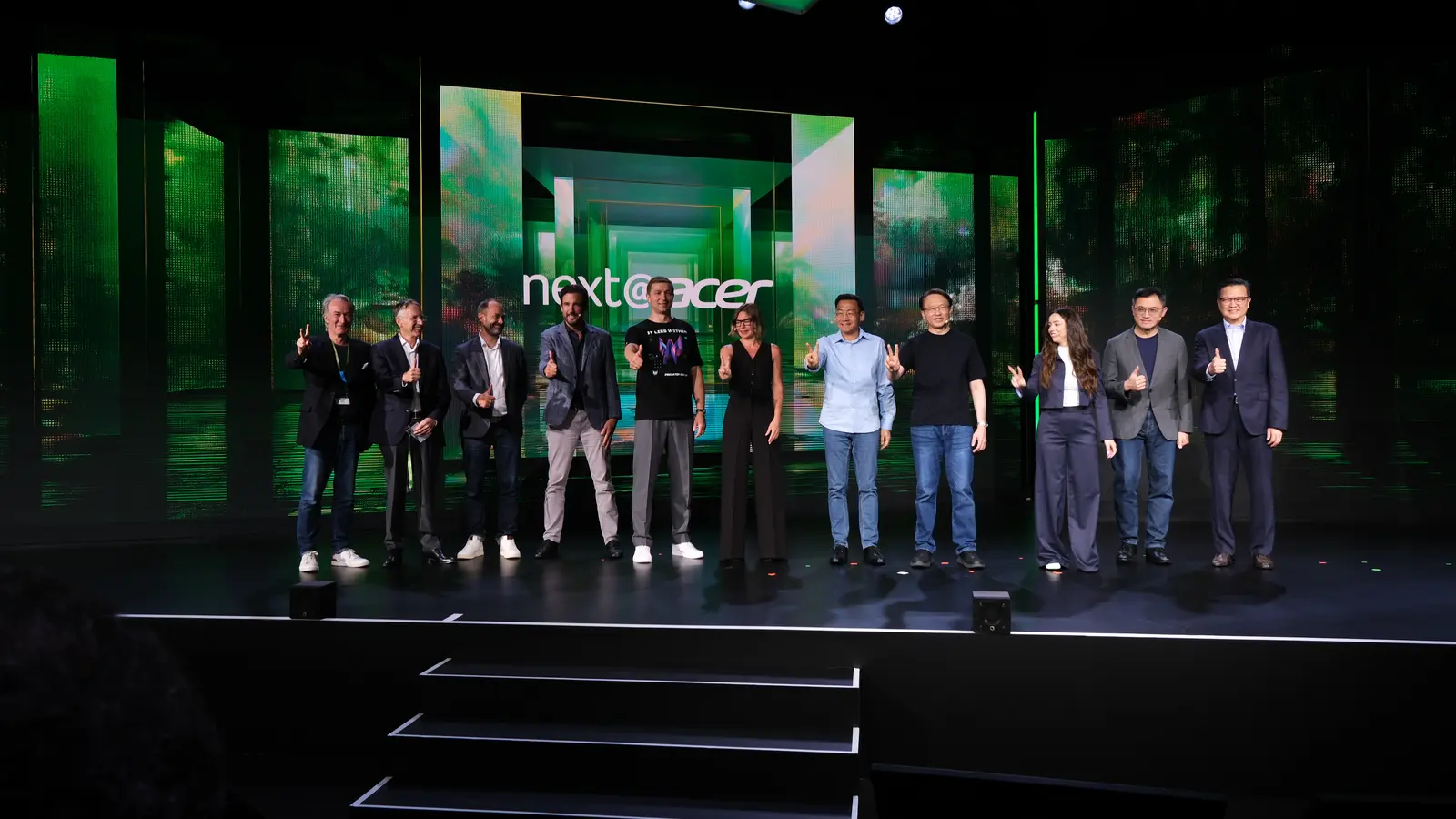
Acer used its Berlin press conference to present a much broader view of its future, combining new PCs and displays with local AI computing, healthcare technology, sustainability and a renewed focus on repairability.
BERLIN: Acer’s IFA 2026 presentation moved quickly between very different worlds.
One moment, the company was talking about a simple computer designed for people who just want technology to work without unnecessary complexity. A few minutes later, the discussion had moved to artificial intelligence in hospitals, cancer research, locally running AI agents, sub-800-gram laptops and computers designed to be repaired rather than replaced.
That breadth was deliberate.
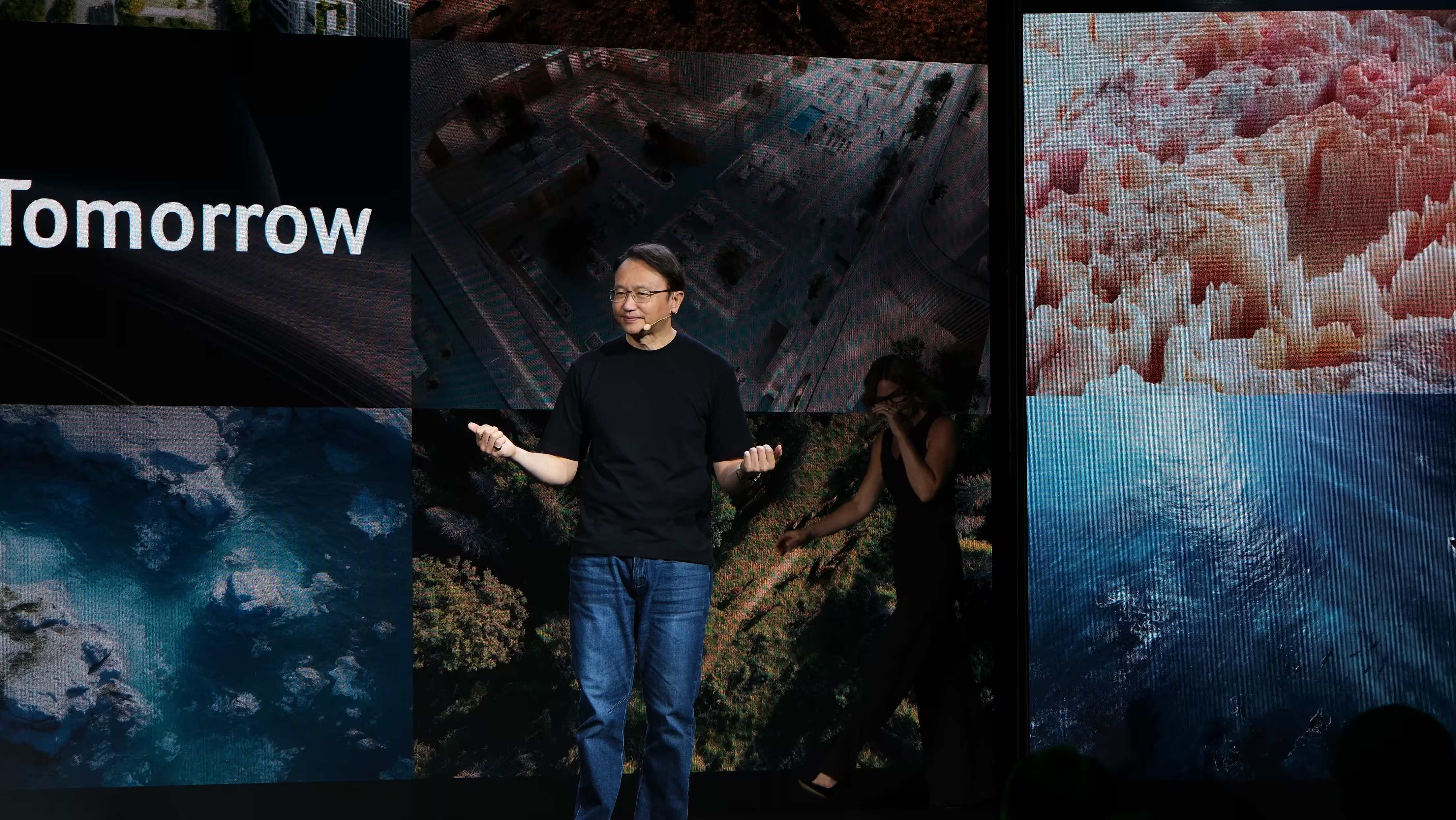
Acer Chairman and CEO Jason Chen described the company’s strategy around four major pillars: computing, AI medical, sustainability and smart mobility. Sustainability itself, he said, has also expanded beyond environmental concerns to include corporate resilience and human health.
The result was a conference that felt less like a conventional PC launch and more like an attempt to explain what Acer wants to become as computing enters a new AI-driven phase.

A simpler approach to personal technology
The portion of the event captured in our recording began with a presentation around Packard Bell and a deliberately uncomplicated approach to consumer computing.
The idea was almost the opposite of the usual technology launch.
The computer being discussed was aimed at users who spill coffee on keyboards, blow dust from USB ports and occasionally click restart when they meant to shut down. The point, the speaker explained, was to let people pay for the technology they actually use rather than “the hype” they do not need.
That emphasis on removing complexity would return throughout the conference, even when the technology itself became far more sophisticated.
Acer sees healthcare as part of its technology business
One of the most striking sections of the event had little to do with conventional consumer electronics.
Chen invited Dr. Allen onto the stage to discuss Acer’s work in healthcare and medical AI.
Allen recalled his experience working in West Africa, including in Burkina Faso, where basic infrastructure such as electricity, water and roads could be missing. He described efforts to maintain the cold chain required for polio vaccines using gas-powered refrigeration, but said the experience taught him that having technology does not automatically mean that technology reaches the people who need it.

“There need to be a bridge,” he said.
For Acer, AI is increasingly becoming part of that bridge.
The company has spent years developing combinations of hardware, software and healthcare solutions. According to the presentation, predictive AI is already being used to support earlier detection, while generative AI and large language models are being applied to reduce the amount of documentation doctors have to handle.
Allen said Acer has also deployed agentic AI inside hospitals and integrated it with electronic medical records, with the aim of letting doctors spend more time speaking with patients rather than typing into screens.
Acer is also exploring AI in drug development, including work related to cancer immunotherapy.
AI could help monitor patients before problems become serious
The healthcare discussion then moved toward continuous monitoring.
Allen used stroke care as one example.

Patients who have suffered a stroke may require continued monitoring of blood pressure, blood sugar, blood lipids and other risk factors. Traditionally, collecting and following that information can consume significant amounts of nursing time.
Acer’s approach is to apply AI and connected systems to automate part of that case management.
Another project discussed on stage uses software to monitor subtle changes in movement over time. Changes to a person’s gait, knee movement or center of mass may be difficult to detect during a short appointment, but longitudinal monitoring could potentially reveal changes earlier.
The system described during the presentation can use a smartphone to collect and compare movement data over time, giving clinicians another way to observe disease progression.
Acer also framed medical AI as a tool for addressing disparities in access to specialist care.
Indonesia was used as an example: specialists may be concentrated in major cities while patients are spread across thousands of islands.
AI cannot physically move a doctor from one island to another, but Acer’s argument is that some expertise and decision support can travel digitally where specialists cannot.
Chen said Acer’s medical solutions are already being used in hundreds of hospitals and medical institutions.

Acer puts serious AI computing on the desktop
From healthcare, the presentation shifted back to hardware.
Acer introduced its SFF RTX Spark, a compact system designed around NVIDIA’s RTX Spark platform.
Despite its small size, the specifications discussed on stage were firmly aimed at demanding AI workloads.
The system was described with a Blackwell RTX GPU containing up to 6,144 cores, a 20-core NVIDIA Grace CPU, as much as 128 GB of unified memory and up to one petaflop of FP4 AI performance.
The important part of the pitch was not simply raw performance.
It was where that performance happens.
Acer positioned the machine as a way to run increasingly large AI workloads locally rather than constantly sending them to cloud services.

NVIDIA: AI agents are moving onto local machines
NVIDIA’s Adam Foat then joined Chen on stage to put the platform into context.
Foat said the RTX Spark system is designed for a mixture of creative workloads, gaming and AI.
He described rendering large 3D scenes with ray tracing, editing 8K video and playing modern games at 1440p, but the most significant part of the discussion centered on agentic AI.
According to Foat, the system is capable of running models with as many as 120 billion parameters locally, with context lengths reaching one million tokens.
That local execution brings several advantages.
Files can remain on the machine. AI systems can access local information more directly. Internet connectivity becomes less critical. And users are not necessarily paying cloud token costs every time an agent performs a task.

Foat described the future relationship between users and agents almost as a working partnership.
AI agents, he suggested, could increasingly act like teammates, helping people create content, code and operate across Windows applications.
Chen repeatedly returned to the idea of a hybrid model: local AI when it makes sense, cloud computing when additional scale is required.
Veriton RI110 brings agentic AI into business
Acer then introduced the Veriton RI110 AI mini workstation as a more business-focused interpretation of the same idea.
The compact machine uses an Intel Core Ultra Series 3 processor alongside an integrated Intel Arc B390 GPU and supports up to 96 GB of dual-channel memory.
Acer said the system can support AI models containing up to 120 billion parameters and is intended to power agentic AI across hybrid environments.
But hardware was only part of the presentation.
Acer also showed software intended to make AI deployment easier for businesses, with simplified installation and tools designed to combine local and cloud intelligence.
The company’s argument was that smaller organizations should not have to wait until they have enterprise-scale infrastructure before they can start experimenting with serious AI workloads.

Swift Air 16: a large screen without the usual bulk
Acer then moved from AI workstations to a more conventional notebook problem.
How do you build a 16-inch laptop without making it feel like a large laptop?
The answer presented on stage was the new Swift Air 16.
Acer described it as a thin, lightweight, all-aluminum notebook offering up to a 3K OLED display while remaining under 13.5 mm thick.
Inside is an Intel Core Series 3 processor, while the chassis is offered in multiple colors rather than limiting buyers to the usual grey finish.
The message was straightforward: more screen, without forcing users to carry significantly more computer.

Microsoft sees the PC becoming a local AI engine
Microsoft’s Mark Linton then joined Chen on stage.
The discussion started by looking backwards.
Linton recalled one of the companies’ early PC projects, built around an Intel 8088 processor, 256 KB of memory, floppy drives and a hard disk measured in megabytes.
The contrast with the machines being announced in 2026 was difficult to miss.
Today, the conversation is about running models containing tens or even hundreds of billions of parameters on a desktop.
Linton described Microsoft's current direction using the phrase “unmetered intelligence.”

The idea is that increasingly powerful PCs can handle more intelligence locally rather than depending on the cloud for every AI request.
“If your PC were powerful enough,” he suggested, the economics of AI could change because models used every day could run directly on the machine rather than consuming cloud tokens each time they are called.
Windows, in Microsoft’s view, therefore needs to evolve into more than an operating system with an AI assistant attached to it.
AI is being integrated into the platform itself.
Windows prepares for agents that can actually act
Linton also addressed one of the harder questions surrounding agentic AI.
If an AI agent can interact with files, applications and corporate systems, how do businesses stop it from doing something it should not?
Microsoft’s answer, according to the presentation, includes isolation, containerization, policy management, auditing and logging.
Businesses need to know what an agent is doing and restrict the parts of a system it can access.
Linton also discussed Windows Foundry and the broader infrastructure Microsoft is building to let developers choose and orchestrate different AI models while keeping security controls around those workloads.
The discussion made clear that the next phase of the AI PC is not simply about generating text or images faster.
It is about allowing software agents to perform increasingly complex actions without losing control of the machine.

Acer goes below 800 grams
One of the simplest announcements of the day was also one of the easiest to appreciate.
Acer introduced a new 14-inch Swift notebook weighing just under 799 grams.
The company described the design philosophy behind it as the “art of subtraction.”
Instead of simply asking how thin a laptop could become, Acer’s engineers asked what could be removed without damaging the experience people expect from a full notebook.
Carbon fiber and magnesium alloy were used to reduce weight while maintaining structural strength.
The machine remains under 14 mm thick and still uses an Intel Core Series 3 processor, with up to a 3K OLED display.
Chen joked about the seemingly arbitrary 799-gram figure.
“Why not 800?”
“Because every gram matters,” came the answer.
Among all the AI-heavy announcements, it was a reminder that conventional hardware engineering still has plenty of room to impress.

Vero moves from recycled materials to repairability
Sustainability returned later in the conference with Acer’s Vero line.
When Vero first appeared, Acer emphasized recycled materials.
The new direction goes further.
The company now wants repairability, upgradeability and longevity to become part of the design itself.
The Vero 16 shown on stage uses a modular approach that allows users to open the rear of the machine and access key components including the SSD, battery and I/O hardware.
Acer also said the motherboard design can remain adaptable across two generations, creating the possibility of upgrading the machine rather than replacing it entirely.
Materials remain part of the story.
The covers were described as combining 50 percent post-industrial recycled aluminum with 50 percent low-carbon aluminum, while a powder-coated finish is intended to withstand years of daily use.
At the same time, Acer said the machine still offers up to a 3K OLED screen and Intel Core Ultra Series 3 processors.
Chen referred to the approach as “Vero 2.0.”
The shift is important.
Recycling addresses what a product is made from.
Repairability addresses how long it stays useful.

A color e-paper screen for people who spend their days reading
Acer also presented the EP130K, a color e-paper display designed around a very different problem: screen fatigue.
The company argued that people who spend long hours reading documents or studying may benefit from a display that feels closer to paper than a conventional illuminated screen.
The EP130K adds color, touch input and an improved refresh rate, making scrolling and navigation more natural than on earlier e-paper devices.
Acer specifically suggested use cases such as academic research, long documents and working across multiple sources for extended periods.
The concept is less about replacing a conventional monitor and more about giving text-heavy work another kind of screen.
One laptop, three extra displays
The final display product in this portion of the event took almost the opposite approach.
Rather than making one screen easier on the eyes, Acer simply added more of them.

Its Triple Screen Extender unfolds into three Full HD panels that can accompany a laptop.
A user could place a video call on one display, a presentation on another and notes on the third while continuing to use the laptop’s own screen.
That effectively creates a four-screen workspace that can travel with the user.
It is a niche product, certainly.
But it also fits the broader theme Acer repeatedly returned to throughout the conference: technology should adapt itself to the way people work rather than forcing users into one fixed setup.
Google says the Chromebook is ready for another reinvention
Acer’s tour through different forms of personal computing then brought Google into the conversation.
John Solomon, Vice President and General Manager of ChromeOS at Google, joined the event through a pre-recorded video rather than appearing on stage in Berlin.
He began by emphasizing the long relationship between Acer and ChromeOS. According to Solomon, Acer has been the number one ChromeOS manufacturer in the consumer segment since 2022 and the leading ChromeOS OEM across all segments in EMEA for more than a decade.
But the more important part of his message concerned what comes after the Chromebook as we know it.
Solomon described the current AI transition as a shift from an operating system toward what he called an “intelligent system.”
Google’s answer is to bring Android and ChromeOS closer together while putting Gemini at the center of a new category of laptops.

On stage, that category was introduced as the Googlebook.
The idea, according to Solomon, is to build laptops around Gemini from the ground up rather than adding AI features later to an existing computing model.
Acer will be one of the partners bringing those machines to market.
The presentation stopped short of revealing detailed specifications for Acer’s first Googlebook, and after Solomon’s video, Chen offered only a brief preview before moving on.
That restraint made the announcement more interesting.
Google and Acer were not simply introducing another Chromebook configuration. They were signaling that the next phase of ChromeOS hardware may be defined by AI much more deeply than the current generation.
Acer turns from productivity to gaming
From there, Acer shifted sharply into gaming.
Chen invited Jeremi Rybak, Head of Marketing at Acer Poland, onto the stage to introduce a series of new Nitro and Predator products.
Rybak’s framing was simple: if different users want different things from a display, why force them to choose one compromise?
The first answer was the Nitro XV275K P3.

The display uses what Acer called Dynamic Frequency Range, allowing it to change its behavior depending on what matters more to the user.
For detail-heavy work, the monitor can operate at 5K resolution and 165 Hz.
When speed takes priority, it can switch to QHD at up to 330 Hz.
That gives creators access to a high-resolution canvas while allowing gamers to trade resolution for dramatically higher refresh rates without buying a second display.
The monitor also uses a 2,304-zone Mini LED backlight and covers 99 percent of Adobe RGB, according to the presentation.
The message was not subtle.
One monitor, Acer argued, should be able to serve both visual quality and speed.
Predator pushes refresh rates to 1,000 Hz
The next display was far more specialized.
Acer introduced the Predator XB253Q GZ, a 24.5-inch monitor aimed squarely at competitive esports.
Its headline figure is extraordinary: a refresh rate of up to 1,000 Hz.
Rybak emphasized that the number is not aimed at the average player. The display is designed for environments where fractions of a second can matter and where players want every possible reduction in latency.

The monitor was also described with response times as low as 0.1 milliseconds and Circular Polarizer technology intended to reduce glare under bright lighting.
The smaller 24.5-inch size is deliberate as well.
Competitive players often prefer keeping the entire game area within a compact field of view rather than moving their eyes across a larger screen.
For Acer, that makes the Predator display less about spectacle and more about removing variables between the player and the game.
Aspire G 3D 16 brings glasses-free 3D back into the conversation
Acer then demonstrated a notebook that produced one of the more visible reactions from the audience.
The Aspire G 3D 16 uses a 16-inch 4K display capable of switching between conventional 2D content and glasses-free 3D.
No headset or dedicated glasses are required.
With a click, users can move between the two modes, and Acer also said conventional 2D material can be converted for 3D viewing.
Rybak was careful not to frame that only as a gaming feature.
An architect could use the display to present a three-dimensional building model.
A medical student could explore anatomical structures with depth.
Creators could visualize projects differently before switching the same machine back into a normal 2D workspace.
The system uses AMD Ryzen processors with unified memory, but the more interesting question is whether Acer can turn glasses-free 3D from a recurring technology demonstration into something people genuinely use.
The hardware is increasingly capable.
The challenge remains giving people enough reasons to switch it on.

Predator Atlas 7 takes Acer’s gaming strategy on the road
Gaming then moved from the desk into the hand.
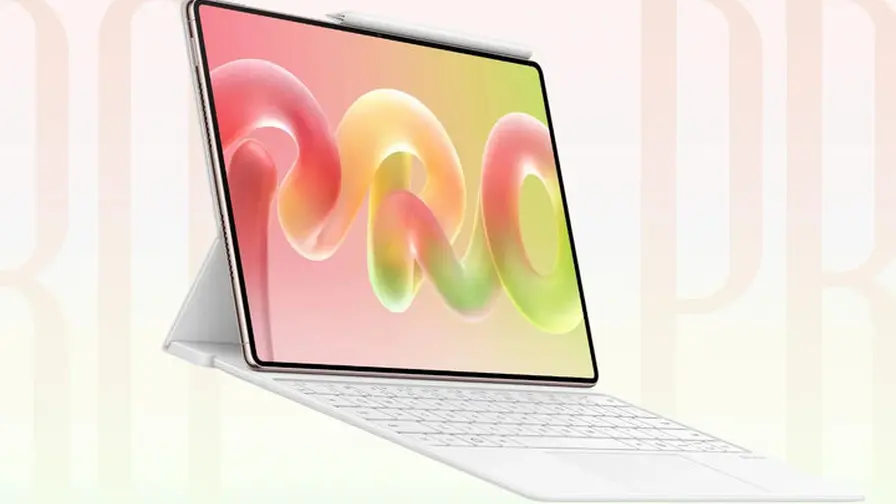
The Predator Atlas 7 is Acer’s more compact handheld gaming system, built around a 7-inch Full HD screen running at 120 Hz with Variable Refresh Rate support and brightness of 500 nits.
Acer said the machine can be configured with Intel processors and up to 24 GB of LPDDR5X memory.
Cooling remains a major concern in such a compact body.
Acer uses its Predator AeroBlade technology as part of the cooling system, while the control hardware includes TMR joysticks and Hall-effect triggers.
Those choices address one of the less glamorous but important problems with gaming handhelds: maintaining precise controls over long periods of use.
Rybak said Acer had asked players at Computex what they most wanted from a handheld.
The answer, he said, was not simply more performance.
It was precision.
The Atlas 7 is Acer’s attempt to deliver that in a smaller form factor.

Intel says the PC is entering the agentic AI era
After the gaming hardware demonstration, Chen brought Intel’s Sam Gao onto the stage.
Gao used Acer’s 50th anniversary as a chance to look at the two companies’ relationship, but his message quickly moved toward the current generation of computing.
Intel sees its latest processor families as the foundation for PCs increasingly built around AI workloads.
The Intel Core Ultra Series 3, codenamed Panther Lake, combines new CPU cores, a new generation of Arc graphics and an upgraded NPU.
The Core Series 3, codenamed Wildcat Lake, brings a related architecture further into the mainstream market.
For Acer, the important part is flexibility.
The same processor roadmap is supporting very different machines shown during the event, from ultra-light Swift laptops to compact AI workstations and Predator handhelds.
Gao highlighted Acer’s sub-800-gram Swift design as an example of the engineering trade-offs the companies have been working on together.
Creating a laptop below 800 grams is one thing.
Doing it while remaining below roughly 13 mm thick and still targeting close to 20 hours of video playback is much harder, he argued.
Intel’s larger message closely echoed what Microsoft and NVIDIA had said earlier in the event.
The PC is becoming a platform for AI that runs locally.
And increasingly, that AI will not just answer questions.
It will act.
Gao described Intel’s role as providing the platform foundation for what he called the agentic AI era.

Acer saves its strangest gaming idea for last
Chen then announced that only one product remained.
Acer had deliberately saved its most experimental device for the end.
Rybak returned to introduce Project DualPlay Mini.
At first glance, the concept looks like another compact Predator handheld.
Then it starts changing shape.
The device combines gaming controls with a full physical keyboard, while two speaker sections can unfold from the sides.
Acer’s idea is to let the same device move between three personalities.

On the sofa, it can behave like a game console.
On a flight, the physical keyboard can turn it into a productivity machine.
At a desk, users can connect a monitor and accessories and treat it more like a conventional PC.
The concept also carries over technology from Acer’s other gaming products, including TMR controls, Hall-effect triggers, Intel processing and Predator AeroBlade cooling.
But Project DualPlay Mini is less interesting for any one specification than for what Acer is trying to do with the form factor.
The company is asking whether a handheld really has to remain a handheld.
Acer officially describes the 8-inch Project DualPlay Mini as a concept rather than a conventional shipping product, designed to blur the line between gaming and mobile productivity.
From the Chromebook to a PC that changes shape
That final concept also brought the second half of Acer’s conference neatly back to the larger argument running through the entire event.
The company is experimenting with the boundaries between categories.
A Chromebook becomes an AI-first Googlebook.
One monitor switches between 5K detail and 330 Hz speed.
Another pushes esports refresh rates to 1,000 Hz.
A laptop moves between 2D and glasses-free 3D.
A gaming handheld becomes a portable PC.
And conventional computers are increasingly expected to run AI models and agents locally rather than treating the cloud as the only place serious intelligence can live.
None of those ideas guarantees a successful product.
Some are deliberately experimental.

But together they reveal a company that is less interested than before in keeping devices inside familiar boxes.
Acer’s IFA 2026 event began with a company celebrating 50 years of personal computing.
By the end, the more interesting question was what the words personal computer will actually mean during the next 50.

“Some times I write about breakthrough startups, digital ecosystems, and how innovation is changing the way we build businesses.”

Discussion
Leave a Comment
Comments (9)
Acer's trying to redraw the PC map. Some toys look gimmicky, others could change workflows — worth watching, not buying on first hype wave.
If that’s real then cool, but can a tiny handheld really do serious AI without frying or killing battery life? thermals, battery, real tests needed
Makes sense, local agents are neat. but who audits them when they act? compliance is a nightmare, not just a checkbox.
Feels overhyped but ok. Lots of concepts, few timelines. Repairability and modular Vero is the one thing that genuinely made me nod. pricing??
Pretty balanced take — Acer trying to be everything to everyone. Risky move, but a few of these niche ideas could actually stick.
I've seen med-AI pilots die for lack of infra, so Acer's 'bridge' idea hits home. Hope they focus on deployment, not just flashy booths.
Is this even true? 1,000 Hz monitors, glasses-free 3D and sub-800g laptops in one lineup... smells like demos, show me benchmarks pls
Makes sense tbh, local AI could cut cloud costs, but will teams actually run 120B models on these minis? still, ballsy strategy.
Wow, Acer went all in — healthcare AI, petaflop desktops and featherweight laptops. Kinda thrilling, kinda overwhelming. Curious to see real-world results...