
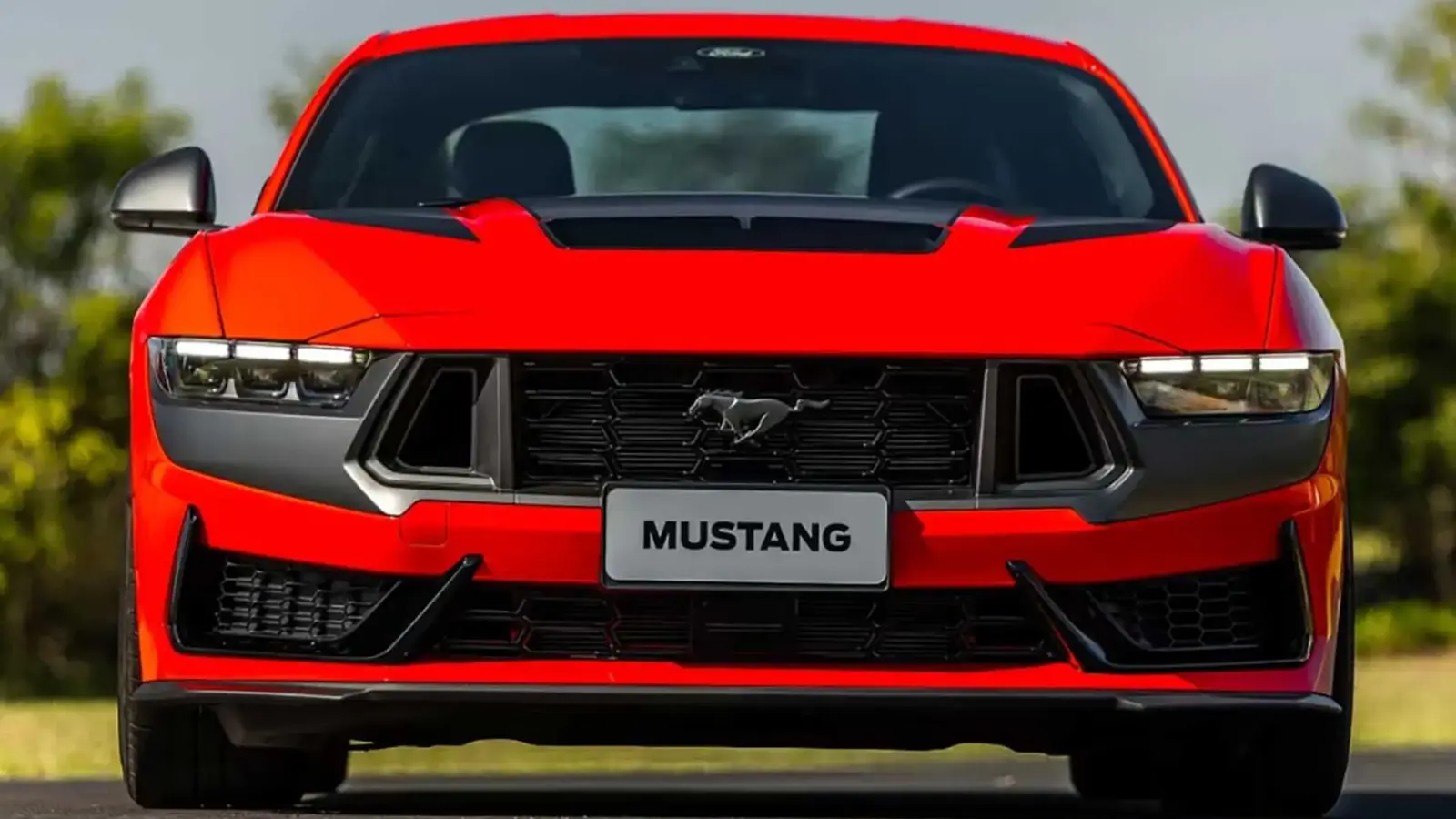
Picture a parking lot outside a summer car meet. Rows of gleaming muscle — but one model keeps returning like a familiar face, over and over. That face is the Ford Mustang, and in the first half of 2026 it didn't just lead its class. It ate the field.
Ford moved 28,725 Mustangs in H1 2026, grabbing roughly 59% of the non-luxury sports-car market. Put bluntly: Mustang sales outpaced the next closest rivals combined. Toyota's GR86 managed only about 4,000 units. Chevrolet's Corvette, the prestige player that once defined attainable performance, tallied 13,417 sales and grew by just 6.5% year over year. Mustang, meanwhile, jumped 22% from last year.
Accessible performance wins
There is no single trick here. The Mustang's advantage is a dossier of smart choices: a broad family lineup, prices that ordinary buyers can stomach, and everyday usability that keeps customers coming back. You can buy a base Mustang with a 2.3-liter turbo four for around €30,700. At the top end sits the Dark Horse SC with a supercharged V8 for buyers chasing raw power. Chevrolet, by contrast, offers the Corvette only as a V8 flagship and positions it at a much higher price point. The Corvette now starts near €66,000, a steep step up that pushes many shoppers toward the Mustang.
Then there is the practical side. Mustang offers four seats and a usable trunk, so it plays double duty as a daily driver. The C8 Corvette, after switching to a mid-engine layout in 2020, became more of a specialist tool. Its cabin has been criticized as tight for taller drivers, and its evolution into a supercar rival, complete with very pricey variants like the Z06 and extreme editions, has narrowed its audience.
Chevrolet's shift matters. When the Corvette moved away from the traditional front-engine, accessible ethos, it effectively ceded a large slice of the attainable-performance market. Add the end of Camaro production and suddenly Mustang stood alone as the primary gasoline-powered muscle car that many buyers could realistically afford.
That affordability story matters more than you might think. Price sensitivity coupled with a hunger for performance creates a big sweet spot. Mustang sits right in it. Buyers who want power but also practicality and value find it hard to resist.
Does that mean Ford can relax? Not at all. The muscle-car scene is bracing for a fresh round of rival fire. Dodge is readying a new Charger with V8 Hemi power, and Chevrolet reportedly plans a new-generation Camaro with a 6.7-liter V8. When those models arrive, they will siphon some attention and sales. Competition will return, and the market will test whether Mustang's recent momentum is a durable trend or a golden moment in a shifting landscape.
For now, though, Mustang sits at the summit. It has sales, variety, and a price ladder that reaches a wide audience. It also has cultural momentum. And in a market where many sports cars are becoming rarer or pricier, that combination can be decisive.

“I cover automotive innovation, electric vehicles, and the future of mobility — where technology meets sustainability.”

Discussion
Leave a Comment
Comments (2)
Is that 59% figure global or just US? Seems huge. Also incentives and fleet deals can skew stuff, if that’s real then… Ford nailed it for now
Mustang owning the lot, crazy numbers. 59%?? Wild, practical, sorta affordable and still fun. Love the lineup, but man bring on the challengers!