
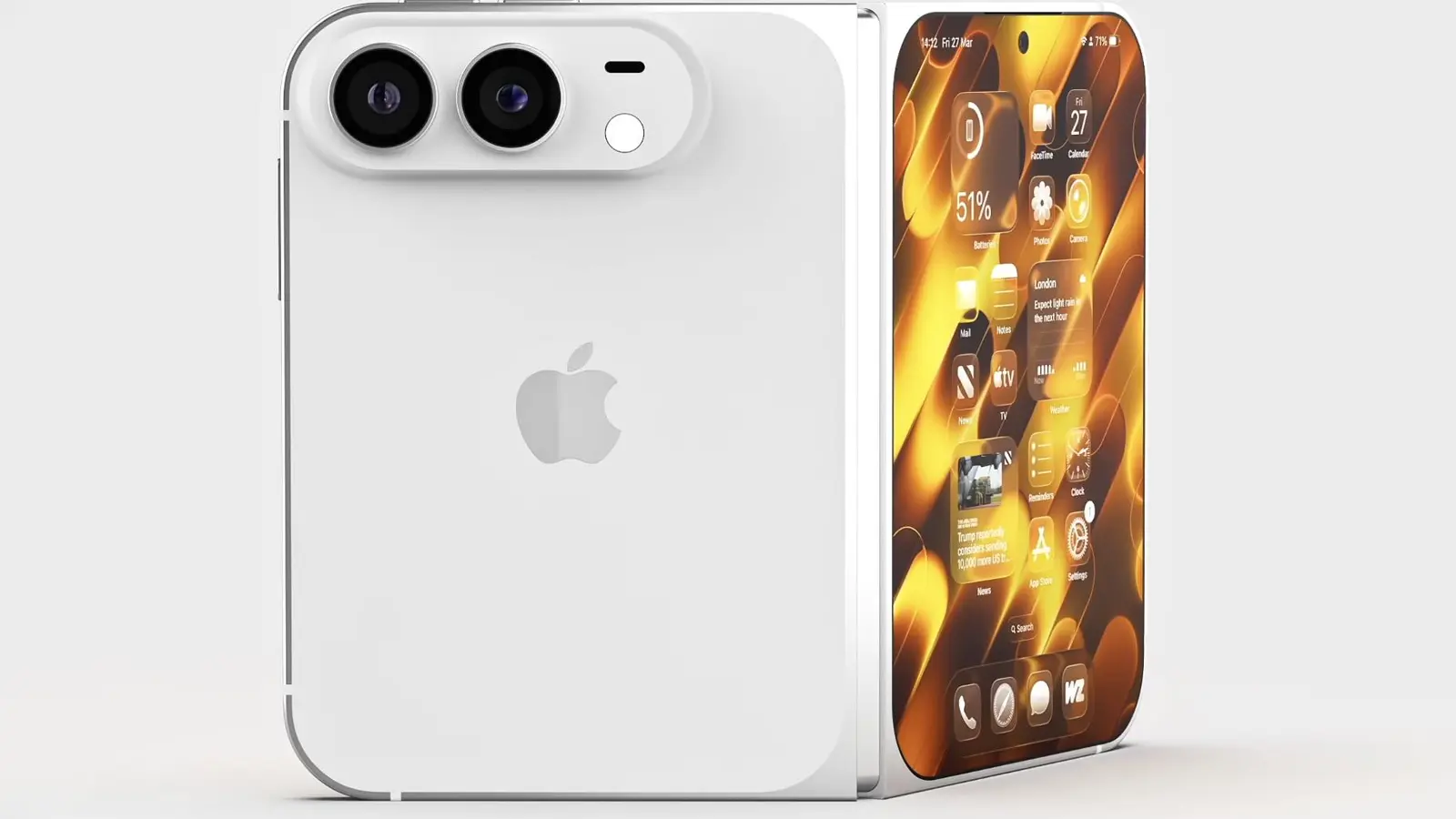
A blurry clip, a cleaned-up composite and a tiny circuit board have set off another round of speculation about Apple’s rumored foldable iPhone. The footage, shared on X by user LusiRoy7, shows what looks like a populated logic board with a large chip that some observers say is the A20 Pro.
What stands out is not the chip itself but how the pieces are arranged. Instead of a stacked system-on-chip and memory package, the die and DRAM appear side by side, linked by a redistribution layer. Think of it as rerouting traffic on the same street rather than building a new overpass; the wiring is flattened into the package so the parts talk without the usual silicon interposer between them.
Why Apple might choose a side-by-side layout
Heat. Thickness. Reliability. Pick two. Stacked packages save space but trap heat. For a folding phone, keeping the module thin is obvious, but managing temperature across a shifting hinge is trickier. Placing the SoC and DRAM next to each other spreads thermal load horizontally, which can reduce hotspots and make a slimmer module easier to fit inside a folding chassis.
The redistribution layer approach can shave millimeters and simplify mechanical tolerances. It also avoids an extra layer of silicon that normally sits between stacked components. The trade-offs are complex, but the motive is clear: pack performance into a design that must flex and fold without cooking the internals.

This one board — if genuine — could be an early sign Apple chose heat management over vertical stacking for its folding iPhone.
That caveat matters. The published image is an AI-cleaned composite, and cleanup tools sometimes invent or distort tiny markings on chips. No Apple logos or model etchings appear on the shielding cans in the clip, and none of the usual, reliable leakers have confirmed this as real Apple hardware. Treat the visuals cautiously.
Still, if the images are authentic they would be among the first physical glimpses of a device that’s expected to debut in September. Reports have pegged the retail cost at around €1,850, placing this foldable at the top end of the market.
For now, the board is an intriguing possibility rather than proof. More independent verification will be needed to say whether we’re looking at an early engineering sample or an elaborate fake. Either way, the layout hints at one of the key engineering questions for foldables: how to balance performance, thermals and a chassis that must bend.


“I cover emerging technologies, digital innovation, and the intersection of tech and everyday life. My goal is to make complex trends accessible and inspiring.”

Discussion
Leave a Comment
Comments
No comments yet. Be the first.