
Picture your living room this fall: a compact speaker that finally keeps up with conversation, a TV box doing heavy lifting for voice tasks, and a small screen on the wall that behaves like a thoughtful control center.
Reports suggest Apple is gearing up to refresh two familiar devices first. Expect a new HomePod mini and an updated Apple TV 4K, likely arriving this autumn. Don’t mistake these for mere cosmetic updates. The upgrades are clearly aimed at one thing: making Siri smarter while keeping the processing local.
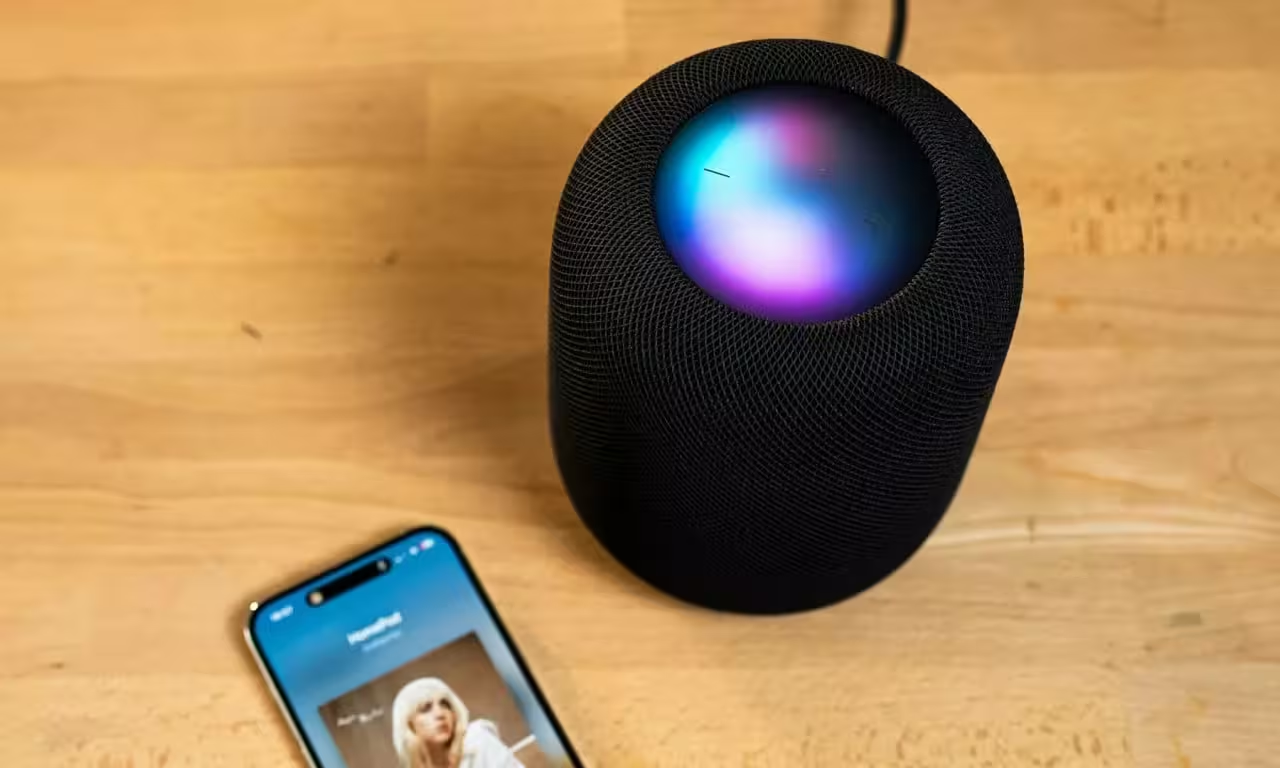
The HomePod mini looks set to move from the S5 chip to the newer S9, or perhaps an even stronger variant. New finishes could join the palette, and Apple may add a wireless chip similar to last year’s N1 found in iPhones, along with modest audio improvements. Those tweaks sound incremental on paper. In practice, they create the hardware headroom Siri needs to operate with better context and lower latency.

Apple TV 4K will likely jump from A15 Bionic to A17 Pro. Yes, the A17 Pro is no longer brand-new, but it is a meaningful step up for on-device intelligence and heavier local processing for Siri requests. Expect a refreshed remote too, a few design adjustments that make the box easier to use with voice-first interactions.
Current entry prices stand at about €120 for the HomePod mini and about €185 for the Apple TV 4K after June’s adjustments. Sources indicate those price points will remain stable for the next generations.
What Apple wants in your living room
Behind these product updates sits a broader strategy: a coherent smart-home platform that lives on your premises and scales from speakers to displays.
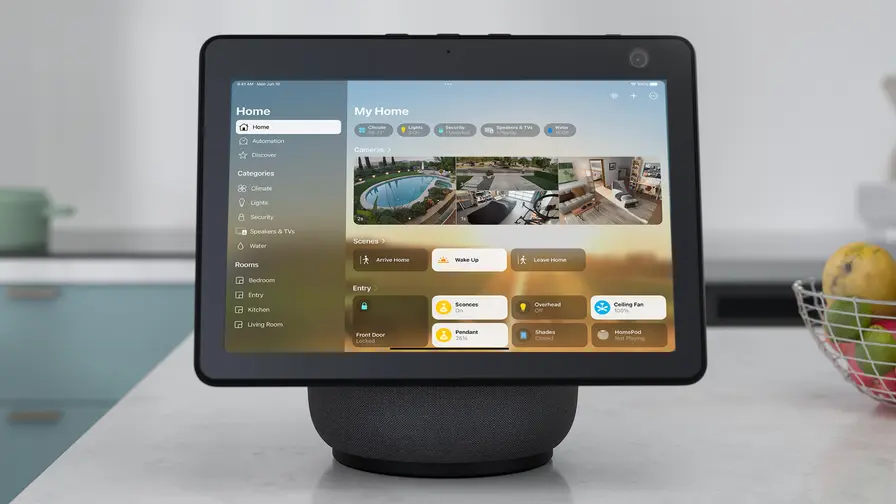
- First, a home hub with a 7-inch square display. Two variations will exist: a simple screen that mounts magnetically to a wall, and a model that attaches to a speaker base for better audio.
- Second, the hub will reportedly run on an A18 chip and a new operating system dubbed homeOS internally. Think FaceTime, richer AI conversations, and a single place to orchestrate smart devices.
- Third, a full-size HomePod refresh will arrive later. It will include a newer chip to support the same on-device intelligence as the mini.
Timing is expected between October and early next year for the hub’s debut. The aim is obvious. Apple wants a tactile, visual anchor for the home that ties into Siri and the rest of its ecosystem.
And that is only the near term. Looking further out, Apple’s hardware map stretches into accessories: first-party security cameras and a smart doorbell are planned. Then comes a more ambitious product, a larger hub with a 9-inch display and a robotic arm, something that behaves like a desktop robot with a display and hands for physical interaction. Those items are slated for late 2026 and into 2027.
Why the pause between software promise and hardware rollout? Building meaningful, private AI that runs well on local silicon takes time. Apple has been iterating on chips and system software so Siri can act with faster context, less cloud reliance, and greater privacy control.
Apple is betting on on-device Siri intelligence to glue its smart-home hardware together.
The result could be subtle at first. Better voice understanding. Smarter home automations. Fewer trips to the cloud. But taken together, these pieces would reshape the way Apple devices anchor a smart home, moving the company from a collection of gadgets to an integrated, voice-first household platform.
For now, watch for an autumn refresh of the HomePod mini and Apple TV 4K, the unveiling of a compact home hub around October, and a pipeline of accessories and a robot-like hub arriving in the longer term. It is a patient play. If Apple pulls it off, our homes might finally feel as thoughtful as our phones.


“I cover emerging technologies, digital innovation, and the intersection of tech and everyday life. My goal is to make complex trends accessible and inspiring.”

Discussion
Leave a Comment
Comments (2)
I work with smart home installs, this path makes sense, local processing is the missing piece. curious how privacy actually plays out tho
Hmm, going all-in on local Siri sounds good… but is this gonna jack up repair costs? And the robot arm? feels like sci-fi fluff for now