
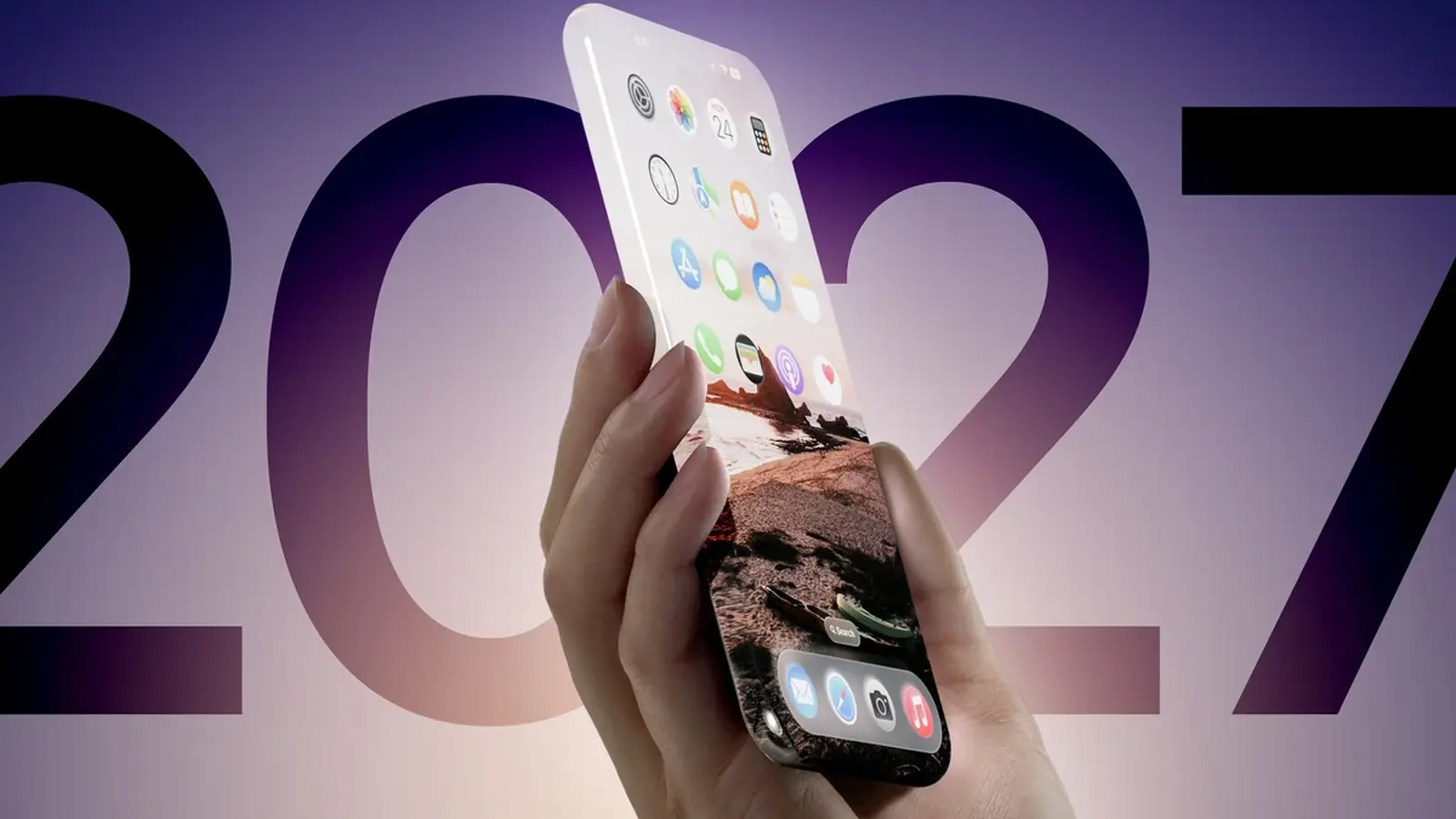
Imagine holding a single sheet of glass that thinks. Smooth, reflective, and so seamless your thumb glides without interruption. That is the image Apple seems to be selling for the iPhone 20, slated to be the centerpiece of its fall 2027 lineup.
What Apple is reportedly building
People inside the supply chain say Apple is planning one of its biggest redesigns since the iPhone X. Bloomberg's Mark Gurman describes the device as largely made of glass with a curved display and no visible notch. The goal: a phone that reads like a unified glass slab, a concept Jony Ive long chased in private sketches and prototypes.
Don’t expect the extreme waterfall edges some rival brands tried. Instead, the screen will use subtle four-sided curvature, what engineers call micro-curves. They soften the swipe experience and keep images from warping at the edge. Ice Universe on X suggests the effect will rely on optical tricks, blending light refraction with guiding layers so bezels almost disappear. Apple may brand that as a liquid glass display.
Under-display Face ID and the selfie camera are priorities, though the tech is still maturing. Display analyst Ross Young warns that under-panel sensors may not be flawless by 2027, meaning Apple could ship a near-seamless screen with a tiny hole or a shrunken Dynamic Island instead of an absolute vanishing act.

Two sizes are expected: roughly 6.3 and 6.9 inches. The larger model, because of wafer-thin 1.1 millimeter bezels, could be marketed as a seven-inch device. That’s a big screen squeezed into a surprisingly compact footprint.
Look closer at the frame and you’ll see why rumors matter. The rim will be a glossy, hairline band. Materials are not confirmed, though some sources favor aluminum for its heat-dissipation benefits over long gaming or editing sessions. Suppliers are already altering production lines in anticipation.
One revived internal project, reportedly codenamed Bongo, aims to remove physical buttons. Expect capacitive touch strips for power, volume, action and camera controls, paired with haptic feedback to mimic the click you used to feel. Apple is betting people will accept simulated presses if the feedback feels real.
Apple plans to replace mechanical buttons with touch zones and haptics, a major move toward a cleaner exterior.
There’s a bigger picture here. If Apple succeeds, the iPhone 20 won’t just be a new model. It will be a statement of direction, nudging the market toward sleeker surfaces, fewer seams, and displays that behave more like windows than screens. Yet the transition is delicate. Under-display sensors and ultra-thin bezels are engineering feats as much as design choices, and Apple often opts for cautious rollouts rather than rushed perfection.
Price details remain unconfirmed. Expect Apple to position the anniversary model as premium, alongside a second-generation foldable iPhone that could debut in the same season. Whether consumers embrace a full-glass identity and touch-only controls will be the real test.
One thing is certain: the iPhone 20 will be watched closely. Not because it is an incremental update, but because it could reshape how a phone feels in your hand and how hardware meets software at the surface.

“I cover emerging technologies, digital innovation, and the intersection of tech and everyday life. My goal is to make complex trends accessible and inspiring.”

Discussion
Leave a Comment
Comments (2)
Is Apple really gonna trust under-display Face ID by 2027? sounds risky, i bet they ship a tiny hole instead. curious tho, hype or not?
Wow, a whole glass slab phone? kinda dreamy but also scary for drops. no buttons sounds odd… would it survive my pockets?