
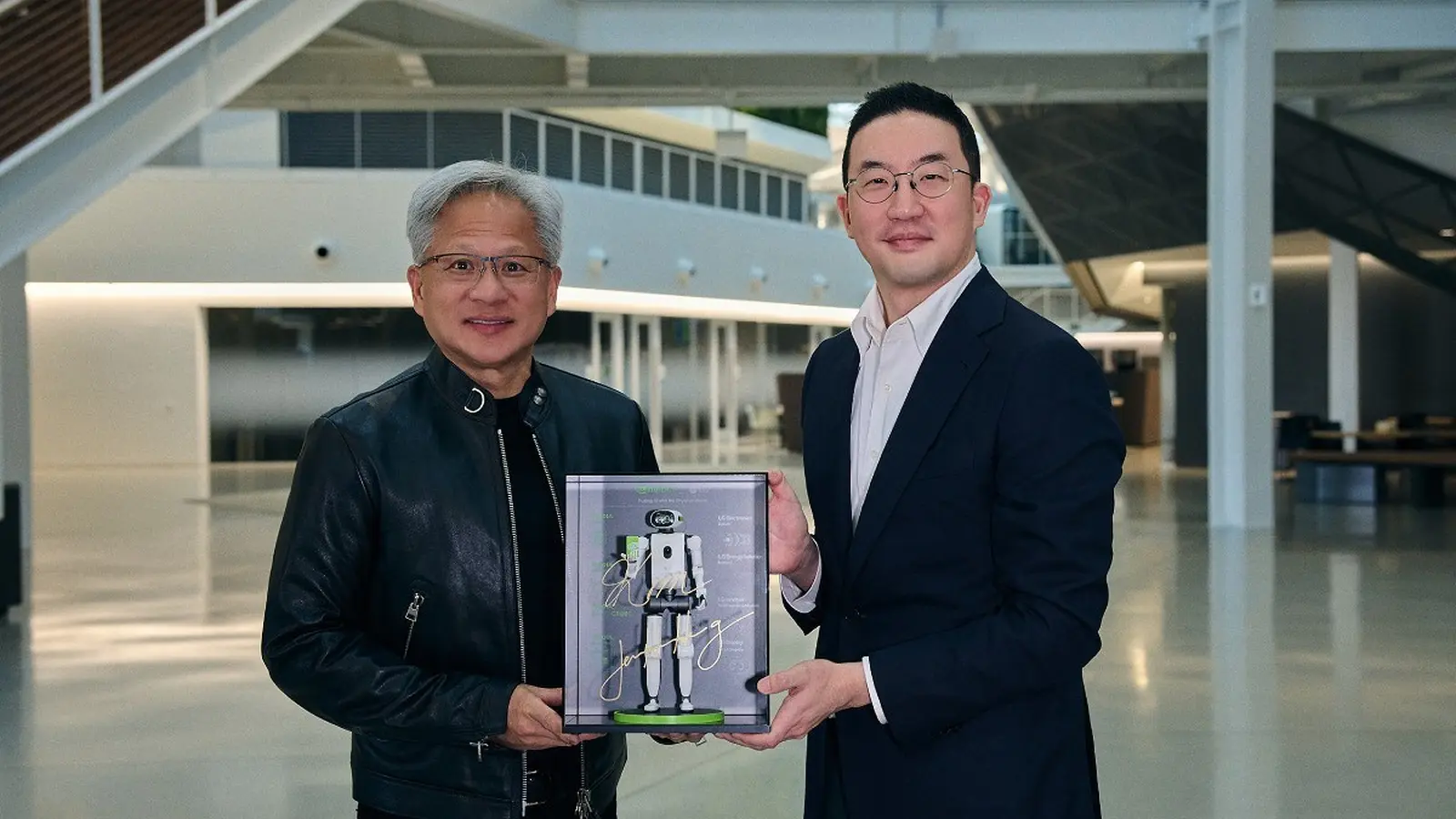
A photograph from Santa Clara said more than a press release ever could: LG's CEO and Nvidia's Jensen Huang standing beside a small humanoid, a snapshot of a much larger design. LG now says that bigger, walking machines will arrive in real form in early 2027, and the company is stacking its bets on Nvidia silicon and foundation models to get them there.
The headline is a bipedal humanoid planned for the first quarter of 2027. It will run on Nvidia's Jetson Thor, a platform that delivers about 2,070 TFLOPs of on-board compute, and use Nvidia's Isaac GR00T open reasoning humanoid foundation model for decision making and motion. Short and decisive moves will need raw power; longer, adaptive behavior will need smart models. LG is targeting both.

Putting robots through the wash—literally
Not everything in LG's roadmap is cinematic. CLOiD, a wheeled robot, will be the first to face real factory work: it will join a washing machine manufacturing line in Tennessee later this year. Think of that line as a field laboratory. If CLOiD can handle repetitive, messy tasks there, the plan is to roll the design into other factories, commercial venues and eventually consumer spaces.
The approach is pragmatic. Start with a controlled environment. Tune sensors, actuators and workflows. Scale when reliability meets expectation. That path from narrow automation to general-purpose assistance is slower than a demo reel, but it solves the most brutal problem in robotics: usefulness at scale.
LG will also build a reference AI data center based on Nvidia's Vera Rubin platform, expected in the first half of 2027. Lessons from that center will feed a much larger project: the planned LG AI Factory in Cheonan, scheduled for the first half of 2028, which will bring about 80 MW of compute online. The goal is twofold. One, to train LG's own robot and vehicle models. Two, to prove LG can deliver validated, turnkey AI data-center solutions to other businesses.
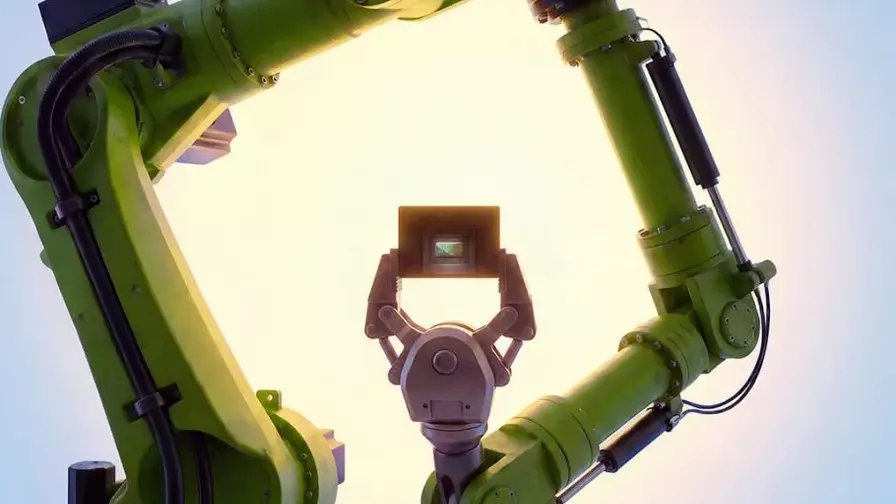

That ambition sits inside LG's 'One LG' strategy. Components will come from across the group: batteries from LG Energy Solution, sensors and modules from LG Innotek, and electronics from LG Electronics. It's an attempt to move from vendor to systems integrator, using internal supply lines to accelerate robot development.
LG is not stopping at factory floors. The company will build the next generation of AI-Defined Vehicles on Nvidia's Drive Hyperion, and will fold those capabilities into LG's own in-vehicle infotainment systems. The pitch to carmakers is simple: deliver hardware that combines advanced driver-assist, autonomous stacks and in-cabin AI services in one package.
Rivals are also moving. Samsung recently launched a Robotics eXperience division aimed at humanoids, factory robots and robotic hands while continuing its strong push in automotive electronics through Harman. Competition will sharpen product roadmaps and, likely, speed time to market.

LG's chairman framed the work as an accelerating effort to spread AI across physical devices and facilities. Nvidia's founder described the opportunity in broader terms: give machines the ability to understand the real world, reason and act safely alongside people, changing how we live, work and travel. The partnership pairs LG's manufacturing depth with Nvidia's edge and cloud AI stack, and it will be watched closely—by automakers, by factory managers and by anyone wondering when the robots we've seen in labs will finally walk out into the world.
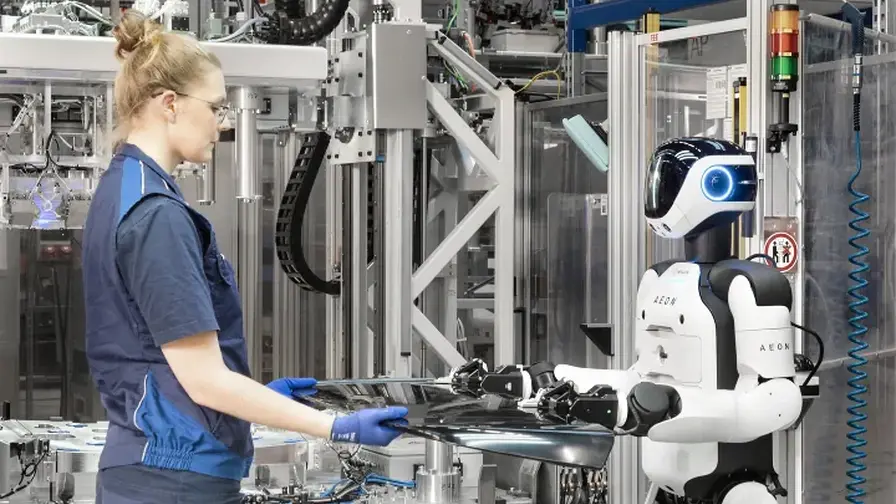
- Humanoid robot due Q1 2027, using Jetson Thor and Isaac GR00T
- CLOiD wheeled robot entering a Tennessee factory later this year
- Reference Vera Rubin data center in H1 2027
- LG AI Factory in Cheonan coming in H1 2028, about 80 MW
- Next-gen AI-Defined Vehicles using Nvidia Drive Hyperion

“I love exploring gadgets, apps, and trends that redefine how we connect, work, and play in a digital world.”

Discussion
Leave a Comment
Comments (2)
Is this even true? 80 MW AI factory sounds massive, but i'll believe it when the biped actually walks without falling. promo reels are easy.
Whoa LG + Nvidia flexing hard. Humanoids by Q1 2027? If that's real then… kinda hyped, kinda worried. Hope reliability isn't just PR lol