
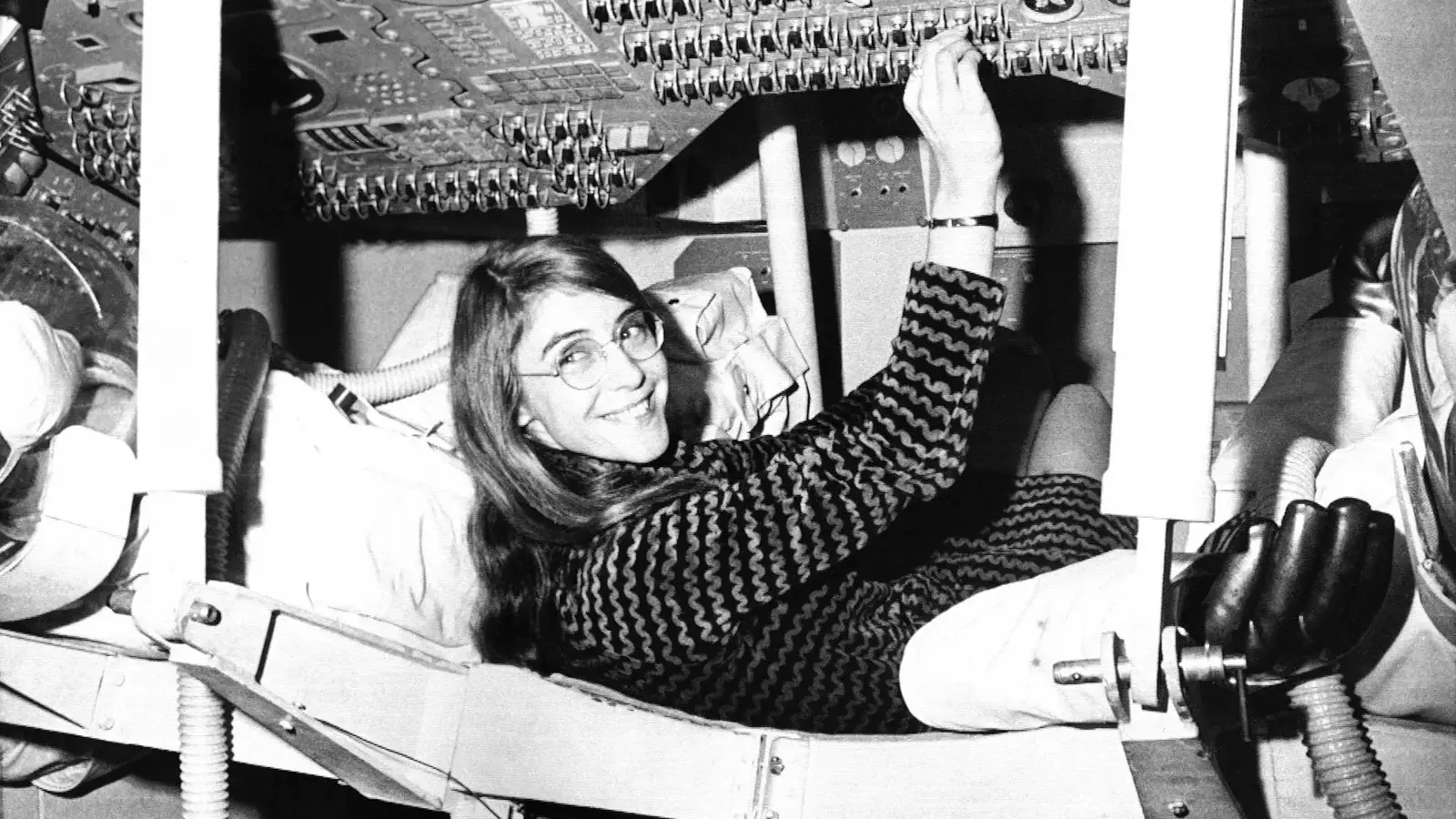
Margaret Hamilton, the software engineer who popularized the term "software engineering" and led development of the Apollo flight software, died on 30 September 2026 at age 90, MIT announced.
Hamilton led the team that developed the flight software used to land Apollo 11 and later served as deputy manager of the Apollo command and service module team, a role that expanded as hundreds joined the effort.
She developed priority scheduling and an approach she described as defensive programming to ensure the onboard computer preserved resources for critical tasks when unexpected conditions arose.
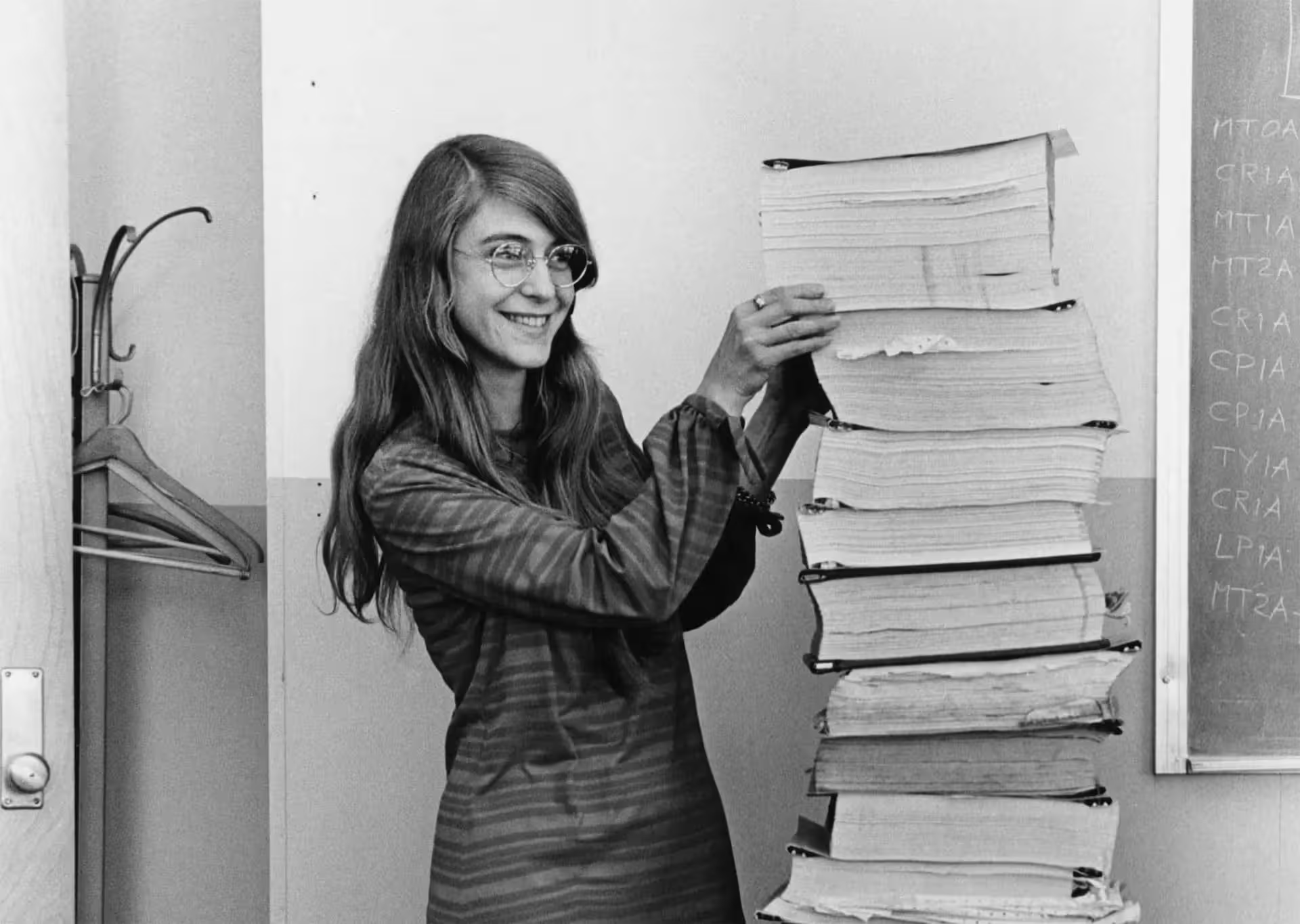
That approach proved decisive on 20 July 1969, during the Apollo 11 lunar descent, when the onboard computer issued alarms following processing overloads. The software discarded lower-priority work and kept essential functions running, allowing the landing to continue.
"The idea itself appealed to me and the fact that it had not been done before. I was the first programmer to join the project and the first woman they hired," Hamilton told The Guardian in 2019.
In a 2017 interview she said that during the alarms she was thinking about the software, and then felt the team's work cohere: "We did it. It worked."
Born in Paoli, Indiana, in 1936, Hamilton earned a bachelor’s degree in mathematics from Earlham College in 1958. She moved to Massachusetts with her husband and began work at MIT in 1959.
At MIT she worked on weather-prediction software with Edward Norton Lorenz and on air-defense systems before joining the Instrumentation Laboratory, which took on Apollo flight software development in 1965.
She initially worked on unmanned missions, then became the first programmer hired for the Apollo project and the first woman programmer on the program, eventually supervising the flight-software team for crewed missions.
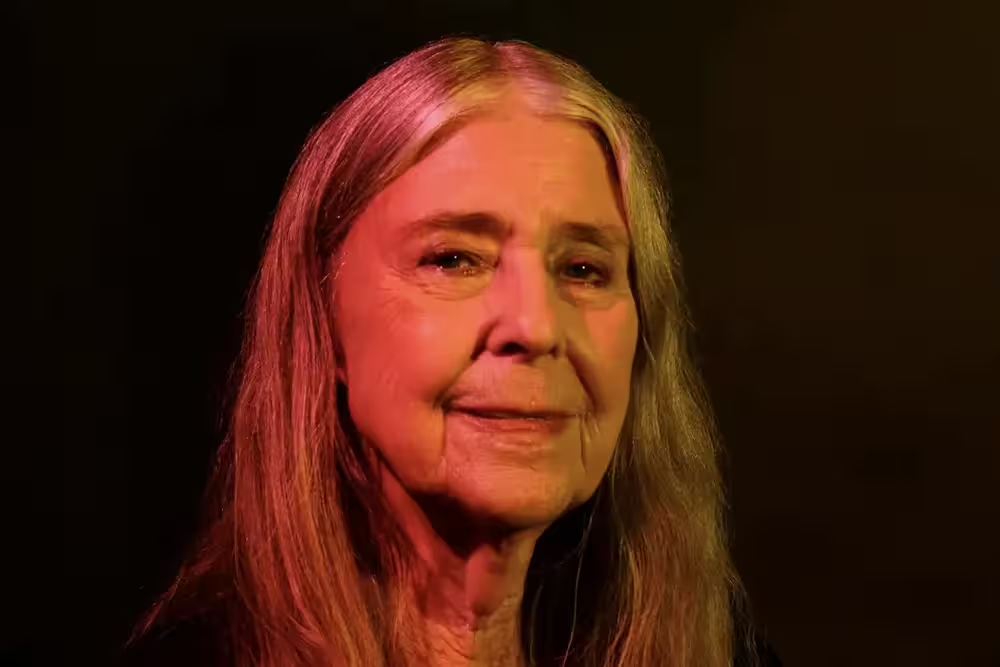
After Apollo, software developed under her direction was reused on projects including Skylab and the Space Shuttle program. She founded Higher Order Software in 1976 and Hamilton Technologies in 1986.
Her later honors included a NASA award for outstanding achievements in space (2003), the Presidential Medal of Freedom presented by President Barack Obama (2016), induction into the National Aviation Hall of Fame (2022), and the Michael Collins Award for lifetime achievement from the Smithsonian National Air and Space Museum (2025).
Her likeness appears in the LEGO "Women of NASA" set. Hamilton campaigned to have software treated as an engineering discipline, using the term "software engineering" to emphasize rigorous methods and system-level responsibility, a term she said some initially found laughable.
Her work established practices now central to the development of complex systems that underpin modern technology and infrastructure.

“I cover emerging technologies, digital innovation, and the intersection of tech and everyday life. My goal is to make complex trends accessible and inspiring.”

Discussion
Leave a Comment
Comments
No comments yet. Be the first.