
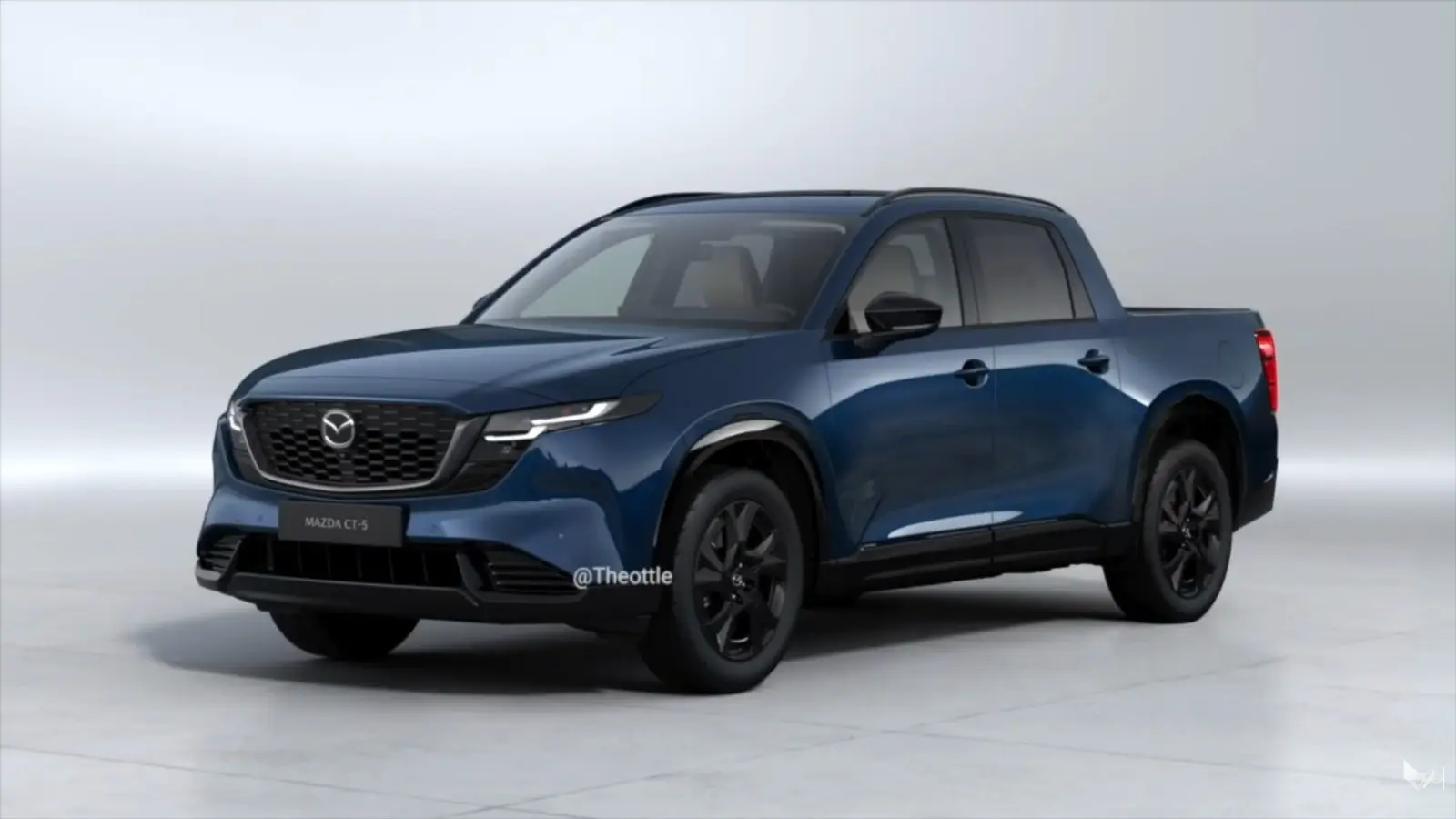
Picture this: a familiar Mazda face up front, the same grille and slim headlights, then further back the silhouette suddenly opens into a pickup bed. It’s a digital daydream—an artist’s rendering that imagines Mazda taking its popular CX-5 crossover and carving a truck out of it. The internet noticed. Enthusiasts argued. Dealers stayed silent.
From crossover to compact pickup: what the rendering shows
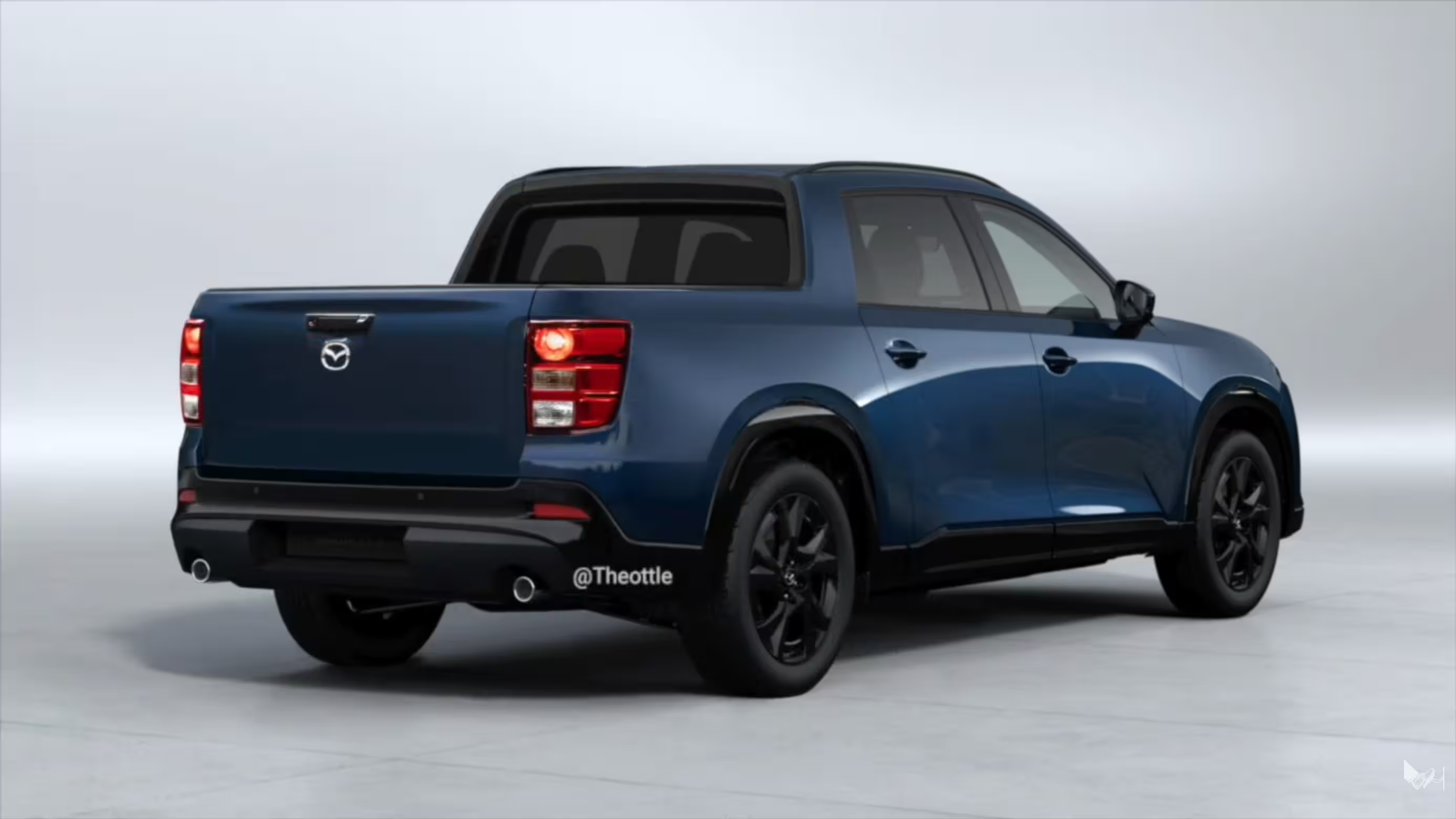
The artwork, released by a virtual designer on YouTube, keeps the CX-5’s identity for the first two-thirds of the body. Up to the C-pillars, you could mistake it for the current third-generation crossover that rolled into production in 2025. Behind that, though, the roofline stretches, new three-quarter panels appear and a surprisingly roomy open bed takes shape. Tailgate, rear bumper and taillights are unique to the concept. Some bits remain unchanged: door handles, wheels and even tailpipes echo the CX-5 donor car.
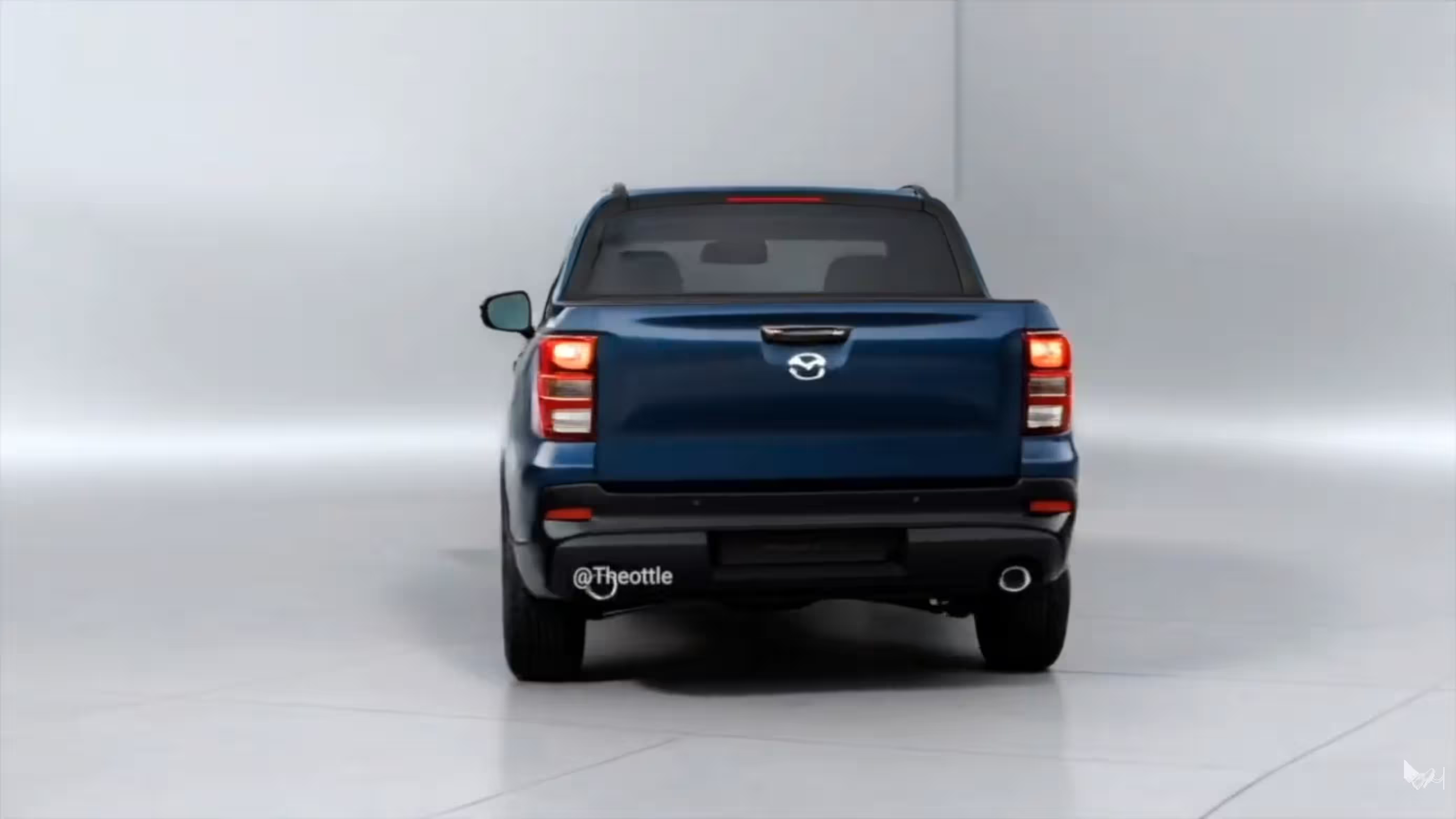
Under the skin, the imagined CT-5 would likely borrow the CX-5’s 2.5-liter SkyActiv-G four-cylinder, the same 187 horsepower and roughly 186 pound-feet of torque, paired with a six-speed automatic and standard all-wheel drive. The rendering also hints at roomier rear seats thanks to a stretched wheelbase, nudging the idea away from a subcompact pickup and toward something mid-size.
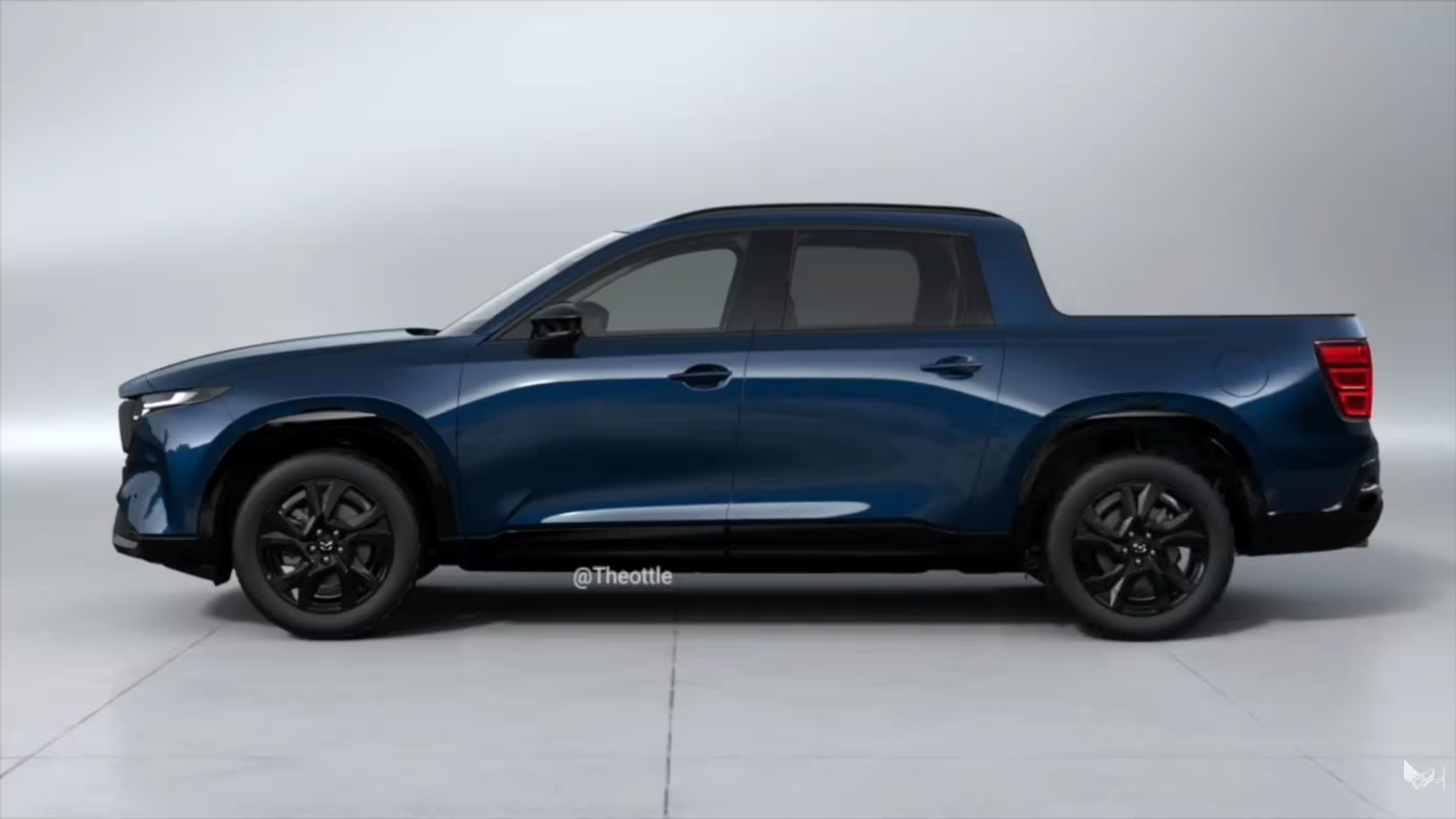
Why this matters: unibody pickups are no longer niche. Buyers want truck practicality without full-size truck bulk. The Ford Maverick and Hyundai Santa Cruz proved this market exists—practical, city-friendly, and more lifestyle than farmwork. Would a Mazda with CX-5 bones slot neatly into that gap? On paper, it’s plausible. On paper only, for now.
Mazda itself has said nothing about a CT-5 project. The company’s pickup presence today is the BT-50, a conventional body-on-frame truck built for international markets and shared with the Isuzu D-Max. Offered in single, extended and double cab formats, and powered mostly by diesel engines, the BT-50 sits apart from the small unibody pickups gaining popularity in North America.
Price comparisons matter because buyers weigh utility against value. The current CX-5 range in the United States starts at about €27,891 for a base 2.5 S and climbs to around €36,281 for the 2.5 S Premium Plus. By contrast, the entry-level Ford Maverick for the 2026 model year is about €26,179, while the Hyundai Santa Cruz begins near €27,668. In Australia the BT-50's driveaway prices translate roughly to €31,359 for the XS two-wheel-drive, €32,934 for the XS four-wheel-drive, €32,925 for the XT two-wheel-drive and €34,154 for the XT four-wheel-drive.
Those numbers suggest a Mazda-built CT-5, if priced close to the CX-5, could compete on cost. Still, price alone won’t win buyers. Packaging, towing and payload specs, cabin ergonomics and the emotional pull of Mazda’s design language would all play roles in any real-world decision.
.avif)
There are trade-offs. Convert a crossover to a pickup and you change the vehicle’s dynamics. Ride comfort could shift. Handling would change. So would manufacturing complexity and dealer inventory planning. Mazda may prefer to leave such experiments to digital artists until market signals clearly demand a compact unibody truck from the brand.
For now, the CT-5 exists where many automotive fantasies start: pixels and imagination. But the rendering does highlight a real strategic question for Mazda—can the company leverage a strong crossover like the CX-5 into a pickup that feels authentically Mazda while standing up to the Maverick and Santa Cruz?
Would you pick a Mazda CT-5 over its rivals if it ever reached showrooms? Leave your verdict—practicality, style or brand loyalty—in the comments.


“I cover automotive innovation, electric vehicles, and the future of mobility — where technology meets sustainability.”

Discussion
Leave a Comment
Comments (2)
Is this even real? Looks like fan art. If Mazda did it, price and payload would decide. I like the look, but specs matter
Whoa, CX-5 turned pickup? Weird but kinda sexy. Would I trust it for towing though, hmmm...