

Forget the benchmark scores and leaderboard chatter. Satya Nadella wants one number to cut through the noise: global economic growth.
When asked about Microsoft’s ambition to multiply AI revenue tenfold, the company’s CEO didn’t offer a revenue-first answer. Instead he pointed to something larger — the aggregate performance of the world economy. Short-term financial targets, he implied, are less meaningful than whether AI actually raises productivity at scale.
Nadella’s uncompromising yardstick
He notes that developed economies today are barely moving. Growth rates around 2 percent, after adjusting for inflation, amount to near stagnation. That’s a problem. With all the hype around artificial general intelligence, the pressing question isn’t which model wins a benchmark test. It’s whether AI can push global growth into the high single digits again — numbers more reminiscent of industrial revolutions than incremental upgrades.
The real test, he argues, is whether the world economy can sustain growth of roughly 7 to 10 percent.
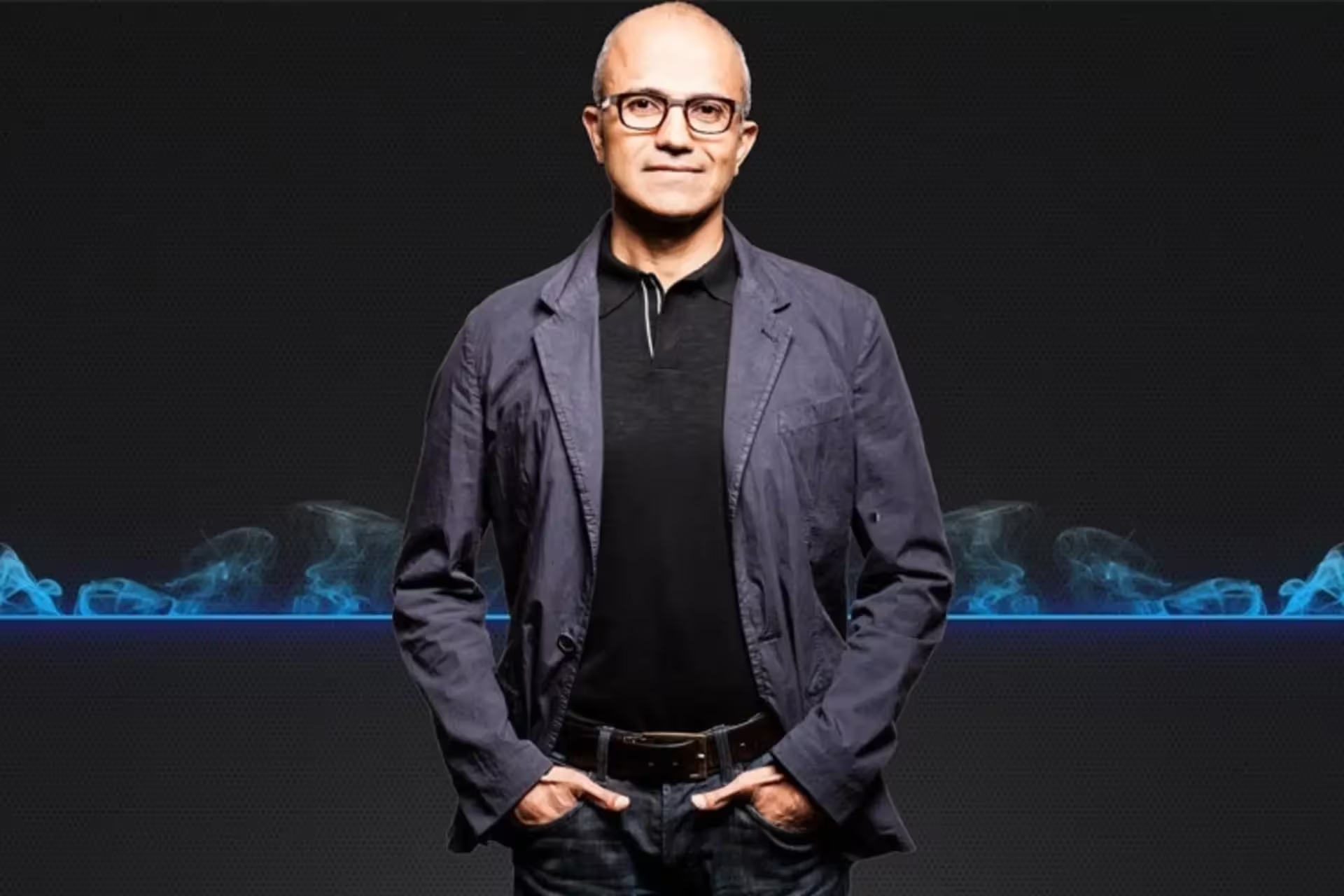
That framing changes where we look for success. It shifts the focus from model zoo metrics to broad economic inputs: productivity gains, labor augmentation, new industries, and faster supply chains. It also reframes winners and losers. The biggest gains, Nadella says, won’t necessarily accrue to the handful of companies that build models. The largest payoff goes to industries that adopt AI as a public-good-like tool and scale it across value chains.
Think of AI as infrastructure rather than a product with a price tag. Utilities don’t capture all the value of electricity. They enable factories, services, and entire regions to perform differently. AI, when deployed across health care, manufacturing, logistics, and education, could produce that systemic shift. But will it? That is the metric Nadella is urging us to watch.
He is blunt about the limits of our current measures. Benchmarks and lab accomplishments are useful for researchers. They are not the same as real-world economic transformation. Speed of inference and leaderboard rank do not directly translate to higher GDP or more inclusive prosperity.
So where does this leave policymakers and business leaders? For starters, the conversation must move beyond short-term monetization. Investment in skills, data infrastructure, regulatory clarity, and distribution mechanisms matters. Without them, the technology will concentrate gains instead of broadening them.
Will AI deliver an era of renewed growth? It could. But only if adoption is widespread, if productivity improvements are captured in measurable output, and if society invests in the systems that turn capability into economic activity. Nadella’s message is simple and unsettling: until we see those numbers tick up, technical milestones remain interesting laboratories — not proofs of societal progress.


“I love exploring gadgets, apps, and trends that redefine how we connect, work, and play in a digital world.”

Discussion
Leave a Comment
Comments
No comments yet. Be the first.