
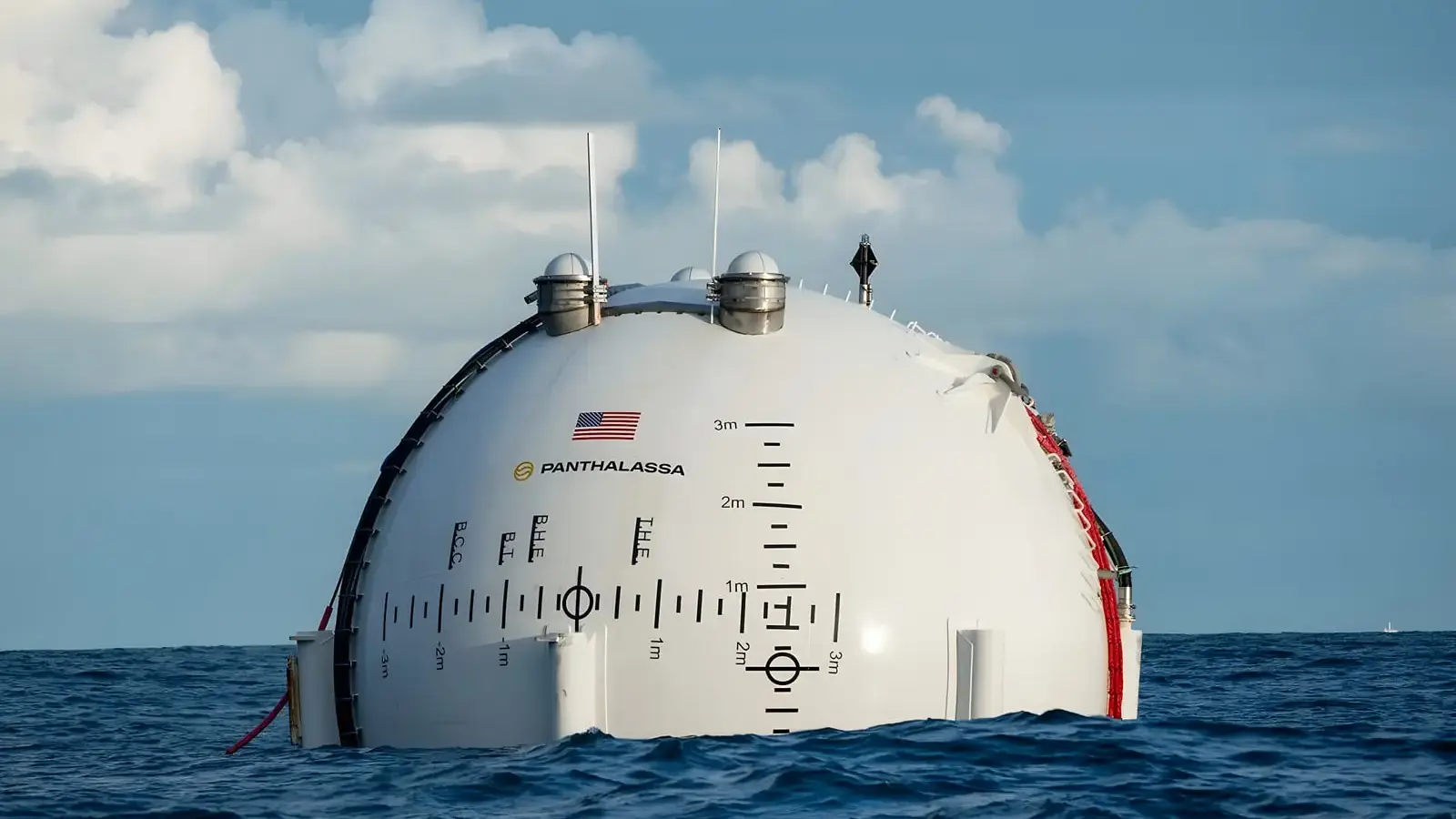
Pantalasa's floating steel platforms generate electricity from wave-driven internal water flow and are designed to operate without power cables or seabed connections.
The U.S. company announced $140 million in funding in 2026 to develop Ocean-3 and pursue construction of floating datacenters that use wave energy for power and cold seawater for chip cooling. Pantalasa said the new capital will complete a pilot manufacturing facility near Portland and speed the build and deployment of Ocean-3 prototypes.
How the Ocean platform works
Pantalasa describes its Ocean platforms as floating steel structures that ride up and down on waves, forcing seawater through internal passages. That throughflow spins turbines mounted inside the hull, generating electricity that is consumed on site to run AI processors. Processed outputs are transmitted ashore via satellite links, and the company says the platforms rely on ambient ocean cooling for equipment thermal management. Pantalasa also notes these platforms do not require an electrical cable or physical connection to the seabed to operate.
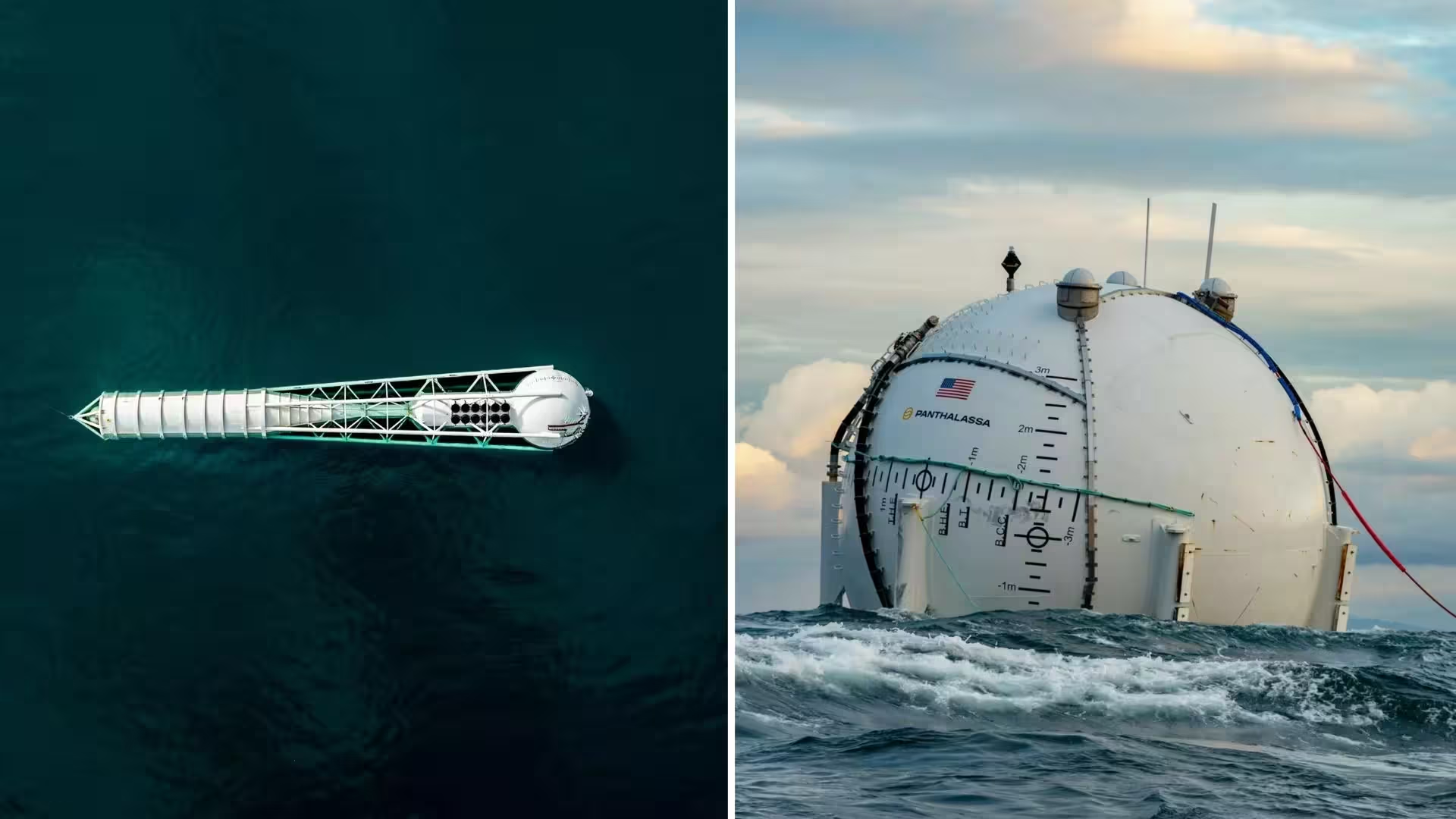
The company hopes simultaneous use of wave-generated power and natural seawater cooling will lower energy and cooling costs for large-scale AI processing, but it acknowledges that independent commercial-scale proof of those savings is not yet available.
Risks, development history and timeline
Pantalasa has worked for more than a decade on wave power generation, autonomy and offshore processing and tested earlier prototypes labeled Ocean-1 and Ocean-2. Ocean-2 was trialed in waters near the state of Washington, and Pantalasa says Ocean-3 will demonstrate inference-level AI processing at sea. The company plans to deploy Ocean-3 prototypes in the North Pacific in 2026 and aims for commercial deployments starting in 2027.
The project faces significant operational challenges: exposure to extreme waves and storms, saltwater corrosion, satellite communications limitations and the difficulty and cost of repairing equipment at sea. Pantalasa also notes that wave-power technology has not yet achieved broad commercial success at scale, so the long-term performance and durability of Ocean platforms in harsh ocean conditions remain to be proven.
Ocean-3 is currently a development-stage initiative rather than a ready replacement for shore-based datacenters, and the 2026 funding round is intended to support further testing, manufacturing and near-term prototype deployments.

“I love exploring gadgets, apps, and trends that redefine how we connect, work, and play in a digital world.”

Discussion
Leave a Comment
Comments
No comments yet. Be the first.