
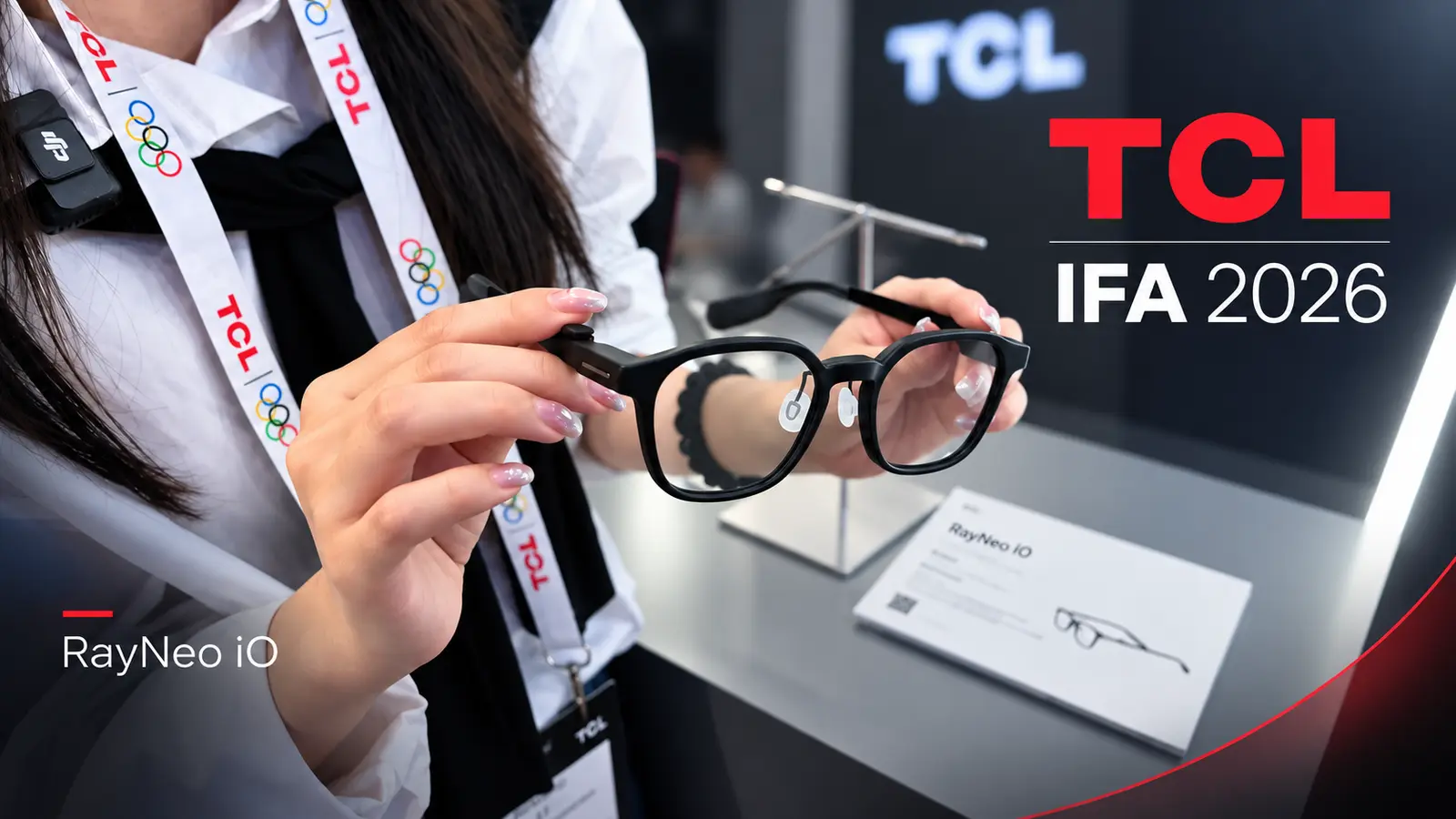
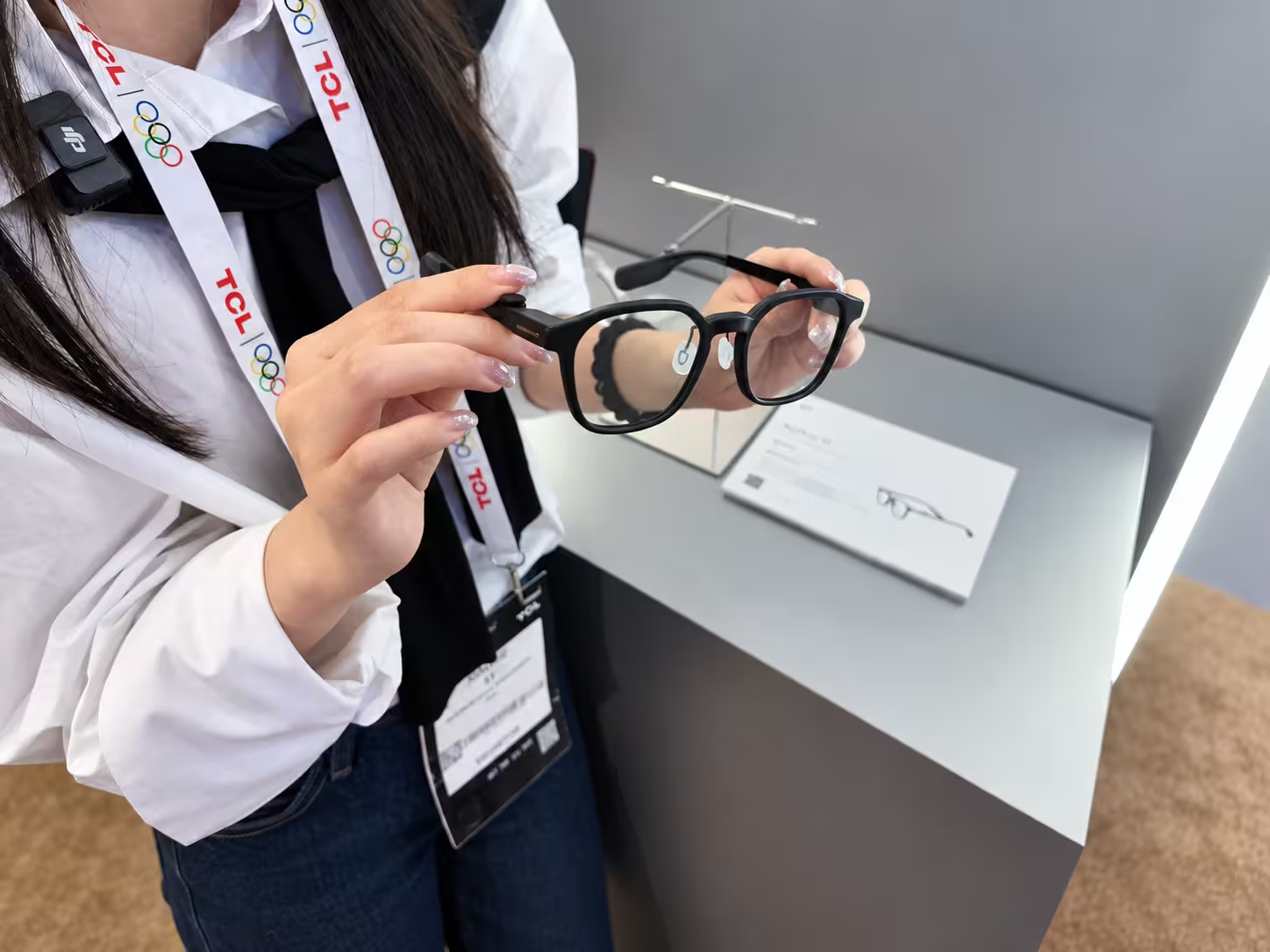
TCL’s RayNeo brand used IFA 2026 to showcase the RayNeo iO, a new pair of AI smart glasses built around an integrated transparent display rather than a camera-first design.
During our hands-on demonstration at the booth, the RayNeo team walked us through several of the glasses’ main functions, including Live Captions, real-time translation, Voice Memo, AI Teleprompter, Life Log, Life Cues and a customizable Dashboard.
The product is clearly aimed less at entertainment and more at productivity, communication and everyday information. RayNeo itself positions the iO primarily for professionals and students who want useful information presented directly in their field of view without constantly checking a phone.
A dashboard that sits directly in front of your eyes
One of the first features demonstrated to us was the iO’s Dashboard.
The interface can be opened using the Smart Crown on the glasses, and users can rotate the crown to move through different functions and information.
According to the RayNeo representative, the Dashboard can be customized with information such as weather, calendar entries and other day-to-day data.
RayNeo describes the iO as using an optically projected transparent display that appears equivalent to a 33-inch screen viewed from around two metres away, while the glasses themselves weigh just 33 grams.
The idea is to keep contextual information visible without completely blocking the user’s normal view of the environment.

Live Captions can translate conversations in real time
The most impressive part of our booth demonstration was Live Captions.
The RayNeo representative switched the glasses to Chinese-to-English translation and spoke directly to us in Chinese. The translated sentence then appeared in English on the glasses.
We tested several short phrases during the demo, and the translations appeared directly in the wearer’s field of view.
RayNeo says Live Captions supports 55 languages and 109 accents, with translated speech displayed on the lenses in real time.
Importantly for our markets, the language menu shown during the demonstration included Baltic languages such as Lithuanian and Latvian.
The system works through the connected RayNeo app, where users select the languages involved in the conversation. The complete transcript can also be saved after the session.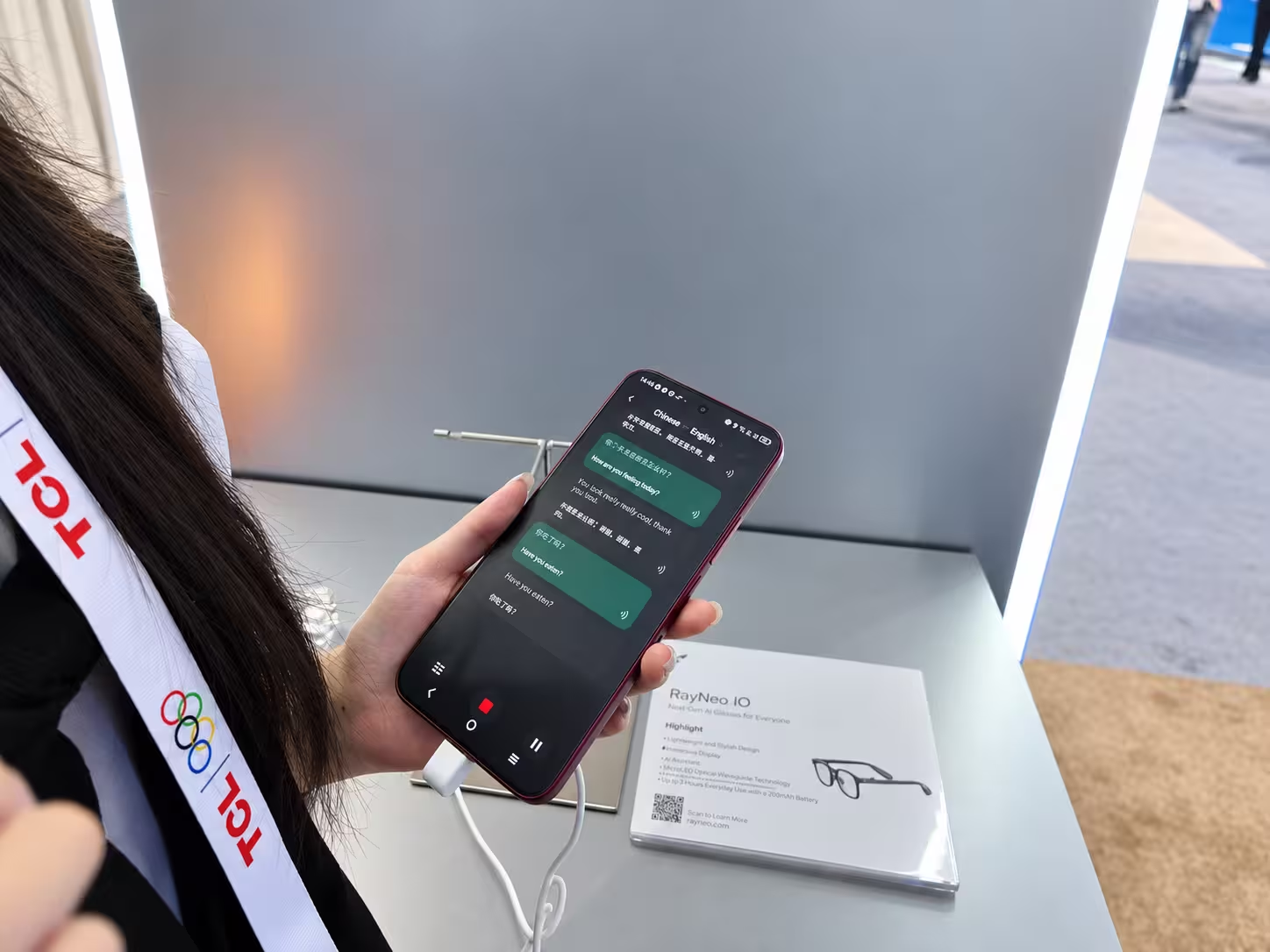
The AI Teleprompter follows your speaking pace
Another productivity-focused feature is the AI Teleprompter.
This places prepared text directly on the glasses, allowing users to read a speech or presentation without looking down at notes or a separate screen.

During our demonstration, the text began scrolling as the wearer spoke and stopped when the speaker paused.
RayNeo says the system uses voice tracking to synchronize the teleprompter with the user’s natural speaking rhythm.
That could make the feature particularly useful for presentations, public speaking, video production or any situation where remembering a long script is difficult.
The representative even suggested musicians and performers as another possible use case.

Voice Memo is designed for meetings and study
The Voice Memo feature is another part of the iO’s productivity focus.
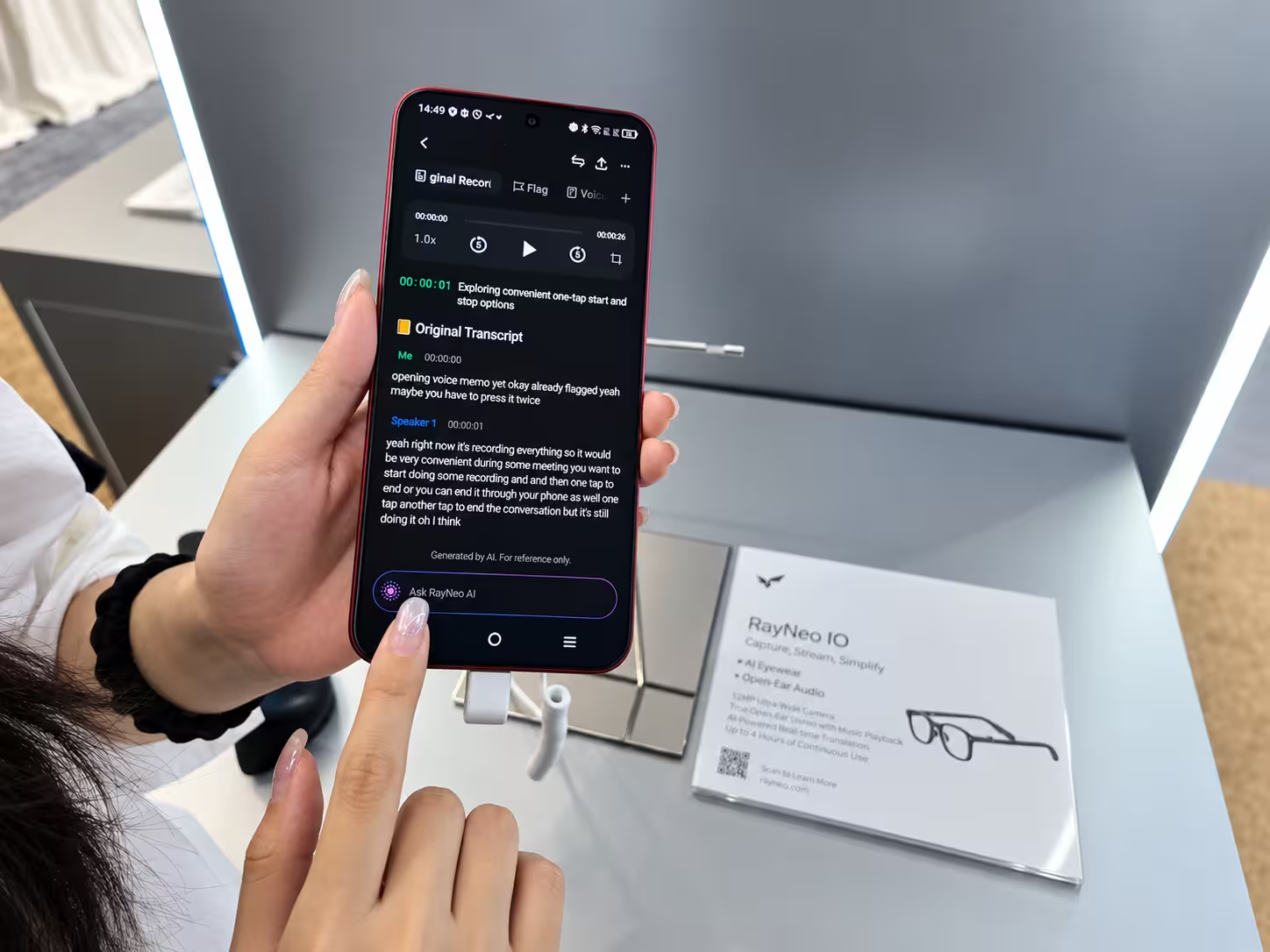
The representative described it as particularly useful for meetings, allowing the glasses to capture spoken information and turn it into a transcript or structured record.
RayNeo officially lists recording and AI meeting notes among the iO’s main features.
This fits closely with the company’s intended audience of business users and students, who may want to preserve meeting discussions, lectures or conversations without manually taking notes throughout.
Life Log turns everyday activity into a personal timeline
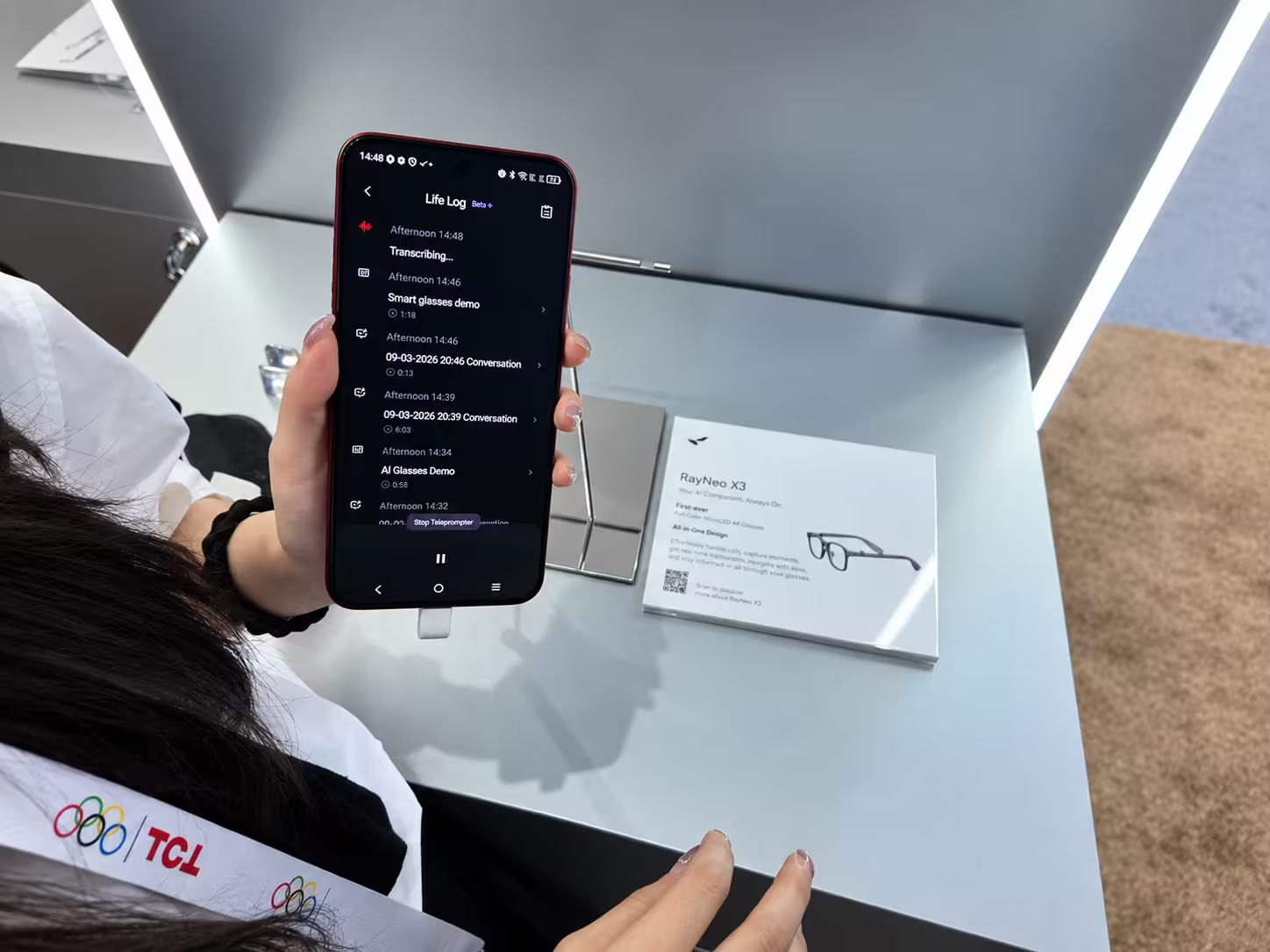
RayNeo also demonstrated a feature called Life Log.
The idea is to collect information from the user’s day and organize it into a timeline or diary-like summary.
According to the representative, the system can identify events it considers important and highlight them later.
RayNeo officially describes Life Log as a personal timeline feature, designed to help users retain and revisit information from everyday activity.
It is one of the features that pushes the iO toward the idea of an always-available digital memory rather than simply a wearable display.
Life Cues brings AI models into conversations
Another feature demonstrated at the booth was Life Cues, although the representative noted that connectivity at the exhibition venue made it difficult to show reliably.
Life Cues is intended to bring AI assistance into everyday conversations and situations.
Users can activate RayNeo’s assistant using a voice command such as:

“Hey, RayNeo.”
The glasses can then respond to questions and surface information directly on the display.
RayNeo supports its own AI as well as access to several external AI models. The current product pages list options including ChatGPT, Gemini, Claude, DeepSeek, Kimi and Qwen, although some advanced models require a paid subscription.
The support documentation also confirms that RayNeo AI can answer general questions, control glasses functions and search through information previously stored in Voice Memo, Live Captions and Life Log.
No camera is part of the privacy strategy
One important design decision with the RayNeo iO is what it does not include.
Unlike many recent smart glasses, the iO has no camera.
RayNeo presents this as a privacy advantage, especially for a device intended to be worn throughout the day in meetings, classrooms and public spaces.
That decision also clarifies the product’s purpose. The iO is not designed primarily for taking photos or recording video. Instead, its focus is displaying information, translating conversations, remembering spoken content and providing AI assistance.
A smart-glasses concept built around productivity
The most interesting aspect of the RayNeo iO at IFA 2026 was how focused the product felt.
Rather than attempting to replace a smartphone completely, the glasses concentrate on a smaller set of tasks that make sense directly in front of the user’s eyes: captions, translation, scripts, reminders, meeting notes and AI answers.
Our real-time translation demonstration was particularly convincing because the benefit was immediately obvious. Hearing someone speak Chinese while seeing the English translation directly in front of your eyes is exactly the kind of interaction where smart glasses can offer something a phone cannot quite replicate as naturally.
The AI Teleprompter and Voice Memo features extend that same idea into work and education.
For RayNeo, the target appears clear: professionals, students and frequent communicators who want information available without constantly breaking eye contact to look at another screen.
Whether that is enough to turn smart glasses into an everyday device will depend on comfort, battery life and how reliable these services prove outside a controlled demonstration. But at IFA 2026, the RayNeo iO offered one of the more practical arguments we saw for why a display in a pair of glasses might genuinely be useful.


“Some times I write about breakthrough startups, digital ecosystems, and how innovation is changing the way we build businesses.”

Discussion
Leave a Comment
Comments (3)
AI Teleprompter sounds neat, could help in lectures and gigs. But will it actually sync in noisy rooms? tbh a bit skeptical.
is this even true? no camera but Life Log records everything?? feels like a privacy tradeoff, or am i missing something...
wow didnt expect live translation to be that smooth! 33g, no camera, smart move but battery life will tell… curious.