
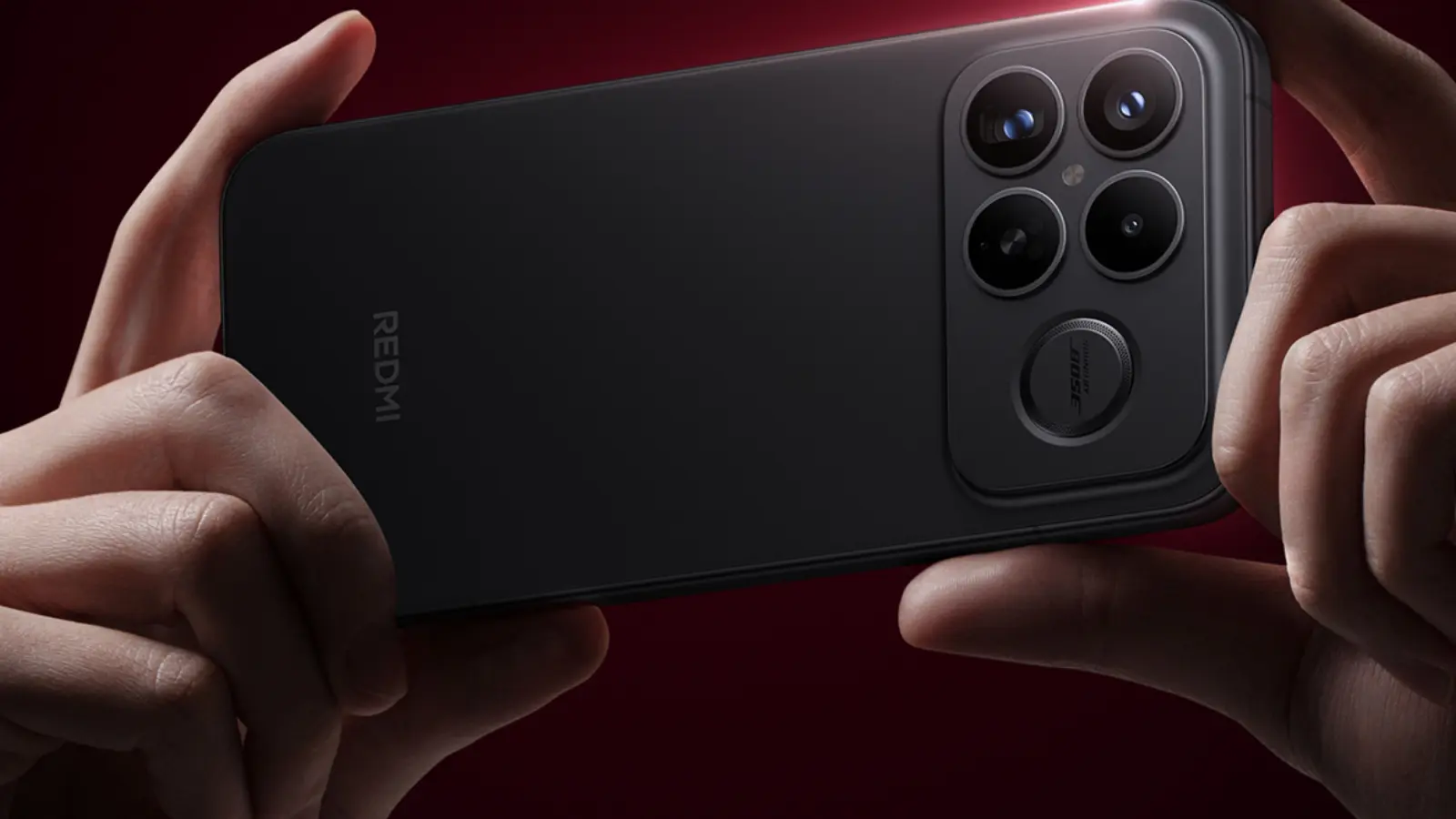
Imagine a tiny fan whirring inside a phone while engineers monitor temperature graphs. That hush of a testing lab tells you more than a press release ever will: some flagships are born slowly, not rushed.
Recent leaks point to a split launch for Redmi's next K-series. The standard K100 and a K100 Pro are still expected to appear in China as early as August, carrying Qualcomm's Snapdragon 8 Elite Gen 5. But the top dog in the family — the rumored K100 Pro Max — looks like it could wait until the first half of 2027, according to reliable tipster Digital Chat Station.
Why the Pro Max may need more time
At the heart of the delay is a new chip. Qualcomm's Snapdragon 8 Elite Gen 6 series is rumored to be built on TSMC's 2nm N2P process and to feature a next-generation Oryon CPU design: two prime cores, three performance cores, and three efficiency cores. Prime cores could reportedly push past 5GHz. Those figures sound exciting — but they also demand intense validation. Thermal control, battery drain, manufacturing yields: each becomes harder to manage the more aggressive the node and clock speed.
The Pro Max candidate is said to be undergoing tests now. Expect advanced cooling measures; whispers mention an active cooling fan inside the frame to preserve sustained performance during gaming or heavy workloads. That kind of engineering takes time to refine. It also needs supply-chain certainty. Chips on a new 2nm node are costly to produce at scale, and brands tend to stage launches to avoid shortages or disappointing early reviews.

Meanwhile, Redmi can keep momentum with the K100 and K100 Pro. Launching a capable pair this summer lets the brand occupy the market while the flagship matures behind the scenes.
So what should you expect from the early K100 phones? Think of them as high-octane flagships without the absolute top-end silicon — but not lightweight by any stretch.
- 185Hz display for buttery responsiveness.
- Massive 9,000mAh battery aimed at multi-day endurance.
- 200-megapixel main sensor alongside a 50-megapixel periscope telephoto.
- 100W wired charging and wireless charging support.
- Ultrasonic in-display fingerprint scanner, stereo speakers, and a large vibration motor.
- IP-rated water resistance and a focus on sustained performance.
Those specs read like a promise: play hard, shoot sharp, and recharge fast. If you value raw endurance and a camera stack that can flex, the August models may already be tempting.
But if you chase the very fastest silicon and peak performance benchmarks, patience might pay off. The Pro Max is being shaped around a next-gen chipset that could reset expectations for mobile performance — at least for a while.
Expect the Pro Max to arrive later, once the new 2nm chipset and advanced cooling are fully validated.
Practically speaking, buyers have options. Need a new handset now? The K100 or K100 Pro could hit the sweet spot. Want the cutting edge? Mark your calendar for the first half of 2027 and watch for official confirmations on naming, exact launch timing, and European availability.
One last thought: staggered releases are a strategic play. They let brands capture sales early, learn from market feedback, and then introduce a halo product that gets more polish. In a crowded market, timing can be as important as specs.

“I love exploring gadgets, apps, and trends that redefine how we connect, work, and play in a digital world.”

Discussion
Leave a Comment
Comments (2)
Play hard, shoot sharp ok but 9000mAh? wow long life, hope they dont bloat the UI. Waiting for the Pro Max, might be worth the patience.
Really? a tiny fan inside a phone? sounds cool but is that practical… battery, noise, dust? if it's legit I'll be curious but skeptical.